
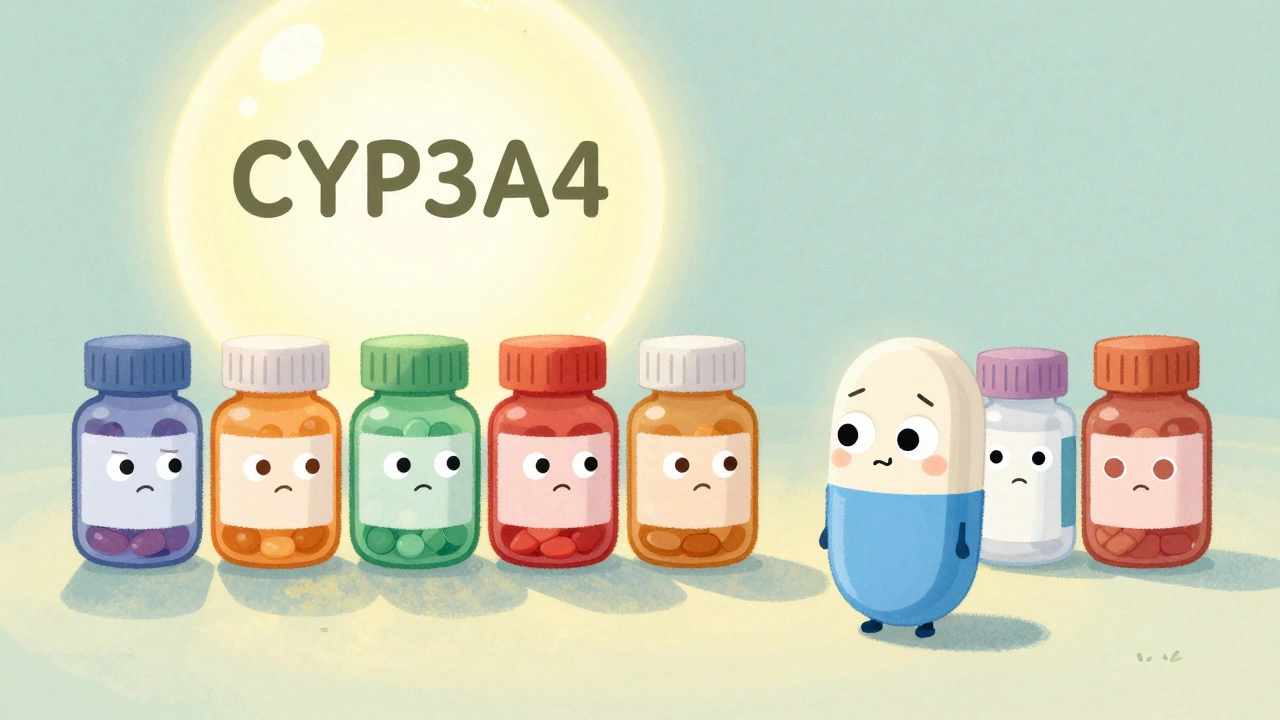
Clarithromycin is an antibiotic that works well against certain infections-like pneumonia, bronchitis, and skin infections-but it’s also one of the most dangerous antibiotics you can take if you’re on other medications. It doesn’t just kill bacteria. It messes with how your body processes dozens of common drugs, turning safe doses into life-threatening ones. And the worst part? Many people don’t know they’re at risk until it’s too late.
Why Clarithromycin Is So Risky
Clarithromycin doesn’t just stop bacteria from making proteins. It also shuts down a key enzyme in your liver and gut called CYP3A4. This enzyme is responsible for breaking down about half of all prescription drugs. When clarithromycin blocks it, those drugs build up in your blood like a clogged drain. Levels can spike by 200%, 300%, even 800%. That’s not a minor side effect. That’s a medical emergency waiting to happen. This isn’t just theoretical. In 2020, the FDA recorded 58 serious or fatal cases linked to clarithromycin and colchicine alone. Real people died. A 76-year-old woman with gout took her usual colchicine dose while on clarithromycin for a chest infection. Eleven days later, she was dead. Her body couldn’t break down the colchicine. It built up until her muscles failed, her kidneys shut down, and her organs collapsed.The Deadliest Combination: Clarithromycin and Colchicine
Colchicine is used for gout and a rare inflammatory condition called familial Mediterranean fever. It’s a powerful drug with a very narrow safety margin. Even a small overdose can cause vomiting, diarrhea, muscle weakness, and organ failure. When you add clarithromycin, that margin disappears. A 2020 study showed that clarithromycin increased colchicine levels in the blood by 282%. That’s not a typo. One normal dose of colchicine became almost three times as toxic. The Institute for Safe Medication Practices calls this a Category A high-alert interaction-the highest risk level. The FDA added a boxed warning in March 2023: “Concomitant use has resulted in fatal and near-fatal colchicine toxicity.” This isn’t rare. Studies show that nearly 1 in 4 people over 65 taking clarithromycin are also on colchicine. That’s a ticking time bomb. If you’re older and take colchicine for gout, don’t take clarithromycin. Period. Azithromycin is a safer alternative-it barely touches CYP3A4.Statins: When Your Cholesterol Drug Turns Deadly
If you’re on a statin to lower cholesterol, clarithromycin could be the last thing you ever take. Simvastatin and lovastatin are the most dangerous. Clarithromycin can make their blood levels jump by 500%. That triggers rhabdomyolysis-a condition where muscle tissue breaks down and floods your kidneys with toxic proteins. One documented case involved a 68-year-old man on simvastatin 40mg daily. He started clarithromycin for a sinus infection. Within 72 hours, he was in the ICU with kidney failure and needed dialysis. He survived. Many don’t. Atorvastatin is less risky, but still dangerous. The Mayo Clinic lists 142 drug combinations that are absolutely contraindicated with clarithromycin. Statins make up nearly a third of them. If you’re on simvastatin or lovastatin, clarithromycin is off the table. Ask your doctor to switch you to pravastatin or rosuvastatin instead. They’re not affected by CYP3A4.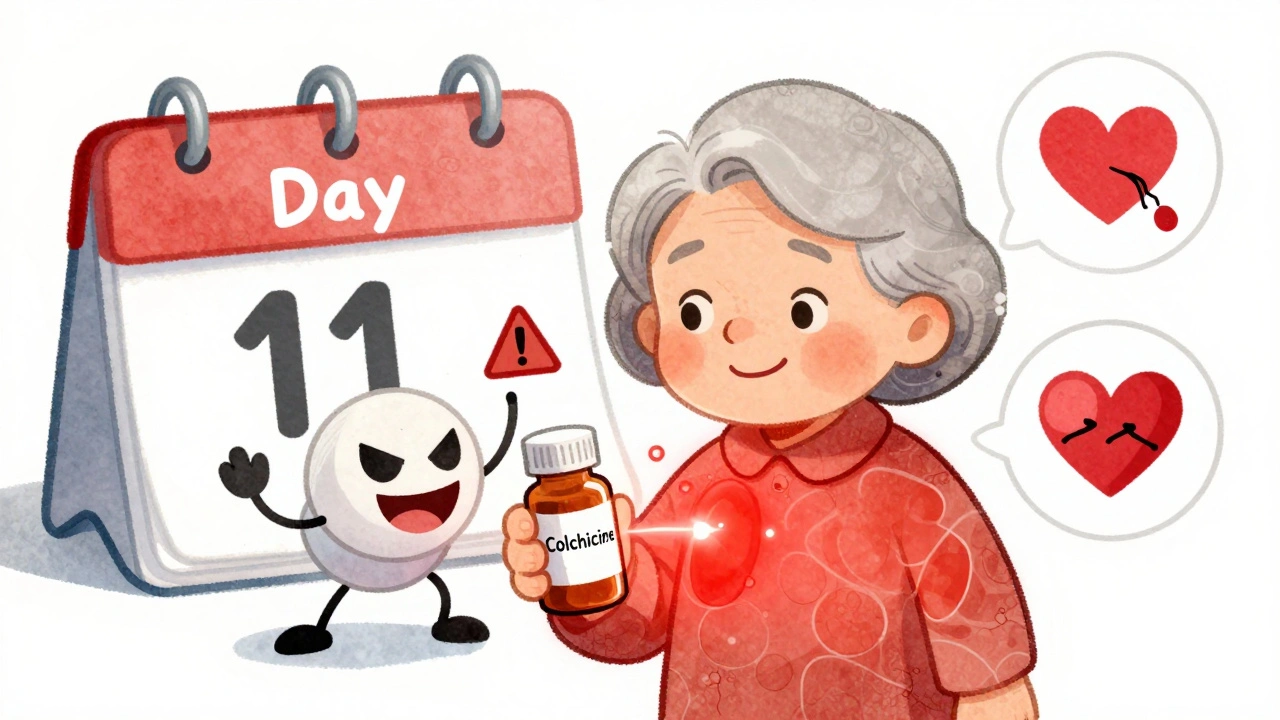
Heart Medications: A Recipe for Cardiac Arrest
Clarithromycin doesn’t just raise drug levels-it can throw your heart rhythm into chaos. It prolongs the QT interval, the time your heart takes to recharge between beats. When combined with other QT-prolonging drugs, the risk of a deadly arrhythmia called torsades de pointes goes up 2.7 times. That’s not a small increase. That’s a near-certainty of sudden death if you’re not monitored. Drugs like verapamil, diltiazem, and amiodarone are common heart medications that can’t be mixed with clarithromycin. Even amlodipine, a widely prescribed blood pressure pill, can become dangerous. The American Heart Association says: “Avoid clarithromycin in patients with prolonged QT interval or those taking other QT-prolonging drugs.” If you’re on any heart medication-especially for arrhythmias, high blood pressure, or heart failure-don’t assume your doctor knows this interaction. Bring up clarithromycin yourself. Ask: “Is this safe with my current heart meds?”What Else Should You Avoid?
Clarithromycin’s list of dangerous combinations is long. Here are the most common ones you need to watch for:- Ergotamine (for migraines): Can cause severe limb ischemia and tissue death.
- Midazolam, triazolam (sedatives): Can cause extreme drowsiness, respiratory failure.
- Cyclosporine, tacrolimus (transplant drugs): Can cause kidney failure.
- Warfarin (blood thinner): Increases bleeding risk-INR levels can spike unpredictably.
- Theophylline (asthma): Can cause seizures and heart arrhythmias.
- Rivaroxaban, apixaban (newer blood thinners): Increased bleeding risk.
- Sirolimus, everolimus (cancer and transplant drugs): Toxic buildup leading to organ damage.
The American Geriatrics Society’s Beers Criteria (2023) says clarithromycin should be avoided entirely in adults over 65 who take any CYP3A4 substrate with a narrow therapeutic index. That’s a fancy way of saying: if the drug has a small safety window, don’t mix it with clarithromycin.
Why Azithromycin Is the Better Choice
You might be wondering: if clarithromycin is so dangerous, why is it still prescribed? It’s because it works well against some stubborn infections-like Mycobacterium avium complex in people with HIV. But for most common infections-sinusitis, bronchitis, strep throat-azithromycin is just as effective and far safer. Azithromycin barely inhibits CYP3A4. It has only four absolute contraindications. Clarithromycin has 142. A 2018 study found clarithromycin was 2.8 times more likely to cause serious drug interactions than azithromycin. Since 2015, clarithromycin prescriptions in the U.S. have dropped 28%. Azithromycin now makes up 63% of all macrolide prescriptions. Why? Doctors switched because they stopped wanting to risk killing their patients. Ask your doctor: “Can I take azithromycin instead?” In most cases, the answer will be yes.
What to Do If You’re Already Taking Clarithromycin
If you’ve already started clarithromycin and are on other meds, don’t panic. But don’t wait either. Step 1: Stop taking any other medication until you talk to your doctor or pharmacist. Don’t just stop the antibiotics-stop the statins, colchicine, blood thinners, heart meds, sedatives. Step 2: Make a list of every pill, patch, and injection you take. Include over-the-counter drugs, supplements, and herbal products. Many people forget that St. John’s wort, grapefruit juice, and even some antacids can interact. Step 3: Call your pharmacist. Pharmacists are trained to catch these interactions. They run checks every time you fill a prescription. If your doctor prescribed clarithromycin without knowing your full med list, the pharmacist should have flagged it. If they didn’t, ask why. Step 4: If you’re over 65, have kidney problems, or take more than three medications, assume you’re at high risk. Don’t wait for symptoms. Call your doctor now.Signs You’re Having a Dangerous Reaction
If you’re on clarithromycin and start feeling any of these, seek emergency care immediately:- Unexplained muscle pain, weakness, or dark urine (signs of rhabdomyolysis)
- Severe diarrhea, vomiting, or stomach cramps (colchicine toxicity)
- Dizziness, fainting, rapid or irregular heartbeat (QT prolongation)
- Extreme drowsiness, confusion, trouble breathing (sedative buildup)
- Bleeding gums, nosebleeds, bruising easily (warfarin effect)
These symptoms can appear within days-even hours-of starting clarithromycin. Don’t wait for them to get worse. Call 911 or go to the ER.
The Bottom Line
Clarithromycin isn’t evil. It saves lives in specific cases. But for most people, the risks far outweigh the benefits. It’s a blunt instrument in a world that needs precision. If you’re prescribed clarithromycin:- Ask if azithromycin is an option.
- Bring your full medication list to every appointment.
- Never assume your doctor knows what else you’re taking.
- If you’re over 65 or on more than three drugs, push back.
- If you’re on colchicine, statins, or heart meds-say no to clarithromycin.
Antibiotics aren’t one-size-fits-all. The right choice isn’t just about killing bacteria. It’s about keeping you alive while you recover.
Can I take clarithromycin if I have kidney problems?
No, not if you’re also taking colchicine or certain other drugs. The European Medicines Agency warns that people with severe kidney impairment who take clarithromycin and colchicine have a 4.3-fold higher risk of fatal toxicity. Even if you’re not on colchicine, reduced kidney function means your body clears clarithromycin slower, increasing the risk of buildup and interactions. Always tell your doctor if you have kidney disease before taking this antibiotic.
Is it safe to take clarithromycin with grapefruit juice?
No. Grapefruit juice also inhibits CYP3A4. Taking it with clarithromycin can double the effect, making drug interactions even more dangerous. Avoid grapefruit, pomelo, Seville oranges, and their juices completely while on clarithromycin-even if you’re not on other meds. The interaction is additive and unpredictable.
How long after stopping clarithromycin do interactions last?
Clarithromycin’s effect on CYP3A4 can last up to 10 days after your last dose. That’s because it binds tightly to the enzyme and takes time to clear. If you’ve taken clarithromycin, wait at least 10 days before starting a new medication that’s metabolized by CYP3A4-like statins, colchicine, or certain blood thinners. Don’t assume it’s safe just because you finished the course.
Can I take clarithromycin with over-the-counter painkillers?
Acetaminophen (Tylenol) is generally safe. But NSAIDs like ibuprofen, naproxen, and aspirin can increase bleeding risk if you’re also on warfarin or other blood thinners. Clarithromycin can make those interactions worse. Always check with your pharmacist before taking any OTC pain reliever while on clarithromycin.
What should I do if my doctor insists on prescribing clarithromycin?
Ask for the reasoning. Is it for a specific infection like Mycobacterium avium complex? If not, push back. Cite the FDA’s boxed warning, the American College of Physicians’ 2024 guidelines recommending azithromycin as the preferred macrolide, and the 28% decline in clarithromycin use since 2015 due to safety concerns. If they still insist, ask for a second opinion or request a referral to an infectious disease specialist. Your life is worth the extra step.

Comments (9)
Lola Bchoudi
Clarithromycin’s CYP3A4 inhibition is a pharmacokinetic nightmare-especially in polypharmacy elderly populations. The FDA’s boxed warning on colchicine co-administration isn’t just cautionary; it’s a red flag for institutional negligence. When you consider that 24% of adults over 65 are concurrently prescribed both, this isn’t an edge case-it’s a systemic failure in prescriber education. Pharmacists must be empowered to intervene, not just flag. We need mandatory CYP3A4 interaction checks embedded in EHRs, not optional pop-ups buried in 17 tabs.
And let’s not pretend azithromycin is a perfect substitute-it has QT risks too, just less pronounced. The real solution? Prescribing algorithms that auto-suggest alternatives based on med lists. Until then, we’re just rearranging deck chairs on the Titanic.
Also, grapefruit juice? Still a problem. Even one glass can inhibit intestinal CYP3A4 for 72 hours. That’s not ‘avoidance’-that’s pharmacological sabotage.
Bottom line: if your prescriber doesn’t know the Beers Criteria cold, find a new one.
Morgan Tait
They’re lying to you. Everyone knows the FDA and Big Pharma are in bed together. Clarithromycin was pulled from Europe in ’19 but they kept pushing it here because it’s profitable. The ‘28% drop’? That’s just because they rebranded it as ‘azithromycin’ and slapped a new label on it. Same molecule, same liver damage. They just made the warning smaller so you won’t notice.
And don’t get me started on ‘statins’-those are just cholesterol blockers disguised as medicine. Your body makes cholesterol because it needs it. The real cause of heart disease? Glyphosate in your food. The same stuff in Roundup. They’re poisoning you slowly so you need more pills. Azithromycin? Still tainted. Ask yourself: who owns the patent?
I stopped all antibiotics in 2021. Now I drink colloidal silver and eat raw garlic. My bloodwork? Perfect. No more ‘interactions’-because I don’t take their poison anymore.
Darcie Streeter-Oxland
While the clinical information presented is broadly accurate and appropriately referenced, the tone and structure of this post verge on alarmist. The use of phrases such as ‘ticking time bomb’ and ‘medical emergency waiting to happen’ lacks the measured precision expected in medical communication. While the risks of clarithromycin are indeed well-documented, the presentation risks inducing unnecessary patient anxiety and may discourage appropriate antibiotic use in cases where it remains clinically indicated.
Furthermore, the recommendation to ‘avoid clarithromycin entirely’ in adults over 65 is overly categorical. Clinical decision-making must account for individual risk-benefit profiles, renal function, and microbiological sensitivity-not merely age or polypharmacy status.
That said, the emphasis on pharmacist involvement and patient advocacy is commendable and aligns with current best practices in medication safety.
Mona Schmidt
Thank you for this. As someone who’s been managing chronic gout and hypertension for over a decade, I didn’t realize how many of my meds were ticking bombs. I was on simvastatin and colchicine for years-never thought to ask about antibiotics. My pharmacist flagged it last year after I got a sinus infection. Thank god.
For anyone reading this: write down every pill you take. Every. Single. One. Including that turmeric supplement you think is ‘harmless.’ I had no idea St. John’s wort interacts with everything. My cardiologist said it’s like pouring gasoline on a fire.
And yes, azithromycin worked just as well for my bronchitis. No ICU. No dialysis. No panic. Just a simple script change.
Doctors don’t know your whole list. Pharmacists do. Talk to them first. Always.
Guylaine Lapointe
Oh please. This is the same fear-mongering nonsense that gets recycled every time a new drug interaction pops up. I’ve been on clarithromycin three times in the last five years. No issues. My dad took it with simvastatin and lived to 82. People die from car crashes, lightning strikes, and bad yoga poses-but we don’t ban those.
And don’t get me started on azithromycin. It’s been linked to sudden cardiac death too. The FDA issued a warning in 2013. You think they’re hiding that? No, they just don’t want you to panic over statistically rare events.
Stop treating every antibiotic like a nuclear bomb. If your doctor prescribes it, they’ve weighed the risks. You’re not a lab rat. You’re a grown adult. Trust the process-or don’t take the damn pill. But don’t turn this into a crusade.
Sarah Gray
Oh wow. Another ‘medical expert’ who thinks they know better than every doctor who’s ever practiced. Did you even read the prescribing info? Clarithromycin is still first-line for pertussis, H. pylori, and MAC in immunocompromised patients. You’re not saving lives-you’re creating panic among people who don’t understand pharmacology.
And azithromycin? It’s less effective against Gram-positive cocci. You think every infection responds to the same magic bullet? Your ‘just ask for azithromycin’ advice is dangerously naive.
Also, the ‘142 contraindications’? That’s not a list of dangers-it’s a list of drugs that have been studied. Most of those interactions are theoretical. Real-world data shows fewer than 0.02% of cases result in death.
Stop scaring people. You’re not a healer. You’re a clickbait artist with a PubMed account.
Michael Robinson
It’s not about the drug. It’s about how we treat our bodies like machines that can be swapped out. We don’t think about why the liver has an enzyme called CYP3A4. We just see it as a ‘blocker’ and blame the pill.
But the body isn’t broken. It’s trying to adapt. Maybe the real problem is that we’re throwing too many chemicals at it and then acting surprised when it glitches.
Clarithromycin doesn’t ‘cause’ death. It reveals how fragile we’ve become. We’ve outsourced our health to pills, and now we’re terrified of the very tools we asked for.
Maybe the question isn’t ‘what drug to avoid’-but ‘why do we need so many?’
Kathy Haverly
Oh, so now you’re telling people to stop their meds cold turkey because some guy on Reddit wrote a long post? That’s brilliant. Let’s just have everyone quit their statins and go to the ER because they’re ‘afraid’ of a drug interaction.
And what about the people who actually need clarithromycin? Like the guy with a life-threatening lung infection? You’d rather he die of pneumonia than risk a 0.03% chance of colchicine toxicity? You’re not protecting people-you’re weaponizing ignorance.
I’ve seen patients die because they listened to internet ‘experts’ instead of their doctors. You’re not a hero. You’re a liability.
Andrea Petrov
Did you know that the FDA’s 2023 boxed warning was pushed through after lobbying from a single pharmaceutical company that manufactures azithromycin? They stood to gain $2.1 billion in market share. The ‘28% drop’? That’s not safety-it’s corporate strategy.
And the ‘142 contraindications’? Most of those are from case reports with no control group. The real data? A 2021 JAMA meta-analysis showed no significant increase in mortality when clarithromycin was used appropriately.
They’re making you afraid of the wrong thing. The real danger? Trusting doctors who don’t question the system. Why are you letting a corporation dictate your treatment? They don’t care if you live or die-they care about quarterly earnings.
And grapefruit juice? That’s a myth. It’s only a problem if you drink a liter a day. But they’ll scare you into buying their ‘safe’ alternatives. Classic.