
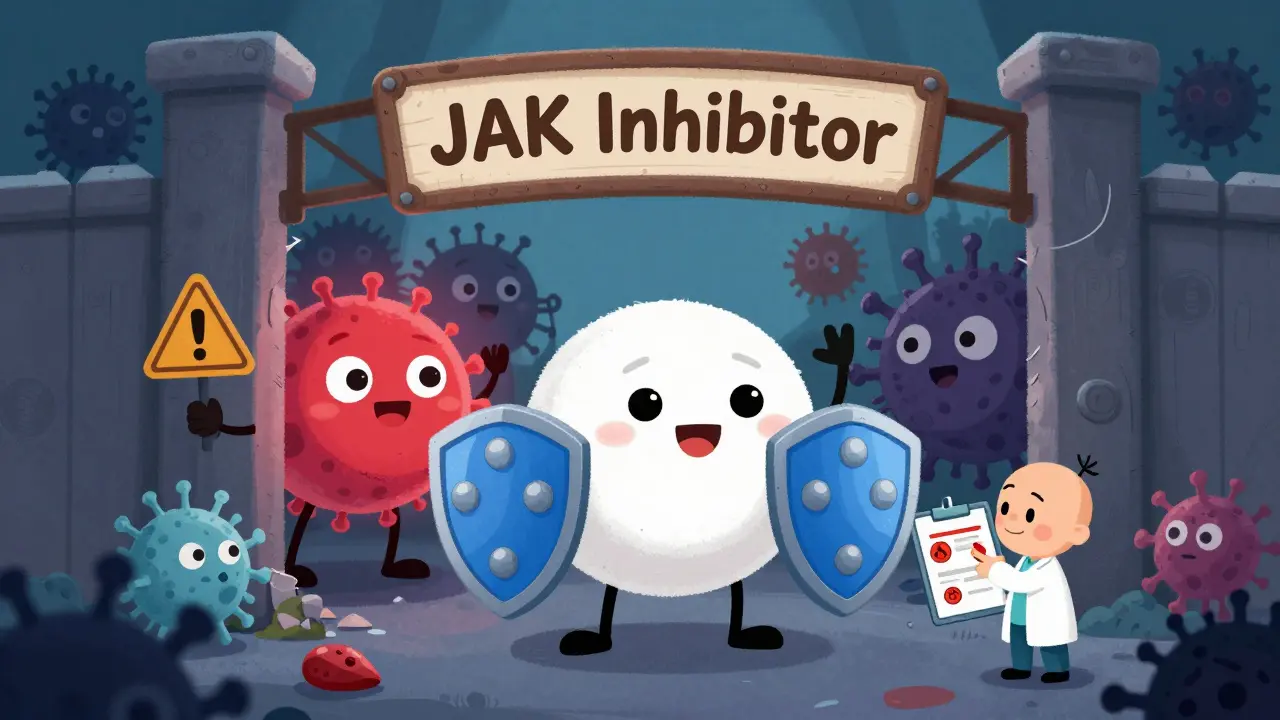
JAK Inhibitor Risk Assessment Tool
Assess Your Risk Factors
This tool helps you understand your personal risk for serious infections and blood clots when taking JAK inhibitors. Based on your medical history, it provides a risk assessment and recommendations for safer treatment.
Infection Risk Assessment
Blood Clot Risk Assessment
When you’re managing a chronic autoimmune disease like rheumatoid arthritis, psoriatic arthritis, or ulcerative colitis, finding a treatment that actually works matters. JAK inhibitors - drugs like tofacitinib, upadacitinib, and baricitinib - deliver real results. Many patients see dramatic improvements in joint pain, skin plaques, or bowel inflammation within weeks. But these drugs don’t come without serious risks. Two dangers stand out above all: serious infections and blood clots. If you’re considering or already taking a JAK inhibitor, you need to know what to watch for - and what your doctor should be checking.
Why JAK Inhibitors Work - and Why They’re Risky
JAK inhibitors block specific enzymes inside immune cells that drive inflammation. By quieting this overactive signaling, they reduce swelling, pain, and tissue damage. But the same pathways they suppress also help your body fight off viruses and bacteria. That’s why infections are the most common serious side effect. And because some of these drugs affect blood cell production, they can also increase your risk of dangerous clots.
These aren’t minor concerns. In 2021, the FDA added a black box warning - its strongest safety alert - to all JAK inhibitors. The warning covers serious infections, cancer, heart problems, and blood clots. This wasn’t based on theory. It came from the ORAL Surveillance trial, which tracked over 4,300 rheumatoid arthritis patients for up to four years. Those taking tofacitinib had a 73% higher risk of pulmonary embolism and a 33% higher risk of death compared to those on TNF inhibitors.
The Infection Risk: It’s Not Just a Cold
Most people expect that immunosuppressants might make them more prone to colds or flu. With JAK inhibitors, the infections are often far worse. The most frequently reported serious infection is herpes zoster - also known as shingles. Even if you’ve had chickenpox as a child or got the shingles vaccine, your risk still goes up. One patient on Reddit shared that despite being vaccinated, they developed shingles within three months of starting tofacitinib and ended up hospitalized for five days.
Other dangerous infections include:
- Tuberculosis (TB)
- fungal infections like histoplasmosis or candidiasis
- bacterial pneumonia
- sepsis from common bacteria like E. coli or Staph
According to FDA adverse event data, infections make up over 32% of all serious side effects reported with JAK inhibitors. Herpes zoster alone accounts for nearly 15% of those infection reports. The risk is highest in the first six months of treatment, but it never fully goes away.
Before starting any JAK inhibitor, your doctor should:
- Test you for latent TB with a skin or blood test
- Check your vaccination status - you need the shingles, pneumococcal, and flu shots at least four weeks before starting
- Avoid live vaccines (like MMR or nasal flu spray) while on treatment
Once you’re on the drug, watch for signs like fever, chills, night sweats, persistent cough, or unusual skin rashes. Don’t wait. Call your doctor immediately if you feel worse than usual.
Thrombosis: The Silent Threat
While infections are obvious, blood clots are sneakier. Venous thromboembolism (VTE) - which includes deep vein thrombosis (DVT) and pulmonary embolism (PE) - is a leading cause of sudden death in people taking JAK inhibitors. You might not feel anything until it’s too late.
A 2022 analysis of more than 126,000 patients found JAK inhibitors increased the odds of blood clots by 2.37 times compared to other drugs. The risk jumps even higher for:
- People over 65
- Those with a history of clots
- Patients who are obese (BMI ≥30)
- Anyone who’s been immobile for long periods - like after surgery or on a long flight
- Women using estrogen-based birth control or hormone therapy
One patient on upadacitinib described a DVT after a long flight: “I had swelling and pain in my calf. My rheumatologist stopped the drug right away.” That’s exactly what should happen. If you develop sudden leg swelling, pain, warmth, or redness - or shortness of breath, chest pain, or rapid heartbeat - get medical help immediately. These could be signs of a clot.
Not all JAK inhibitors carry the same risk. Studies show tofacitinib has the highest signal for clots, while newer agents like upadacitinib and filgotinib - which are more selective for JAK1 - appear to have lower rates. The JAKARTA2 trial found upadacitinib had less than a quarter the clot rate of tofacitinib in low-risk patients. But this doesn’t mean any JAK inhibitor is safe. The European Medicines Agency says the risk applies to all drugs in this class, regardless of selectivity.

Who Should Avoid JAK Inhibitors Altogether?
Not everyone is a candidate. Regulatory agencies now say JAK inhibitors should be reserved for patients who haven’t responded to safer options like TNF inhibitors or methotrexate. They’re no longer first-line.
Doctors should avoid prescribing them to people with:
- A history of blood clots or stroke
- Active cancer or recent cancer treatment
- Smoking history (current or former)
- Uncontrolled high blood pressure or cholesterol
- Age 65 or older with at least one cardiovascular risk factor
Even if you’re young and healthy, if you’ve had a clot before, you shouldn’t take these drugs. The risk is too high. One study found patients with prior VTE had over five times the chance of another clot on JAK inhibitors.
Monitoring: What Your Doctor Should Be Doing
Taking a JAK inhibitor isn’t a set-it-and-forget-it situation. You need regular checkups.
Standard monitoring includes:
- Complete blood count (CBC) every 4 to 8 weeks - to catch low white cells, red cells, or platelets
- Lipid panel at 4 and 12 weeks - JAK inhibitors raise cholesterol levels by 15-20% within weeks
- Liver and kidney function tests
- Annual skin checks - increased risk of skin cancers like melanoma
Some experts now recommend baseline D-dimer tests and lower-extremity ultrasounds for high-risk patients before starting treatment. While not yet universal, this is becoming more common in top rheumatology clinics.
If you develop a serious infection, your doctor will pause the drug until you’re fully recovered. If you have a confirmed blood clot, you’ll stop the JAK inhibitor permanently and switch to anticoagulants. There’s no safe way to restart it after a clot.
Real Patients, Real Choices
On Drugs.com, JAK inhibitors average a 6.2 out of 10 rating. Forty-two percent of negative reviews mention infections. Twenty-eight percent mention blood clots. But 82% of patients who avoid these complications say the drugs changed their lives.
One patient with severe psoriatic arthritis said: “I couldn’t hold my kids before. Now I can play with them. But I get blood work every month and I’m terrified of getting sick. It’s a trade-off.”
That’s the reality. JAK inhibitors are powerful. They can restore function and quality of life. But they’re not risk-free. The decision isn’t just about efficacy - it’s about your personal risk profile.
What’s Next? Safer Options on the Horizon
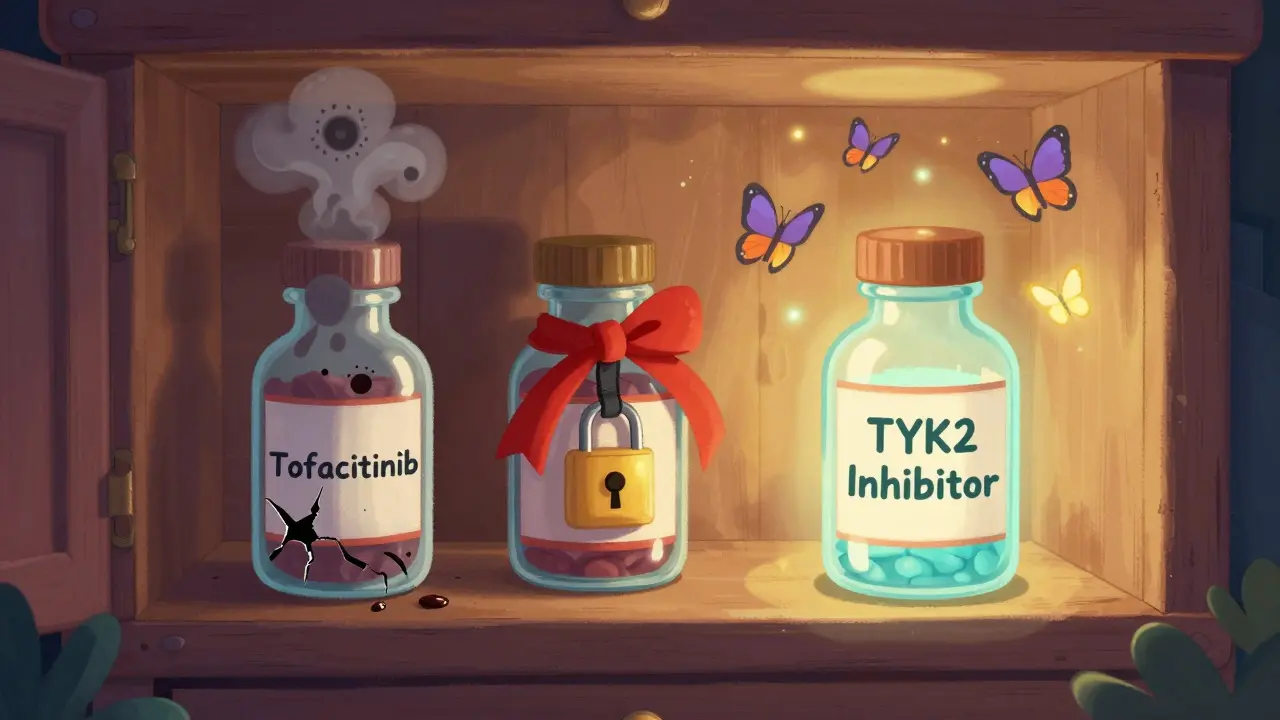
Researchers are already working on next-generation drugs. New agents like TYK2 inhibitors target a more specific part of the immune pathway, potentially offering similar benefits with less infection and clot risk. Early data looks promising, and trials are underway.
For now, if you’re on a JAK inhibitor and feeling well, don’t panic. But do stay vigilant. Keep your appointments. Report any new symptoms. Talk to your doctor about whether your current drug is still the best choice for you - especially if your condition has stabilized.
The goal isn’t just to control your disease. It’s to do it safely - for years to come.
Can I take a JAK inhibitor if I’ve had a blood clot before?
No. If you’ve had a deep vein thrombosis (DVT), pulmonary embolism (PE), or any other venous thromboembolism, you should not start a JAK inhibitor. The risk of another clot is extremely high - studies show it’s over five times greater than in patients without prior clots. These drugs are contraindicated in this group. Your doctor will recommend alternative treatments like TNF inhibitors or IL-17 blockers instead.
Do JAK inhibitors cause weight gain?
JAK inhibitors themselves don’t directly cause weight gain. However, some patients gain weight because their disease improves - they can move more, eat better, and feel less pain. Others may gain weight due to steroid use alongside JAK inhibitors. The drugs do raise cholesterol and triglycerides, which can contribute to fat buildup, but this is a metabolic effect, not direct weight gain. Monitoring lipid levels every 4-12 weeks is standard to manage this.
Are JAK inhibitors safe for older adults?
They are not recommended for most people over 65, especially if they have heart disease, high blood pressure, diabetes, or smoke. The ORAL Surveillance trial showed older patients had significantly higher rates of heart attacks, strokes, blood clots, and death on JAK inhibitors compared to TNF inhibitors. If no other treatments work, a doctor may consider them - but only after a detailed risk assessment and with strict monitoring.
How long do I need to be monitored after starting a JAK inhibitor?
Monitoring should continue as long as you’re on the drug. Blood tests (CBC, lipids) are needed every 4 to 8 weeks for the first 6 months, then every 3 months if stable. Infection screening and cancer checks should be part of your annual physical. Even if you feel fine, stopping monitoring increases your risk of missing early signs of serious complications. The FDA and EMA require ongoing safety follow-up for all patients on these drugs.
Can I get the shingles vaccine while on a JAK inhibitor?
No. The shingles vaccine (Shingrix) is not live, so it’s safe to receive before starting a JAK inhibitor - but only if given at least 4 weeks prior. Once you’re on the drug, you cannot get any live vaccines, and even non-live vaccines may not work as well because your immune system is suppressed. If you haven’t had the shingles shot yet, get it before starting treatment. If you’re already on the drug, talk to your doctor about whether a repeat dose or alternative prevention strategies are possible.

Comments (8)
Jay Ara
I was on tofacitinib for 8 months and got shingles so bad I couldn't hold my dog
Doc said it was the drug but I felt guilty like i should've known better
Now I'm on abatacept and yeah it's slower but at least i'm not scared to sneeze
Michael Bond
Black box warning for a reason.
Kuldipsinh Rathod
My uncle took baricitinib and got pneumonia in 3 months
He was 71 and had high bp
They told him it was just a bad flu
He died 2 weeks later
Doctors dont listen until its too late
SHAKTI BHARDWAJ
THIS IS WHY I HATE BIG PHARMA THEY MAKE YOU SICK SO THEY CAN SELL YOU MORE DRUGS
THEY KNOW THESE DRUGS ARE DANGEROUS BUT THEY MAKE BILLIONS
MY FRIEND GOT A PE AND THEY SAID IT WAS COINCIDENCE LOL
Matthew Ingersoll
In India, many patients skip baseline TB tests because of cost and access
That’s not negligence-it’s systemic failure
The FDA warning doesn’t help if you can’t afford a skin test
These drugs are miracles for some, death sentences for others depending on where you live
carissa projo
There’s a quiet grief in taking a drug that gives you back your life but steals your peace
You celebrate the ability to hug your child, then panic every time your throat feels scratchy
It’s not just medical monitoring-it’s emotional vigilance
Every blood test becomes a ritual of hope and dread
And the worst part? No one talks about how lonely that is
You’re told to be grateful, but no one asks if you’re scared
Maybe the real miracle isn’t the drug-it’s the courage it takes to keep showing up for yourself
josue robert figueroa salazar
People act like the risk is some surprise
It’s in the damn label
Stop acting like you didn’t read the fine print
Also if you’re over 65 and still on this stuff you’re either rich or dumb
david jackson
I’ve been on upadacitinib for 14 months and honestly it’s been a game changer-my joints don’t scream anymore, I can walk to the mailbox without wheezing, I played catch with my nephew last weekend and he didn’t even realize I used to need a cane
But here’s the thing-I don’t sleep well anymore
Not because of the drug, but because every time I feel a twinge in my calf or a feverish chill, my brain goes straight to pulmonary embolism or sepsis
I track my temps like a scientist, I check my legs every night, I’ve memorized the symptoms of histoplasmosis
My rheumatologist says I’m overreacting
But when your life was stolen by inflammation and then given back by a drug that could also kill you-how do you not become a hypochondriac?
They talk about black box warnings like they’re just paperwork
But for us? It’s a shadow that walks beside us every day
And I don’t know if I’m brave for staying on it-or just too afraid to go back to the pain
Maybe both