When your doctor prescribes a medication, you might assume the brand name is the only option. But in reality, most prescriptions today are filled with generic drugs-cheaper, FDA-approved copies of brand-name medicines. The question isn’t whether generics work. It’s when they should be used, and who gets to decide. Medical societies-groups of doctors, specialists, and researchers-have taken official stands on this. And those positions aren’t all the same.
Why Medical Societies Care About Generic Substitution
Generic drugs aren’t just cheaper. They’re required by the FDA to have the same active ingredient, strength, dosage form, and route of administration as the brand-name version. They must also prove they’re bioequivalent-meaning they deliver the same amount of drug into your bloodstream at the same rate. The FDA says 90% of prescriptions in the U.S. are now for generics, and they make up just 23% of total drug spending. But doctors don’t just look at cost. They look at safety. For most drugs, switching to a generic is seamless. For others, even tiny differences in how the drug is absorbed can cause real problems. That’s where medical societies step in. They review the science, weigh the risks, and issue official guidelines. These aren’t suggestions. They shape how prescriptions are written, how pharmacists dispense drugs, and even what state laws allow.Neurology: The Exception That Proves the Rule
The American Academy of Neurology (AAN) has one of the clearest and most controversial positions: they oppose generic substitution for antiepileptic drugs. Why? Because seizures don’t wait. If a patient’s blood levels of the drug dip even slightly-because of a different filler, coating, or release rate-it could trigger a breakthrough seizure. That’s not theoretical. Studies show 68% of neurologists believe generic switches have led to complications in their patients. The AAN isn’t saying generics are unsafe. They’re saying the margin for error is too small. Antiepileptic drugs have a narrow therapeutic index (NTI). That means the difference between a therapeutic dose and a toxic one is tiny. For drugs like phenytoin, carbamazepine, or valproate, even a 10% change in absorption can mean the difference between control and crisis. This isn’t just about opinion. It’s shaped policy. Several states have passed laws requiring prescriber consent before substituting generics for NTI drugs. Other states don’t. So a patient in California might get the same brand every time. A patient in Texas might get switched without knowing. And that inconsistency? It’s dangerous.Internal Medicine: The General Support
Meanwhile, the American College of Physicians (ACP) takes a broader view. For most conditions-high blood pressure, diabetes, cholesterol, depression-generic substitution is not just safe, it’s standard. The ACP supports the FDA’s position: if a generic is approved, it’s therapeutically equivalent. There’s no evidence that switching causes harm in these cases. In fact, the data backs them up. Millions of patients have been switched to generics over the past 40 years. For the vast majority, outcomes haven’t changed. Blood pressure stays controlled. Blood sugar stays stable. Depression doesn’t worsen. The savings? Huge. A 30-day supply of a generic statin might cost $5 instead of $150. That’s life-changing for people on fixed incomes. The ACP’s stance is simple: if the science says it’s safe, use it. Don’t let brand loyalty or fear of the unknown stand in the way of better access.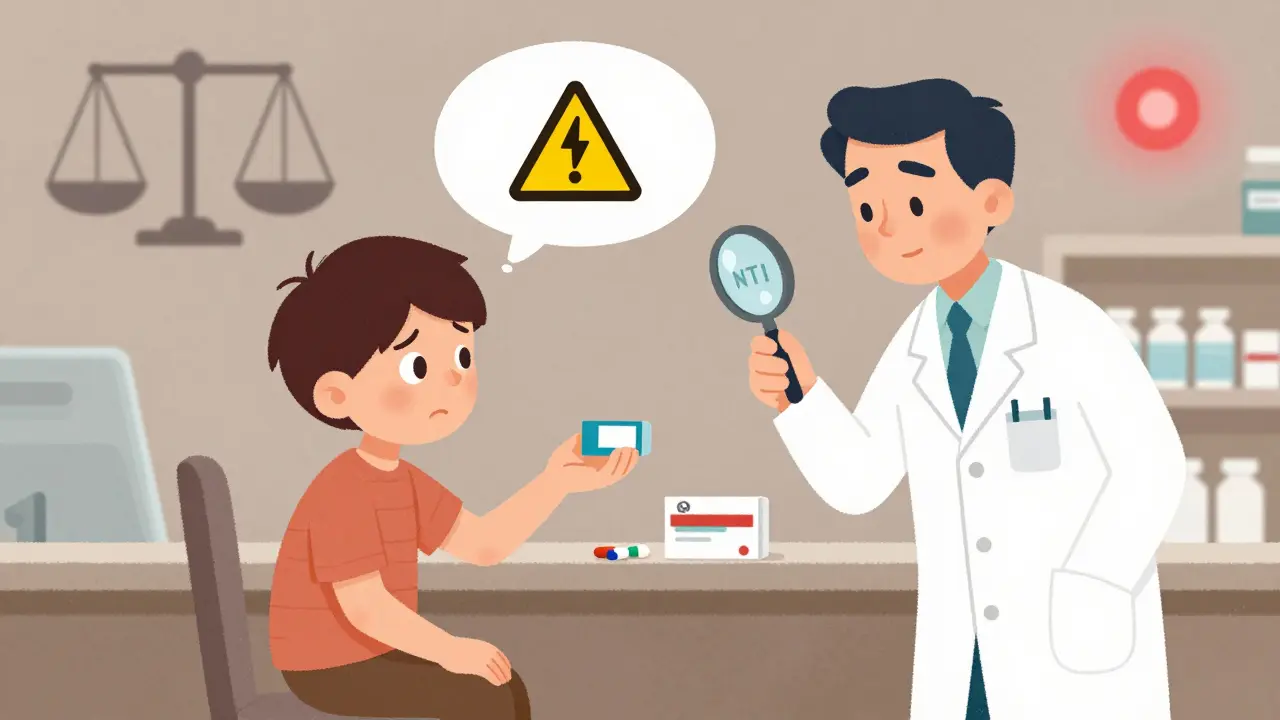
Oncology: Off-Label Use and the NCCN Edge
Cancer treatment is another story. Here, generics aren’t just substitutes-they’re enablers. Many chemotherapy drugs are used off-label-meaning they’re prescribed for conditions not listed on the original FDA label. For example, a generic drug approved for rheumatoid arthritis might be used to treat a rare type of lymphoma. That’s where the National Comprehensive Cancer Network (NCCN) comes in. The NCCN Guidelines are the gold standard in oncology. They don’t just list approved uses. They document real-world, evidence-based off-label applications. And here’s the key: the NCCN treats therapeutically equivalent generics as interchangeable for these off-label uses. If a brand-name drug is recommended, a generic with the same active ingredient is considered just as safe and effective. This matters because cancer drugs are expensive. A single cycle of chemotherapy can cost tens of thousands. If a generic version is available, and the NCCN says it’s acceptable, insurance is far more likely to cover it. That’s not just cost-saving-it’s life-saving.The Naming Game: How Generic Names Affect Safety
You might not think about how a drug is named. But it matters. The American Medical Association’s United States Adopted Names (USAN) Council decides the nonproprietary names for all drugs in the U.S. Their job? Make names clear, consistent, and safe. They use stems-like “-pril” for ACE inhibitors or “-vastatin” for statins-to show drug class. That helps doctors quickly recognize what a drug does. But they also avoid names that sound too similar. “Lisinopril” and “Lisinopril HCTZ” are different. But if two drugs had names like “Duloxetin” and “Duloxetine,” a pharmacist could easily mix them up. The USAN Council’s guidelines are strict: names must be useful for prescribing, dispensing, and administering. No confusion. No errors. That’s why they rarely create new stems-only when a drug is truly novel. And they’ve been doing this since 1964. This isn’t bureaucracy. It’s patient safety.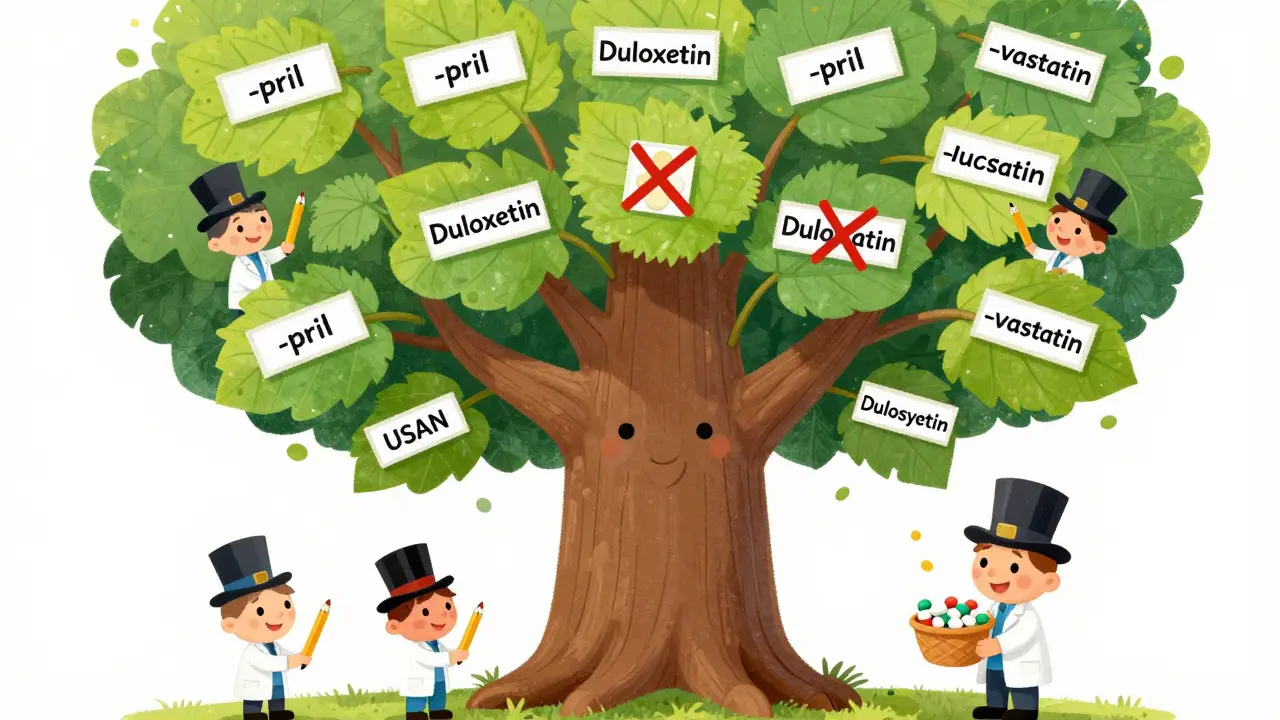
The Regulatory Tightrope: FDA vs. Specialty Societies
The FDA says generics are interchangeable. The AAN says they’re not-for certain drugs. Who wins? In practice, it’s a balance. The FDA sets the legal standard. Medical societies set the clinical standard. When they align, like with most chronic disease medications, substitution is automatic. When they clash, like with antiepileptics, doctors have to speak up. Pharmacists are caught in the middle. In some states, they can substitute generics unless the doctor writes “dispense as written.” In others, they can’t substitute NTI drugs at all. In some, they can substitute, but must notify the patient. This patchwork of rules makes it hard for patients to know what they’re getting-and for doctors to know what’s allowed. The FDA’s Orange Book, which lists therapeutic equivalence ratings, is the official reference. Drugs marked “A” are considered interchangeable. But the AAN and other specialty societies often add their own layer: “Even if it’s rated A, don’t switch this one.”What This Means for You
If you’re on a generic drug and it’s working-no side effects, no flare-ups-you’re probably fine. Most people are. But if you’re on an antiepileptic, thyroid medication, blood thinner, or certain cancer drugs, pay attention. Ask your doctor: “Is this a drug where switching generics could be risky?” If they say yes, ask them to write “dispense as written” on the prescription. If you’ve had a bad reaction after a switch, tell your doctor. That feedback matters. Don’t assume all generics are the same. Don’t assume they’re all safe to swap. But don’t fear them either. For most conditions, generics are just as good-and a lot more affordable.What’s Changing Now
Medical societies are starting to align more closely with the FDA’s latest therapeutic equivalence ratings. But they’re not backing down on NTI drugs. The AAN’s position hasn’t changed. The NCCN keeps expanding its list of approved off-label uses for generics. And the USAN Council still meets every month to review new drug names-making sure no one gets confused. The future? More data. More transparency. More patient-centered guidelines. But the core question remains: when does cost-saving become risk-taking? And who gets to decide?Are generic drugs really as effective as brand-name drugs?
Yes-for most drugs. The FDA requires generics to have the same active ingredient, strength, and bioequivalence as the brand-name version. Studies show they work just as well for conditions like high blood pressure, diabetes, and depression. But for drugs with a narrow therapeutic index-like antiepileptics or warfarin-even small differences can matter. Always talk to your doctor if you’re unsure.
Why do some doctors refuse to allow generic substitution?
Doctors who oppose substitution usually work with drugs where the margin for error is very small. Antiepileptic drugs are the clearest example. A slight change in blood levels can cause a seizure. Other examples include blood thinners like warfarin and thyroid medications like levothyroxine. These drugs have a narrow therapeutic index, meaning the difference between the right dose and a harmful one is tiny. Doctors want to avoid any risk of instability.
Can pharmacists switch my generic without telling me?
It depends on your state. In most places, pharmacists can substitute a generic unless the prescription says “dispense as written” or “no substitution.” Some states have extra rules for drugs with narrow therapeutic indices. Always check your prescription label and ask your pharmacist if the medication changed. You have the right to know.
Do generic drugs have the same side effects as brand-name drugs?
The active ingredient causes the side effects, so yes-generics have the same potential side effects. But inactive ingredients (fillers, dyes, coatings) can differ. Rarely, these can cause allergic reactions or affect how the drug is absorbed. If you notice a new side effect after switching to a generic, tell your doctor. It might be the filler, not the drug itself.
Why don’t all medical societies agree on generic use?
Because different specialties deal with different risks. Neurologists treat patients where a tiny change can cause a seizure. Internists treat millions of patients where the risk is negligible. Oncologists rely on off-label uses that aren’t covered by brand-name labels. Each group looks at the data in their own context. There’s no one-size-fits-all answer-only evidence-based guidance for each situation.