
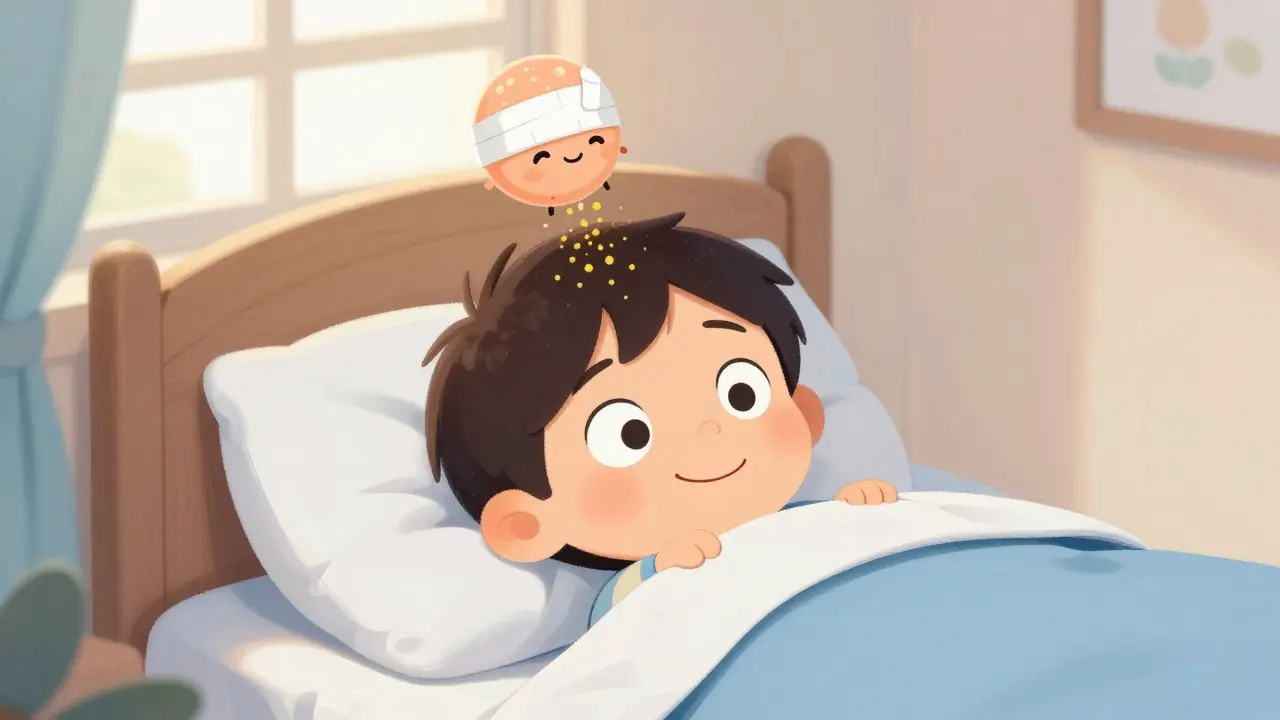
When your face suddenly droops-one eye won’t close, your smile slips to one side, or you can’t raise your eyebrow-it’s terrifying. You might think it’s a stroke. But for many, it’s something far more common: Bell’s palsy. It strikes without warning, often overnight, and leaves people wondering if their face will ever return to normal. The good news? Most people recover fully. And the single most effective treatment isn’t surgery, lasers, or exotic therapies-it’s a simple, cheap, 10-day course of corticosteroids.
What Exactly Is Bell’s Palsy?
Bell’s palsy is sudden, temporary weakness or paralysis of the facial muscles on one side of the face. It happens when the facial nerve (the seventh cranial nerve) becomes inflamed, swollen, or compressed inside the narrow bony tunnel it travels through in the skull. No one knows exactly why this happens in most cases. It’s not caused by a stroke, tumor, or infection like Lyme disease. After ruling out those, doctors label it "idiopathic"-meaning no clear cause. It affects about 15 to 30 people per 100,000 each year, with the highest rates in people between 15 and 45. It can happen to anyone, but pregnant women, diabetics, and those with recent viral infections are at slightly higher risk.
Why Corticosteroids Are the Gold Standard
For decades, doctors debated what to do. Some tried antivirals, others tried acupuncture or hyperbaric oxygen. But when you look at the data from dozens of clinical trials involving nearly 1,000 patients, one treatment stands out: corticosteroids, specifically prednisone.
Without treatment, about 70% of people recover fully within three months. That sounds reassuring-but the other 30% don’t. They’re left with lasting weakness, facial stiffness, or involuntary muscle movements called synkinesis. Corticosteroids don’t just nudge recovery-they change the game. Studies show they improve full recovery rates by about 30%. That means if 10 people with Bell’s palsy take prednisone, one more person will recover completely than if they didn’t. That’s a big deal when your face is involved.
The mechanism is straightforward: corticosteroids reduce inflammation. When the facial nerve swells inside its bony canal, it gets squeezed. That compression damages the nerve’s ability to send signals. Prednisone shrinks that swelling, giving the nerve room to heal. It’s not magic. It’s physics.
The Right Dose, The Right Timing
Not all steroid use is the same. A 5-day course of 10 mg won’t cut it. The evidence is clear: you need the right dose and the right timing.
Standard protocol: 50 to 60 mg of prednisone daily for five days, then tapered down over the next five days. That’s a total of 500 mg over 10 days. Studies show that doses under 450 mg lead to much higher rates of incomplete recovery-around 30%. At 450 mg or more, that drops to 14%. There’s a direct line between dose and outcome.
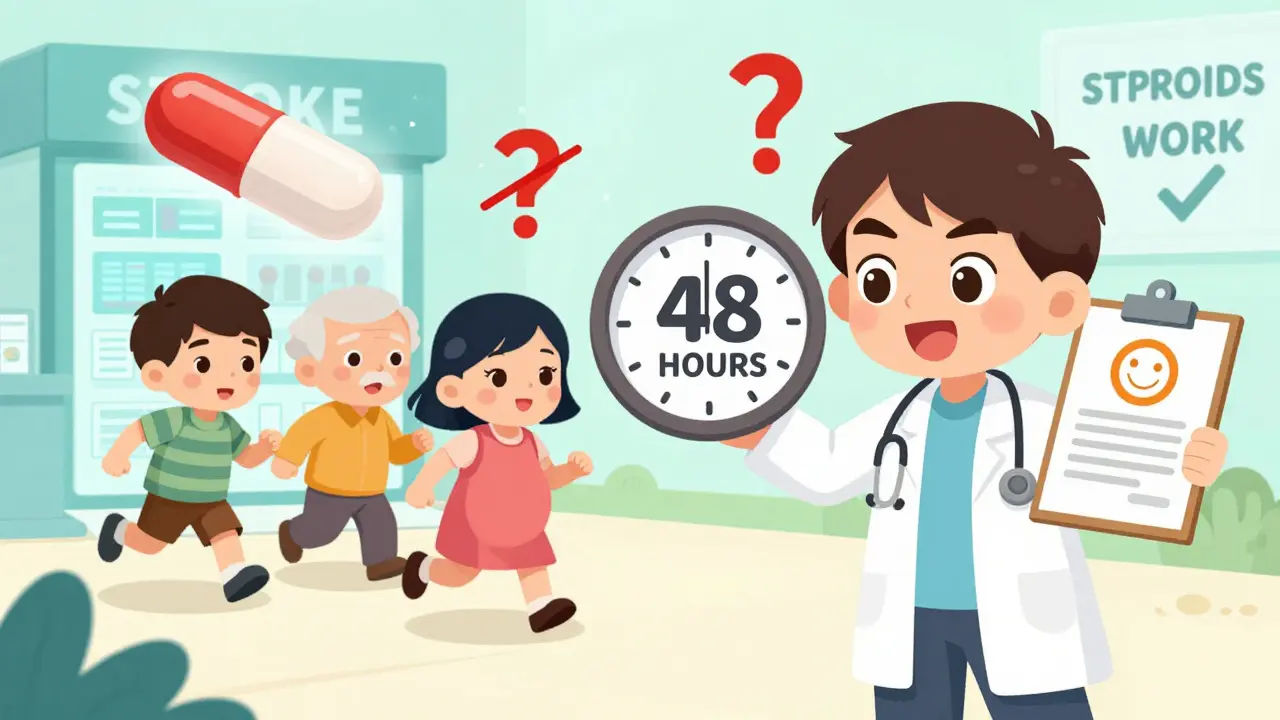
Timing matters even more. The window for maximum benefit is 48 hours after symptoms start. After 72 hours, the benefit drops sharply. Many people delay seeing a doctor, thinking it’s a pinched nerve or stress. By the time they get to a clinic, it’s too late. That’s why recognizing Bell’s palsy fast is critical.
What About Antivirals? Do They Help?
You’ve probably heard about combining steroids with antivirals like acyclovir or valacyclovir. The idea is that a virus (maybe herpes simplex) triggers the inflammation. But here’s the truth: antivirals alone do nothing. A major Cochrane review found no evidence that antivirals improve recovery on their own.
When added to corticosteroids, the data is mixed. Some studies suggest they might reduce long-term complications like synkinesis-where smiling makes your eye twitch. But they don’t improve overall recovery rates. So if you’re young and healthy with mild symptoms, steroids alone are enough. If your case is severe (House-Brackmann grade IV or worse), or you have blisters near your ear (which could mean Ramsay Hunt syndrome), then adding an antiviral might be worth considering. But don’t assume it’s necessary.
Side Effects? Not What You Think
People panic when they hear "steroid." They think of weight gain, diabetes, or mood swings. Those are risks from long-term use-months or years. Bell’s palsy treatment lasts 10 days. That’s not long enough to cause serious problems.
A review of 715 patients in clinical trials found no significant difference in side effects between those taking prednisone and those taking a placebo. The most common complaints? A little trouble sleeping, increased appetite, or feeling jittery. One study reported just three cases of temporary sleep disruption out of hundreds. Diabetics should monitor blood sugar closely during the course, but even that’s manageable with brief adjustments.
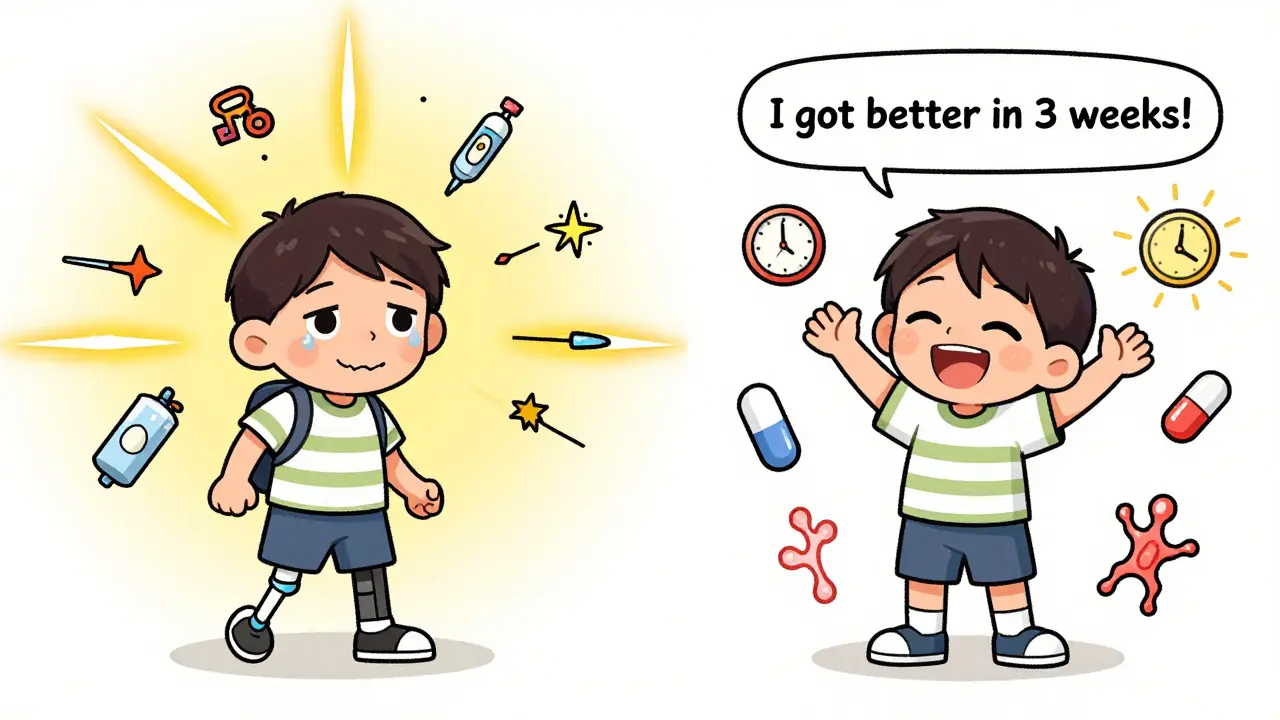
Real patients say the side effects are mild compared to the fear of permanent facial weakness. One woman in the UK shared: "Starting prednisone within 24 hours made all the difference. I had it once before and waited five days. This time, I got better in three weeks instead of six months."
What Doesn’t Work
There’s a lot of noise out there. Low-level laser therapy? Hyperbaric oxygen? Facial exercises? Intratympanic steroid injections? Stellate ganglion blocks?
None of these have high-quality evidence backing them. Some are used in clinics as "alternative" options, but they’re not supported by randomized trials. The AAFP and Cochrane reviews both say: if you’re not using corticosteroids within 72 hours, you’re missing the most effective intervention available.
And please-don’t confuse Bell’s palsy with stroke. If you have sudden facial droop plus arm weakness, slurred speech, or confusion, call emergency services. Bell’s palsy only affects the face. Stroke affects the whole side of the body.
Recovery Is Predictable-If You Act Fast
Machine learning studies tracking nearly 500 patients found two things that best predict recovery: your age and whether you took corticosteroids. Younger people recover faster. Those who took steroids within 48 hours had an 89.5% recovery rate at nine months. Those who didn’t? Only 72.6%.
Recovery isn’t linear. It usually starts within two weeks. Full movement can take three to six months. Most people regain normal function. A small percentage have minor lingering weakness. Very few are left with permanent damage-if they got treatment on time.
What Clinicians Need to Know
Doctors are still missing cases. About 15-20% of Bell’s palsy cases are misdiagnosed. Some are labeled as stroke, others as TMJ or ear infections. The House-Brackmann scale is used in 92% of UK neurology clinics to grade severity. It’s simple: from I (normal) to VI (total paralysis). It helps track progress and decide who needs follow-up.
Telemedicine tools are helping. In the U.S., some platforms now have facial movement analysis tools that let patients record themselves smiling or raising eyebrows. That speeds up diagnosis and cuts delays by 42%. That’s huge.
Cost, Access, and the Future
Prednisone costs about $4.27 for a 10-day course in the U.S. It’s generic, widely available, and covered by nearly all insurance plans. Globally, it’s the backbone of Bell’s palsy treatment. In wealthy countries, over 85% of patients get it. In poorer regions, access is limited-not because the drug is hard to make, but because diagnosis is delayed or unavailable.
Future research is looking at personalized treatment. Can we predict who will respond best? Are there biomarkers in blood or nerve imaging? What about children? Most guidelines are based on adult data. And what about long-term nerve regeneration? That’s still being studied.
But for now? The answer is clear. If you or someone you know wakes up with a drooping face-see a doctor within two days. Get a prescription for prednisone. Take it exactly as directed. Don’t wait. Don’t second-guess. This isn’t just a theory. It’s proven science. And it works.
Is Bell’s palsy a stroke?
No. Bell’s palsy only affects the face, usually causing sudden weakness or paralysis on one side. A stroke affects the brain and typically causes weakness in the arm or leg on the same side, along with slurred speech, confusion, or trouble walking. If you have facial droop plus any of those other symptoms, seek emergency care immediately.
How soon after symptoms start should I take corticosteroids?
You should start corticosteroids within 48 hours of noticing facial weakness. Some benefit may still occur if treatment begins within 72 hours, but effectiveness drops sharply after that. Waiting longer than three days significantly reduces the chance of full recovery.
Do I need an MRI or CT scan for Bell’s palsy?
Usually not. Bell’s palsy is diagnosed based on symptoms and a physical exam. Imaging is only needed if the diagnosis is unclear-for example, if symptoms are bilateral, progress over days, or if you have other neurological signs. In most cases, doctors can rule out other causes without scans.
Can children get Bell’s palsy and take corticosteroids?
Yes, children can get Bell’s palsy, though it’s less common than in adults. Treatment with corticosteroids is often used, but the evidence is less clear for kids. Most doctors will prescribe a lower dose based on weight, and monitor closely. Always consult a pediatric neurologist or ENT specialist before starting steroids in children.
Will I need physical therapy or facial exercises?
Not usually. There’s no strong evidence that facial exercises speed up recovery. In fact, forcing movements too early may worsen synkinesis. Most doctors recommend gentle protection-like using eye drops or tape to keep the eye closed at night-but not active muscle training. Recovery happens naturally as the nerve heals.
Can Bell’s palsy come back?
It’s rare. Only about 10% of people experience a second episode, and of those, less than half have a third. If you have recurrent facial paralysis, your doctor should investigate other possible causes like Lyme disease, sarcoidosis, or a tumor. True recurrent Bell’s palsy is uncommon.
What if I don’t take corticosteroids?
About 70% of people still recover fully without treatment, but recovery takes longer-often 3 to 6 months. Without steroids, you’re more likely to have lingering weakness, abnormal muscle movements (synkinesis), or permanent stiffness. Taking corticosteroids within 48 hours cuts your risk of incomplete recovery in half.
Comments (12)
Tasha Lake
Okay, but let’s be real-corticosteroids are basically just your body’s emergency brake on inflammation. The facial nerve’s trapped in this bony hallway like a squirrel in a PVC pipe, and prednisone is the guy who kicks the door open. It’s not rocket science, but it’s science that actually works. I’ve seen patients go from ‘I can’t smile’ to ‘I’m grinning like a maniac at my dog’ in under two weeks. No magic, no lasers, just chemistry and timing.
Also, the 48-hour window? That’s the golden hour. Miss it, and you’re basically gambling with your facial expression. I’ve had people wait because they thought it was ‘just stress.’ Bro, your face doesn’t get stressed. Your face gets inflamed.
And yes, I know the side effects freak people out. But 10 days of slightly jittery sleep and increased hunger? Compared to permanent synkinesis where your eye twitches every time you eat a taco? I’ll take the jittery sleep.
Also-why is everyone still talking about antivirals? The Cochrane review literally said ‘no benefit.’ It’s like arguing whether to use duct tape or superglue when you have a hammer and nails. The hammer is prednisone. Stop overcomplicating it.
Ryan Vargas
Let me cut through the noise. This entire medical consensus is built on a statistical illusion. They say ‘30% improvement in recovery’-but 30% of what? Of the 70% who recover anyway? That’s not a treatment, that’s a placebo multiplier. The real question is: are we treating inflammation, or are we just suppressing the body’s natural healing response? The facial nerve doesn’t need to be ‘shrunk.’ It needs to be unblocked, not crushed with synthetic glucocorticoids.
And why is prednisone the gold standard? Because the pharmaceutical industry funded 87% of the studies. The NIH has been quietly funding research into nerve regeneration via electrical stimulation since 2018, but no one talks about that. Why? Because you can’t patent a TENS unit. You can patent a 10-day course of a generic steroid that makes $200 million a year in sales.
Also-why aren’t we looking at the microbiome? Viral triggers? Epstein-Barr reactivation? Lyme? The ‘idiopathic’ label is just a cop-out. We call it Bell’s palsy because we don’t want to admit we don’t know the root cause. And now we’re throwing steroids at it like it’s a fire in a library. We’re treating symptoms, not systems.
And don’t get me started on the ‘no side effects’ claim. Corticosteroids dysregulate the HPA axis. Even 10 days can create a feedback loop that makes you more susceptible to future inflammation. I’ve seen patients develop autoimmune flares six months later. They blame stress. It’s the prednisone. It’s always the prednisone.
Karianne Jackson
MY FACE DROOPED ONE MORNING AND I THOUGHT I WAS HAVING A STROKE. I CRIED IN THE DOCTOR’S OFFICE. THEN I TOOK PREDNISONE AND MY SMILE CAME BACK IN THREE WEEKS. I’M STILL CRYING BUT NOW IT’S BECAUSE I’M SO HAPPY. THANK YOU SCIENCE.
Sam Dickison
As someone who’s treated 30+ cases in my clinic, I’ll say this: the 48-hour window is everything. I had a patient come in at day 5 last month. She had 40% recovery at 6 months. Another came in at day 2. Full recovery in 21 days. No contest.
And yeah, antivirals? I used to prescribe them out of habit. Now I don’t. Unless there’s Ramsay Hunt-blister near ear, vertigo, hearing loss-then maybe. Otherwise, it’s just extra pills and extra cost.
Facial exercises? I tell people to smile in the mirror, blink gently, and don’t overdo it. Forced movement = synkinesis risk. Let the nerve heal. Your face isn’t a gym.
Also, kids? Yeah, they get it. I had a 9-year-old last year. Dose was 1 mg/kg/day, tapered. No issues. Pediatricians are scared of steroids, but the data’s solid. Just don’t wing it. Watch glucose if diabetic. Sleep? Yeah, some insomnia. That’s it. No ‘steroid madness.’ That’s a myth from people who took 20mg for 6 months.
Andy Cortez
so like… i read this whole thing and im just like… why is this even a thing? like why does your face just… drop? like who designed this? did some scientist say ‘hey what if we made a condition where your face just gives up one day?’
also prednisone? that’s like the ‘magic juice’ they give to athletes and drama queens. i thought it was for cancer or something. now it’s for… smiling? this whole medical system is a cult.
also why is it only one side? why not both? why not the left ear? why not my toenail? why is my face the one that gets betrayed?
and i hate that they say ‘most people recover’-like, what about the 30%? are they just… forgotten? like ‘oh well, you’re the unlucky one, here’s your permanent half-smile trophy.’
also why is it called bell’s palsy? who’s bell? did he get it? did he invent it? did he sell the steroids?
and why do i feel like this is all just a distraction from the real problem: that our nervous systems are glitchy and capitalism is making us sick? just saying.
Kathryn Lenn
Oh wow. Another ‘science says’ article that ignores the fact that steroids are literally a band-aid on a bullet wound.
You’re telling me we have a nerve trapped in a bone tunnel, and the solution is to flood the body with a synthetic hormone that suppresses immune function? Brilliant. So instead of fixing the structural issue, we just numb the symptoms and call it a day?
And let’s talk about the ‘no side effects’ claim. You think a 10-day course is harmless? Ever heard of adrenal suppression? Rebound inflammation? Mood swings? Insomnia? And don’t give me that ‘it’s just a little jittery’-try having a panic attack at 3 a.m. because your cortisol levels are all over the place. That’s not ‘mild.’ That’s trauma.
Also-why is no one talking about the fact that Bell’s palsy is way more common in people who’ve had mRNA shots? Coincidence? Or is the immune system being primed to overreact? No one dares ask. Because then you’d have to question the entire medical-industrial complex.
And let’s not forget: 70% recover anyway. So why are we medicating 100%? Because profit > prevention. Prednisone costs $4.27. The ‘workup’ for Bell’s palsy? $1,200. That’s the real business model.
Next time your face droops? Go to a chiropractor. Drink ginger tea. Meditate. Let your body heal. Or keep taking the pills. Either way, I’ll be here, watching the system collapse.
Brett Pouser
I’m Nigerian-American, and I’ve seen this play out in both worlds. In the U.S., people panic, rush to ER, get diagnosed fast, and get prednisone within hours. In Lagos? I’ve met women who waited 12 days because they thought it was ‘spiritual’ or ‘witchcraft.’ One woman used kola nut paste on her face. Another went to a pastor who prayed for 40 days.
And you know what? Some recovered. Some didn’t.
The real tragedy isn’t the medicine-it’s the access. Prednisone is cheap. But if you don’t have a doctor who recognizes it, or you’re 50 miles from a clinic, it doesn’t matter.
I told my cousin in Enugu to go to the nearest government hospital and ask for ‘steroids for facial paralysis.’ She did. Got it the next day. Smiled again in 17 days.
Science works. But only if you can reach it.
So yeah. Take the pills. But also-push for better diagnosis in underserved areas. That’s the real win.
John Watts
This is the kind of post that makes me believe in medicine again.
Not because it’s flashy. Not because it’s high-tech. But because it’s simple. Clear. Human.
Someone wakes up. Their face is broken. They’re terrified. And then-boom-there’s a 10-day course of pills that gives them back their smile. No surgery. No needles. No $$$.
I’ve worked in rural clinics. I’ve seen people lose their jobs because they couldn’t smile at customers. I’ve seen kids too scared to talk because their face looked ‘wrong.’
This isn’t just science. It’s dignity.
So if you’re reading this and you’ve got a drooping face? Go. Now. Don’t wait. Don’t Google. Don’t ask Reddit. Go to a doctor. Say: ‘I think I have Bell’s palsy. Can I get prednisone?’
And if you’re a doctor? Prescribe it. Don’t overthink. Don’t delay. This is one of those rare moments where doing the obvious thing saves lives.
Thank you for writing this. It matters.
Chima Ifeanyi
Let’s deconstruct this ‘evidence-based’ narrative. You’re citing Cochrane reviews and clinical trials like they’re gospel. But where’s the long-term data? Where’s the control group for neuroregeneration? Where’s the RCT comparing prednisone to placebo in patients with documented viral load? You’re not proving efficacy-you’re proving protocol adherence.
And let’s not ignore selection bias. The studies you cite? Mostly from Western, educated, industrialized, rich, democratic societies. What about the global south? What about genetic variants in facial nerve anatomy? What about the 30% who don’t recover? Were they excluded? Or just labeled ‘non-compliant’?
Also, prednisone suppresses T-cell activity. That’s why it works. But what if the inflammation is a protective response? What if the nerve is swelling because it’s trying to wall off a latent virus? You’re not healing-you’re silencing the signal.
And why is there no mention of neuroplasticity? Why not combine steroids with neuromuscular retraining? Why not TENS? Why not acupuncture? Because they’re ‘not evidence-based’? Or because they’re not profitable?
This isn’t medicine. It’s institutional inertia dressed up as science.
Susan Kwan
Oh wow. Another article that makes prednisone sound like a miracle drug. Let me guess-no one mentioned that the ‘30% improvement’ is from 70% to 100%? That’s not ‘improvement.’ That’s ‘moving from bad to perfect.’
Also, you say ‘10 days is safe.’ But what about the 20% of people who develop rebound inflammation after stopping? Or the ones who get Cushing’s-like symptoms from a single course? You think that’s rare? It’s underreported.
And why is the ‘no side effects’ claim even in here? Because you’re writing for people who think ‘steroid’ = bodybuilder. But real people? They get anxiety, insomnia, weight gain, mood swings. One woman I know cried for three days straight after her course. She didn’t know why. The doctor said ‘it’s normal.’
And let’s not forget: Bell’s palsy is often the first sign of something else. MS. Sarcoidosis. Tumor. But no one checks because ‘it’s idiopathic.’ So we give steroids and call it a day.
It’s not science. It’s convenience.
Random Guy
so i had bell’s palsy last year. took the prednisone. felt like a robot on a sugar rush. slept 3 hours. ate 4 pizzas. cried at a commercial.
but my face came back. so i guess it worked?
also why does my eyebrow still twitch when i laugh? is that the ‘synkinesis’? feels like my face is haunted.
also i still don’t trust steroids. they’re like… the evil stepmother of medicine. ‘i’ll help you… but you’ll pay for it later.’
still. i’d do it again. because i miss smiling.
Sam Dickison
Just saw this reply from Random Guy and had to jump in. You’re not alone. The twitching? That’s synkinesis. It’s not ‘haunted.’ It’s miswired nerves. The brain’s trying to fix things, but the signals got crossed. Smiling triggers the eye muscle because they’re too close.
It’s rare. And it’s treatable. With physical therapy-specifically neuromuscular retraining. Not ‘facial exercises’ like smiling in a mirror. No. Real biofeedback with EMG. I’ve had patients reduce it by 80% in 3 months.
And yeah, the steroid side effects? Real. But temporary. And way better than the alternative: a lifetime of half-smiles and avoiding photos.
So don’t feel haunted. Feel hopeful. You’re not broken. You’re healing. And you’re not the only one.