
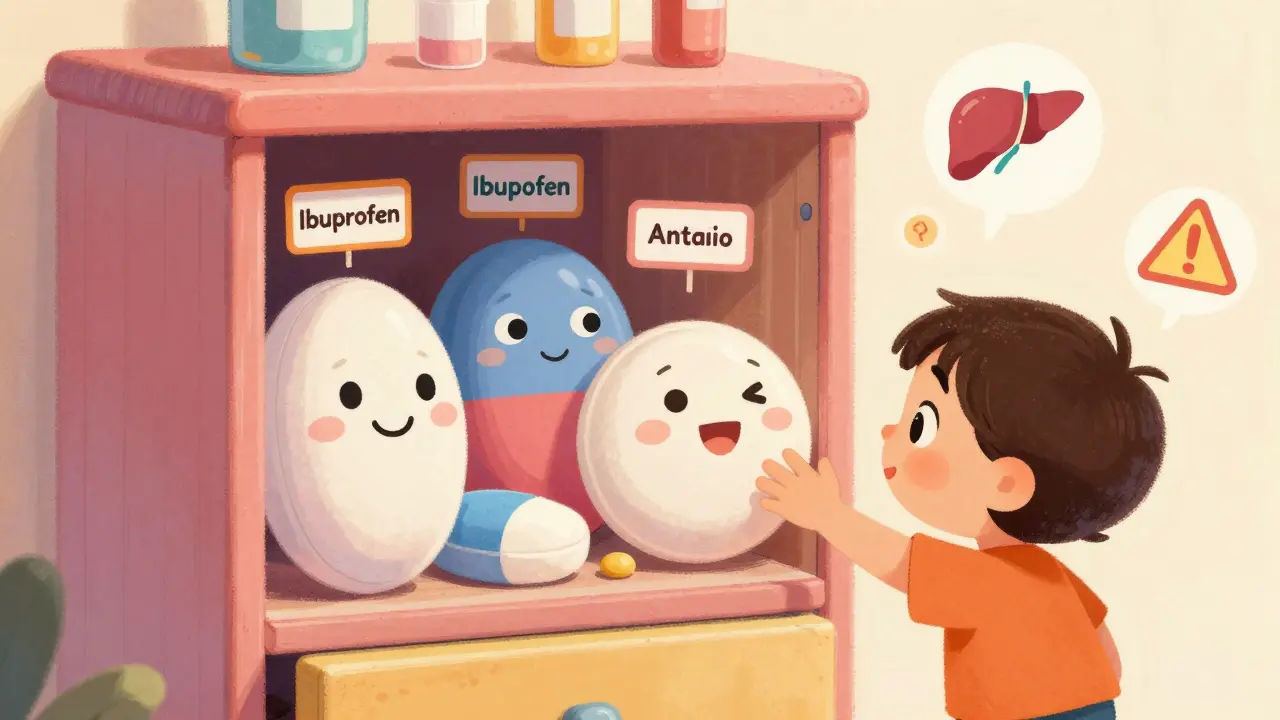
Every year, millions of people reach for OTC medications without thinking twice. A headache? Grab some acetaminophen. Stuffy nose? A decongestant. Heartburn? An antacid. It’s easy to assume these pills are harmless because you don’t need a prescription. But here’s the truth: OTC medications are still drugs - and like any drug, they can hurt you if used wrong.
In the U.S. alone, over 100,000 OTC products are on shelves. They cover everything from pain and allergies to coughs and stomach issues. But knowing what’s in them - and what they can do to your body - isn’t optional. It’s essential.
What’s Really in Your Medicine Cabinet?
OTC meds aren’t just random pills. They’re grouped by what they treat, and each group has specific active ingredients you need to recognize. Let’s break them down.
Pain relievers are the most common. Two main types: acetaminophen (Tylenol) and NSAIDs like ibuprofen (Advil, Motrin) and naproxen (Aleve). Acetaminophen is great for fever and mild pain, and it’s often the go-to for kids and pregnant women. But here’s the catch: take more than 4,000mg a day - even just a few extra pills over time - and you risk serious liver damage. The FDA reports 15,000 to 18,000 cases of acute liver failure each year from acetaminophen overdose. Many people don’t realize it’s in cold medicines, sleep aids, and combination pills. Double-dosing is easy.
NSAIDs work differently. They reduce inflammation, making them better for muscle strains, arthritis, or menstrual cramps. But they can irritate your stomach lining. Long-term use increases risk of ulcers and internal bleeding. A 2021 study in the Journal of Clinical Gastroenterology found NSAIDs raise bleeding risk by 2 to 4 times. If you have a history of stomach issues, kidney disease, or high blood pressure, these aren’t safe for daily use.
Cold and flu meds are trickier because they often combine ingredients. Look at the label: pseudoephedrine (Sudafed) helps with nasal congestion but can raise blood pressure. Dextromethorphan (Delsym) suppresses coughs - but some teens abuse it for its hallucinogenic effects. Guaifenesin (Mucinex) thins mucus, but it won’t stop a runny nose. Many people take multiple cold products at once, unknowingly doubling up on dextromethorphan or acetaminophen. That’s how overdoses happen.
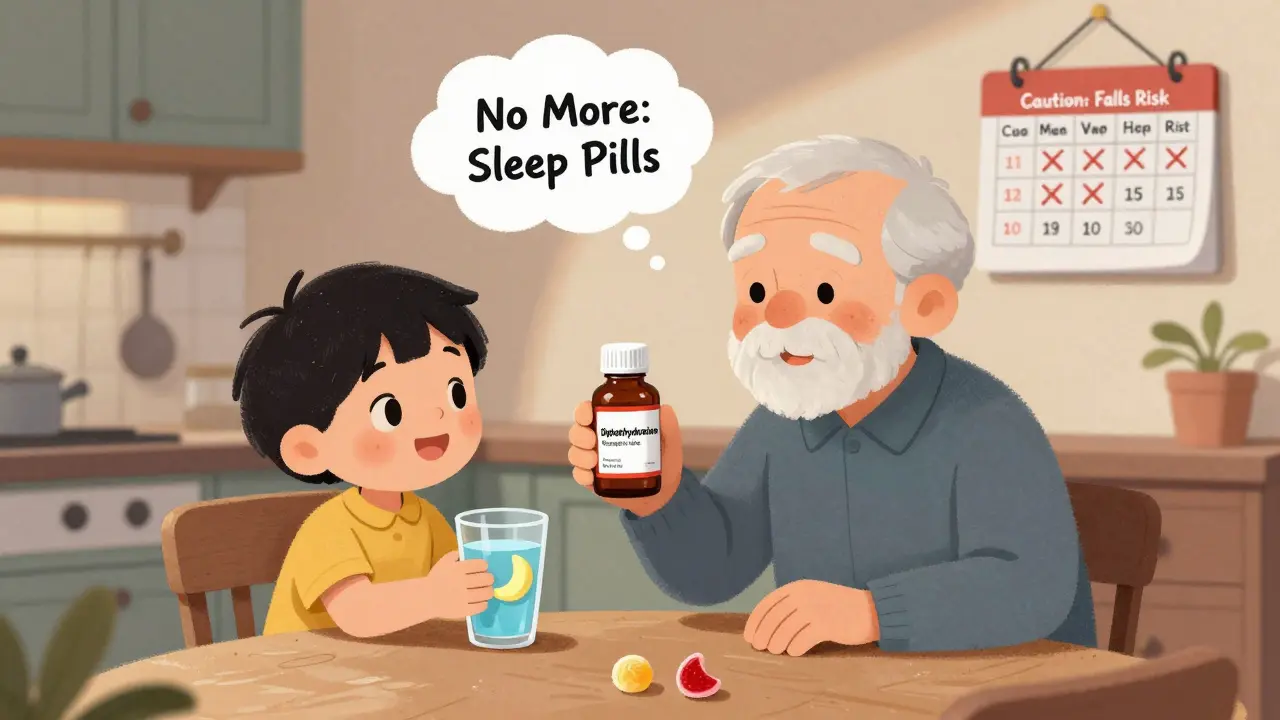
Allergy meds come in two generations. First-gen: diphenhydramine (Benadryl). It works, but it knocks you out. Studies show it causes drowsiness in over 80% of users. That’s why the FAA bans pilots from flying within 12 hours of taking it. Second-gen: loratadine (Claritin), fexofenadine (Allegra). They’re just as effective for sneezing and itching but cause almost no drowsiness. If you’re driving, working, or over 65, second-gen is the smarter pick. Older adults are at higher risk of falls from sedating meds - a 2021 JAMA Internal Medicine study found a 30% increase in fall risk with diphenhydramine in seniors.
Stomach meds are another minefield. Antacids like Tums (calcium carbonate) give quick relief. H2 blockers like famotidine (Pepcid) last longer. But proton pump inhibitors (PPIs) like omeprazole (Prilosec OTC) - taken daily for heartburn - are where things get dangerous. A 2023 JAMA Internal Medicine study linked long-term PPI use to a 20-50% higher risk of chronic kidney disease. These are meant for short-term use (14 days max). Using them for months or years without a doctor’s oversight is risky.
Who Should Avoid These Meds?
Not everyone can take the same OTC meds. Some people need to avoid them entirely.
If you’re pregnant, acetaminophen is still the safest pain reliever. But NSAIDs? Avoid them after 20 weeks. They can affect fetal kidney development. The American College of Obstetricians and Gynecologists (ACOG) is clear on this.
If you’re over 65, skip diphenhydramine for sleep. It increases confusion and falls. Instead, try melatonin or non-drug strategies. Also, watch your kidney function. Loratadine and fexofenadine need lower doses if your kidneys aren’t working well.
People with liver disease should never take more than 2,000mg of acetaminophen a day - or even avoid it entirely. Those with ulcers, Crohn’s, or kidney disease should avoid NSAIDs. Loperamide (Imodium) can be dangerous if you have severe diarrhea or kidney problems. And if you have diabetes, check the sugar content in liquid or chewable forms.
What You’re Not Reading on the Label
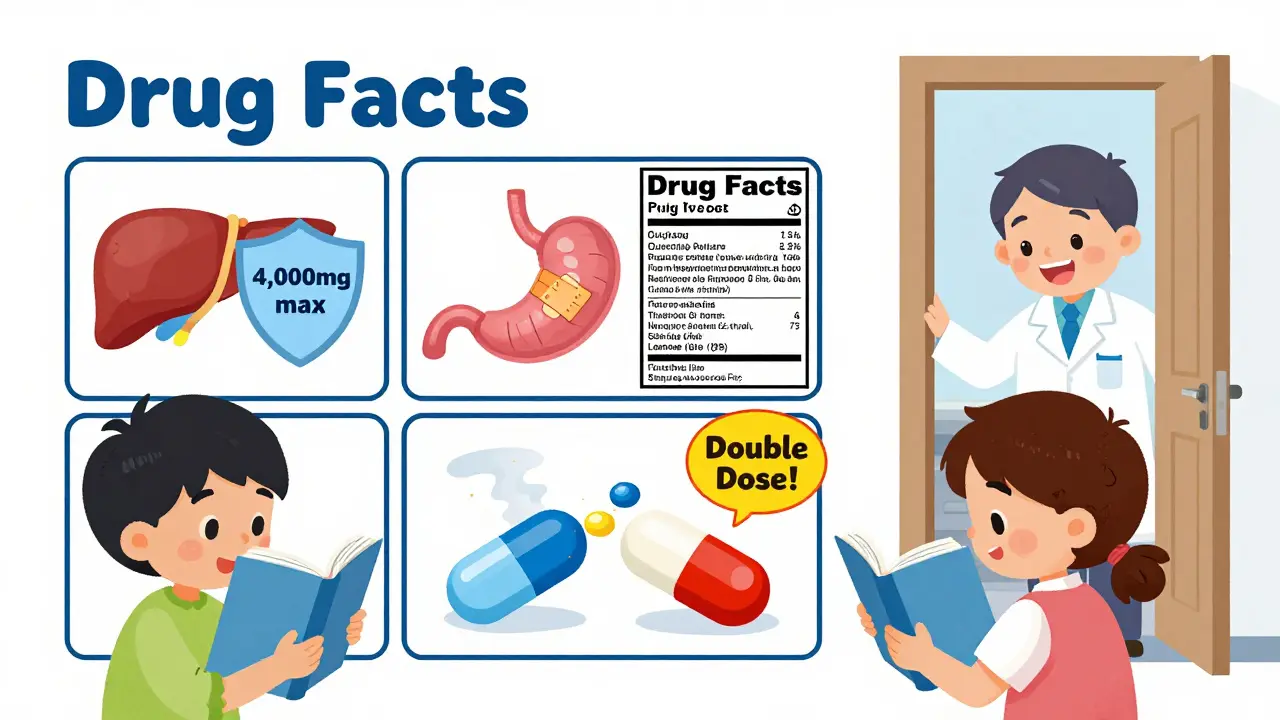
The Drug Facts label on every OTC box is required by the FDA. It lists active ingredients, uses, warnings, and directions. But most people skip it. Here’s what you’re missing:
- Active ingredient concentration: “Acetaminophen 500mg per tablet” - not just “pain reliever.”
- Warnings: “Severe liver damage may occur if you take more than directed.”
- Directions: “Take 1 tablet every 4 to 6 hours.” Not “as needed.”
That 2023 FDA rule made labeling clearer. But if you don’t read it, you’re still guessing. And guessing with meds is dangerous.
Also, don’t assume “natural” or “herbal” means safe. Some OTC supplements interact with meds you’re already taking. Even something as simple as St. John’s Wort can interfere with antidepressants or birth control.
Storage, Expiration, and When to Call a Pharmacist
OTC meds don’t last forever. Most expire 2-3 years after manufacture. Heat and humidity ruin them. Store them in a cool, dry place - not the bathroom medicine cabinet. Sunlight and moisture break down active ingredients.
And if you’re unsure? Talk to a pharmacist. In the U.S., 93% of people live within 5 miles of a pharmacy. Pharmacists are trained to spot interactions, catch double-dosing, and recommend safer alternatives. They’re not just dispensers - they’re your first line of defense.
For example, if you’re taking blood pressure meds and reach for a cold medicine with pseudoephedrine, your pharmacist will catch it. If you’re on antidepressants and considering diphenhydramine, they’ll warn you. That’s why the American Pharmacists Association now requires member pharmacies to offer mandatory counseling on high-risk OTC products.
The Bigger Picture: OTC Medications Are Not Harmless
The OTC market is huge - $135.8 billion globally in 2022. But that growth comes with a cost. The FDA says 25% of adults think OTC meds are always safe. That myth leads to 68% of accidental overdoses.
And it’s not just overdoses. People are using OTC meds for chronic problems they shouldn’t. Taking PPIs for years for occasional heartburn. Using NSAIDs daily for joint pain without checking for kidney damage. Relying on diphenhydramine as a sleep aid long-term. These aren’t fixes - they’re hidden risks.
Experts like Dr. Jane Axelrad, former FDA advisor, warn that the line between self-care and self-harm is blurring. We treat symptoms like they’re problems, not signals. A persistent cough? A lingering ache? That’s not a reason to pop more pills - it’s a reason to see a doctor.
OTC meds are powerful tools. But they’re not candy. They’re not optional. They’re medicine. And medicine, even if it’s over-the-counter, demands respect.
When to Stop Self-Treating
Here’s a simple rule: if symptoms last more than 7 days, get worse, or come back after stopping the med - stop self-treating. Call a doctor.
- Pain that doesn’t improve after 10 days of acetaminophen or ibuprofen
- Heartburn that returns after stopping omeprazole
- Cough lasting over 2 weeks
- Allergy symptoms that don’t respond to loratadine
- Diarrhea that lasts more than 48 hours
These aren’t just inconveniences. They’re red flags. OTC meds mask symptoms - they don’t fix causes. And sometimes, the cause is something serious.
Can I take OTC pain relievers with alcohol?
No. Mixing alcohol with acetaminophen increases liver damage risk, even at normal doses. With NSAIDs like ibuprofen, alcohol raises your chance of stomach bleeding. The combination doesn’t just make you feel worse - it can land you in the hospital.
Is it safe to give OTC cold medicine to a 3-year-old?
No. The FDA banned OTC cough and cold medicines for children under 4 in 2008 after 115 deaths were linked to overdoses between 1969 and 2006. Even products labeled "for kids" can be dangerous at young ages. Use saline drops, a humidifier, and suction for congestion instead.
What’s the difference between Claritin and Benadryl?
Claritin (loratadine) is a second-generation antihistamine - it treats allergies without drowsiness. Benadryl (diphenhydramine) is first-gen - it works fast but causes heavy sleepiness, dizziness, and dry mouth. For daily use, Claritin is safer. Benadryl is better for short-term, severe reactions - not for sleep or long-term allergy control.
Can I take ibuprofen every day for arthritis?
Not without a doctor’s supervision. Daily NSAID use increases risk of stomach ulcers, kidney damage, and heart problems. If you need daily pain relief for arthritis, talk to your doctor about safer long-term options - like physical therapy, prescription meds, or acetaminophen with monitoring.
Do OTC meds expire? Is it dangerous to use them after?
Yes, they expire. Most last 2-3 years. After that, potency drops. In rare cases, expired meds can break down into harmful chemicals. Using expired antibiotics or antihistamines might not work at all - which could delay proper treatment. When in doubt, throw it out.

Comments (14)
Daniel Dover
Been using Tylenol for years. Never knew it was in so many cold meds. Double-dosing is way too easy. Learned the hard way after a weekend of flu and sleep aids. Liver enzymes went nuts. Never again.
Kaye Alcaraz
Knowledge is power. This post should be required reading for every high school health class. OTC doesn't mean harmless. It means you're responsible for knowing what you're putting in your body. Educate yourself. Protect your health.
Charlotte Dacre
Oh wow. So OTC meds aren't candy? Who knew? I guess next I'll learn that water can drown you if you drink too much. Groundbreaking stuff.
Chiruvella Pardha Krishna
The human body is a temple, yet we treat medicine like gossip - passed around, misunderstood, and consumed without reverence. We mask symptoms like they are sins, not signals. The real illness is not the pain, but our refusal to listen.
Joe Grushkin
Let’s be real - the FDA is just another bureaucracy trying to control your life. If you want to take 10 Advil and a glass of whiskey before bed, that’s your right. Stop infantilizing adults with warning labels. You’re not a child. Act like one.
Kapil Verma
India has been using Ayurveda for 5000 years. We don’t need your Western pills. These OTC drugs are poison made by Big Pharma to keep you dependent. Our turmeric and ginger cure everything. Why are you still buying chemicals?
Michael Page
I read the label. I know what’s in my medicine. But I also know that most people don’t. The real issue isn’t the drugs - it’s the culture of ignorance. We’ve outsourced responsibility to corporations and now we’re surprised when things go wrong.
Mandeep Singh
You think this is bad? Wait until you see what’s in those "natural" supplements sold on Amazon. I work in a pharmacy and I’ve seen people take 17 different OTC pills a day - including 3 kinds of sleep aids, 2 painkillers, 4 probiotics, a magnesium supplement, and a "detox tea" that had senna in it. One woman ended up in ICU because she thought "more is better." She’s lucky she’s alive. People are idiots.
Betty Kirby
OTC meds are the quiet assassins of modern life. You don’t see the damage until your kidneys give out or your stomach bleeds. It’s not dramatic. It’s slow. Silent. And by the time you notice - it’s too late. We’ve turned medicine into a vending machine. And we’re all just pressing buttons.
Josiah Demara
Let me break this down for the emotionally stunted crowd: if you’re taking OTC meds daily for more than a week, you’re not self-medicating - you’re self-sabotaging. You’re not managing symptoms. You’re avoiding the root cause. And that’s not health - it’s cowardice disguised as convenience.
Sarah Barrett
I used to think OTC meant "safe." Then I watched my mother take PPIs for five years for occasional heartburn. She developed severe vitamin B12 deficiency and osteoporosis. Now she’s on a strict diet, sleeps upright, and avoids spicy food. The pills didn’t fix her - they masked her until it was too late. Read the label. Always.
Erica Banatao Darilag
im so glad this was posted. i had no idea benadryl could make older people fall. my grandma took it every night for sleep and i just thought it was normal. now im getting her off it. thank you.
Esha Pathak
Everything we do is a transaction with our bodies. Every pill is a whisper to our cells: "I am not listening." We live in a world of instant fixes, but the body doesn't work on Instagram time. Healing is slow. Pain is sacred. And silence? That’s the loudest warning we ignore.
Mike Hammer
Pharmacists are the real MVPs. I walked in with a list of 8 OTC meds I was taking. The pharmacist looked at it, paused, and said "you’re basically giving yourself a stroke." We talked for 20 minutes. She swapped out 3 things. I haven’t felt this good in years. Go talk to one. They’re not just people who hand out pills.