
Immunosuppressant Hair Loss Risk Calculator
Find Your Risk Level
Your Results
Recommended Actions
Why Your Hair Is Falling Out After Starting Immunosuppressants
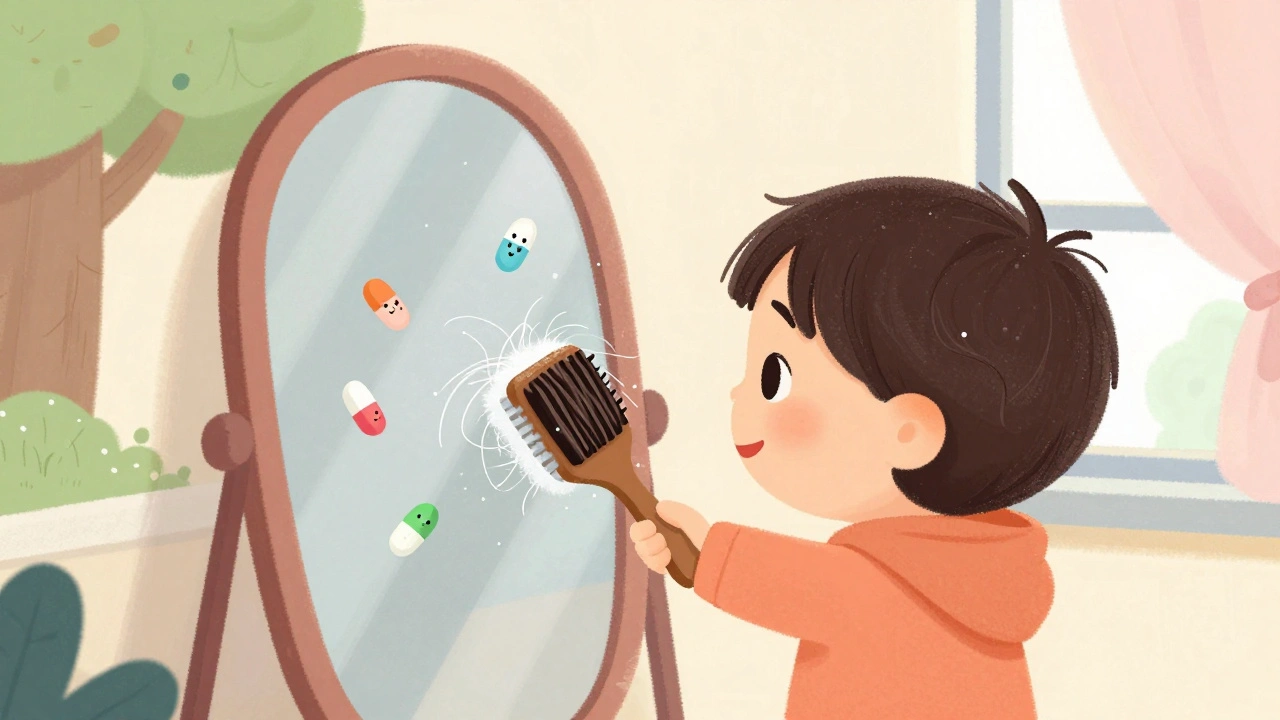
If you’ve been on immunosuppressants for a transplant or autoimmune condition and suddenly noticed more hair in your brush, shower drain, or on your pillow, you’re not alone. Hair loss from these medications is more common than most people realize-and it’s not a sign that something’s going wrong with your body. It’s a known side effect, and it’s usually temporary. The real issue isn’t the hair itself, but how much it affects your confidence, daily life, and even your willingness to keep taking life-saving drugs.
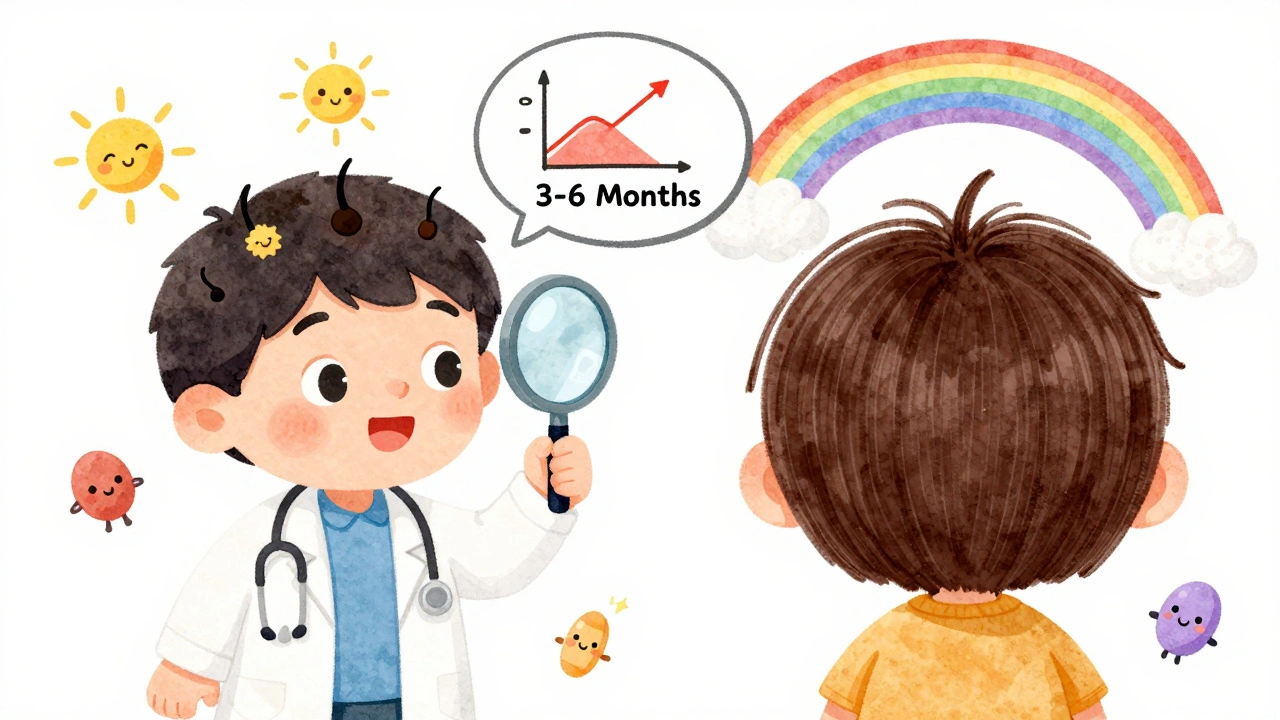
Immunosuppressants like tacrolimus, methotrexate, and mycophenolate work by calming down your immune system. That’s exactly what you need after a kidney or liver transplant, or if you have rheumatoid arthritis or lupus. But your hair follicles are also fast-dividing cells, and these drugs don’t always tell the difference between a rogue immune cell and a healthy hair root. When they slow down cell growth, your hair can shift from its growing phase (anagen) into its resting phase (telogen) too soon. This leads to diffuse shedding-hair thinning all over, not in patches. It usually starts 3 to 6 months after you begin the medication, sometimes even longer. One study found the average delay was over 14 months.
Not all immunosuppressants cause hair loss the same way. Tacrolimus, used in about 90% of kidney transplant patients, is the biggest culprit. In one study of kidney-pancreas transplant recipients, nearly 29% experienced noticeable hair loss, and 11 out of 13 of those patients were women. That’s a big gender gap. Cyclosporine, another common drug, does the opposite-it can actually make hair grow thicker or even cause unwanted facial hair in 20-30% of users. Why? It affects different signaling pathways in the follicles. Meanwhile, methotrexate (used for arthritis) causes hair thinning in 3-7% of people, and leflunomide in about 10%. Biologics like etanercept have lower rates, around 4.4%.
Who’s Most Likely to Lose Hair on These Drugs?
It’s not random. Certain people are more at risk. Women are far more likely to notice and report hair loss than men. In the tacrolimus study, women made up nearly 85% of those affected. That’s partly because women’s hair is often finer and more visible when it thins, but also because hormonal differences may interact with how these drugs affect follicles.
Genetics matter too. If you already have a family history of male or female pattern baldness, your follicles might be more sensitive to the stress of immunosuppressants. Even if you’ve never had thinning before, the medication can trigger or speed up a genetic tendency.
Other factors pile on. Taking other medications that affect hair-like beta-blockers for blood pressure or statins for cholesterol-can make hair loss worse. If you already have an autoimmune disease like lupus that causes hair loss on its own, your risk jumps by 40%. Higher doses of the immunosuppressant also increase the chance. And if you’re not getting enough key nutrients-like iron, zinc, or biotin-your hair won’t have the building blocks it needs to bounce back.
What Does It Look Like? How to Tell It’s the Drug and Not Something Else
Drug-induced hair loss doesn’t look like alopecia areata (patchy bald spots) or scarring from lupus. It’s diffuse. You’ll notice your ponytail feels thinner, your part looks wider, or your scalp shows through more than it used to. You might shed more than 100 hairs a day-but that’s normal even without medication. The key is a change. If you’ve suddenly gone from brushing out 15 hairs to 50, and you’ve been on a new drug for 4-6 months, it’s likely the medication.
Doctors can help confirm it. They’ll look at your scalp, check for signs of inflammation or scarring, and ask about your timeline. Sometimes they’ll do a pull test-gently tugging on a small section of hair to see how many come out. If more than 10% come loose, it’s a sign of active shedding. Blood tests might be ordered to rule out thyroid issues or low iron, which can mimic drug-induced loss.
One thing to watch out for: some patients think their hair loss means their transplant is failing or their autoimmune disease is flaring. That’s rarely true. Hair loss from immunosuppressants is usually a side effect, not a sign of disease progression. But if you’re also having new rashes, joint pain, or fatigue, talk to your doctor. It’s worth checking.
What Works to Stop or Reverse It
The good news? In most cases, your hair will grow back-once you give it time and the right support. You don’t have to just wait it out. There are proven steps you can take.
The first-line treatment is minoxidil. The 5% foam or solution, applied twice daily, is the most studied option. In one study, 63% of people saw visible improvement after 4 to 6 months. Complete regrowth happened in about a third. It doesn’t work for everyone, but it’s safe, affordable, and doesn’t interfere with your immunosuppressants. Use it consistently. If you stop, you’ll lose the progress.
Some people turn to low-level laser therapy (LLLT). Devices like Capillus82 or iRestore are worn like hats or combs and use red light to stimulate follicles. A 2021 trial showed a 22% increase in hair density after 6 months of use, three times a week. It’s not a miracle, but for people who don’t like topical treatments, it’s a solid option.
Nutrition matters. A 2022 review found that supplementing with biotin (10,000 mcg/day) and zinc (50 mg/day) helped about half of patients. Don’t go overboard-too much zinc can cause nausea or interfere with copper absorption. Talk to your doctor before starting. Iron deficiency is common in transplant patients, so check your ferritin levels. If you’re low, iron supplements can help hair regrowth.
One surprising option: switching drugs. If you’re on tacrolimus and losing hair, your transplant team might consider switching you to cyclosporine. In the same study where 29% lost hair on tacrolimus, none of the patients on cyclosporine did. And in a few cases, patients who switched saw their hair grow back completely. That’s not something you do on your own-it requires careful planning to avoid rejection. But if hair loss is severely affecting your mental health, it’s a valid conversation to have.
What Doesn’t Work (And What to Avoid)
There’s a lot of noise out there. Don’t waste time or money on unproven products. Hair growth shampoos with “keratin” or “biotin” won’t do much-those molecules are too big to penetrate the scalp. Scalp massages alone won’t reverse drug-induced loss. And while some people swear by essential oils like rosemary or peppermint, there’s no solid evidence they work for this type of alopecia.
Most importantly: never stop or lower your immunosuppressant dose because of hair loss. The Organ Procurement and Transplantation Network found that patients who reduced their meds on their own had a 15% higher chance of rejecting their transplant. That’s not a risk worth taking. Your hair can grow back. Your organ can’t.
Also avoid harsh treatments. Tight ponytails, hot tools, chemical straighteners, or bleaching can add stress to already fragile hair. Be gentle. Use a soft brush. Wash with a mild shampoo. Sleep on a silk pillowcase to reduce friction.

How to Cope When It’s More Than Just Hair
For many people, especially women, hair loss isn’t just a physical change-it’s emotional. One survey found that 78% of patients said it affected their social life. Some avoided mirrors. Others skipped family photos. A few even considered stopping their meds.
Psychological support is part of treatment. Talk to a counselor who understands chronic illness. Join a patient group. On Reddit’s r/transplant community, users share stories like: “After 8 months on tacrolimus, I lost 40% of my hair. My dermatologist prescribed minoxidil. Six months later, I’ve regained 70%.” Hearing that others made it through helps.
Practical fixes can restore confidence fast. A good wig, hair-thickening fibers, or a stylish hat can make a big difference while you wait for regrowth. Many transplant centers now offer free wig fittings as part of their patient support programs. Ask your nurse or social worker.
And remember: this isn’t permanent. In most cases, hair starts to return within 6 months of stopping the drug-or even while still on it, if you’re using minoxidil. Full regrowth can take up to a year. Patience is hard, but it’s part of the journey.
The Future: What’s Coming Next
Science is catching up. In 2023, researchers found a genetic marker-WNT10A variants-that predicts who’s likely to lose hair on tacrolimus. That means in the future, doctors might test your DNA before prescribing and choose a different drug if you’re at high risk.
New treatments are in the works. A topical JAK inhibitor, already used for alopecia areata, is being tested for drug-induced hair loss. Early results are promising. There’s also a scalp-cooling device, originally designed for chemo patients, now being adapted for immunosuppressant users. Early trials show a 65% reduction in hair loss severity.
More transplant centers are waking up to this issue. Fifteen major U.S. hospitals now have dedicated hair loss clinics. By 2025, nearly 70% plan to include hair loss counseling in pre-transplant education. That’s progress. You’re not just a patient-you’re a person, and your appearance matters.
Final Thoughts: You’re Not Alone
Hair loss from immunosuppressants is common, frustrating, and often misunderstood. But it’s not a failure. It’s a side effect-and one that’s manageable. You’re doing something incredibly brave by staying on your meds. Your body is fighting to survive. Your hair will, too.
Start with minoxidil. Check your nutrition. Talk to your doctor about switching if it’s severe. Don’t suffer in silence. And don’t let anyone tell you it’s “just hair.” It’s part of your identity, your confidence, your daily life. You deserve to feel like yourself again-even while taking life-saving drugs.

Comments (12)
Christian Landry
i just started tacrolimus last year and lost like half my hair 😭 minoxidil helped but man it’s rough seeing your ponytail shrink every week. still taking it tho - kidney’s still working 🙏
om guru
The physiological mechanism described herein is scientifically accurate. Hair follicle cycling disruption due to suppression of rapidly dividing keratinocytes is well documented in pharmacological literature.
Richard Eite
USA has the best transplant care in the world why are people even complaining about hair loss when they got a new organ lmao get over it
Katherine Chan
you are not alone i felt the same way when i lost my hair but minoxidil and a cute hat changed everything you got this
Olivia Portier
i switched from tacrolimus to cyclosporine after 8 months of crying in the shower and my hair came back like magic like 90% in 5 months honestly yall should ask your doc about this its wild
Brianna Black
It is imperative to recognize that the psychological ramifications of dermatological changes in immunocompromised individuals are profoundly under-addressed within contemporary medical frameworks. One’s identity is inextricably linked to corporeal presentation.
Ronald Ezamaru
I’m a transplant nurse and see this all the time. The key is not to panic. Most people regrow hair within a year even while staying on meds. Minoxidil + biotin + iron check is the holy trinity. And yes - cyclosporine switch works if your levels are stable. Talk to your team.
Katie Harrison
I’m Canadian, and I had to fight my doctor for a wig referral... they said it was "cosmetic." But when you can’t leave the house because you look like a balding ghost, it’s not cosmetic. It’s dignity. My transplant center finally gave me one - free. Don’t be afraid to ask. You deserve to feel like you again.
Mona Schmidt
The assertion that hair loss is typically temporary is supported by longitudinal studies, including those published in the Journal of Clinical Transplantation (2021). However, the claim that biotin supplementation aids regrowth lacks robust clinical validation. A 2022 meta-analysis found no statistically significant difference between placebo and biotin groups when serum levels were normal. Please consult your physician before initiating supplementation.
Guylaine Lapointe
Honestly? If you’re losing your hair because of a drug that’s supposed to save your life, maybe you shouldn’t be on it. I mean, what’s the point of living if you feel like a stranger in the mirror? I’d rather die with hair than live bald and grateful. #NotAllHeroesWearCapes
Ryan Brady
bro cyclosporine is for losers who can’t handle real meds 🤡 tacrolimus is the gold standard stop whining and grow back your hair like a man
Stacy Tolbert
I lost my hair on tacrolimus... I didn't leave the house for 11 months. My husband said I looked like a ghost. I cried every time I saw my reflection. Then I found a wig that looked like my real hair. I wore it to my daughter's graduation. She didn't even notice. But I did. And for the first time in a year... I smiled.