

When you hear ACA plans, you might think of cheap health insurance. But the truth is more complicated. The Affordable Care Act didn’t just make insurance cheaper-it changed what insurance even means. If you’re signing up for a plan on HealthCare.gov, or you’re worried about your premium jumping next year, you need to know exactly what’s covered, what’s not, and how the rules are changing in 2026.
What ACA Plans Actually Cover (The 10 Essential Health Benefits)
Not all health plans are created equal. Before the ACA, insurers could sell you a policy that covered doctor visits but nothing else. No maternity care. No mental health. No prescription drugs. That’s gone. Every ACA Marketplace plan-whether it’s Bronze, Silver, Gold, or Platinum-must include these ten essential health benefits:- Ambulatory patient services (outpatient care)
- Emergency services
- Hospitalization
- Maternity and newborn care
- Mental health and substance use disorder services
- Prescription drugs
- Rehabilitative and habilitative services
- Laboratory services
- Preventive and wellness services
- Pediatric services, including oral and vision care
That last one-pediatric vision and dental-is often misunderstood. It’s required for kids under 18, but adults don’t automatically get it. If you’re 30 and need glasses, your ACA plan won’t cover them unless it’s a dental/vision add-on. That’s a common trap.
And here’s something most people don’t realize: preventive care is truly free. No copay. No deductible. That includes annual checkups, flu shots, mammograms, colonoscopies, and depression screenings. You pay nothing out of pocket-even if you haven’t met your deductible yet.
How Metal Tiers Work (Bronze, Silver, Gold, Platinum)
ACA plans are grouped into four metal tiers. These aren’t marketing fluff-they tell you exactly how much of your medical costs the plan will cover on average.- Bronze: Covers 60% of costs. You pay 40%. Lowest monthly premium, highest out-of-pocket if you get sick.
- Silver: Covers 70%. This is the sweet spot for most people because it qualifies for cost-sharing reductions (CSRs) if your income is below 250% of the poverty line.
- Gold: Covers 80%. Higher monthly cost, but you pay less when you use care.
- Platinum: Covers 90%. Only makes sense if you’re on chronic meds or need frequent hospital visits.
Most people pick Silver. Why? Because if your income is between 100% and 250% of the Federal Poverty Level, you get extra help cutting your copays and deductibles. That’s called Cost-Sharing Reductions (CSRs). A Silver plan with CSRs can act like a Gold plan-lower deductible, lower copays-without the higher premium.
But here’s the catch: CSRs only apply to Silver plans. If you pick Gold or Platinum, you don’t get them. And if your income is above 250% of the poverty line, you don’t qualify for CSRs at all.
Premium Tax Credits: The Real Secret to Affordable Care
The biggest reason ACA plans are affordable for millions isn’t because insurance companies lowered prices. It’s because the government pays part of your bill. That’s the premium tax credit.Before 2021, you could only get this credit if your income was between 100% and 400% of the Federal Poverty Level. In 2021, Congress removed that cap. That meant even people making $80,000 a year could get help if their plan cost more than 8.5% of their income.
That change saved people thousands. A 40-year-old earning $50,000 a year paid $247 a month for a Silver plan with tax credits. Without them? $534. That’s $3,444 extra per year.
But here’s the problem: those enhanced credits expire at the end of 2025. If Congress doesn’t act, the average monthly premium for Marketplace enrollees will jump by 114%. That’s not a small bump-it’s a cliff. For a 60-year-old in some states, premiums could go up nearly 200%.
And it’s not just about the number. The IRS now requires you to reconcile your actual income with what you estimated when you enrolled. If you made $45,000 but said $38,000, you’ll owe money at tax time. If you made $32,000 but said $40,000, you’ll get a refund. But that reconciliation process is messy. Thousands of people get hit with surprise bills because their side gig income wasn’t tracked in real time.
What’s Changing in 2026 (And Why It Matters)
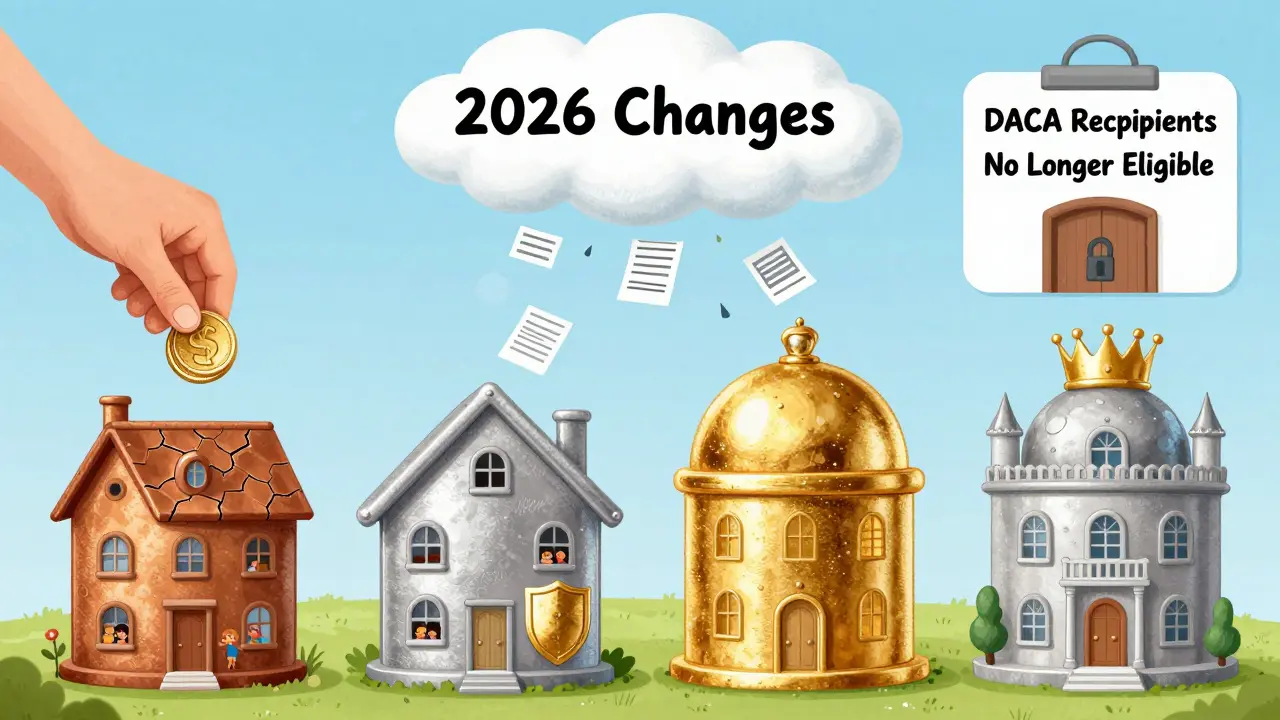
The Centers for Medicare & Medicaid Services (CMS) rolled out the 2025 Marketplace Integrity and Affordability Final Rule on November 11, 2025. It’s not flashy, but it’s going to change how you enroll.- Starting in 2026, you’ll need to update your income every quarter. Right now, you do it once a year. That’s a big shift for freelancers and gig workers.
- The way subsidies are calculated is changing. Instead of using the current enhanced credit system, the IRS will use 2026 subsidy caps-which are much lower.
- DACA recipients are no longer eligible. About 550,000 people will lose coverage by early 2026.
- The monthly Special Enrollment Period for people under 150% of the poverty line is gone. That means if you lose your job, you might not be able to sign up until next open enrollment.
These changes aren’t just bureaucratic. They’re life-changing. A single mom in Texas who lost her job in October 2025 won’t be able to get a new plan until November 2026 unless she qualifies for Medicaid. That’s a year without coverage.
Who Gets Left Out (And Why)
The ACA was designed to cover people who don’t get insurance through work. But it doesn’t fix everything.The family glitch: Before 2023, if your employer offered you affordable coverage-even if it was useless for your family-you couldn’t get Marketplace help. Now, if your family’s coverage costs more than 8.5% of your income, they can qualify for subsidies. That’s huge.
The Medicaid gap: In 10 states, Medicaid hasn’t been expanded. That means if you make $16,000 a year and have no kids, you make too much for Medicaid but too little for tax credits. You’re stuck. No coverage. No help.
Young and healthy people: They’re leaving the market. Why pay $300 a month for a plan you never use? But when healthy people leave, premiums go up for everyone else. That’s why experts warn of a “death spiral.”
Real Stories From Real People
Sarah K., a freelance writer in Ohio, earns $32,000 a year. She got a $0 premium Silver plan with full cost-sharing reductions. Her deductible is $500. Her copay for a specialist visit is $15. She takes two prescriptions a month-both covered at $5. She says, “I’d be bankrupt without this.” Then there’s Marcus from Arizona. He’s a truck driver. His income varies. He estimated $45,000 in 2024. He actually made $38,000. At tax time, he got a $2,100 refund. But in 2023, he made $52,000 and said $45,000. He owed $2,800. “I had to sell my motorcycle to pay the IRS,” he told Reddit.One user on HealthCare.gov forums said: “I got a $0 premium plan. Then I got a promotion. My income jumped to $52,000. My premium went from $0 to $620. I didn’t know I had to report it. Now I’m in debt.”
How to Enroll Without Getting Screwed
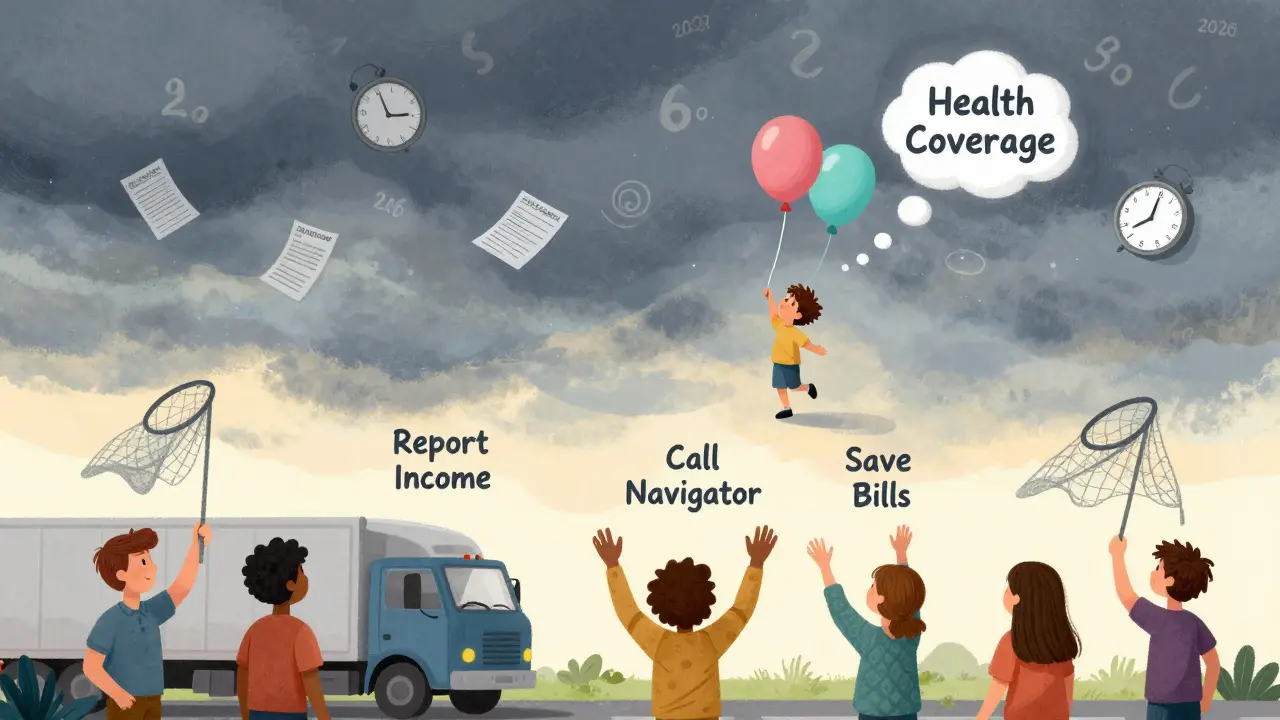
If you’re signing up for an ACA plan, here’s what you need to do:- Know your income. Use your most recent tax return. If you’re self-employed, average your last 12 months. Don’t guess.
- Use the official calculator. HealthCare.gov has a subsidy estimator. Plug in your zip code, income, and age. It’ll show you what you qualify for.
- Choose Silver if you’re under 250% FPL. You’ll get lower out-of-pocket costs.
- Update your income if it changes. Don’t wait for tax season. Log into your HealthCare.gov account and report changes immediately.
- Save every medical bill. Even if you think it’s covered, keep it. You might need it for appeals or tax reconciliation.
If you’re confused, call HealthCare.gov. Their average response time is 24 hours. Spanish speakers wait 48. But if you’re in a hurry, go to a local navigator. They’re free. They’re trained. They don’t push plans-they help you understand them.
What Comes Next?
The ACA isn’t broken. It’s under siege. Premiums are stable in 2025 because of temporary fixes. But without Congress extending the enhanced tax credits, the system will unravel. Insurers will pull out of states where enrollment drops. Networks will shrink. Copays will rise.The real question isn’t whether ACA plans are good. They are-for the right people. The question is: will they still exist in 2027? If you’re covered now, don’t assume you’ll be covered next year. Watch for news in late 2025. If Congress lets the credits expire, your premium might double.
Right now, 17.3 million people are on ACA plans. That’s more than ever. But if nothing changes, that number could drop by 3 million by 2027. That’s not policy. That’s a health crisis waiting to happen.

Comments (8)
George Bridges
I’ve been on a Silver plan with CSRs for three years now. My deductible’s $300, and my insulin is $5. I work freelance, so my income jumps around, but I update it every time I get paid. It’s a pain, but it’s saved my life. I don’t know how people survive without this.
And yeah, the 2026 changes? Scary. If they cut the subsidies, I’m done. No way I can afford $700/month.
Faith Wright
Oh sweet mother of bureaucracy, they’re making us update income quarterly now? So instead of one stressful tax season, we get four? Brilliant. Just brilliant.
Meanwhile, my landlord raises rent by $200 and nobody bats an eye. But if I make an extra $300 from dog walking? Suddenly I’m a ‘subsidy fraud risk.’ Tell me again why we don’t just give everyone free healthcare and be done with it?
Rebekah Cobbson
Hey, if you’re new to ACA plans, don’t panic. You’ve got this.
Start with HealthCare.gov’s calculator. Use your last tax return-not your gut feeling. If you’re under 250% FPL, go Silver. Always. Even if it looks expensive upfront, the cost-sharing reductions are like a secret discount code you didn’t know existed.
And update your income when it changes. I know it’s annoying, but the IRS doesn’t care if you forgot. They’ll hit you with a bill. Save every receipt. Even the ones that say ‘$0.’ You’ll thank me later.
You’re not alone in this. There are free navigators in every county. They don’t sell anything. They just help. Call them. Seriously.
And if you’re on Medicaid gap? Advocate. Talk to your rep. Write letters. This system only works when people speak up.
You deserve care. Don’t let red tape steal that from you.
Audu ikhlas
USA is so weak. Why you let government pay for lazy people? In Nigeria, if you sick, you go to clinic and pay cash. No free stuff. No papers. No tax credit nonsense. You work or you suffer. Simple.
And who is this DACA people? Why they get free health? In Nigeria, even citizen get no free medicine. You think USA is heaven? No. You are broke because you give handout to everyone. Even illegal. This is why your economy die.
2026 change? Good. Cut all this. Let people learn responsibility. No more free ride. USA need to be strong again. Not soft like this.
And why you need vision for kids? Why not just buy glasses? So dumb. This is why cost so high. Too many free things. No discipline.
PS: I no speak good English but I speak truth.
Sonal Guha
The family glitch fix was a bandaid not a cure. Subsidy cliff coming. 114% premium jump. 200% for elderly. Medicaid gap still exists in 10 states. No coverage for 2.2M adults. Gig workers will be crushed by quarterly updates. Tax reconciliation is a nightmare. 550K DACA recipients losing coverage. Death spiral already started. Healthy people leaving. Insurers will pull out. Networks shrink. Copays rise. No policy fix in sight. Congress won’t act. You’re on your own.
TiM Vince
Just wanted to say thanks for the post. I’ve been on a Bronze plan for two years and didn’t realize preventive care was free. Got my colonoscopy last month-zero out of pocket. That’s huge.
I’m a mechanic, income’s all over the place. I update my info every time I get paid. It’s a pain, but I’d rather deal with it than end up like Marcus from Arizona. Sold his motorcycle just to pay the IRS.
Hope Congress extends the credits. I don’t know how I’d survive without them.
Jessica Bnouzalim
Okay real talk-why is this so complicated?! I’m a single mom, I work two jobs, I barely have time to breathe, and now I have to track my income quarterly and remember to log into HealthCare.gov and pray I don’t get a surprise bill?!
And don’t even get me started on pediatric dental. My kid needs braces. My plan says it’s covered… but only if I find a dentist who takes Medicaid and accepts the tiny reimbursement rate. Good luck with that.
Also-why is the only person who actually says something real on Reddit the one who sold his motorcycle?! That’s not a story-that’s a warning sign!
I just want to know if I can afford to get sick next year. That’s it. Is that too much to ask?
Also-navigators are angels. I found mine on Facebook. She didn’t push a plan. She just listened. And then she cried with me. That’s the kind of help we need.
PS: I’m not mad. I’m just… tired. And scared. And I don’t know what to do next.
PPS: If you’re reading this and you’re covered-don’t take it for granted. Fight for it. Call your rep. Write a letter. Even one sentence matters.
laura manning
It is imperative to note, with the utmost precision, that the impending expiration of the enhanced premium tax credits, as stipulated under the Inflation Reduction Act, constitutes a material and systemic risk to the structural integrity of the Affordable Care Act marketplace. The projected increase in average monthly premiums-114%-is not merely a fiscal adjustment; it is a catastrophic destabilization event that will precipitate adverse selection, insurer withdrawal, and, ultimately, market collapse in multiple states. Furthermore, the elimination of the Special Enrollment Period for individuals below 150% of the Federal Poverty Level represents a violation of the ACA’s foundational principle of continuous coverage accessibility. The exclusion of DACA recipients, while administratively expedient, is ethically indefensible and legally precarious, given the precedent established in DACA v. DHS. The quarterly income reporting requirement, while ostensibly designed to enhance subsidy accuracy, imposes an undue administrative burden on vulnerable populations, particularly those engaged in non-traditional employment. Without legislative intervention prior to January 1, 2026, the ACA will cease to function as a viable mechanism for equitable health access. This is not a policy debate. It is a humanitarian emergency.