
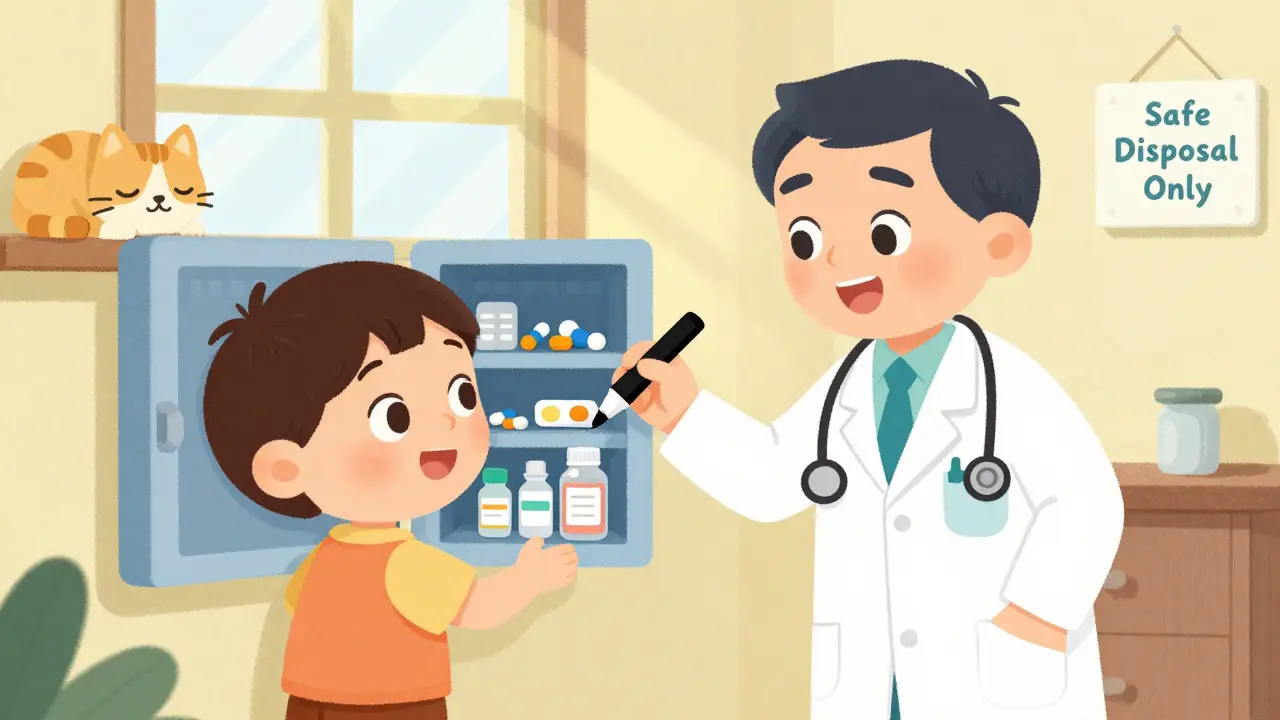
Every year, millions of unused medications sit in medicine cabinets across the U.S.-expired painkillers, leftover antibiotics, old patches, forgotten vitamins. Most people don’t know what to do with them. Flushing them down the toilet? Throwing them in the trash? Those are the wrong choices. Both can poison water supplies or end up in the hands of someone who shouldn’t have them. The safest, cleanest, and most responsible way to get rid of unused medications is through a take-back event or permanent collection site. But here’s the catch: if you don’t prepare them right, they’ll be turned away.
Why Proper Preparation Matters
It’s not just about being tidy. Improperly prepared medications are the #1 reason people get turned away from take-back sites. In 2023, Stericycle reported that 41% of rejected submissions were due to incomplete removal of personal information. Another 29% were rejected because liquids weren’t sealed properly or pills were mixed in random containers. That’s more than 70% of failed drop-offs caused by simple mistakes. The stakes are high. The DEA estimates that 70% of misused prescription drugs come from family and friends-often from unsecured medicine cabinets. Meanwhile, the USGS found that 80% of U.S. streams contain traces of pharmaceuticals. These aren’t just chemicals. They’re active drugs-antibiotics, antidepressants, opioids-that can harm fish, disrupt ecosystems, and eventually find their way back into our drinking water. Taking the time to prepare correctly isn’t just about following rules. It’s about protecting your family, your community, and the environment.What You Can and Can’t Bring
Not all medications are accepted. Knowing what’s allowed saves you time and avoids embarrassment at the collection site.- Accepted: Prescription pills and liquids, over-the-counter meds (like ibuprofen or allergy pills), patches (fentanyl, nicotine, estrogen), ointments, vitamins, pet medications, and even controlled substances like oxycodone or Adderall.
- Not Accepted: Inhalers (aerosols), thermometers (especially mercury), hydrogen peroxide, iodine-based meds, sharps (needles, syringes), and illegal drugs. These require different disposal methods.
Step-by-Step: How to Prepare Your Medications
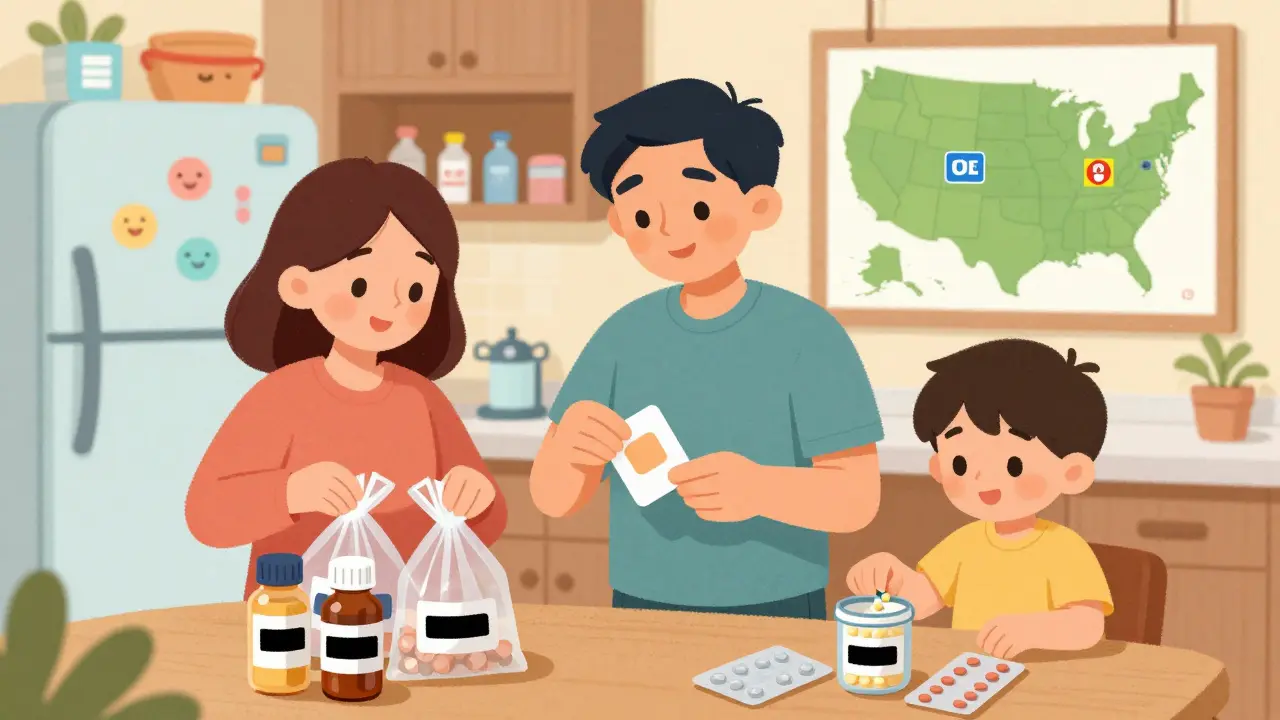
Follow these steps exactly. They’re based on the latest FDA and DEA guidelines updated in January 2024.- Remove all personal information. This is non-negotiable. Use a permanent marker to black out your name, address, prescription number, and pharmacy details on the bottle. If the label is too faded, cover the whole thing. If you’re using a zip-lock bag, write your info on the outside of the bag and then scribble it out. HIPAA rules require this for privacy.
- Keep meds in original containers. 92% of collection sites require this. The barcode and label help staff verify the medication type and ensure nothing dangerous slips through. If the bottle is broken or missing, transfer pills to a small, sealed plastic container-a clean pill bottle, a small food jar, or a zip-lock bag. But only do this if you have no other option.
- Don’t mix medications. Keep each prescription separate. Even if they’re all pills, don’t dump them all into one bag. Mixing makes it harder for staff to identify what’s being disposed of and increases the risk of errors.
- Handle liquids carefully. If you have liquid medications, keep them in their original bottle. Screw the cap on tightly. Then place that bottle inside a second sealed plastic bag to prevent leaks. Don’t pour liquids into other containers.
- Prepare patches properly. Fold transdermal patches (like fentanyl or nicotine patches) so the sticky side is pressed against itself. This deactivates the drug and prevents accidental skin contact. Place them in a sealed bag.
- Remove insulin pens from their packaging. Take the pen apart if possible. Remove the needle and dispose of it separately at a sharps collection site. The pen body can go in the take-back bin, but only if the needle is gone.
What If You Don’t Have the Original Bottle?
It happens. Maybe you moved. Maybe the bottle got tossed. Don’t panic. You can still dispose of your meds. Use a small, clear plastic container-a pill organizer, a baby food jar, or a resealable sandwich bag. Make sure it’s sealed. Then write the name of the medication on the outside with a marker (e.g., “Lisinopril 10mg”) and black it out. Staff will still accept it. Some sites, like Walgreens’ kiosks, don’t require original containers at all-just make sure your name is gone. But don’t assume that’s true everywhere. Always check local rules.Where to Find a Take-Back Site
You don’t need to wait for a special event. There are over 16,500 permanent collection sites across the U.S. as of 2024. Most are at pharmacies, hospitals, or police stations. Use the DEA’s online locator: www.dea.gov/takebackday. Type in your zip code. It shows you the closest drop-off points, whether they’re open year-round, and what they accept. In rural areas, take-back access is still limited. If you’re more than 10 miles from a site, your local pharmacy might offer a mail-back envelope. Ask. Some states, like Washington and California, have free mail-back programs for residents.Common Mistakes (And How to Avoid Them)
People make the same errors over and over. Here’s what to watch out for:- Only scratching out part of your name. Full black-out is required. Partial redaction = rejection.
- Putting liquids in plastic bags without a secondary container. Leaks ruin entire batches. Always double-bag.
- Bringing expired vitamins with the bottle still sealed. Even if they’re harmless, staff can’t verify contents without labels. Remove the label or cover it.
- Bringing sharps or inhalers. These are dangerous and require special handling. Call your pharmacy for proper disposal instructions.
- Assuming all sites are the same. A Walgreens kiosk in New York might have different rules than a police station in Ohio. Always confirm.
What Happens After You Drop Them Off?
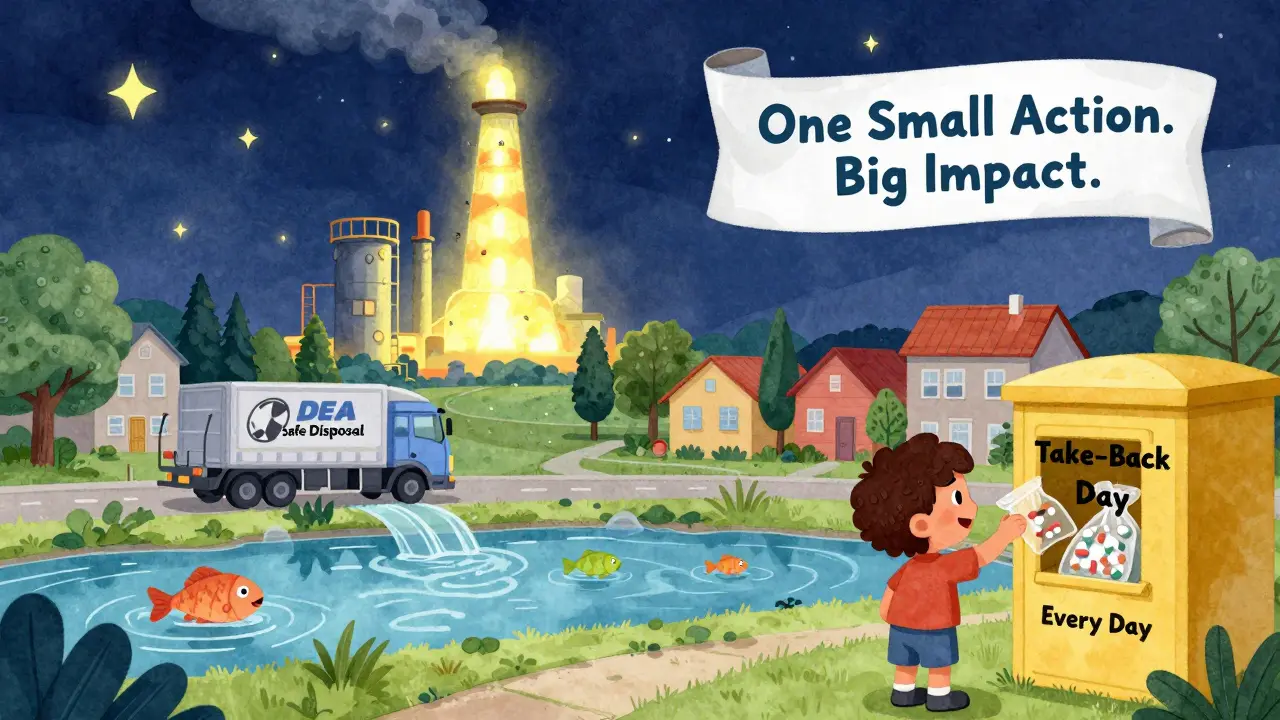
Once you hand over your meds, they’re not going to a landfill. They’re taken to a licensed incineration facility. The DEA requires all collected medications to be destroyed by high-temperature incineration-no recycling, no composting, no flushing. In 2024 alone, Stericycle incinerated nearly 30,000 tons of pharmaceutical waste. This process ensures no drug residue enters the environment. It also means no one can dig through the trash and find your old painkillers.Why Participation Is Still Too Low
Only 15% of unused medications are properly disposed of. That’s not because people don’t care. It’s because the process feels confusing. A 2023 Johns Hopkins study found that 43% of people didn’t know how to prepare their meds. That’s why 28% avoided take-back events entirely. Rural residents faced even higher rejection rates-22% more than urban users. The good news? Change is coming. The DEA’s “Every Day is Take Back Day” initiative launched in January 2024 to standardize rules nationwide. Thirty-eight states are testing simpler protocols-like allowing sealed bags instead of original bottles. Early results show participation could jump 22% if these changes stick.Your Next Step
Grab a marker. Open your medicine cabinet. Look at what’s expired, unused, or no longer needed. Don’t wait for a special event. Find your nearest drop-off site today. Prepare your meds using these steps. Drop them off. You’re not just cleaning out a cabinet-you’re protecting your neighbors, your water, and your community.One small action. Big impact.
Can I throw unused pills in the trash without preparing them?
No. Throwing pills directly in the trash is unsafe. Someone-like a child, a pet, or a stranger-could find them. Even if you crush them, the active ingredients can still be recovered. Always remove personal info and place them in a sealed container before trashing. But the safest option is always a take-back site.
Do I need to remove pills from blister packs?
No. You can leave pills in their original blister packs. Just make sure the outer container (the box or bottle) has your personal info fully blacked out. If you’re using the blister pack as the only container, place it inside a sealed plastic bag and write the medication name on the outside before covering it.
Can I bring someone else’s medications to a take-back site?
Yes. You can drop off medications belonging to a family member or friend. Just make sure all personal information is removed from the labels. You don’t need to prove ownership. Staff won’t ask for ID. The goal is to get the meds out of circulation safely.
Are there any fees for using take-back events?
No. All DEA-authorized take-back sites offer free disposal. This includes permanent kiosks at pharmacies and special collection events. If someone asks for payment, it’s not an official site. Report it to the DEA.
What if I have a lot of medication to dispose of?
You can bring as much as you need. There’s no limit. If you have dozens of bottles, bring them in a box or bag. Staff are used to large drops, especially during events. Just make sure each container is labeled and personal info is removed. For very large quantities (over 20 bottles), call ahead to check if the site can handle it.

Comments (15)
kenneth pillet
Just did this last week. Took 15 mins. Marker, ziplock, double bag the liquids. Done. No drama.
Zoe Brooks
I used to just toss mine in the trash until my grandma got sick from someone stealing her pain meds. Now I’m obsessed with this stuff. 🙏
Andrew Qu
The part about folding patches is gold. I didn’t know that. I always just threw them away like regular trash. Learned something new today. Thanks for the clear guide.
Danny Gray
You know what’s really ironic? We spend billions trying to clean up pharmaceuticals from waterways, but we still let people flush pills like it’s a toilet paper issue. We’re not just bad at disposal-we’re bad at thinking. We treat medicine like it’s a disposable snack. And then we’re shocked when the ecosystem freaks out.
Wendy Claughton
I love that this guide doesn’t judge. So many posts make you feel dumb for not knowing. But this? This feels like a friend sitting with you, marker in hand, saying, 'Let’s fix this together.' 😊
Stacey Marsengill
People still don’t get it. They think ‘just throw it away’ is fine. Meanwhile, their kid’s friend finds a bottle of oxycodone in the trash and ends up in the ER. And then they cry about the opioid crisis. Wake up. This isn’t about rules. It’s about responsibility. And most people don’t have it.
Selina Warren
It’s not about disposal. It’s about control. We hoard meds like they’re relics of our past selves. The real problem isn’t the trash-it’s the emotional attachment to expired pills. We keep them like trophies from a life we’re done with. And that’s the real epidemic.
Andrew Short
Let’s be real-this whole system is a scam. Incineration? 30,000 tons? Who’s paying for that? Taxpayers. And the DEA? They’re just protecting Big Pharma’s profits by making it hard to recycle or repurpose. You think they want you to know that?
Jodi Harding
I live in rural Kansas. 22 miles to the nearest site. Mail-back? No one offers it. So I keep them. Until I die. Or someone breaks in.
christian Espinola
The DEA’s ‘Every Day is Take Back Day’? That’s a PR stunt. The real reason they’re pushing this now? Because the FDA just approved 17 new opioids. They need to clean up the evidence before the next scandal hits.
Dayanara Villafuerte
I took my mom’s meds to Walgreens last Tuesday. Kiosk was clean, no questions asked. I cried. Not because I was sad-because someone finally made it easy. 🤍
Aysha Siera
They’re tracking this. Every pill you drop off. Your name, your zip, your meds. They’re building a database. Don’t believe me? Check the contracts. They’re selling this data to insurers.
Robert Davis
I’ve been to three drop-offs. Two times they rejected my stuff because I didn’t know you had to remove the cap from the bottle. I’m not a pharmacist. Why is this so complicated? And why don’t they just make it easy?
Andrew McLarren
It is my solemn duty to express my profound appreciation for the meticulous attention to regulatory compliance demonstrated in this comprehensive exposition. The adherence to FDA and DEA protocols is not merely commendable-it is, in fact, a civic imperative of the highest order.
Naomi Keyes
I appreciate the effort, but you missed a critical point: what about expired insulin? The vials are still refrigerated, and the needles are still attached. You can’t just throw them in a bag. You need a sharps container AND a sealed, labeled container for the vial. And no one ever tells you that.