
COPD Medication Safety Checker
Check Medication Safety for COPD
This tool helps you determine if a medication is safe for COPD patients. Type a medication name to see if it's risky and learn about safer alternatives.
How This Works
This tool uses information from the article "Medications to Avoid with COPD: Preventing Respiratory Compromise" to determine if a medication is safe for COPD patients.
Based on medical research, some medications can worsen breathing and increase risk of respiratory failure for people with COPD. This checker identifies risky medications and suggests safer alternatives.
Living with COPD means every medication you take - even something as simple as a sleep aid or painkiller - could be quietly making your breathing worse. It’s not about avoiding all drugs, but knowing which ones can push your lungs past their limit. For millions of people with chronic obstructive pulmonary disease, a seemingly harmless prescription can trigger a hospital visit, or worse. The truth is, many doctors don’t always realize how dangerous some common medications are for COPD patients. And patients? They often have no idea they’re at risk.
Why Certain Medications Are Dangerous for COPD
COPD isn’t just a cough or wheeze. It’s a chronic, progressive disease where the airways are inflamed, narrowed, and clogged with mucus. Your lungs are already working harder just to get air in and out. Add a drug that slows your breathing, thickens mucus, or tightens your airways, and you’re stacking the odds against yourself.
The goal isn’t to eliminate all medications - it’s to replace risky ones with safer alternatives. A 2021 study in the European Respiratory Journal showed that proper medication management can reduce COPD flare-ups by up to 25%. That’s not a small win. It means fewer ER trips, less time in the hospital, and more days where you can breathe without panic.
Opioids: The Silent Respiratory Killer
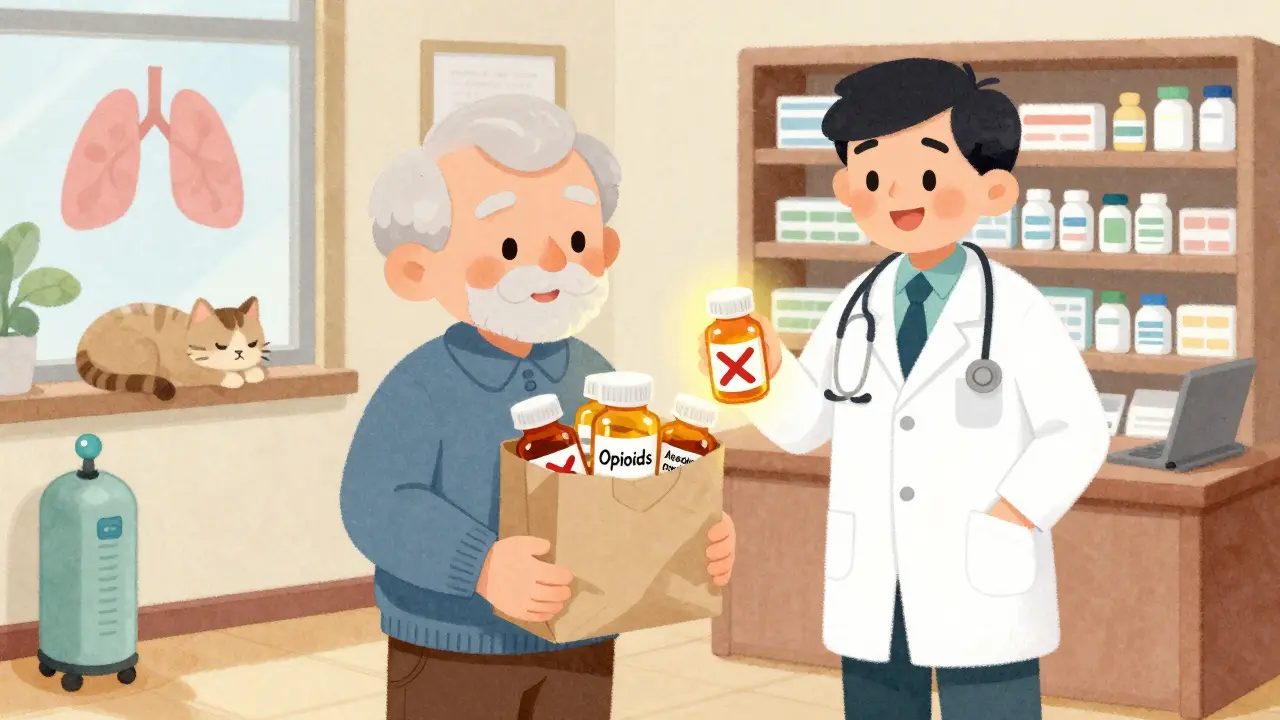
Opioids like morphine, oxycodone, and hydromorphone are powerful pain relievers - and extremely dangerous for COPD patients. These drugs act on the brainstem, the part that controls your breathing rhythm. In healthy people, the body compensates if breathing slows. In COPD, that compensation is already broken.
The American Thoracic Society found that opioid use in COPD patients increases the risk of respiratory failure by 37%. The CDC recorded over 1,200 COPD-related deaths in the U.S. in 2021 linked to opioids. Even low doses can cause dangerous drops in oxygen levels. One patient in Melbourne, 72, with moderate COPD was prescribed oxycodone for back pain. Within days, his oxygen saturation dropped from 92% to 84% at rest. He didn’t realize it was the medication - until his pulmonologist flagged it.
There are exceptions. In end-stage COPD with severe breathlessness, opioids may be used under strict supervision. But that’s not for pain management - it’s for palliative relief. And even then, it’s done with continuous monitoring.
Benzodiazepines and Sleep Aids: A Deadly Combo
If you’re taking alprazolam (Xanax), diazepam (Valium), zolpidem (Ambien), or eszopiclone (Lunesta) for anxiety or sleep, you’re playing Russian roulette with your lungs. These drugs are central nervous system depressants - they slow your brain’s signal to breathe.
A 2022 study in Chest Journal found that combining opioids with benzodiazepines increases the risk of respiratory arrest by 400% in COPD patients. Even without opioids, sleep aids alone are risky. The NIH reported that 28% of COPD patients hospitalized for breathing crises had used prescription sleep medications in the prior week.
There are safer options. Cognitive behavioral therapy for insomnia (CBT-I) works just as well as pills - without the risk. If you need something short-term, low-dose melatonin is generally considered safe. But never start or stop these drugs without talking to your doctor.
Non-Selective Beta-Blockers: The Hidden Lung Tightener
Many COPD patients also have heart disease. That’s why beta-blockers are often prescribed. But not all beta-blockers are the same. Non-selective ones like propranolol, nadolol, and timolol block receptors in the lungs as well as the heart. This causes bronchoconstriction - your airways tighten up, making breathing even harder.
A 2022 meta-analysis in Respiratory Medicine showed these drugs increase COPD exacerbation risk by 31%. That’s not theoretical. In one Australian study, 18% of COPD patients on non-selective beta-blockers were unaware they were taking a dangerous drug.
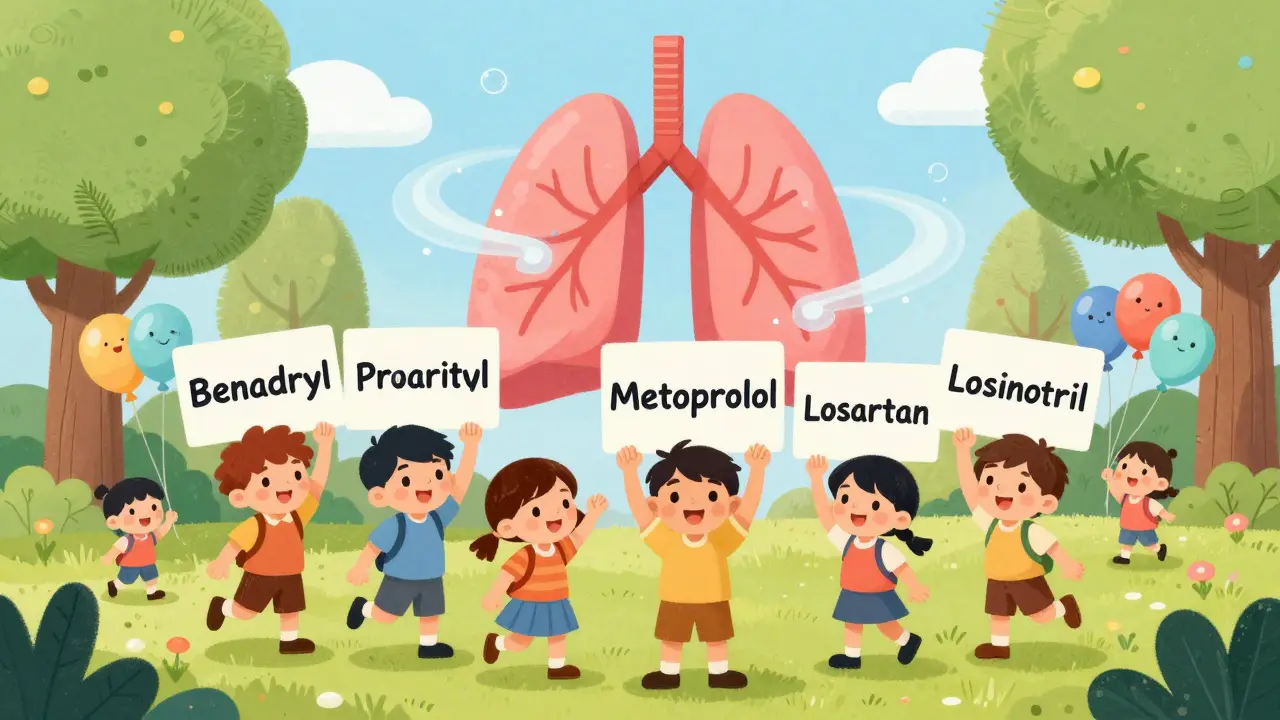
The fix? Switch to cardioselective beta-blockers like metoprolol or bisoprolol. These target the heart, not the lungs. One patient with 25 years of COPD saw his FEV1 (a key lung function measure) improve by 15% after switching from propranolol to metoprolol. He didn’t know the change was possible - until his pharmacist flagged it.
Anticholinergics: Thickening Mucus, Blocking Relief
First-generation antihistamines like diphenhydramine (Benadryl) and hydroxyzine are common in cold and allergy meds. But they’re anticholinergic - they dry up secretions. Sounds good, right? Not for COPD.
In COPD, mucus is already thick and hard to clear. Anticholinergics make it worse. A 2021 study in the Annals of Allergy, Asthma & Immunology found these drugs increase sputum viscosity by 22-35%. That means more coughing, more blockages, more flare-ups.
Same goes for tricyclic antidepressants like amitriptyline. A 2022 study showed 27% of COPD patients on TCAs had worsening breathing - compared to just 9% on SSRIs like sertraline or escitalopram. The Beers Criteria (2023 update) specifically warns against these drugs in older adults with COPD.
For allergies, use second-generation antihistamines like loratadine or cetirizine. They don’t cross into the brain or dry up airway secretions. For depression, SSRIs are the safer bet.
ACE Inhibitors: The Cough That Won’t Quit
ACE inhibitors like lisinopril and enalapril are common for high blood pressure. But they cause a dry, hacking cough in 12-20% of users. For someone with COPD, that cough isn’t just annoying - it can trigger a flare-up.
The cough hits harder in certain groups: 35% of Asian patients, 25% of African Americans, and 15% of Caucasians. It’s not an allergy - it’s a chemical side effect. Many patients think it’s their COPD getting worse. They don’t connect it to their blood pressure pill.
The solution? Switch to an ARB (angiotensin II receptor blocker) like losartan or valsartan. A 2022 review found ARBs cause 68% fewer cough-related complications than ACE inhibitors. Your blood pressure stays controlled - without the cough.
Clarithromycin and Other Antibiotics: Hidden Drug Interactions
Antibiotics like clarithromycin (Biaxin) are often used for COPD infections. But here’s the catch: clarithromycin blocks an enzyme (CYP3A4) that breaks down many other drugs - including opioids. This can spike opioid levels in your blood by up to 60%, leading to accidental overdose and respiratory depression.
Even azithromycin, sometimes used long-term to prevent COPD flare-ups, carries a risk. It can prolong the QT interval on an ECG - a heart rhythm issue. That’s especially dangerous if you’re also on other drugs that do the same, like certain antidepressants or antifungals.
Always tell your doctor every medication you take. They need to check for interactions before prescribing antibiotics.
Muscle Relaxants: The Overlooked Threat
Cyclobenzaprine (Amrix), methocarbamol, and baclofen are often prescribed for back or neck pain. But they’re CNS depressants. They slow your breathing just like opioids and benzodiazepines.
A 2020 study in Mayo Clinic Proceedings found that 22% of COPD patients using muscle relaxants needed emergency care for breathing problems within 30 days. Many doctors assume these drugs are safe because they’re not opioids. They’re not. They’re just as risky.
Physical therapy, heat, and gentle stretching are safer long-term solutions. If you must use a muscle relaxant, use the lowest dose for the shortest time - and never combine it with other sedatives.
What You Can Do Right Now
Don’t wait for a crisis. Take action today:
- Do a brown bag review. Take every pill, supplement, and OTC med you take - including creams and patches - to your doctor or pharmacist. Don’t leave anything out.
- Ask: “Is this safe for COPD?” Don’t assume it is. Even herbal supplements like kava or valerian can depress breathing.
- Request a medication review with a pharmacist. A 2023 study showed pharmacist-led reviews cut COPD hospitalizations by 29%.
- Use the Anticholinergic Cognitive Burden Scale to check if your meds are adding up. Even small amounts from multiple sources can be harmful.
- Get on a cardioselective beta-blocker if you’re on a non-selective one. Ask for metoprolol or bisoprolol.
Technology can help too. AI-powered drug interaction checkers are now being used in clinics. One pilot study showed a 45% drop in dangerous prescriptions when these tools flagged risks before the doctor clicked “approve.”
Real Stories, Real Risks
On the American Lung Association’s COPD forum, a woman wrote: “I took Benadryl for a cold and ended up in the ER with pneumonia. I didn’t know it could do that.” Another said: “My doctor put me on diazepam for anxiety. I nearly stopped breathing in my sleep. I’ve been off it for a year - and I breathe easier than I have in a decade.”
These aren’t rare cases. On Reddit’s r/COPD community, a 2022 poll of 1,243 people found 78% had experienced a medication-related breathing crisis. Opioids, sleep aids, and muscle relaxants topped the list.
You’re not alone. But you can take control. Medication safety isn’t about fear - it’s about awareness. The right choices can mean the difference between staying home and ending up in the hospital.
Final Thought
COPD is managed with inhalers, oxygen, and pulmonary rehab. But it’s also managed with what you don’t take. Every medication has a cost. For COPD patients, the cost of the wrong pill can be your breath. Talk to your doctor. Ask questions. Don’t be afraid to push back. Your lungs are worth it.
Can I still take painkillers if I have COPD?
Yes, but avoid opioids like morphine, oxycodone, and hydrocodone unless absolutely necessary and under close supervision. Safer options include acetaminophen (Tylenol) for mild to moderate pain. NSAIDs like ibuprofen are usually okay, but check with your doctor if you have kidney or heart issues. Always avoid combining pain meds with sleep aids or alcohol.
Are all beta-blockers dangerous for COPD?
No. Non-selective beta-blockers like propranolol and nadolol should be avoided because they tighten airways. But cardioselective beta-blockers like metoprolol and bisoprolol are generally safe and may even improve survival in COPD patients with heart disease. Always confirm the type with your doctor or pharmacist.
Is Benadryl safe for COPD patients?
No. Benadryl (diphenhydramine) is a first-generation antihistamine with strong anticholinergic effects. It thickens mucus, making it harder to clear from your lungs, which can trigger flare-ups. Use second-generation antihistamines like loratadine (Claritin) or cetirizine (Zyrtec) instead - they don’t affect breathing.
What should I do if I’m already on a risky medication?
Don’t stop suddenly. Some medications, like benzodiazepines or beta-blockers, can cause withdrawal or rebound effects. Talk to your doctor or pharmacist about a safe tapering plan. They can help you switch to a safer alternative. Many patients feel better within weeks after making the change.
Can I use over-the-counter cold medicines with COPD?
Be very careful. Many OTC cold and flu products contain antihistamines, decongestants, or cough suppressants that can worsen COPD. Avoid products with diphenhydramine, codeine, or dextromethorphan. Stick to single-ingredient remedies like saline nasal spray, humidifiers, and acetaminophen for fever. Always read labels and ask your pharmacist.
How often should I review my medications?
At least twice a year - or anytime you start or stop a medication. COPD changes over time, and so do your needs. A pharmacist-led medication review can catch hidden risks you might miss. Many insurance plans cover this service at no extra cost.
Next Steps
If you’re managing COPD, your medication list is your safety plan. Write down every pill, patch, and supplement you take. Bring it to every appointment. Ask: “Is this helping me breathe better - or worse?”
Ask your doctor for a referral to a clinical pharmacist who specializes in respiratory conditions. Ask your pulmonologist to review your meds using the STOPP/START criteria. Use apps or tools that flag drug interactions - but don’t rely on them alone.
The goal isn’t to be afraid of medicine. It’s to be smart about it. The right choices give you back control - over your breathing, your health, and your life.

Comments (9)
Victoria Rogers
this whole thing is just fearmongering. i've been on oxycodone for 12 years with COPD and i'm fine. doctors are just trying to push their agenda. stop scaring people with stats. my lungs don't care about your journal articles.
Meghan O'Shaughnessy
i live in a rural town where the nearest pulmonologist is 90 miles away. most people here just take what the pharmacist hands them. this post is the first time i've heard that benadryl could be dangerous. thank you for the clarity. i'm going to switch to zyrtec tomorrow.
Jody Patrick
opiods bad. beta blockers not all bad. read the label. ask your doc. simple.
Radhika M
i am nurse in india. many patients take dolo, cetirizine, and amitriptyline without knowing. this article is very important. please share with family. your lungs are your life.
Philippa Skiadopoulou
The data presented is robust and clinically significant. Anticholinergic burden in polypharmacy elderly COPD populations is grossly underappreciated. Pharmacist-led reviews are not optional-they are essential. I recommend implementing the Beers Criteria universally.
Pawan Chaudhary
this really helped me. i was scared to stop my xanax but now i'm trying cbt-i. small steps. breathing better already. thanks for sharing the truth without the fear.
Anna Giakoumakatou
Ah yes, because nothing says "medical wisdom" like a 5,000-word manifesto written by someone who clearly hasn't met a real COPD patient. Next you'll tell us oxygen is just a placebo and we should all start doing tai chi while chanting affirmations. How quaint.
Erik J
I'm curious-how many of the cited studies controlled for concurrent smoking or environmental exposures? The interaction effects could be confounding. Also, did any of the trials include patients with advanced disease? Just wondering if the risk ratios are generalizable.
BETH VON KAUFFMANN
This is textbook harm reduction 101, but let's be real-most of these "risks" are only dangerous if you're on 7 different CNS depressants and still drinking 3 glasses of wine a night. The real issue isn't the meds, it's the lack of patient education. We're treating symptoms, not systems. And no, you can't just "switch to metoprolol" if your cardiologist didn't order it. This post reads like a pharmacy pamphlet written by someone who thinks "beta-blocker" is a type of yoga pose. Still, the intent is noble. Just tone down the jargon. We're not all MDs here.