
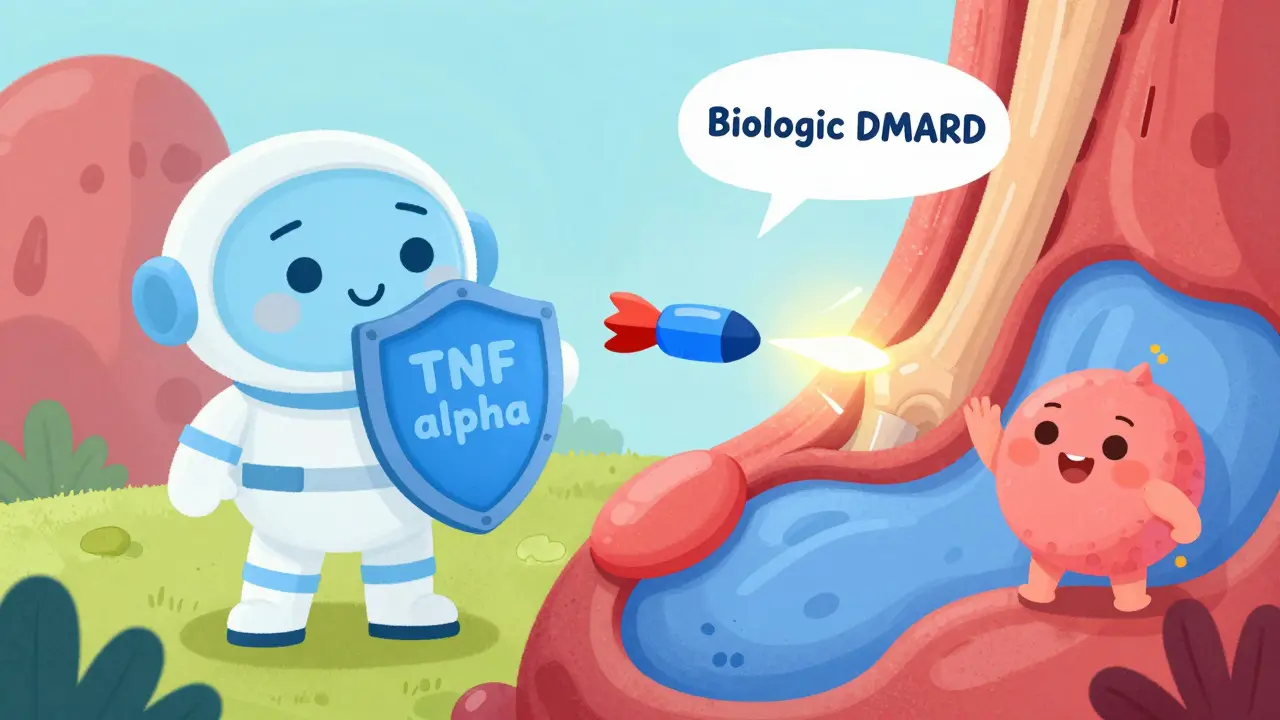
For decades, rheumatoid arthritis (RA) meant a slow, painful decline. Joint pain, stiffness, and swelling didn’t just come and go-they built up. Many people ended up with damaged hands, bent knees, or even lost the ability to work. But something changed in the last 25 years. Biologic DMARDs didn’t just slow RA-they made remission possible for people who once thought it was out of reach.
What Are Biologic DMARDs, Really?
Biologic DMARDs are not like regular arthritis pills. They’re not made from chemicals in a lab. They’re made from living cells-engineered proteins that act like precision missiles in your body. Instead of broadly suppressing your immune system, they target one specific part of it that’s driving the inflammation in your joints. Think of it this way: In RA, your immune system attacks your own joints like they’re invaders. Biologics step in and block the signals telling your immune system to keep fighting. Some block TNF-alpha, a major inflammation trigger. Others stop T-cells from activating, or silence IL-6, another key player. Each one has a different target, and that matters. The first one, etanercept (Enbrel), got FDA approval in 1998. Since then, more than a dozen have followed. They’re not all the same. Some are injected under the skin once a week. Others need an IV drip every few weeks. Some work fast-symptoms improve in days. Others take weeks or months to show full effect.Why Doctors Don’t Start With Biologics
You might wonder: If these drugs can bring remission, why aren’t they the first thing you’re given? Because methotrexate still works. And it’s cheap. A month of methotrexate costs about $50. A year of a biologic? Around $60,000. That’s not just a big difference-it’s life-changing for people without good insurance. The American College of Rheumatology says: Start with methotrexate. Give it a fair shot. If you’re still in pain after 3 to 6 months, or if your joints are showing damage on X-rays, then it’s time to talk about biologics. That’s not because biologics are risky-it’s because most people respond well to methotrexate alone. And if you start with a biologic, you might miss the chance to find a cheaper, simpler solution that works.Who Actually Gets Remission?
Remission doesn’t mean you’re cured. It means your RA is quiet. No swelling. No morning stiffness. Blood tests show normal inflammation levels. You can walk, grip, and lift without pain. Studies show that with methotrexate alone, only 5% to 15% of people reach remission. With biologics? That jumps to 20% to 50%. That’s not a small improvement. That’s the difference between living with a disability and living normally. But here’s the catch: Not everyone responds. About 30% to 40% of people don’t get enough relief from their first biologic. That’s why doctors don’t just pick one and hope. They look at your history, your symptoms, your blood markers, and sometimes even your joint tissue to guess which drug might work best. For example: If your joints have lots of B-cells, rituximab (Rituxan) might be your best bet. If your inflammation is driven by IL-6, tocilizumab (Actemra) often works better than TNF blockers. One patient in a 2022 case study went from severe RA for 15 years to full remission in just eight weeks on tocilizumab. That’s not luck-it’s matching the right drug to the right biology.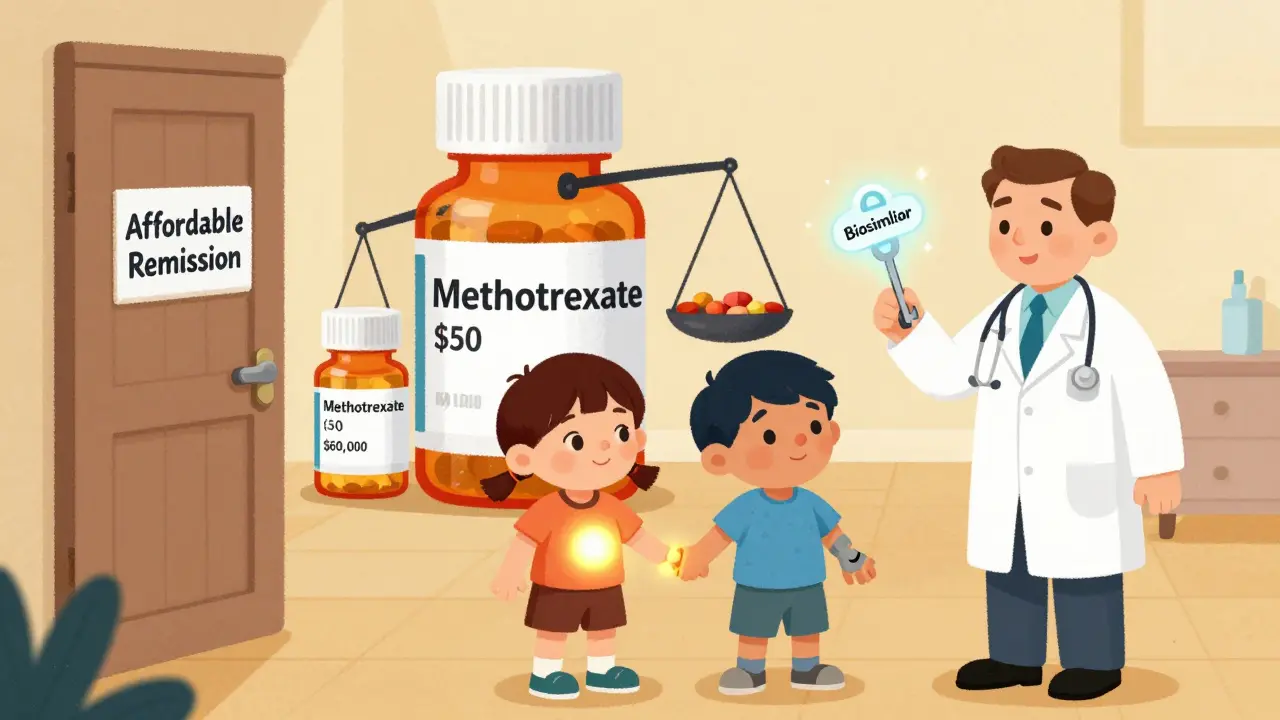
TNF vs. Non-TNF: What’s the Real Difference?
TNF inhibitors-like adalimumab (Humira), etanercept (Enbrel), and infliximab (Remicade)-were the first wave. They’re still widely used. But newer studies show they’re not always the best. A 2022 review found that adalimumab, etanercept, and golimumab were 19% more effective than infliximab in real-world use. And non-TNF biologics like abatacept and tocilizumab showed even better results in certain groups. Why? Because RA isn’t one disease. It’s many. Some people’s RA is fueled by TNF. Others? It’s IL-6, or T-cell overdrive, or B-cell chaos. Using a TNF blocker when your RA isn’t driven by TNF is like using a key that doesn’t fit the lock. That’s why doctors are moving away from “one-size-fits-all” treatment. They’re starting to look at your immune system like a fingerprint. Blood tests, joint scans, and even tissue biopsies are becoming part of the decision-making process.Cost, Side Effects, and Real-Life Struggles
Biologics aren’t magic. They come with trade-offs. The biggest one? Cost. Even with insurance, many people pay hundreds or thousands out of pocket. That’s why biosimilars-cheaper copies of brand-name biologics-are changing the game. By 2023, 35% of TNF inhibitor prescriptions in the U.S. were biosimilars. One Reddit user said switching from Humira to its biosimilar cut their monthly cost from $800 to $250. Side effects? Yes. Infections are the biggest risk. Biologics lower your body’s ability to fight off bacteria and viruses. You might get more colds. Or worse-pneumonia, tuberculosis, or serious skin infections. That’s why doctors test for TB before you start. And why you’re told to avoid people who are sick. Injection site reactions are common too. Redness, itching, swelling-usually mild, but annoying. About 45% of patients report them. A few people have to stop because of them. And then there’s the emotional toll. Waiting weeks for insurance approval. Learning how to self-inject. Feeling like a medical project instead of a person. One patient on the Arthritis Foundation forum wrote: “I’m grateful for the relief, but I never thought I’d need to become a nurse to stay alive.”What Happens When a Biologic Stops Working?
Many people assume: If the first biologic doesn’t work, try the next one. But it’s not that simple. Research shows the benefit drops with each new biologic you try. The second one might help. The third? Maybe. The fourth? Often, not much. That’s why timing matters. Doctors now talk about “strategic sequencing.” If you’re a TNF non-responder, don’t jump to another TNF drug. Try abatacept or tocilizumab instead. Or a JAK inhibitor like tofacitinib or upadacitinib. JAK inhibitors aren’t biologics-they’re pills, not injections. But they work similarly, targeting internal signals in immune cells. Upadacitinib (Rinvoq) even beat adalimumab in a direct head-to-head trial in 2021. For some people, that’s the new gold standard.
How to Make It Work for You
If you’re on a biologic-or thinking about it-here’s what actually helps:- Train properly. Most people learn to self-inject in two sessions with a nurse. Don’t skip this. Mistakes lead to bad reactions.
- Track your symptoms. Use apps like ArthritisPower to log pain, stiffness, and energy. This helps your doctor see patterns.
- Know the signs of infection. Fever, chills, cough, red swollen skin-call your doctor fast.
- Ask about biosimilars. They’re just as safe, often cheaper, and approved by the FDA.
- Use patient support programs. Drugmakers offer copay cards, free injections supplies, and even 24/7 nursing lines.
The Future: Personalized RA Care
The next big thing isn’t just a new drug. It’s knowing which drug to pick before you even start. Scientists are studying synovial tissue-what’s inside your joints-to predict response. One study found that patients with low B-cell signatures had only a 12% chance of responding to rituximab. But 50% responded to tocilizumab. That’s not guesswork. That’s precision. Longer-acting biologics are coming too. Imagine one injection every six months instead of every week. Clinical trials are already testing this. And cost? It’s going down. Biosimilars are expanding. By 2027, they could make up 60% of the biologic market. That means more people will get access. But the biggest shift? Remission is no longer a dream. It’s a goal. And with the right drug, at the right time, it’s within reach.What If You Don’t Reach Remission?
Not everyone gets there. And that’s okay. Low disease activity is still a win. If you’re not in remission, but you can walk without pain, work, and sleep through the night-that’s progress. Doctors measure this with tools like DAS28, which scores your joint swelling, pain, and blood markers. The goal isn’t perfection. It’s control. Even if you need two drugs, or a combo of biologic and methotrexate, you’re still doing better than you would have 20 years ago. The key is to keep working with your rheumatologist. RA changes. So should your treatment. Don’t settle. Don’t give up. And don’t assume that if one drug failed, you’re out of options.Can biologic DMARDs cure rheumatoid arthritis?
No, biologic DMARDs don’t cure rheumatoid arthritis. But they can bring the disease into remission-meaning symptoms disappear, inflammation drops to normal levels, and joint damage stops. Remission isn’t permanent for everyone, but many people stay in it for years with ongoing treatment. Stopping the drug often leads to flare-ups.
How long does it take for biologics to start working?
TNF inhibitors like adalimumab or etanercept often start working in 2 to 4 weeks. Some people feel relief in days. Non-TNF biologics like abatacept or tocilizumab can take 3 to 6 months to show full effect. Patience is key, but if there’s no improvement after 3 months, your doctor may switch you.
Are biosimilars as safe and effective as brand-name biologics?
Yes. Biosimilars are highly similar to their brand-name counterparts and must pass strict FDA and EMA testing to prove they work the same way with no meaningful difference in safety or effectiveness. Many patients switch without issues. In fact, 35% of TNF inhibitor prescriptions in the U.S. are now biosimilars as of 2023.
What are the biggest risks of biologic DMARDs?
The biggest risk is serious infection, including tuberculosis, pneumonia, and fungal infections. Biologics weaken parts of your immune system. Other risks include injection site reactions, increased risk of certain cancers (rare), and, for some drugs, higher chances of heart failure or nerve damage. Regular blood tests and screening before starting are essential.
Why do some people stop responding to biologics over time?
This is called secondary non-response. Your body may develop antibodies against the drug, making it less effective. Or your RA’s underlying inflammation may shift to a different pathway. About 40% of patients experience this after 12 to 24 months. Doctors handle it by switching to a biologic with a different mechanism, like going from a TNF blocker to a JAK inhibitor.
Can I stop taking biologics if I go into remission?
Some people try to taper off under close supervision, especially if they’ve been in remission for over a year. But most doctors advise continuing treatment, because stopping often leads to flare-ups. If you do stop, you’ll need frequent monitoring. Only a small percentage stay in remission long-term without medication.
Comments (15)
Ajay Brahmandam
I've been on adalimumab for 3 years. First 6 months? Night and day. Now I'm on the biosimilar and paying $180 a month instead of $800. Still working. Life's weird like that.
Just don't skip the TB test. I knew a guy who did. Not a good story.
Herman Rousseau
Seriously though - if you're on a biologic and you're not tracking your symptoms, you're flying blind. I use ArthritisPower. My doc saw I was crashing every 3 weeks after my injection and switched my timing. Game changer. 💪
Gabriella da Silva Mendes
I'm sorry but this whole biologic thing is just Big Pharma selling hope. My cousin spent $120k on Humira and still ended up in a wheelchair. You think this is medicine? It's a luxury tax for the middle class.
Sam Black
The real magic isn't the drug - it's the fact that we finally stopped treating RA like a one-size-fits-all curse. We're learning to read the body like a language. TNF? IL-6? B-cell chaos? It's not just jargon. It's your immune system whispering what it needs.
I used to think remission meant 'cured.' Now I know it's just quiet. And quiet is sacred.
Nader Bsyouni
Remission? Please. You're just suppressing your immune system until it collapses. What happens when the next pandemic hits and your body can't fight back because you're on tocilizumab? You think the FDA cares? They're just approving drugs until the next patent expires
Tarun Sharma
Biosimilars work. I switched from Enbrel to a biosimilar last year. No difference in pain, no new infections. Cost dropped from $750 to $220. Simple math.
Jamison Kissh
It’s fascinating how we’ve moved from treating RA as a disease of the joints to seeing it as a systemic immune misfire. We used to think of inflammation as a symptom. Now we know it’s the signal. And biologics? They’re not drugs - they’re translators. They’re letting us listen to the body’s code.
Jeremy Hendriks
The fact that we're even having this conversation is absurd. We're engineering proteins to fight proteins we made ourselves. We're playing god with cytokines and calling it science. What's next? Editing your DNA to stop your immune system from being too emotional?
Aliyu Sani
In Nigeria, we don't even have access to methotrexate regularly. My aunt took herbal tea for 8 years. Her hands are bent. But she laughs. Maybe remission isn't just about drugs. Maybe it's about how you carry the pain.
Candy Cotton
I find it deeply concerning that this article casually promotes foreign-made biologics without acknowledging the superior quality control standards of American pharmaceutical manufacturing. The FDA is the gold standard - everything else is a gamble. And don't get me started on biosimilars - they're just knockoffs with a new label.
jenny guachamboza
I think the government is secretly using biologics to control the population. Why else would they push them so hard? And why do all the ads say 'talk to your doctor'? That's code for 'don't ask questions'. I read a blog once that said they're linked to 5G. I don't trust this.
Cara Hritz
I tried abatacept and it made my skin turn purple and I think I got a cold for 3 months. My doctor said it was normal but I think they're lying. Also I think the website had a typo in the word 'biologic'. So I'm not trusting anything anymore.
Vikrant Sura
This is just more fluff. 50% remission? That’s just a marketing stat. Half the people probably just stopped reporting pain because they got tired of filling out forms. And why are you even talking about JAK inhibitors? They’re basically steroids with a fancy name.
Jim Brown
There's a quiet dignity in chronic illness that society refuses to acknowledge. We are not broken. We are not failures. We are people who learned to live inside a body that betrayed us - and still chose to get up. Biologics didn't give me back my life. They gave me back the chance to build a new one. And that's not science. That's grace.
Julie Chavassieux
I stopped mine. Just... stopped. No warning. No doctor. I just felt like I didn't need it anymore. And you know what? I'm fine. I'm actually better. Maybe they were making me sicker. Maybe it was all in my head. I don't know. But I'm free.