Abdominal Fat After Menopause: Causes, Risks, and What You Can Do
When women hit menopause, abdominal fat, the deep fat stored around internal organs, often called visceral fat. Also known as belly fat, it’s not just cosmetic—it’s a signal your body’s metabolism is shifting. This isn’t about eating too much or skipping workouts. It’s about hormones. As estrogen drops, your body starts storing fat differently—moving it from hips and thighs to your midsection. That’s why so many women notice their clothes fitting tighter around the waist, even if the scale hasn’t changed much.
This type of fat is more than inconvenient. Visceral fat, the fat surrounding your liver, pancreas, and intestines releases inflammatory chemicals that raise your risk for heart disease, type 2 diabetes, and even certain cancers. And it’s not just about size—your waist measurement matters more than your weight. A waist over 35 inches signals higher health risks, regardless of your BMI. What makes this worse? Many women start moving less as they age, sleep less due to hot flashes, and deal with higher stress levels—all of which push fat storage even deeper into the abdomen.
Here’s the good news: hormonal changes, the drop in estrogen and other shifts during menopause don’t mean you’re powerless. You can’t reverse menopause, but you can change how your body responds. Strength training builds muscle, which burns more calories at rest. Walking daily helps lower insulin resistance, a key driver of belly fat. And sleep? It’s not optional. Poor sleep raises cortisol, the stress hormone that directly fuels abdominal fat storage. Eating more protein and fiber, cutting back on added sugar, and managing stress aren’t trendy diets—they’re science-backed moves that actually work.
What you’ll find in the posts below isn’t fluff. It’s real, practical advice from people who’ve been there. You’ll see how medications like metformin help manage insulin spikes tied to menopause weight gain. You’ll learn how drug interactions—like those between certain antidepressants and metabolism—can make belly fat harder to lose. You’ll find out why generic drug savings matter when you’re managing long-term health after 50. And you’ll see how simple tools like medication lists and proper dosing can help you stay on track without getting overwhelmed. This isn’t about quick fixes. It’s about understanding what’s happening in your body and taking smart, sustainable steps forward.
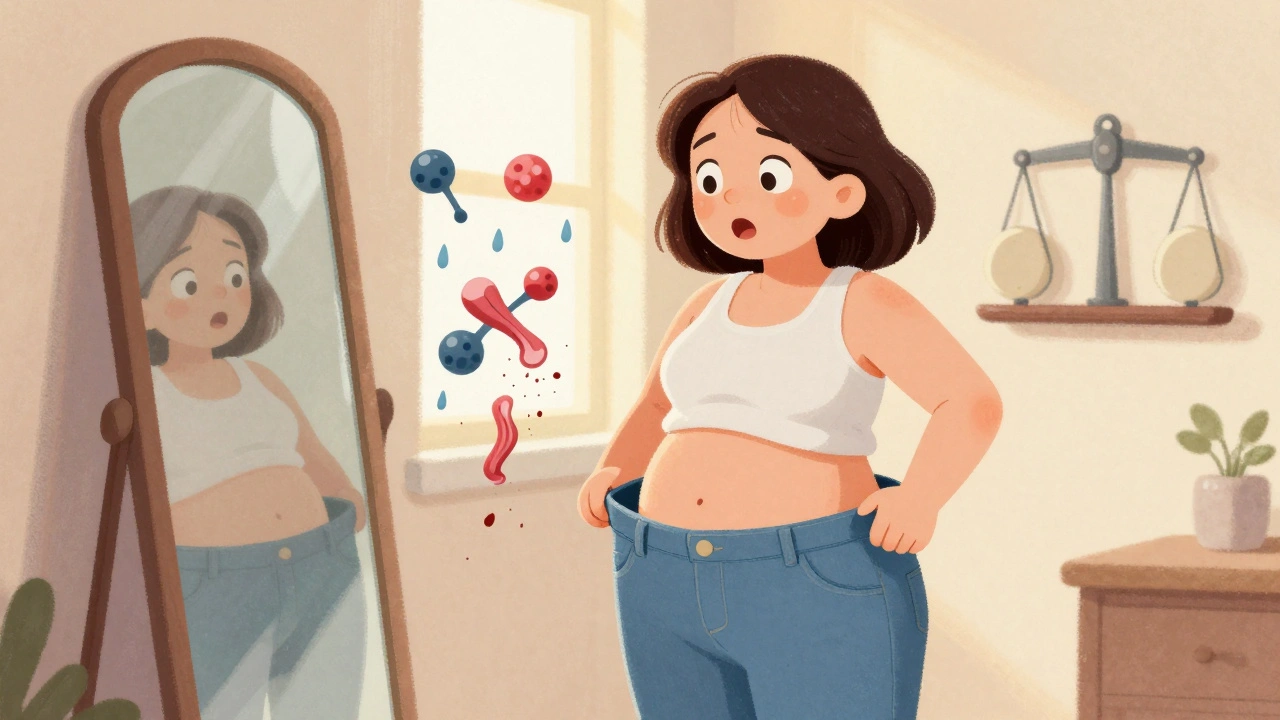
Menopause Weight Gain: How Hormones, Muscle Loss, and Strategy Shape Your Body After 40
Menopause weight gain is driven by hormonal shifts, muscle loss, and metabolic slowdown-not just overeating. Learn how estrogen decline, abdominal fat storage, and strength training affect your body after 40, and what actually works to regain control.
View More
© 2026. All rights reserved.