Antibiotic Drug Interactions: What You Need to Know Before Taking Them
When you take an antibiotic drug interaction, a harmful reaction that happens when an antibiotic mixes with another medication, supplement, or even food. It's not just about side effects—it's about your body’s chemistry being thrown off in ways you can’t predict. Many people think antibiotics are safe because they’re common, but that’s exactly why the risks are hidden. A simple combo like clarithromycin and a statin can spike muscle damage. Azithromycin might seem like a safer pick, but it’s not risk-free either. These aren’t rare cases—they happen every day in clinics and homes because the warnings aren’t clear enough.
One of the biggest culprits behind these interactions is the CYP3A4 drug interactions, a liver enzyme system that breaks down over half of all prescription drugs. When antibiotics like clarithromycin block this enzyme, other meds build up to toxic levels. Think colchicine for gout, blood thinners like warfarin, or even common heart pills. You might not feel anything right away, but damage can creep in over days or weeks. And it’s not just antibiotics—proton pump inhibitors can mess with antifungals like itraconazole, making them useless. These aren’t isolated issues; they’re part of a bigger pattern where multiple drugs interact in ways doctors don’t always catch. Even herbal stuff like St. John’s Wort can turn dangerous when mixed with antibiotics or antidepressants, triggering serotonin syndrome. The problem isn’t just the drugs—it’s how we assume they’re harmless because they’re prescribed or sold over the counter.
What makes this even trickier is that not all antibiotics act the same. Keflex (cephalexin) is usually safe with most meds, while clarithromycin is a known troublemaker. If you’re on multiple prescriptions—especially for heart disease, diabetes, or mental health—you’re at higher risk. Age matters too. Older adults metabolize drugs slower, so even small interactions can lead to falls, confusion, or kidney stress. And if you’re taking something for a chronic condition like epilepsy or high blood pressure, the stakes are even higher.
You don’t need to be a pharmacist to protect yourself. Always ask: "What else am I taking that could clash with this?" Keep a list of every pill, supplement, and herb you use. Check labels for warnings. And if you’re unsure, talk to your pharmacist—they see these combos every day. The good news? There are safer alternatives. Sometimes switching from clarithromycin to azithromycin cuts the risk. Sometimes changing your statin or timing your doses makes all the difference. This page pulls together real, practical advice from posts that break down exactly which combinations to avoid, why they’re dangerous, and what you can do instead. You’ll find clear, no-fluff guidance on clarithromycin, CYP3A4, and other common troublemakers—all based on actual cases and clinical data, not theory. What you’re about to read could keep you out of the ER.
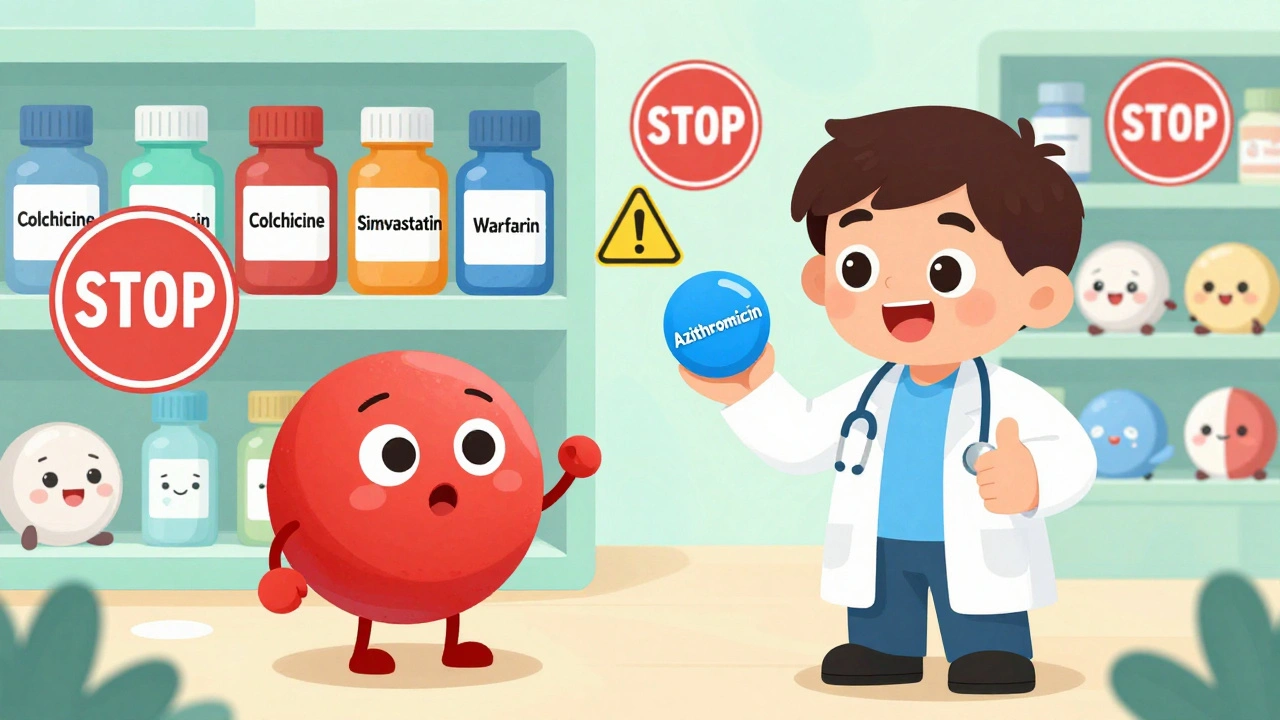
Clarithromycin Drug Interactions: Dangerous Combinations to Avoid
Clarithromycin can cause deadly interactions with common medications like statins, colchicine, and heart drugs. Learn which combinations to avoid and safer alternatives to ask your doctor for.
View More
© 2026. All rights reserved.