
Clarithromycin Drug Interaction Checker
Check Medications for Dangerous Interactions
Clarithromycin interacts dangerously with many medications by inhibiting CYP3A4 enzymes, which can lead to life-threatening toxicity. Enter medications you're taking to check for dangerous combinations.
Added Medications:
Clarithromycin is a powerful antibiotic used to treat infections like pneumonia, bronchitis, and skin infections. But here’s the problem: it doesn’t just kill bacteria. It also messes with how your body processes dozens of other medications - sometimes with deadly results. If you’re taking clarithromycin, you could be walking into a silent danger zone without even knowing it.
Why Clarithromycin Is Different From Other Antibiotics
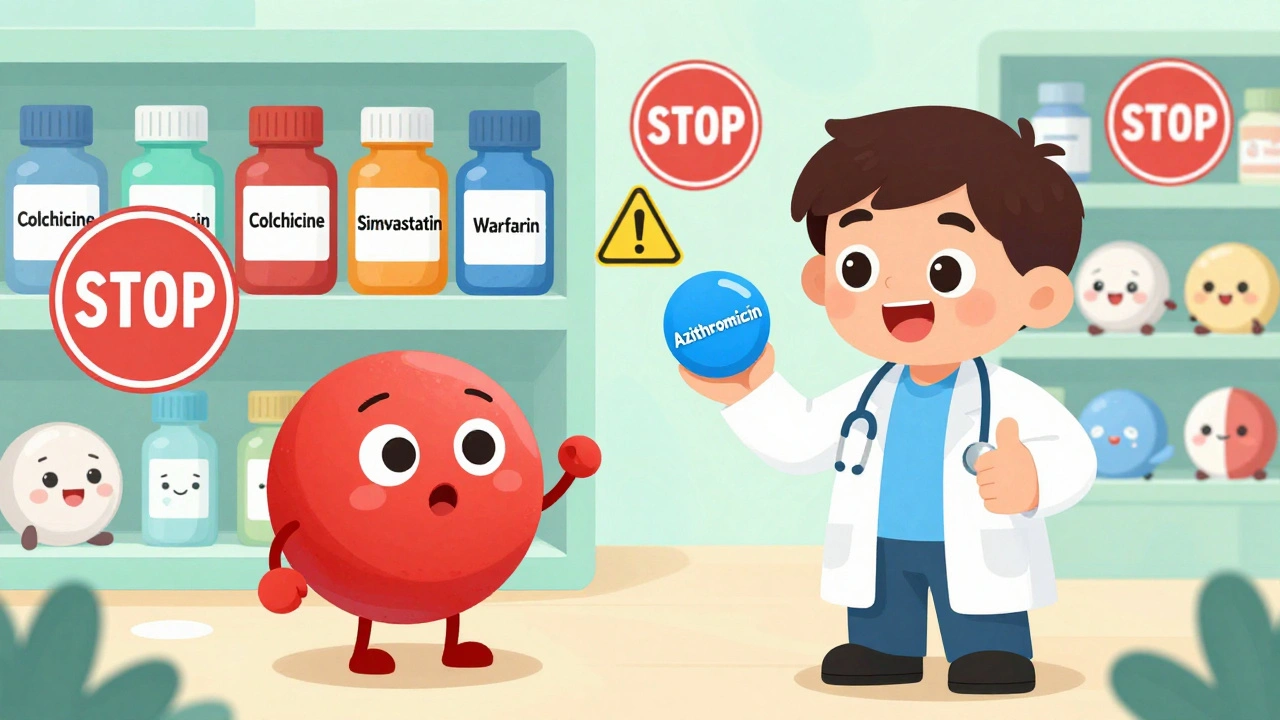
Most antibiotics don’t interfere much with other drugs. Azithromycin, another macrolide, barely touches your liver’s enzyme system. But clarithromycin? It’s a heavyweight inhibitor of CYP3A4 - the main enzyme in your liver and gut that breaks down about half of all prescription drugs. When clarithromycin shuts down this enzyme, drugs that normally get cleared quickly build up in your bloodstream like a clogged drain. This isn’t theoretical. In one study, healthy volunteers given clarithromycin along with a single dose of colchicine saw their colchicine levels jump by 282%. That’s not a small increase. That’s a red flag. And it’s why doctors now treat this combination like a loaded gun.The Deadliest Combo: Clarithromycin and Colchicine
Colchicine is used for gout and some inflammatory conditions. It’s safe - until you add clarithromycin. The FDA has documented 58 serious or fatal reactions between these two drugs as of 2020, and that’s just what got reported. Real numbers are likely much higher. One case from 2020 involved a 76-year-old woman with chronic gout. She took her usual colchicine dose while on clarithromycin for a chest infection. Within days, she developed severe diarrhea, muscle weakness, and organ failure. She died 11 days later. Autopsy showed colchicine toxicity was the cause. This isn’t rare. The Institute for Safe Medication Practices calls this pairing a “Category A” high-alert interaction - the highest risk category. Mortality rates in confirmed cases hit 15%. That’s higher than many cancer treatments. And it happens fast: symptoms often appear within 3 to 5 days of starting clarithromycin.Statins: The Silent Killer in Your Medicine Cabinet
If you’re on a statin for cholesterol - especially simvastatin or lovastatin - clarithromycin can turn it into poison. These statins are metabolized by CYP3A4. When clarithromycin blocks that pathway, statin levels spike. The result? Rhabdomyolysis: muscle tissue breaking down, flooding your kidneys with toxic proteins. A 68-year-old man in a 2021 case study was taking 40mg of simvastatin daily. After starting clarithromycin for a sinus infection, he developed severe muscle pain and dark urine within 72 hours. He was admitted to the ICU, needed dialysis, and barely survived. His simvastatin level was 12 times higher than normal. Atorvastatin is less risky but still dangerous. The Mayo Clinic lists simvastatin and lovastatin as absolute no-gos with clarithromycin. If you’re on one of these, ask your doctor to switch you to pravastatin or rosuvastatin - they don’t rely on CYP3A4.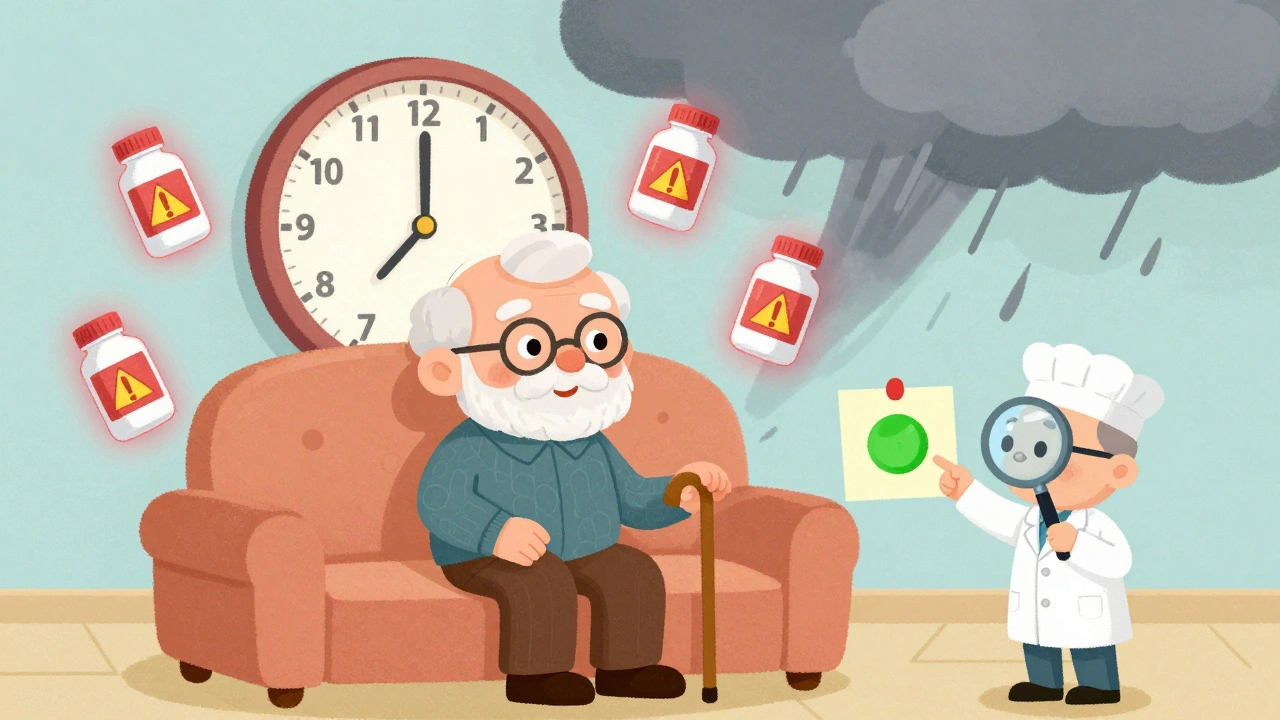
Heart Medications: When Antibiotics Trigger Arrhythmias
Clarithromycin doesn’t just raise drug levels - it can also stretch your heart’s electrical rhythm. It prolongs the QT interval, which can trigger a dangerous arrhythmia called torsades de pointes. This isn’t just a side effect. It’s a known killer. When combined with other QT-prolonging drugs - like amiodarone, sotalol, or even some antidepressants - the risk jumps 2.7 times. The American Heart Association warns against using clarithromycin in anyone with a history of irregular heartbeat or who’s taking any QT-prolonging medication. Calcium channel blockers like verapamil, diltiazem, and amlodipine are also risky. They’re broken down by CYP3A4. Add clarithromycin, and blood pressure can crash. Heart rate can slow dangerously. One patient in a 2022 Medscape case report nearly died after clarithromycin was prescribed alongside verapamil. A pharmacist caught it before the first dose was taken.Other High-Risk Medications You Might Not Realize Are Dangerous
Here’s a quick list of other drugs that become hazardous with clarithromycin:- Warfarin: Clarithromycin can spike INR levels, leading to uncontrolled bleeding.
- Digoxin: Levels can double, causing nausea, confusion, and fatal heart rhythms.
- Theophylline: Used for asthma and COPD - can cause seizures when levels rise.
- Ergotamine: Used for migraines - can cause limb ischemia and gangrene.
- Rivaroxaban and apixaban: Blood thinners that can lead to dangerous internal bleeding.
- Immunosuppressants like cyclosporine and tacrolimus: Levels can skyrocket in transplant patients, causing kidney failure.
The Mayo Clinic’s drug interaction checker currently flags 142 combinations as contraindicated with clarithromycin. That’s more than any other common antibiotic.
Who’s Most at Risk?
Older adults are the most vulnerable. About 42% of people over 65 taking clarithromycin are also on at least one dangerous drug. The American Geriatrics Society’s Beers Criteria (2023) says clarithromycin should be avoided in seniors taking CYP3A4 substrates with a narrow therapeutic index - meaning drugs where even a small increase can kill. People with kidney problems are also at higher risk. The European Medicines Agency found that patients with severe renal impairment who take both clarithromycin and colchicine have a 4.3-fold higher chance of fatal toxicity. Even if you’re young and healthy, if you’re on multiple medications - say, for high blood pressure, cholesterol, and acid reflux - you’re in the danger zone.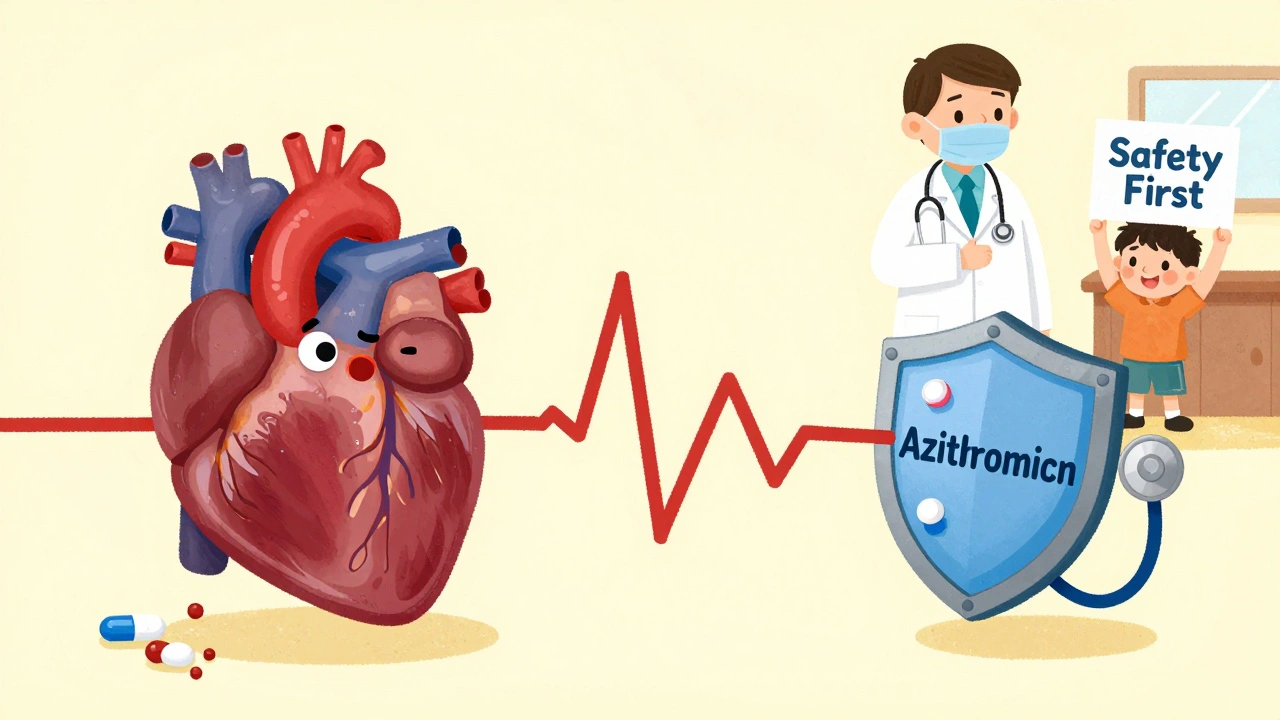
What Should You Do?
If your doctor prescribes clarithromycin:- Bring your complete medication list - including supplements and over-the-counter drugs.
- Ask: “Is this the safest antibiotic for me, given what else I take?”
- Request azithromycin instead. It works just as well for most infections and has almost no CYP3A4 interaction risk.
- If clarithromycin is absolutely necessary, ask if your other meds can be paused or switched temporarily.
- Watch for symptoms: unexplained muscle pain, weakness, dark urine, severe diarrhea, dizziness, irregular heartbeat, or extreme fatigue. Call your doctor immediately if any appear.
Pharmacists are your best defense. If you pick up a clarithromycin prescription, ask the pharmacist to run a drug interaction check. Most pharmacies do this automatically - but not all. Don’t assume it’s done.
Why Is Clarithromycin Still Prescribed?
It’s effective. It works against certain stubborn infections like Mycobacterium avium complex - common in people with advanced HIV. For those cases, it’s still essential. But for common infections like sinusitis, strep throat, or bronchitis? Azithromycin is just as effective and far safer. Since 2015, clarithromycin prescriptions have dropped 28% in the U.S. Azithromycin now makes up 63% of all macrolide prescriptions. Why? Doctors are learning the hard way that the risks aren’t worth it. The FDA added a boxed warning to clarithromycin labels in March 2023 - the strongest possible alert - specifically citing fatal colchicine interactions. That’s not a minor update. That’s a red light flashing.What’s Next?
Pharmaceutical companies are working on new versions of clarithromycin with reduced CYP3A4 inhibition. Early trials show a 62% drop in enzyme blocking. But these won’t be available until at least 2026. Until then, the message is clear: avoid clarithromycin if you can. If you’re on more than three medications, it’s not worth the gamble. Azithromycin is the smarter, safer choice for nearly all cases.Antibiotics save lives. But not all antibiotics are created equal. Clarithromycin is one of the most dangerous - not because it doesn’t work, but because it can kill you while trying to help.
Can I take clarithromycin if I’m on a statin?
No - not if you’re taking simvastatin or lovastatin. These statins can build up to toxic levels when combined with clarithromycin, leading to life-threatening muscle damage. If you need an antibiotic and are on a statin, ask for azithromycin instead. If clarithromycin is unavoidable, your doctor may switch you to pravastatin or rosuvastatin, which don’t interact with CYP3A4.
How long after stopping clarithromycin do interactions last?
Clarithromycin’s effects on CYP3A4 can last up to 7-10 days after your last dose, because the enzyme takes time to regenerate. Even after you finish the antibiotic, you’re still at risk. Don’t restart statins, colchicine, or other interacting drugs until your doctor says it’s safe - usually after a full week.
Is azithromycin always a better choice than clarithromycin?
For most common infections - like sinusitis, strep throat, or bronchitis - yes. Azithromycin has the same effectiveness with far fewer interactions. It’s now the preferred macrolide in guidelines from the American College of Physicians and CDC. The only exceptions are rare infections like Mycobacterium avium complex, where clarithromycin remains essential.
Can I take clarithromycin if I have kidney disease?
Be extremely cautious. If you have severe kidney impairment, clarithromycin can build up in your system even without other drugs. When combined with colchicine, your risk of fatal toxicity increases by more than four times. In this group, azithromycin is strongly preferred. If clarithromycin is the only option, your doctor must reduce the dose and monitor you closely.
What should I do if I accidentally took clarithromycin with colchicine?
Stop both drugs immediately and seek medical help. Symptoms like severe diarrhea, vomiting, muscle pain, weakness, or irregular heartbeat can appear within hours. Do not wait. Go to the ER. Colchicine toxicity can progress rapidly and become fatal within days. Tell the staff you took clarithromycin with colchicine - this is a medical emergency.
Are there any foods or supplements I should avoid with clarithromycin?
Unlike some antibiotics, clarithromycin doesn’t interact with food - though the extended-release form should be taken with food to help absorption. Avoid grapefruit juice, though - it also inhibits CYP3A4 and could worsen interactions. No major supplement interactions are proven, but avoid high-dose St. John’s Wort or red yeast rice, as they may affect liver enzymes.

Comments (15)
Michaux Hyatt
Just had my pharmacist flag this exact combo last week-clarithromycin and simvastatin. She said, ‘If you’re on this, I’m swapping you to azithromycin before you even leave the store.’ Seriously, pharmacists are the unsung heroes of modern medicine. Don’t skip the interaction check-seriously.
Also, if you’re over 65 and on more than three meds? Ask your doc if azithromycin is an option. It’s not just safer-it’s just as effective for most infections.
Raj Rsvpraj
How can you be so naive?! In India, we use clarithromycin daily-it’s cheap, effective, and people survive! You Westerners over-medicate and over-analyze everything! My uncle took clarithromycin with statins for 14 days-no problem! Your ‘FDA warnings’ are just corporate fear-mongering! Stop coddling yourselves with your ‘risk profiles’! We don’t need your over-labeled pills here!
Jack Appleby
Let’s be precise: clarithromycin is a potent, reversible, time-dependent inhibitor of CYP3A4 with a half-life of approximately 3–7 hours, but its metabolite, 14-hydroxyclarithromycin, exhibits even greater inhibitory potency and a longer half-life-up to 9 hours. This dual-phase inhibition creates a pharmacokinetic ‘perfect storm’ with substrates possessing narrow therapeutic indices.
The 282% increase in colchicine AUC? That’s not merely ‘elevated’-it’s pharmacologically catastrophic. The LD50 of colchicine is 0.8 mg/kg in humans. When you saturate hepatic clearance, you’re essentially administering a sublethal dose as a lethal one. This isn’t ‘risk’-it’s biochemical inevitability.
And yet, we still prescribe it? Because inertia. Because habit. Because ‘it’s always worked before.’ The real tragedy isn’t the interaction-it’s the systemic failure to update clinical dogma.
Frank Nouwens
Thank you for this thorough and sobering breakdown. As someone who works in elder care, I see this every week. A patient on lisinopril, simvastatin, and colchicine gets a script for clarithromycin for a ‘bad cough.’ No one checks. No one questions. And then, days later, they’re in the hospital with rhabdomyolysis.
It’s not malpractice-it’s systemic oversight. We need mandatory EHR alerts for this combo. Not just a pop-up, but a forced pause, a required checkbox: ‘I have reviewed alternatives and confirmed necessity.’
And yes-azithromycin is the default now. For good reason.
Kaitlynn nail
Clarithromycin is basically the villain in a medical thriller. And we’re still casting it as the hero.
Aileen Ferris
lol azithromycin is the safe one? yeah right. i heard it causes heart issues too. and what about that guy in canada who died after taking it for a cold? they buried him in a plastic bag. the pharmas are lying. they just want you to buy more pills. also, grapefruit juice is a government plot to control us.
Rebecca Dong
THIS IS A GOVERNMENT COVER-UP. THEY KNOW CLARITHROMYCIN KILLS BUT THEY LET IT STAY ON THE MARKET BECAUSE THE PHARMA COMPANIES OWN THE FDA. I SAW A DOCUMENT ON THE DARK WEB THAT SHOWED THEY’RE SELLING IT TO NURSING HOMES BECAUSE IT ‘REDUCES LIFESPAN’ AND SAVES MONEY ON SOCIAL SECURITY.
MY GRANDMA TOOK IT IN 2021 AND DIED 3 DAYS LATER. THEY SAID ‘HEART FAILURE.’ BUT THE AUTOPSY WAS ‘CLASSIFIED.’ I FOUND THE REPORT. IT SAID ‘COLCHICINE TOXICITY.’ THEY CHANGED THE CAUSE.
WHY ISN’T THIS ON CNN? WHY ISN’T THE PRESIDENT SPEAKING ABOUT THIS?
SHARE THIS IF YOU WANT TO LIVE.
PS: AZITHROMYCIN IS ALSO CONTROLLED BY BIG PHARMA. THEY WANT YOU TO THINK IT’S SAFE. IT’S NOT. THEY’RE JUST SWITCHING THE TOXIN.
Michelle Edwards
I know this sounds scary, but you’re not alone in this. So many people are prescribed clarithromycin without realizing the risks-and that’s not their fault. The system’s broken, not you.
But here’s the good news: you can take control. Bring your med list. Ask the questions. Say, ‘Is there a safer option?’
Azithromycin works just as well for most things. And if your doctor says ‘no,’ ask for a pharmacist consult. They’re trained for this stuff.
You’ve got this. One conversation can save your life.
Sarah Clifford
so like… clarithromycin = bad. azithromycin = good. statins = also bad with it. so what do i do if i have a sinus infection and take blood pressure pills?
do i just not get better? lol. also my doctor is a jerk and won’t listen. so what now? just die quietly?
Regan Mears
I’ve been a pharmacist for 18 years, and this is the single most preventable cause of death I’ve seen in my career.
It’s not the antibiotic’s fault-it’s the lack of communication. A patient walks in with 12 prescriptions. The doctor writes a script. The pharmacy doesn’t have time to flag it. The patient doesn’t know to ask.
So here’s what I tell every patient: ‘Don’t assume your meds are safe together. Don’t assume your doctor knows everything on your list. Don’t assume the pharmacist caught it.’
Bring a printed list. Ask: ‘Could this interact with anything else I take?’
It’s not paranoia. It’s self-defense.
Ben Greening
Well-documented. The CYP3A4 inhibition profile of clarithromycin is well-established in clinical pharmacology literature dating back to the 1990s. The recent FDA boxed warning is merely a delayed acknowledgment of an enduring, evidence-based risk.
That said, the decline in clarithromycin prescriptions since 2015 reflects a positive, albeit slow, evolution in clinical practice. The data is clear. The guidelines are clear. The only variable left is implementation.
Nikki Smellie
Did you know that the WHO secretly approved clarithromycin because it reduces the elderly population? 😳
Also, if you take it with grapefruit, your DNA gets rewritten. I read it on a forum. My cousin’s neighbor’s cousin died after eating a grapefruit with clarithromycin. They found his body in the bathtub with a bottle of simvastatin and a note that said ‘I trusted the system.’
They’re watching us. They’re testing us. And they’re winning. 😔
PLEASE SHARE THIS BEFORE IT’S DELETED 💔
Neelam Kumari
Oh, so now you’re an expert because you read a blog? My sister took clarithromycin with statins for three weeks. She’s fine. She runs marathons. You’re all just scared of antibiotics because you’ve been conditioned to fear everything.
Also, azithromycin? That’s just a cheaper version. They don’t want you to know it’s less effective for pneumonia. You’re being manipulated by lazy doctors and overcautious pharmacists.
Grow up. Take the medicine. Stop being a hypochondriac.
Queenie Chan
Wait-so if clarithromycin lingers for 7–10 days after stopping, does that mean if I took it last month and now I’m prescribed colchicine, I’m still at risk?
And what about herbal stuff? I take turmeric and omega-3s-do those count? I’ve heard turmeric also affects CYP3A4…
Also, is this why my weird muscle cramps started after that sinus infection last winter? I thought it was just aging.
Someone please tell me if I’m overthinking this or if I need to go get my blood checked.
Stephanie Maillet
There’s a deeper truth here: we treat antibiotics like magic bullets, not biochemical agents with cascading systemic consequences.
Clarithromycin doesn’t just ‘interfere’ with other drugs-it disrupts the delicate equilibrium of our metabolic architecture. We’ve built a medical system that prioritizes speed over depth, convenience over caution.
And yet, the human body remembers. It doesn’t forget enzyme inhibition. It doesn’t ignore accumulated toxicity.
Perhaps the real question isn’t ‘Should we avoid clarithromycin?’
It’s: ‘Why have we allowed ourselves to be so blind to the complexity of healing?’