Clarithromycin Side Effects: What You Need to Know Before Taking It
When you take clarithromycin, a macrolide antibiotic used to treat bacterial infections like pneumonia, bronchitis, and skin infections. Also known as Biaxin, it works by stopping bacteria from growing—but it doesn’t just target the bad bugs. It also messes with your body’s natural drug-processing system, which is why clarithromycin side effects can be more than just an upset stomach.
One of the biggest risks isn’t the antibiotic itself, but what it does to other meds you’re already taking. Clarithromycin blocks a liver enzyme called CYP3A4, a key enzyme that breaks down dozens of common drugs. When this enzyme slows down, drugs like statins, blood thinners, and even some heart medications build up to dangerous levels in your blood. That’s why mixing clarithromycin with colchicine or simvastatin can lead to muscle damage, kidney failure, or worse. It’s not rare—doctors see this in clinics all the time. And if you’re over 65 or have kidney trouble, your risk goes up even more.
Then there are the direct side effects. Diarrhea is common, but if it turns watery, bloody, or lasts more than a couple days, it could be C. diff, a severe gut infection caused when antibiotics wipe out good bacteria. Nausea, taste changes, and headaches are frequent too. Less common but serious? Liver problems, irregular heartbeat, or allergic reactions like swelling or rash. And yes, even if you’ve taken it before without issues, that doesn’t mean you’re safe this time. Your body changes. Other meds change. Your liver doesn’t always keep up.
What makes clarithromycin tricky is that it often gets prescribed without checking what else you’re on. A simple blood pressure pill or cholesterol drug could turn a routine course into an emergency. That’s why it’s not enough to just read the label—you need to tell your pharmacist and doctor every supplement, OTC med, and herb you take. Even St. John’s Wort or grapefruit juice can play a role. Azithromycin is often a safer alternative for people on multiple meds, but it’s not always the right choice for every infection.
Below, you’ll find real, practical advice from people who’ve been through this. We’ve pulled together posts that cover what happens when clarithromycin clashes with other drugs, how to spot warning signs before it’s too late, and why some people need to avoid it entirely. No fluff. No guesswork. Just what you need to know to protect yourself.
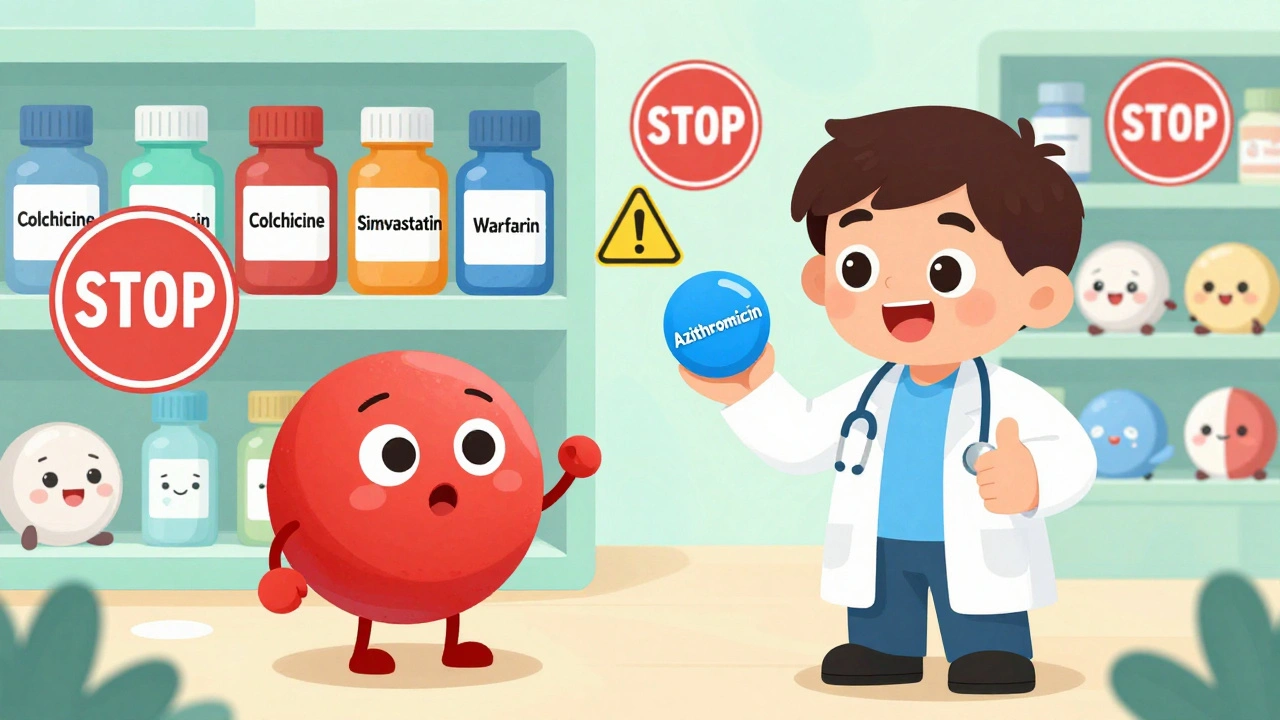
Clarithromycin Drug Interactions: Dangerous Combinations to Avoid
Clarithromycin can cause deadly interactions with common medications like statins, colchicine, and heart drugs. Learn which combinations to avoid and safer alternatives to ask your doctor for.
View More
© 2026. All rights reserved.