Hormonal Weight Gain: What Causes It and How to Fight It
When you gain weight even though you’re eating right and moving more, it’s not always about willpower. Often, it’s your hormonal weight gain, weight gain driven by imbalances in hormones like cortisol, insulin, thyroid, or estrogen. Also known as metabolic weight gain, it happens when your body’s chemical messengers get out of sync—turning fat storage into a default setting. This isn’t the same as gaining weight from overeating pizza or skipping the gym. It’s deeper. It’s invisible. And it’s way more common than most doctors admit.
Take insulin resistance, a condition where cells stop responding to insulin, forcing the body to make more of it. High insulin tells your body to store fat, especially around your belly. It’s not about sugar alone—it’s about how your body handles it. Then there’s cortisol weight gain, the stress hormone that spikes during chronic stress, sleep loss, or overtraining. It doesn’t just make you crave snacks—it rewires your fat distribution, packing it onto your midsection. Women often notice this during perimenopause, when estrogen drops and fat shifts from hips to waist. Men? Low testosterone can do the same thing. And if your thyroid weight gain, a slowdown in thyroid hormone production that reduces metabolic rate is going unnoticed, you could be burning 200 fewer calories a day without realizing it.
These aren’t isolated issues. They feed each other. High cortisol raises insulin. Low thyroid slows digestion, making insulin resistance worse. Estrogen decline alters fat cell behavior. And most doctors won’t test for all of them unless you push. That’s why so many people feel stuck—because the fix isn’t just ‘eat less, move more.’ It’s understanding which hormone is driving the problem, and how to reset it.
What you’ll find below are real, practical posts that cut through the noise. You’ll see how medications like metformin help with insulin spikes, how certain drugs interfere with hormone balance, and why some supplements backfire. You’ll learn what blood tests actually matter, how sleep and stress play into this, and why fixing one hormone often fixes others. No fluff. No gimmicks. Just what works when your body’s chemistry is working against you.
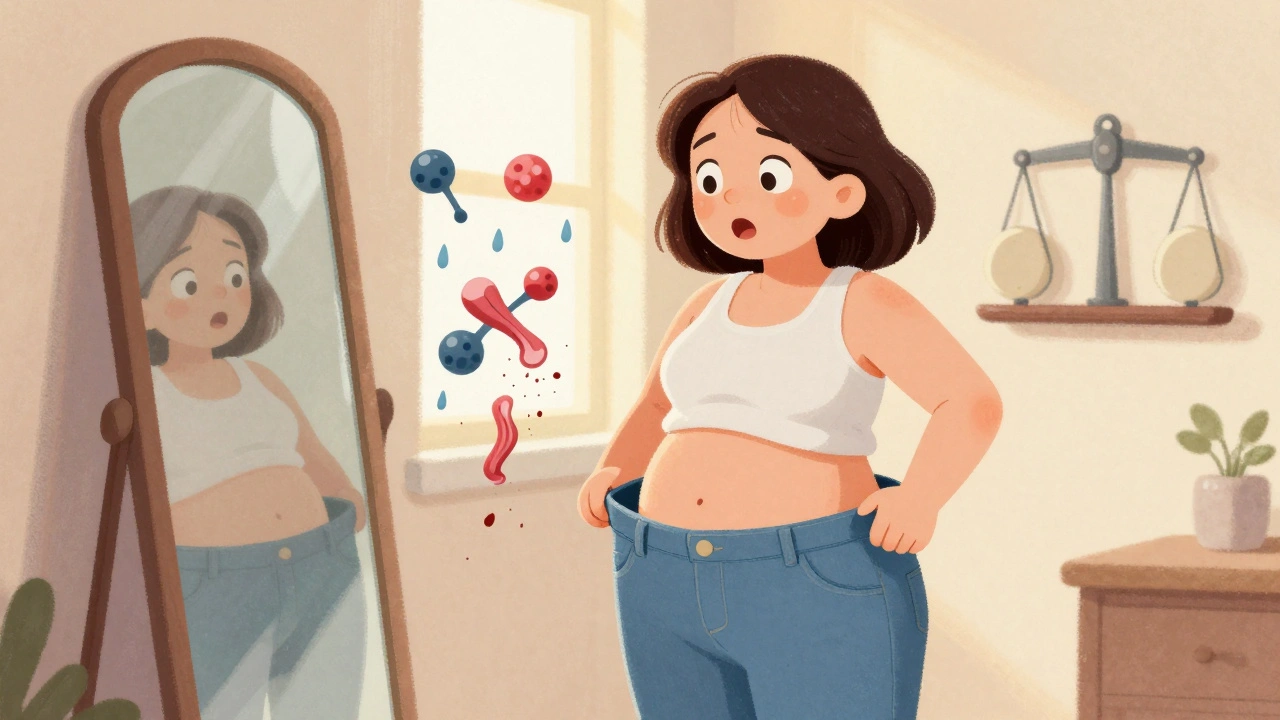
Menopause Weight Gain: How Hormones, Muscle Loss, and Strategy Shape Your Body After 40
Menopause weight gain is driven by hormonal shifts, muscle loss, and metabolic slowdown-not just overeating. Learn how estrogen decline, abdominal fat storage, and strength training affect your body after 40, and what actually works to regain control.
View More
© 2026. All rights reserved.