Liquid Medication Dose: How to Measure, Adjust, and Use It Safely
When you or a loved one needs a liquid medication dose, a precise amount of medicine in liquid form, often used for children, seniors, or people who can’t swallow pills. Also known as oral liquid drug, it’s one of the most common ways to give medicine—but also one of the most error-prone. A wrong drop, a misread syringe, or using a kitchen spoon instead of a proper measuring device can turn a safe treatment into a dangerous one.
Unlike pills, where you take one tablet and know you’re getting the full dose, liquid medication dose depends entirely on how accurately you measure it. That’s why tools like oral syringes and dosing cups matter more than you think. Many people use kitchen teaspoons or tablespoons, not realizing those vary wildly in size—a teaspoon from your drawer might hold 3 mL, while a medical one holds exactly 5 mL. That’s a 40% overdose right there. For pediatric medication, even a small mistake can have serious effects. Kids’ bodies process drugs differently, and their weight-based dosing leaves little room for error. The same goes for older adults on multiple meds, where liquid forms of drugs like metformin or reglan are common. Getting the dose right isn’t just about following the label—it’s about using the right tool, reading it correctly, and double-checking with your pharmacist.
Some liquid meds come with a dosing device; others don’t. If yours didn’t, ask for one. Most pharmacies will give you a free oral syringe or dosing cup. Never guess. Never eyeball. Always write down the dose, time, and what you used to measure it—especially if you’re caring for someone else. And remember, some liquids need shaking before use, others shouldn’t be mixed with juice or food. The medication dosing isn’t just about the number on the bottle—it’s about how the drug behaves in your body, how it’s absorbed, and whether it’s meant to be taken with food or on an empty stomach. That’s why a dose measurement error isn’t just a slip—it’s a risk to safety.
Below, you’ll find real-world advice from people who’ve been there—parents figuring out how to give antibiotics to a screaming toddler, caregivers managing multiple liquid meds for seniors, and patients switching from pills to liquids after surgery. These aren’t theory pages. These are stories about getting the dose right, avoiding mistakes, and staying safe when the medicine comes in a bottle, not a capsule.
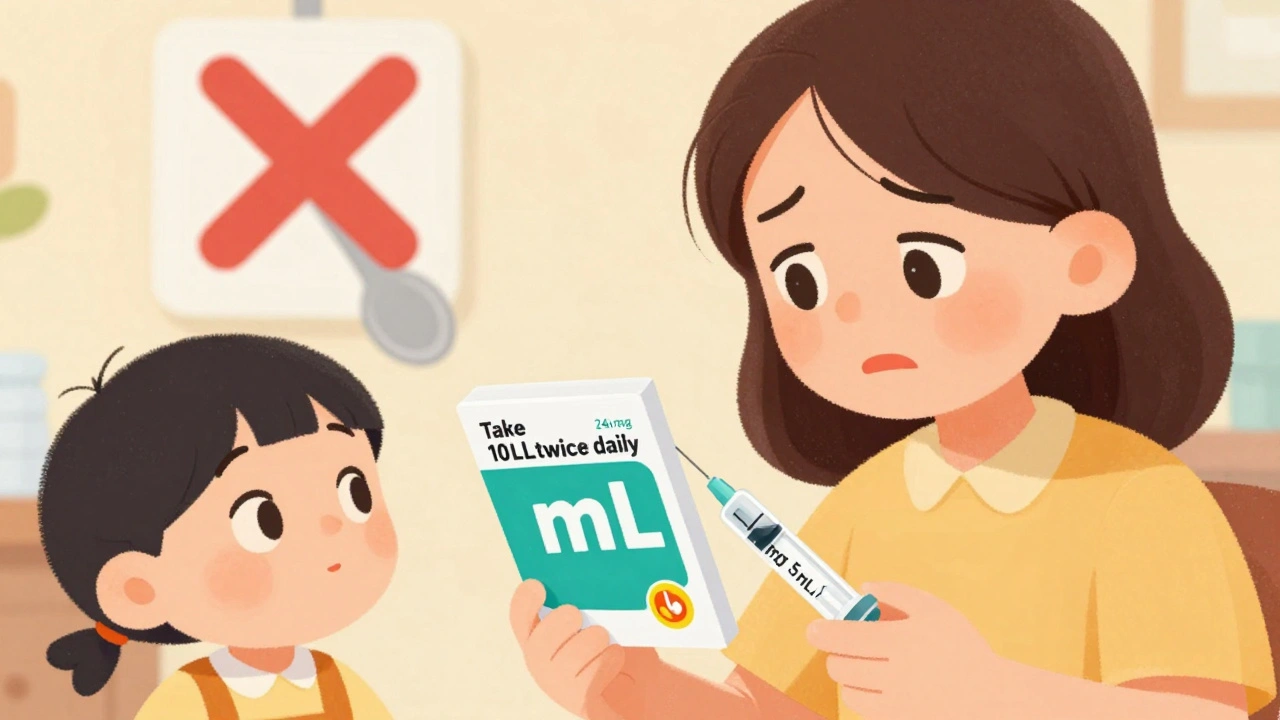
How to Read Dose Measurements on Liquid Prescription Labels
Learn how to safely read liquid prescription labels by focusing on milliliter measurements, concentration, decimal formatting, and proper dosing tools. Avoid common mistakes that lead to dangerous overdoses or underdoses.
View More
© 2026. All rights reserved.