Menopause Weight Gain: Why It Happens and What Actually Works
When you hit menopause, your body doesn’t just stop having periods—it starts rewiring how it stores fat. This isn’t laziness or poor willpower. It’s biology. Menopause weight gain, the increase in body fat, especially around the abdomen, that occurs as estrogen levels drop during and after menopause. Also known as midlife weight gain, it’s a common, well-documented shift that affects most women between 45 and 55. You might notice your clothes fitting tighter even if you haven’t changed your diet. That’s not your imagination. Your metabolism slows down by about 5% per decade after 30, and estrogen decline makes it worse.
Estrogen decline, the drop in female sex hormones during menopause that triggers fat redistribution and insulin resistance is the main driver. Lower estrogen shifts fat storage from hips and thighs to your belly. That visceral fat isn’t just cosmetic—it’s linked to higher risks of heart disease and type 2 diabetes. And here’s the catch: your body becomes less sensitive to insulin, meaning sugar turns to fat more easily. Even if you eat the same amount as before, your body now stores more of it as fat.
It’s not just hormones. Metabolism, the rate at which your body burns calories for energy, which naturally slows with age and hormonal shifts plays a big role. Muscle mass drops as you age, and since muscle burns more calories than fat, your resting metabolism slows. Add in sleep problems, stress, and less physical activity—common during menopause—and it’s easy to gain weight without realizing it.
Here’s what actually helps: strength training. Not cardio alone. Lifting weights or doing resistance exercises builds muscle, which boosts your metabolism and helps burn fat even when you’re sitting. Eating more protein keeps you full longer and supports muscle retention. Cutting back on sugar and refined carbs matters more than ever—your body can’t handle them like it used to. And sleep? Fixing poor sleep can reset hunger hormones and reduce cravings.
There’s no magic pill. No supplement will undo estrogen loss. But you’re not powerless. The changes you see aren’t inevitable—they’re manageable. What follows are real, practical insights from people who’ve been there: how to spot hidden triggers, what foods to prioritize, why some diets backfire, and how small daily habits make the biggest difference over time. These aren’t theories. They’re lessons from real cases, studies, and patient experiences—all pulled from posts that cut through the noise and give you what works.
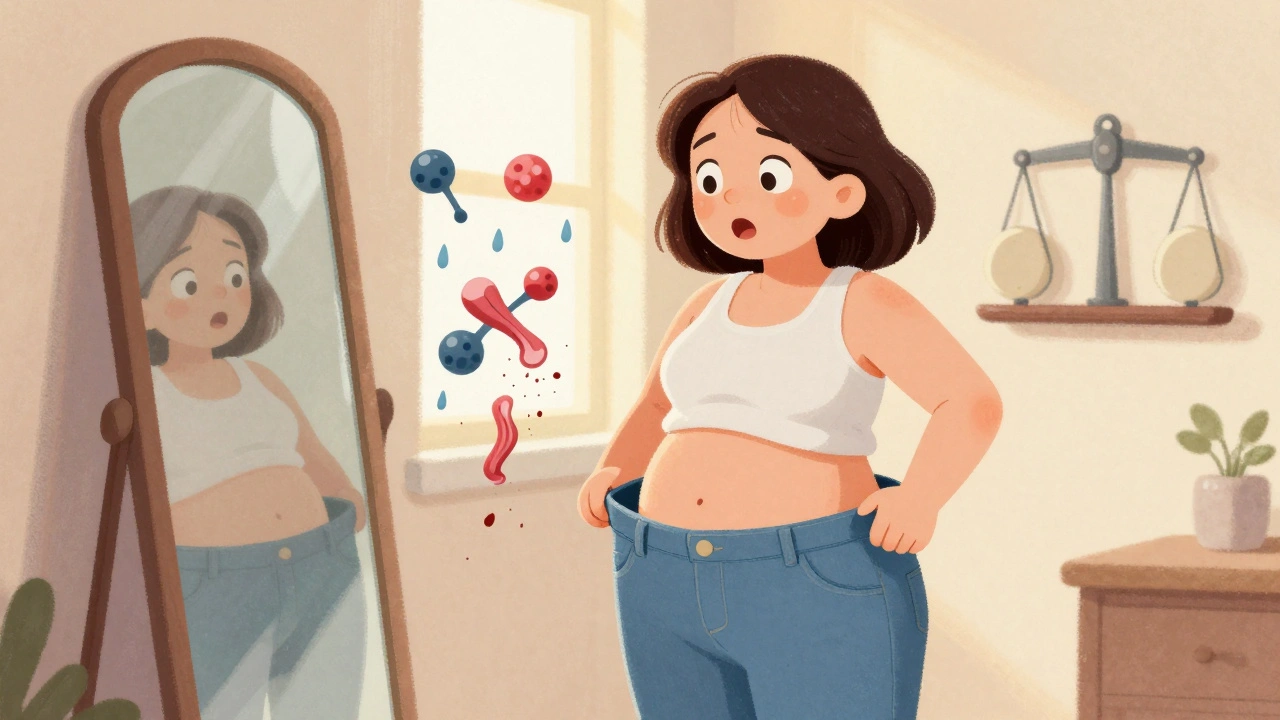
Menopause Weight Gain: How Hormones, Muscle Loss, and Strategy Shape Your Body After 40
Menopause weight gain is driven by hormonal shifts, muscle loss, and metabolic slowdown-not just overeating. Learn how estrogen decline, abdominal fat storage, and strength training affect your body after 40, and what actually works to regain control.
View More
© 2026. All rights reserved.