Menopause Weight Loss Strategy: Real Ways to Shed Pounds When Hormones Shift
When you hit menopause, your body doesn’t just stop having periods—it starts changing how it stores fat, burns energy, and responds to food. This isn’t just about eating more or moving less. It’s about menopause weight loss strategy, a targeted approach to managing weight gain caused by hormonal shifts during and after menopause. Also known as hormonal weight gain, this isn’t laziness or poor discipline. It’s biology. Estrogen drops sharply during menopause, and that one change rewires your metabolism. Fat doesn’t just disappear because you cut carbs. Your body starts holding onto belly fat like it’s preparing for a survival mode you didn’t sign up for.
That’s why generic diet plans fail. A menopause metabolism, the way your body processes energy after estrogen levels decline runs differently than it did in your 30s. You might burn 100-200 fewer calories a day just from aging and hormonal shifts. Combine that with less muscle mass, more stress cortisol, and poor sleep—and you’ve got a perfect storm for weight gain. No pill, supplement, or detox will fix this. What works? estrogen decline, the natural drop in estrogen during menopause that triggers fat redistribution and metabolic slowdown forces you to change how you move, what you eat, and how you sleep. Strength training isn’t optional—it’s essential. Lifting weights or even bodyweight exercises three times a week helps rebuild muscle, which burns more calories at rest. Protein intake needs to go up, not down. And sugar? It’s not just empty calories—it spikes insulin, which tells your body to store fat, especially around your midsection.
Sleep matters more than you think. Poor sleep during menopause isn’t just annoying—it raises ghrelin (the hunger hormone) and lowers leptin (the fullness signal). That’s why you’re craving snacks at midnight. Managing hot flashes, reducing caffeine after noon, and keeping your bedroom cool can make a bigger difference than any supplement. Stress management isn’t fluffy advice—it’s metabolic medicine. Cortisol from chronic stress turns your body into a fat-storing machine. Walking, breathing exercises, or even just sitting quietly for 10 minutes a day can help reset your nervous system.
You won’t find a quick fix here. But you will find real, proven steps that women have used to lose weight after 50—not by starving themselves, but by working with their changing bodies. Below, you’ll see how medications, lifestyle habits, and even how you track food can make or break your success. No fluff. No gimmicks. Just what actually works when your hormones are working against you.
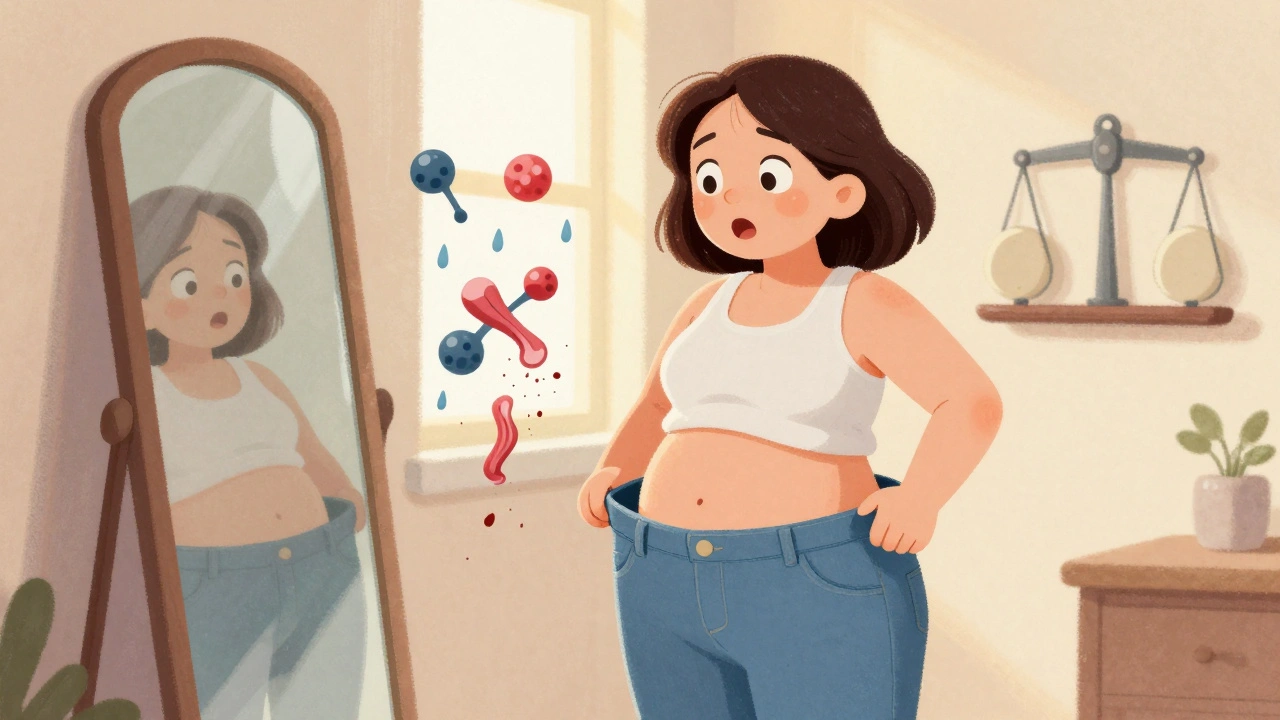
Menopause Weight Gain: How Hormones, Muscle Loss, and Strategy Shape Your Body After 40
Menopause weight gain is driven by hormonal shifts, muscle loss, and metabolic slowdown-not just overeating. Learn how estrogen decline, abdominal fat storage, and strength training affect your body after 40, and what actually works to regain control.
View More
© 2026. All rights reserved.