Milliliter Dosing: How to Measure Medications Accurately and Avoid Dangerous Mistakes
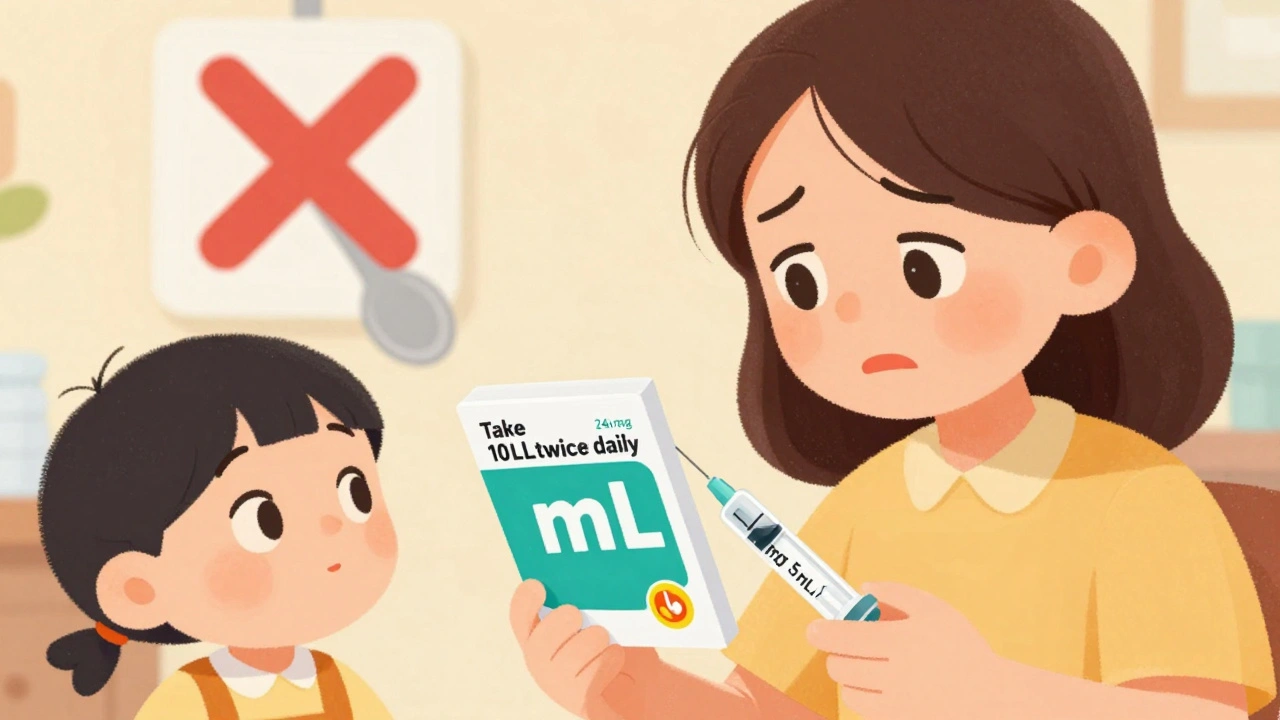
When you’re giving a child liquid medicine, helping an elderly parent take their heart pill, or managing your own chronic condition, milliliter dosing, the precise measurement of liquid medications in milliliters (mL). Also known as liquid drug measurement, it’s not just a number—it’s the difference between healing and harm. Many people assume that if the bottle says "5 mL," just use a teaspoon. But a regular kitchen spoon can hold anywhere from 3 to 7 mL. That’s a 40% error. And in medicine, that’s not a mistake—it’s a risk.
Milliliter dosing is tied directly to syringe dosing, the use of oral syringes to deliver exact liquid doses. These small plastic syringes, often included with prescriptions, are designed to be accurate to the tenth of a milliliter. Yet, studies show over half of caregivers still use kitchen spoons, cups, or droppers—tools never meant for medicine. This isn’t just about kids. Seniors with shaky hands or vision problems often misread labels, especially when bottles have tiny print or confusing instructions. A single wrong dose of antibiotics, seizure meds, or blood thinners can land someone in the ER.
It’s not just about tools—it’s about context. medication measurement, the process of determining and delivering the correct volume of liquid drugs changes based on age, condition, and even time of day. Metformin for diabetes, for example, might be dosed in mL for liquid forms, and even a 1 mL error can spike blood sugar. Opioid pain meds for seniors? A 0.5 mL overage could cause delirium or breathing trouble. And with generics now making up 90% of prescriptions, you’re more likely to get a new bottle with a different concentration—making it even easier to mix up doses.
Some of the most dangerous errors happen when people switch between brands or when pharmacies change formulations. A generic version of a liquid antibiotic might have 125 mg per 5 mL, while the brand used to be 250 mg per 5 mL. If you don’t check the label, you’re giving half the dose. That’s not just ineffective—it can lead to antibiotic resistance. And if you accidentally double it? That’s a trip to the hospital.
There’s no magic trick. Just three rules: always use the syringe that came with the medicine, never guess with spoons, and write down the dose and time on a sticky note if you’re juggling multiple meds. If the label says "take 10 mL," don’t assume it’s two teaspoons. Measure it. Every time. And if you’re unsure? Call your pharmacist. They’ve seen the mistakes—and they know how to fix them before it’s too late.
Below, you’ll find real stories and practical guides from people who’ve been there—whether it’s managing metformin with kidney issues, avoiding dangerous interactions with SSRIs, or verifying recalls by lot number. These aren’t theory pages. They’re the kind of info that keeps you safe when you’re holding a syringe in your hand, staring at a tiny bottle, wondering if you got it right.
How to Read Dose Measurements on Liquid Prescription Labels
Learn how to safely read liquid prescription labels by focusing on milliliter measurements, concentration, decimal formatting, and proper dosing tools. Avoid common mistakes that lead to dangerous overdoses or underdoses.
View More
© 2026. All rights reserved.