
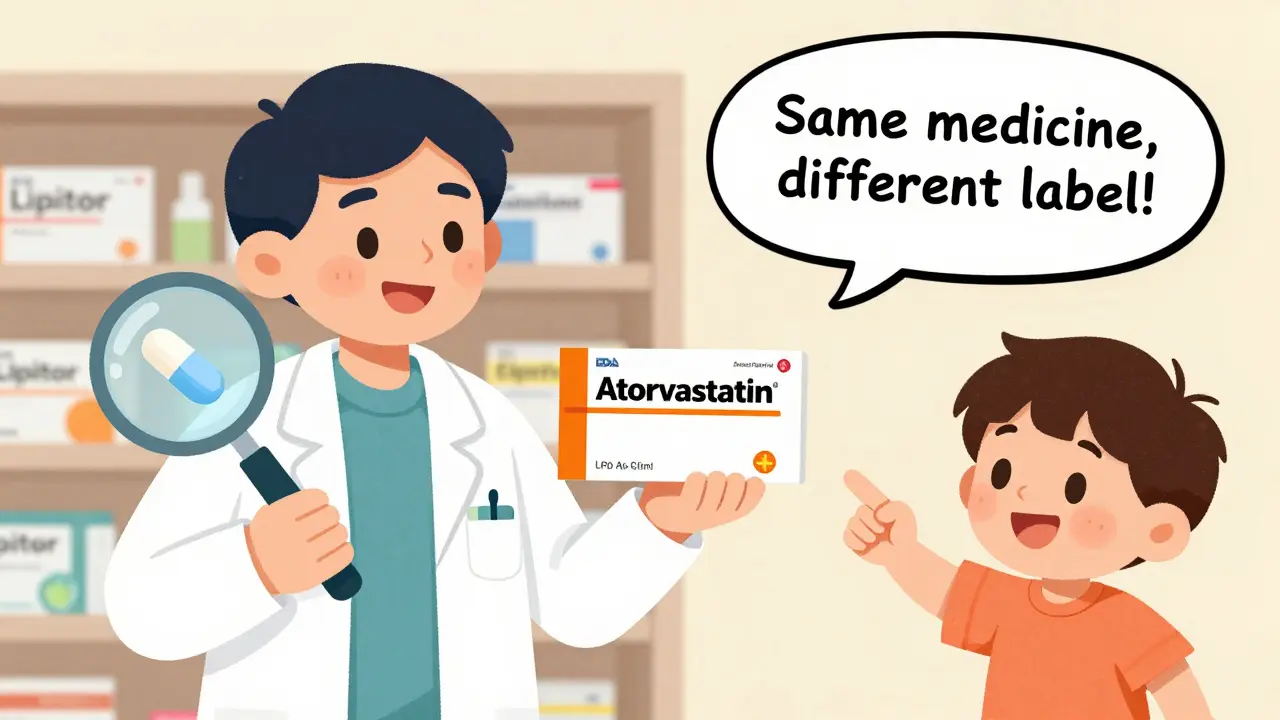
Have you ever picked up a prescription and noticed the pill looks different - maybe a different color or shape - but the name on the bottle is the same? And then you find out it’s cheaper? That’s not a mistake. It could be an authorized generic.
Most people think generics are made by other companies after the brand-name drug’s patent expires. That’s usually true. But here’s the twist: sometimes, the same company that made the brand-name drug is the one making the so-called generic version. Same pill. Same factory. Same chemistry. Just a different label.
What Exactly Is an Authorized Generic?
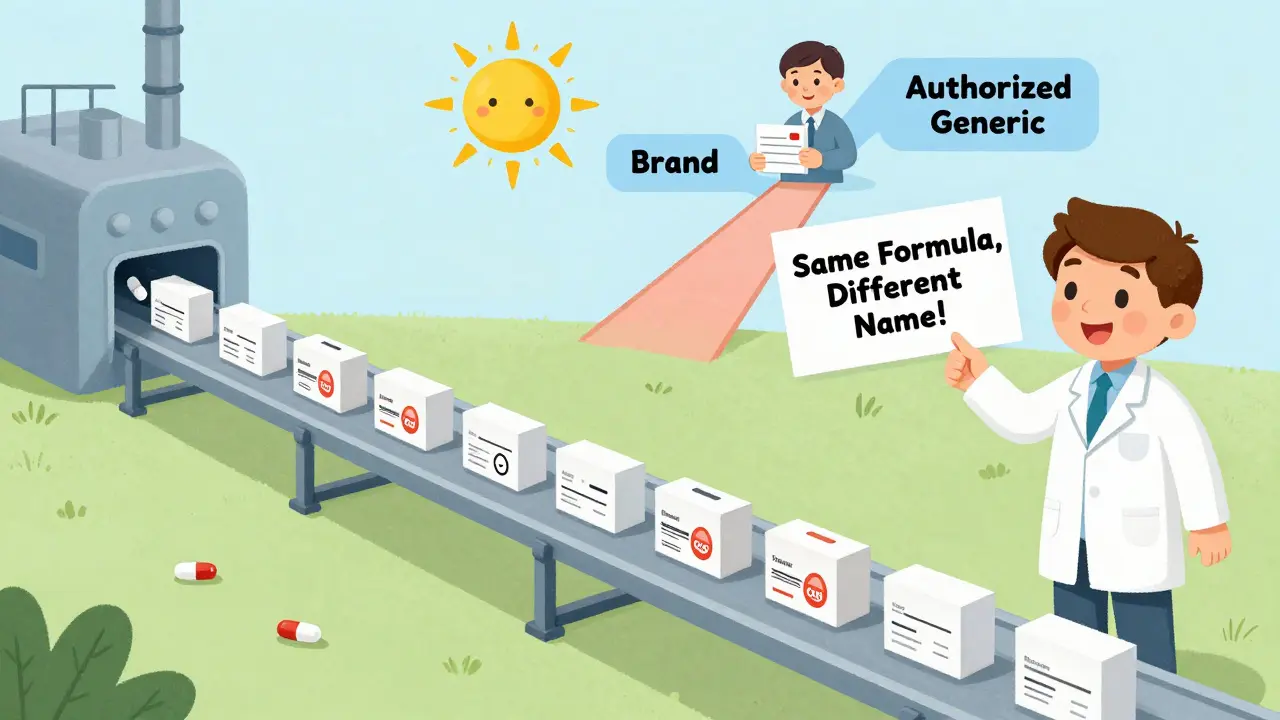
An authorized generic is the exact same drug as the brand-name version - down to the last inactive ingredient. It’s not a copy. It’s not a look-alike. It’s the real thing, just sold without the brand name. The manufacturer uses the original FDA-approved New Drug Application (NDA) to sell it. That means no extra testing, no new approval process. It’s the same batch of medicine, just packaged differently.
For example, if you take Lipitor for cholesterol, Pfizer made the original. When the patent ran out, Pfizer didn’t just sit back. They launched an authorized generic under their own subsidiary, Greenstone. The pill? Identical. The dose? The same. The way your body processes it? No difference at all.
This isn’t a loophole. It’s written into U.S. law. Under Section 505(t)(3) of the Federal Food, Drug, and Cosmetic Act, the FDA allows brand manufacturers to market their own drugs as generics - as long as they don’t use the brand name, logo, or trademark. The only visible changes might be a different color, marking, or packaging. Inside? Nothing changes.
How Is This Different from Regular Generics?
Regular generics have to go through a whole separate approval process. They submit an Abbreviated New Drug Application (ANDA) to the FDA. They have to prove they’re bioequivalent - meaning they work the same way in your body as the brand drug. But they’re allowed to use different inactive ingredients. That’s why you might see a generic version of metformin that’s blue, while the brand is white. The active ingredient is the same, but the fillers, dyes, or binders might differ.
Authorized generics skip all of that. They don’t need an ANDA. They don’t need to prove bioequivalence. Why? Because they’re not different. They’re the exact same product, just sold under a different label. They’re made on the same production line, in the same facility, with the same quality controls.
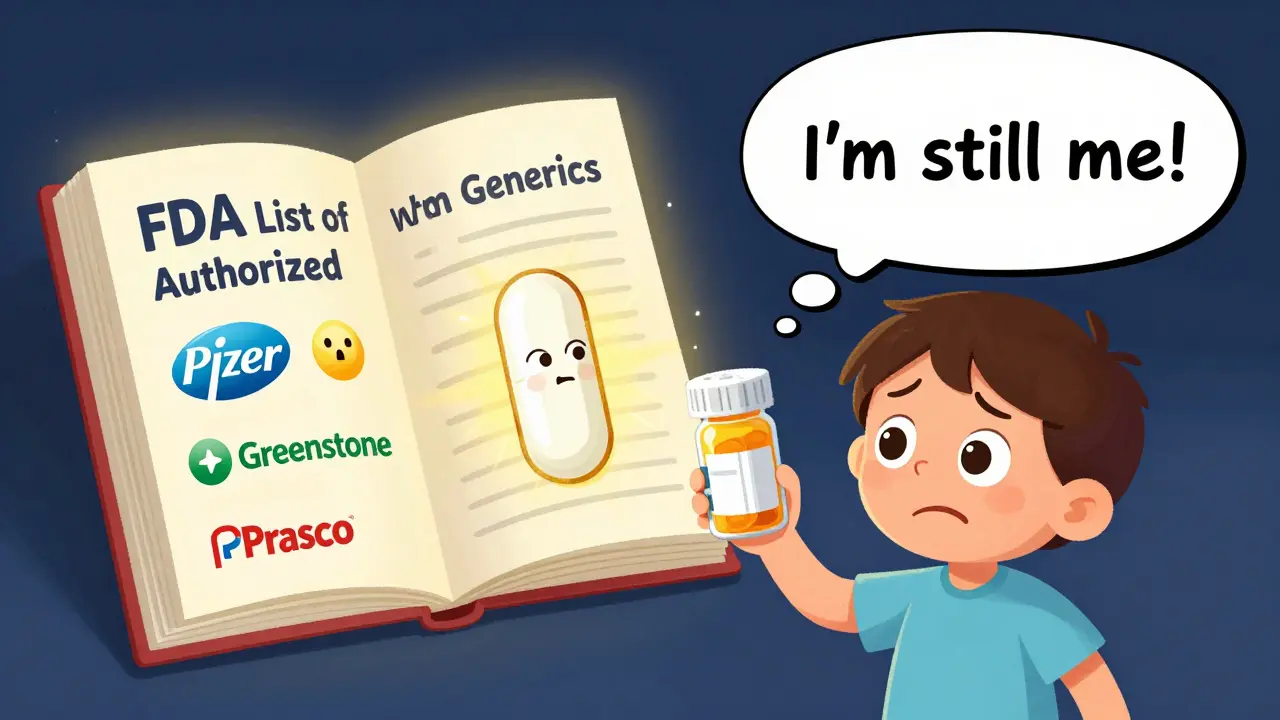
And here’s the kicker: authorized generics don’t show up in the FDA’s Orange Book - the official list of approved generic drugs. That’s because they’re not technically generics under the ANDA system. They’re branded drugs sold as generics. Pharmacists have to check a separate FDA list to confirm they’re legitimate.
Why Do Companies Do This?
It sounds weird. Why would a brand-name company help kill its own profits? Simple: they don’t want to lose market share.
When a drug’s patent expires, the first company to file a generic application gets 180 days of exclusive rights to sell the generic version. That’s a huge financial incentive. But here’s what brand manufacturers realized: if they wait, they lose. So instead of letting another company take over, they launch their own authorized generic - right before or during that 180-day window.
It’s a smart business move. They keep customers. They keep revenue. And they undercut the competition. If you’re a pharmacy, you’re going to stock the cheaper option. If that cheaper option is made by the same company that made the brand, you get the same quality, lower price, and no supply chain risk.
Companies like Pfizer (Greenstone), Procter & Gamble (Prasco), and others have built entire divisions just to handle authorized generics. These aren’t small players. They’re the original brand manufacturers, quietly shifting into the generic space.
What Does This Mean for You as a Patient?
For you, it’s mostly good news.
You get the same drug, at a lower price. No loss in effectiveness. No risk of side effects from different inactive ingredients. If you’ve had trouble with a generic before - maybe it didn’t work as well - an authorized generic removes that fear. It’s not a generic. It’s the brand, just cheaper.
But there’s confusion. Patients often think, “Wait, this isn’t the same pill.” And they’re right - the color or shape might be different. That’s why some people refuse to take it. They think they’re getting a lower-quality version. Pharmacists report this all the time. A patient will come in, see a different-looking pill, and demand the brand.
Here’s what you need to know: if your prescription says “Lipitor” and you get a white oval pill with “AT” on it, that’s still Lipitor. It’s just the authorized generic version. The FDA says it’s therapeutically equivalent. Your doctor doesn’t need to re-prescribe. Your insurance won’t care. And your body won’t notice.
Why Aren’t More People Talking About This?
Because the system doesn’t make it easy to know.
Authorized generics aren’t listed in the Orange Book. Pharmacies don’t always flag them in their systems. Prescribers aren’t trained to recognize them. Even insurance formularies often lump them in with regular generics, so you might not even realize you’re getting one.
And manufacturers don’t advertise them. Why? Because they’re not trying to build brand loyalty. They’re trying to sell the same product at a lower price point. So there’s no marketing. No commercials. No patient brochures.
That means you have to ask. If you’re on a drug that’s gone generic, ask your pharmacist: “Is this an authorized generic?” If they don’t know, ask them to check the FDA’s List of Authorized Generic Drugs. It’s public. It’s updated. And it’s your right to know.
Is This Fair to Generic Drug Makers?
That’s the big debate.
The Hatch-Waxman Act of 1984 was designed to encourage competition. It gave the first generic company 180 days of exclusivity - a reward for challenging patents. But when a brand manufacturer launches an authorized generic during that window, it wipes out that incentive. The first generic might have spent millions on legal fees to challenge the patent, only to be undercut by the very company they were trying to compete with.
Some experts argue this distorts the market. It reduces the financial reward for generic companies to take on the risk of patent litigation. In a 2023 study in Health Affairs, researchers found that authorized generics have become a major tool for brand manufacturers to preserve profits, sometimes before the first generic even hits the shelves.
But others say: if the drug is identical and cheaper, who loses? Patients get lower prices. Pharmacies get reliable supply. Insurance companies save money. The system works - even if the rules feel a little unfair to the first generic company.
What Should You Do?
Here’s the practical advice:
- Ask your pharmacist: “Is this an authorized generic?”
- If you’re switching from brand to generic and notice a change in pill appearance, don’t panic. It might be authorized - and that’s a good thing.
- Check your prescription label. If it says “generic” but you recognize the drug from the brand, it might be authorized.
- If you’re concerned about effectiveness, ask for the FDA’s List of Authorized Generic Drugs. It’s available online and updated regularly.
- Don’t assume all generics are the same. Authorized generics are the closest thing to the brand you can get - and usually the cheapest.
The bottom line: you’re not getting a lesser drug. You’re getting the exact same medicine, just without the brand name and price tag. In a system where drug costs are a constant burden, this is one of the quietest ways to save money - without sacrificing quality.
Are authorized generics as safe as brand-name drugs?
Yes. Authorized generics are manufactured in the same facility, with the same formula, and under the same quality controls as the brand-name drug. The FDA considers them therapeutically equivalent. The only difference is the label.
Why don’t authorized generics appear in the Orange Book?
Because they’re not approved under the Abbreviated New Drug Application (ANDA) process. They’re marketed under the original brand’s New Drug Application (NDA). The Orange Book only lists drugs approved via ANDA, so authorized generics are tracked separately on the FDA’s List of Authorized Generic Drugs.
Can my doctor prescribe an authorized generic?
Yes. Doctors prescribe by drug name, not brand or generic label. If the prescription says “atorvastatin,” your pharmacist can dispense the brand, a regular generic, or an authorized generic - all are acceptable unless the prescription says “dispense as written” or specifies the brand.
Do authorized generics cost less than regular generics?
Usually, yes. Because they’re made by the original manufacturer, they often enter the market at the same price as regular generics - sometimes even lower. Since they don’t require separate FDA approval, the cost to produce them is lower than for brand-name drugs, and they’re priced competitively to capture market share.
How can I tell if I’m getting an authorized generic?
Check the label. If the drug name matches the brand (e.g., “atorvastatin”) but the manufacturer name is a known authorized generic producer like Greenstone, Prasco, or Patriot, you’re likely getting one. You can also ask your pharmacist to check the FDA’s official list of authorized generics online.
If you’re paying for a prescription, knowing about authorized generics could save you hundreds a year. It’s not magic. It’s just smart. And it’s right there in your medicine cabinet - waiting for you to ask the right question.

Comments (8)
Hugh Breen
OMG I JUST REALIZED I’VE BEEN TAKING AN AUTHORIZED GENERIC FOR MY CHOLESTEROL FOR YEARS AND NEVER KNEW! 🤯 My pill went from blue to white and I thought my pharmacy messed up. Turns out I was saving cash and getting the EXACT SAME DRUG. Pfizer’s Greenstone? Yeah, that’s my boy. 🙌 No more fear of ‘generic = weak’ - this is the real deal. Thanks for this post, I’m telling all my friends.
Byron Boror
This is why America’s pharma system is broken. Brand companies get to play both sides - make the drug, then undercut themselves to crush competition. It’s not innovation, it’s manipulation. The 180-day exclusivity rule exists for a reason: to reward companies that actually challenge patents. But Pfizer just waltzes in with their own version and laughs all the way to the bank. Shameful.
Lorna Brown
I love how this exposes the illusion of ‘generic = inferior.’ The real question isn’t whether it’s the same drug - it’s why we ever believed the label mattered more than the chemistry. We’re conditioned to equate branding with quality. But if the pill in my hand is chemically identical, manufactured in the same facility, under the same FDA oversight… why does the logo change my biology? This isn’t about cost - it’s about trust. And we’ve been lied to.
Rex Regum
LMAO so now the big pharma giants are ‘generics’? What’s next? Coca-Cola selling ‘authorized generic cola’ under a white label? This is the ultimate scam. They’re not saving you money - they’re just renaming the same product to avoid paying the ‘generic tax’ while keeping the profit margin. You think you’re getting a deal? You’re just being manipulated by the same company that priced the brand at $500 a month.
Emma Nicolls
i had no idea this was a thing 😳 i just thought my pill changed because my insurance switched pharmacies. now i feel kinda dumb for complaining once. but also kinda smart for asking? like… maybe i should’ve asked sooner. anyway. this is wild. and cheap. and same. so… win? 🤷♀️
Jimmy V
Authorized generics = the only legitimate cost-saving hack in pharma. No trade-offs. No bioequivalence guesswork. Same factory. Same batch. Same FDA approval. If your pharmacist says ‘generic,’ ask: ‘Is it authorized?’ If yes - you’re getting the brand, at 60% off. No drama. No risk. Just science and savings. Ask your pharmacist. Now.
Richard Harris
Fascinating stuff. I’ve been on a generic statin for ages and never thought to check the manufacturer. Turns out it’s Greenstone. So… I’ve been getting the real thing all along? I’m glad I read this. I’ll be asking next time. Quiet win for patients, really. 🫡
tamilan Nadar
In India we call this 'same medicine different name' and it happens all the time. Pharma companies here do this too. But here they dont tell you. You just get confused. But in US you have FDA list. Thats good. I am happy to know this. My uncle in Texas was scared to take his white pill. Now he will be calm. Thank you.