
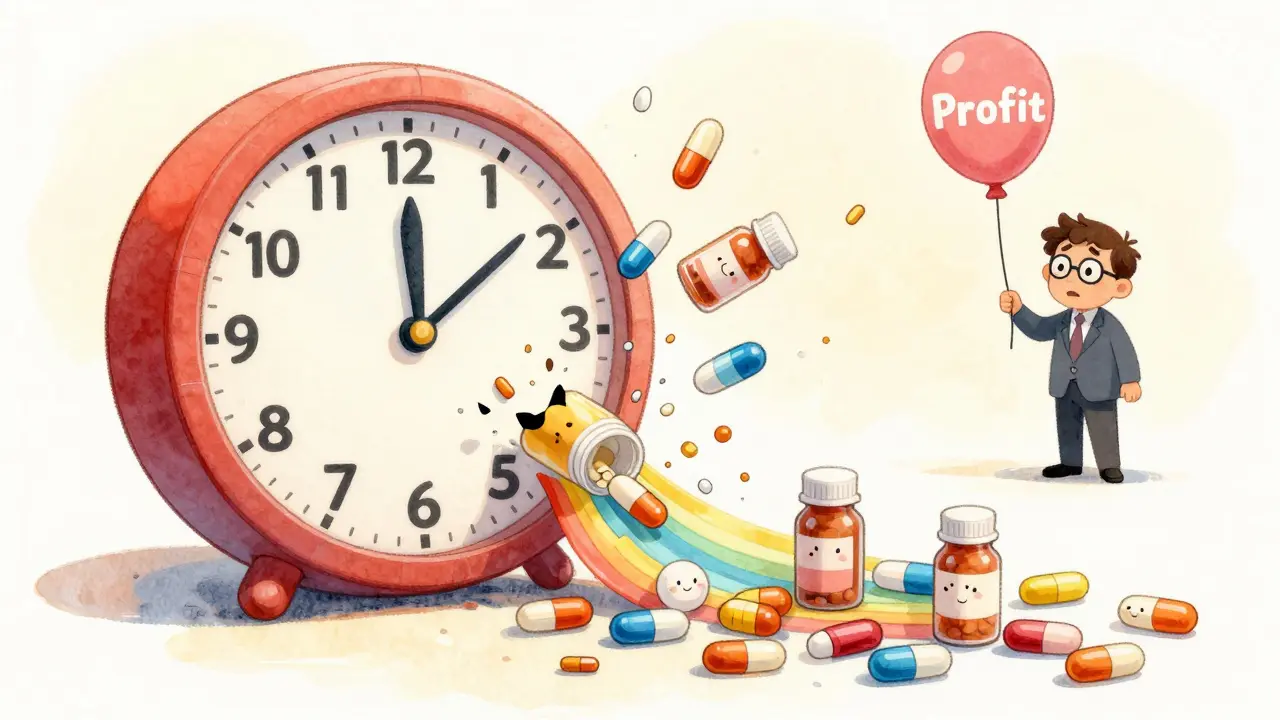
When a brand-name drug loses its patent, everything changes. The price doesn’t just drop-it collapses. Within months, dozens of companies start selling the exact same medicine for a fraction of the cost. Patients pay less. Insurers save millions. But the company that spent years and billions developing that drug? They lose up to 90% of their revenue overnight. This isn’t speculation. It’s the reality of the generic drugs revolution.
The Patent Cliff: When Revenue Vanishes
Every brand-name drug has a patent clock. Usually 20 years from filing, though often extended through legal maneuvers. Once that clock runs out, generic manufacturers can legally copy the drug. And they do-fast. The FDA approves hundreds of generic versions each year. By the time a drug like Humira lost patent protection in 2023, over 15 generic versions were already approved. Within a year, the brand’s sales dropped by more than 85%. This isn’t rare. It happens to nearly every top-selling drug. Lipitor, Enbrel, Plavix-all saw similar crashes. For pharmaceutical companies, this moment is called the “patent cliff.” It’s not just a financial setback. It’s a corporate earthquake. Investors panic. Stock prices plunge. Executives scramble to replace lost income.Generics Are Cheap. Really Cheap.
Generic drugs cost 80 to 85% less than their brand-name equivalents. That’s not a guess. It’s the FDA’s official estimate, backed by data from millions of prescriptions. In 2014 alone, generics saved the U.S. healthcare system $253 billion. By 2023, that number had climbed to over $330 billion annually. Yet generics make up only about 20% of total drug spending. Why? Because 90% of all prescriptions filled are for generics. That’s the paradox: most people take generics, but most money still flows to brand drugs-until the patent expires. The pricing model for generics is brutal. As soon as one company enters the market, prices drop. With two or three competitors, prices fall another 20%. By the time five or six manufacturers are selling the same pill, the price can be 95% below the original brand price. The FDA tracked 2,400 new generics approved between 2018 and 2020. In every case, the moment generic competition started, the brand’s price became irrelevant.Brand Manufacturers Don’t Just Sit There
Brand companies don’t wait for the axe to fall. They fight back. One tactic? “Pay for delay.” That’s when a brand manufacturer pays a generic company to hold off on launching its cheaper version. These deals aren’t illegal-until recently. The Congressional Budget Office estimates these agreements cost patients and taxpayers nearly $12 billion a year. In some cases, generic companies accepted millions in payments just to delay entry by months. Another trick? “Product hopping.” A brand company slightly changes its drug-maybe switches from a pill to a liquid, or adds a new coating-and then files a new patent. This resets the clock. Patients are told the new version is “better,” even though the active ingredient hasn’t changed. The CBO says ending this practice could save $1.1 billion over ten years. Some brands even launch their own generic versions. Pfizer did this with its cholesterol drug Lipitor. Novartis spun off its generic division, Sandoz, as a separate company in 2022. These moves let them keep some of the profit from the generic market instead of losing it all to competitors.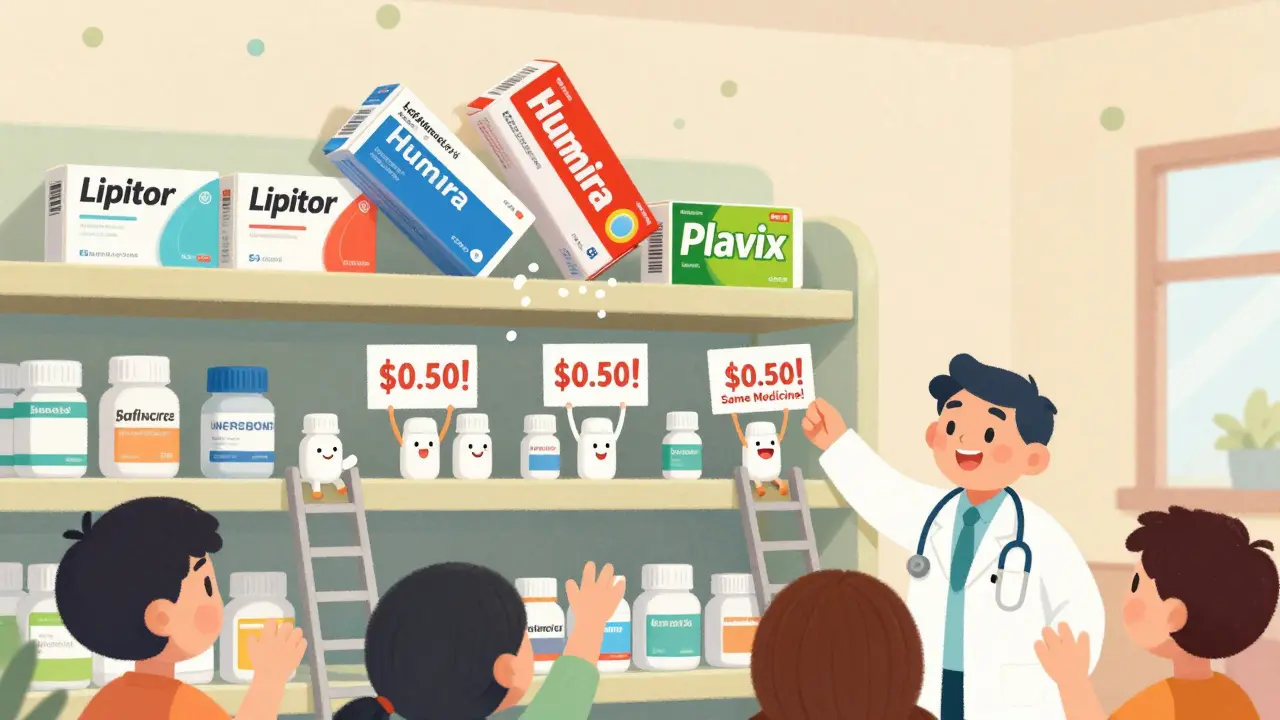
Who Really Benefits? The Middlemen
Here’s the twist: even though generics are cheaper, patients don’t always save as much as they should. Why? Pharmacy benefit managers-PBMs. These are the middlemen between insurers, pharmacies, and drugmakers. They negotiate rebates, set reimbursement rates, and control which drugs get covered. But their pricing system is opaque. A 2022 study from the Schaeffer Center at USC found patients often pay 13 to 20% more for generics than they should. Pharmacists on Reddit complain daily about this. One pharmacist wrote: “I fill a 30-day supply of metformin. The PBM reimburses me $4. The wholesale cost is $3.50. I lose 50 cents per prescription. And this is a drug that costs $100 a month under brand name.” PBMs make money by keeping the gap between what they charge insurers and what they pay pharmacies wide. Generics were supposed to fix this. Instead, the system got more complicated.Supply Chains Are Fragile
Low prices mean thin margins. And thin margins mean manufacturers cut corners. When a generic drug sells for pennies, companies have to produce millions of pills just to make a profit. That leads to pressure on production. Factories in India and China dominate the market. When one plant has a quality issue-say, contamination or mislabeling-the entire supply chain can freeze. The FDA has warned that this pressure contributes to drug shortages. In 2023, over 300 drugs were in short supply in the U.S., many of them generics. Insulin, antibiotics, IV fluids-all hit hard. The same companies that make these drugs cheaply also make them in bulk. When production slows, patients suffer.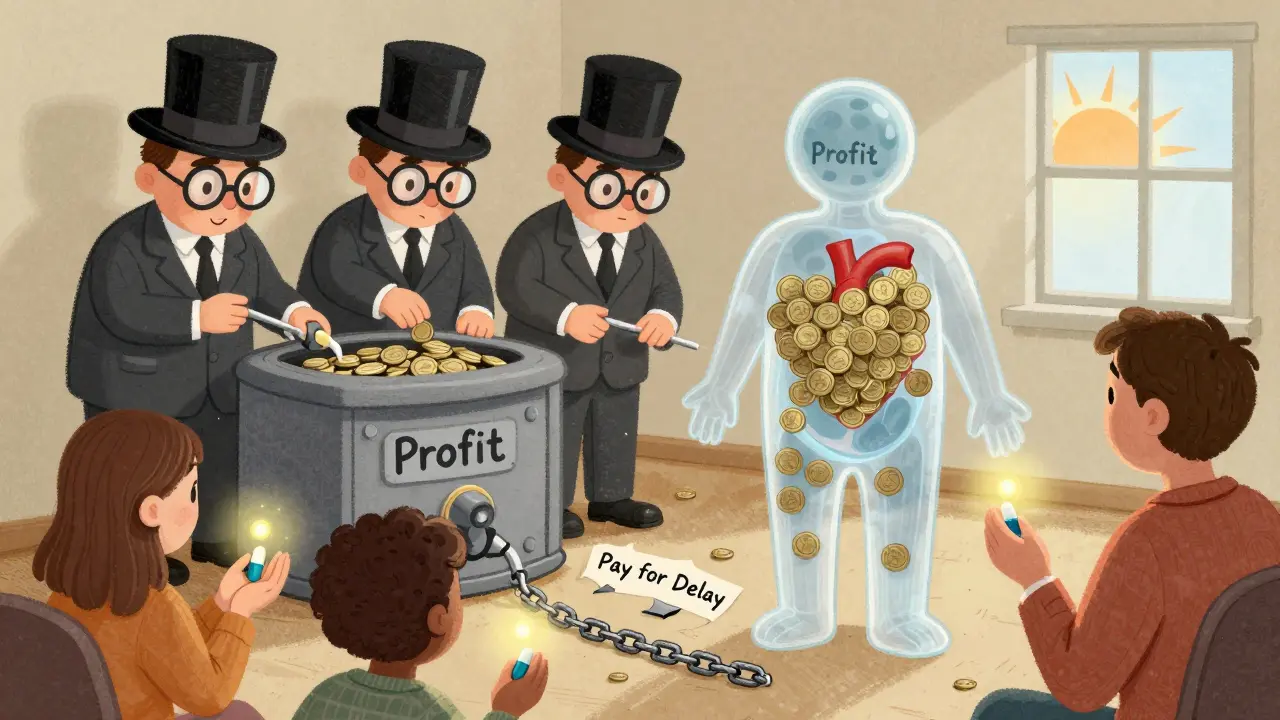
Complex Drugs Are the New Frontier
Not all generics are created equal. Simple pills? Easy to copy. Inhalers? Injectables? Complex biologics? Hard. These drugs require advanced manufacturing, specialized equipment, and rigorous testing. As a result, generic versions take longer to enter the market. Even after approval, they’re not always cheaper. For example, generic versions of insulin pens still cost hundreds of dollars. The FDA approved its first biosimilar insulin in 2021, but adoption has been slow. Manufacturers are still figuring out pricing. Patients still pay more than they should. The same goes for generic versions of cancer drugs and autoimmune treatments.What’s Next? The $400 Billion Problem
By 2028, an estimated $400 billion in brand drug revenue will be at risk from patent expirations. That’s more than the entire annual budget of the U.S. Department of Education. Big pharma companies are already retooling. Some are shifting to gene therapies and personalized medicine-treatments so complex and expensive that generics won’t be possible for decades. Legislation is catching up. Bipartisan bills in Congress aim to ban “pay for delay” deals outright. If passed, they could save $45 billion over ten years. The FDA’s GDUFA program, funded by $1.1 billion in industry fees through 2027, is speeding up generic approvals. But even with faster approvals, the system is still rigged in favor of profit over price.Generics Are the Engine of Affordability-But Not the Whole System
There’s no denying it: generics are the most powerful tool we have to make medicine affordable. They’ve saved trillions. They’ve kept millions on life-saving treatments. But they’ve also created a broken economic model. Brand manufacturers are forced to chase ever-higher prices before their patents expire. PBMs profit from confusion. Patients pay more than they should. And manufacturers cut corners to survive. The answer isn’t to stop generics. It’s to fix the system around them. Transparent pricing. Fair reimbursement. Real competition. And an end to legal loopholes that protect profits over patients.Why are generic drugs so much cheaper than brand-name drugs?
Generic drugs cost less because they don’t need to recoup the billions spent on research, clinical trials, and marketing that brand-name drugs do. Once a patent expires, multiple manufacturers can produce the same drug using the same formula. Competition drives prices down-often to 80-85% below the brand price. The FDA requires generics to be identical in active ingredients, dosage, safety, and effectiveness, so the lower cost comes from eliminating redundant expenses, not cutting corners on quality.
Do generic drugs work as well as brand-name drugs?
Yes. The FDA requires generics to meet the same strict standards as brand-name drugs. They must have the same active ingredient, strength, dosage form, and route of administration. They must also be bioequivalent-meaning they work the same way in the body and deliver the same therapeutic effect. Studies show no meaningful difference in effectiveness or safety between generics and their brand-name counterparts. Millions of people take generics every day with the same results as the original.
Why do some patients still pay a lot for generics?
Pharmacy benefit managers (PBMs) control reimbursement rates and often set prices that don’t reflect true wholesale costs. Even when a generic pill costs $1 to produce, a PBM might reimburse a pharmacy only $4, while charging the insurer $10. Patients with high deductibles or copays may still pay $20-$50 per prescription because the system is designed to maximize PBM profits, not patient savings. This is especially true for older, widely used generics where competition is high but pricing transparency is low.
What is a "pay for delay" deal?
A "pay for delay" deal happens when a brand-name drug company pays a generic manufacturer to delay launching its cheaper version. Instead of competing right away, the generic company waits months or even years. These deals keep prices high and hurt consumers. The Federal Trade Commission and Congressional Budget Office estimate these agreements cost the U.S. healthcare system $12 billion a year, with $3 billion coming directly from patients’ pockets. Several bills in Congress aim to ban them entirely.
How do generic drug shortages happen?
Because generics have such thin profit margins, manufacturers operate on razor-thin budgets. When production costs rise-due to raw material shortages, regulatory inspections, or factory failures-companies may stop making the drug entirely. Since many generics are produced overseas, a single plant shutdown in India or China can disrupt supply for the entire U.S. market. The FDA tracks over 300 drug shortages each year, and most involve low-cost generics that no one wants to make profitably.
Can brand companies ever recover after a patent expires?
It’s rare, but some companies adapt. Some launch their own generic versions (called "authorized generics") to capture part of the market. Others shift focus to new, high-priced drugs-like GLP-1 weight-loss medications or gene therapies-that won’t face generic competition for years. A few, like Novartis, spin off their generic divisions into separate companies. But for most, the patent expiration means a permanent drop in revenue. Recovery usually comes from a new blockbuster drug, not from the old one.

Comments (12)
Chloe Hadland
Generics saved my life and my wallet
My insulin used to cost $400 a month
Now it's $15 and I don't have to choose between meds and rent
Amelia Williams
I work in a rural clinic and let me tell you-generics are the only reason our patients keep taking their meds
People don’t care if it’s brand or generic as long as it works
And honestly? Most don’t even know the difference
It’s the system that’s broken, not the pills
Doctors used to push brands out of habit, now we just prescribe what’s affordable
Patients are smarter than we give them credit for
They notice when their copay drops by 90%
And they notice when the pharmacy runs out because no one wants to make pennies on a pill
We need better reimbursement models, not more patents
The real villains aren’t the manufacturers-they’re the middlemen hiding behind opaque rebates
And yeah, I’ve seen the same patient fill a $3 generic metformin script and pay $40 out of pocket because of PBM nonsense
It’s criminal
But we keep fighting because someone has to
Kevin Waters
Interesting breakdown
I’ve always wondered why generics aren’t cheaper for patients when they’re so cheap for pharmacies
Turns out it’s the PBM middleman game
And the fact that manufacturers can’t profit off pennies means they stop making drugs altogether
Which leads to shortages
So we’re stuck in this loop where affordability kills supply
Maybe we need a public option for generic manufacturing
Like how the VA handles it
Or at least cap PBM rebates
Otherwise we’re just rearranging deck chairs on the Titanic
Sushrita Chakraborty
As someone from India, where generic pharmaceuticals are a national pride point, I find this analysis both accurate and deeply familiar.
Our manufacturers produce over 50% of the world’s generic drugs, often at a fraction of the cost.
Yet, even here, the quality control is under constant strain due to export demands.
The FDA’s warnings about contamination are not hypothetical-they are daily realities in some facilities.
But the solution is not to restrict production, but to invest in regulatory infrastructure.
India’s Central Drugs Standard Control Organization needs more funding, not less.
And yes, the U.S. system’s reliance on opaque PBMs is absurd.
Why should a patient pay $20 for a $0.10 pill?
It is not capitalism-it is corruption dressed in corporate jargon.
Generics are not the problem.
The profit-driven architecture around them is.
Let us not confuse the cure with the disease.
Karen Conlin
Let’s be real-no one’s mad at generics
People are mad that after 20 years of monopoly pricing, Big Pharma gets to play both sides of the field
They make the drug, then make the generic version of it
They patent the delivery method, not the drug
They pay competitors to sit on their product
And then they act shocked when patients can’t afford the medicine they invented
Meanwhile, the CEO buys a private jet
And the pharmacist loses 50 cents per metformin script
It’s not capitalism
It’s feudalism with a pharmacy receipt
And if you think this is about innovation-you’re drunk on pharma ads
Real innovation doesn’t need a 20-year monopoly to survive
It thrives on competition
And if you don’t believe me, ask a diabetic who’s been on generics for a decade
They’ll tell you the same thing: it works
Just like the brand
But now they can afford to live
That’s not a flaw
That’s the point
Sawyer Vitela
Patent cliffs are just market efficiency
Stop crying about lost revenue
Investment returns are supposed to be finite
If you can’t adapt, you fail
Simple
And PBMs? They’re the real cancer
Not generics
Fix the middlemen, not the pills
Izzy Hadala
It is imperative to note that the FDA’s bioequivalence standards for generic pharmaceuticals are grounded in rigorous scientific protocols, including in vivo pharmacokinetic studies and in vitro dissolution profiling.
Nevertheless, the systemic distortion introduced by Pharmacy Benefit Managers (PBMs) via rebate structures and formulary manipulation undermines the intended economic efficiency of generic substitution.
Furthermore, the phenomenon of product hopping constitutes a form of regulatory arbitrage, wherein minor modifications to drug formulation are leveraged to extend patent exclusivity in contravention of the spirit of the Hatch-Waxman Act.
Legislative intervention is not merely advisable-it is a moral imperative to restore competitive equilibrium to the pharmaceutical marketplace.
Without such reform, the public health benefits of generic accessibility will remain perpetually suboptimal.
asa MNG
bro the whole system is rigged lol
they pay people to not make the cheap stuff 😭
and then act surprised when people die from not taking their meds
also pbms are the real villains
also i think the fda is in on it too
they always approve the generics but then the drugs disappear??
like where do they go??
aliens??
or just the same 3 companies that own everything??
also i saw a video on tiktok that said insulin is $1 in india but $300 here
and the same company makes both??
im just saying
its not a coincidence
its a conspiracy
😭😭😭
Dolores Rider
they’re hiding something
why do the same pills cost 10x more in the US than in Canada?
why do the same factories make both?
why do PBMs get richer every year while patients go bankrupt?
it’s not supply and demand
it’s control
they want you dependent
they want you scared
they want you paying $50 for a pill that costs $0.20 to make
and they’re laughing all the way to the bank
while you choose between insulin and rent
don’t believe the narrative
this isn’t medicine
it’s extortion
and they’re all in on it
every single one
pharma execs, PBMs, even the FDA
they’re all part of the machine
you’re not imagining it
you’re being exploited
and they’re not sorry
they’re counting your money
Heather McCubbin
so the real villain isn't the drug
it's the system that lets a company make billions on a pill then act like they're the hero when they make a generic version of it
and then the pharmacist loses money on every prescription
and the patient still pays $20
and everyone says 'oh it's cheaper!'
but it's not cheaper for the person holding the receipt
it's cheaper for the insurance company
which means the profit just moved
not disappeared
we're being played
and we're all just pawns in a game no one asked to be in
and now we're told to be grateful for the crumbs
while the table is set for the rich
and the rest of us just wait for the next shortage
because no one wants to make pennies on a life-saving drug
but everyone wants to profit from your suffering
and that's not capitalism
that's hell with a pharmacy counter
Phil Maxwell
just saw a pharmacist post about how they’re losing money on every generic script
and they still show up every day
they’re the real heroes
not the execs
not the investors
just the people who hand out the pills
while the system eats them alive
venkatesh karumanchi
As someone from India where generics are the backbone of healthcare access, I see this daily.
Our factories ship millions of pills to the U.S. every month.
But the same companies that make $0.10 pills here sell the exact same formula for $100 in America.
It’s not about cost-it’s about control.
And the worst part? Most Americans don’t even know their insulin was made in Hyderabad.
They think it’s a luxury brand.
We built the system that saves your lives.
And you don’t even know our names.
But we still make the pills.
Because someone has to.
And we’re not asking for thanks.
We just want you to know: you’re not alone.
And the medicine you take? It’s not magic.
It’s just hard work.
And greed.