
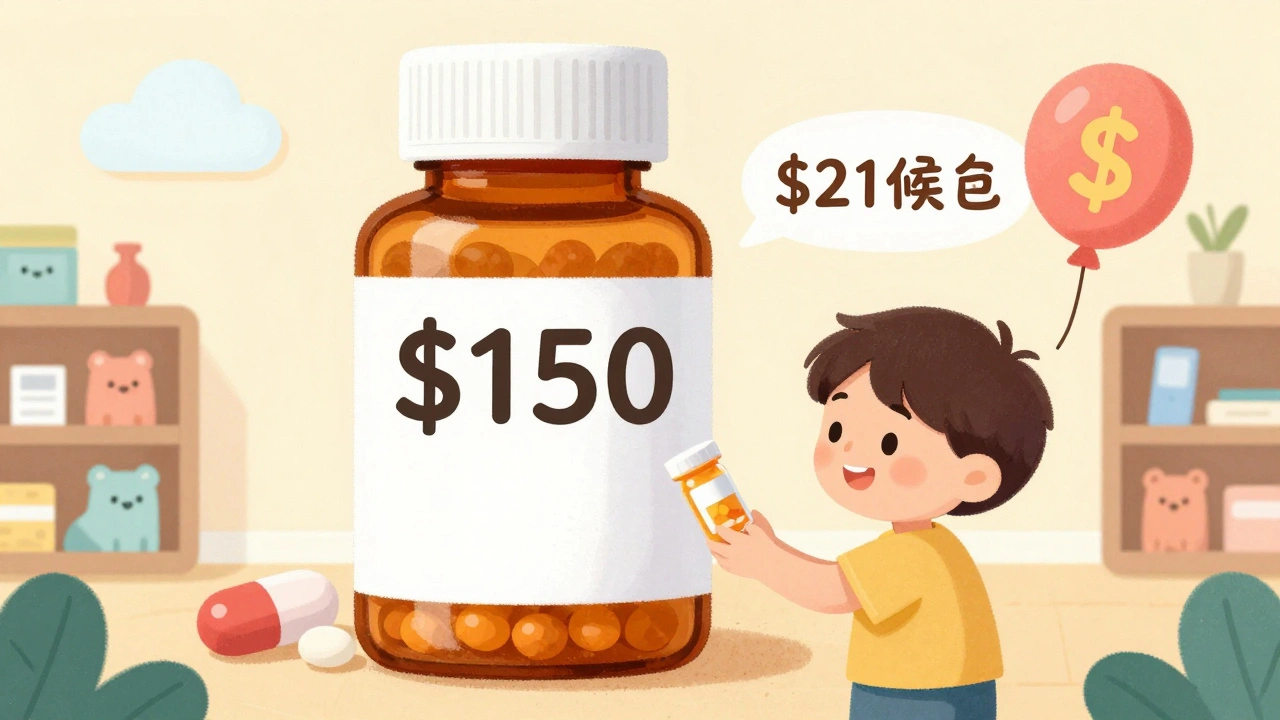
Every year, Americans spend over $700 billion on prescription drugs. But here’s the thing: generic drugs are responsible for saving the U.S. healthcare system $467 billion in 2024 alone. That’s not a guess. That’s a fact from the 2025 U.S. Generic & Biosimilar Medicines Savings Report. And it’s not just a one-time spike-over the past decade, generics have saved the system more than $3.4 trillion. Yet most people still don’t realize how much they’re paying unnecessarily at the pharmacy counter.
What You Pay vs. What the System Pays
In 2024, 90% of all prescriptions filled in the U.S. were generics. That’s 3.9 billion prescriptions. But those 3.9 billion prescriptions only cost $98 billion total. Meanwhile, brand-name drugs made up just 10% of prescriptions-435 million-but cost $700 billion. That’s a five-to-one ratio: generics gave you 90% of your meds for just 12% of the cost. Think about that next time you’re handed a $150 prescription. If it’s a brand-name drug, you’re paying roughly $28.69 out of pocket on average. If it’s a generic? You’re paying $6.95. That’s not a small difference-it’s life-changing for people on fixed incomes, seniors, or anyone without good insurance. For uninsured Americans, the gap is even wider. Since 2019, the average cost of a brand-name drug has jumped by 50%, hitting $130.18 per prescription. Meanwhile, generic prices actually dropped by 6%, or $2.45, over the same period. That’s not a fluke. It’s the result of competition. When multiple companies make the same drug, prices fall. Brand-name companies don’t face that pressure.How Generics Keep Getting Cheaper-Even as More Are Used
Here’s the wild part: more people are using generics than ever before. In 2015, Americans took about 167 billion generic pills and capsules. By 2024, that number hit 197 billion. That’s a 15% increase in volume. But here’s what’s even more surprising: total spending on generics has gone down by $6.4 billion since 2019-even though more pills were sold and more new generics entered the market. That’s deflation in action. In every other industry, when demand goes up and supply stays steady, prices rise. In the generic drug market, it’s the opposite. More competition = lower prices. And that’s why generics are the only part of the entire U.S. healthcare system that consistently reduces overall spending. Recent data from April to July 2025 shows this trend continuing. In May, $40 million in generic drug prices dropped, while only $26 million went up. Net savings: $14 million for Medicaid. In June, the numbers were even better: $45 million down, $29 million up. Net savings: $17 million. This isn’t a blip. It’s the new normal.Biosimilars: The Next Big Wave of Savings
Biosimilars are the next generation of generics. They’re not exact copies like traditional generics-they’re highly similar versions of complex biologic drugs used for cancer, autoimmune diseases, and other serious conditions. But they still save money. Big money. In 2024, biosimilars saved $20.2 billion, nearly double what they saved the year before. Since they entered the market in 2015, they’ve saved $56.2 billion total. And here’s the kicker: 60% of those savings happened in just the last two years. That means adoption is accelerating. These drugs have been used in nearly 3.3 billion days of patient therapy. No safety issues. No drop in effectiveness. Just lower prices. For example, a biosimilar for rheumatoid arthritis that used to cost $2,000 a month now costs under $800. That’s not a minor discount. It’s what keeps people alive and working.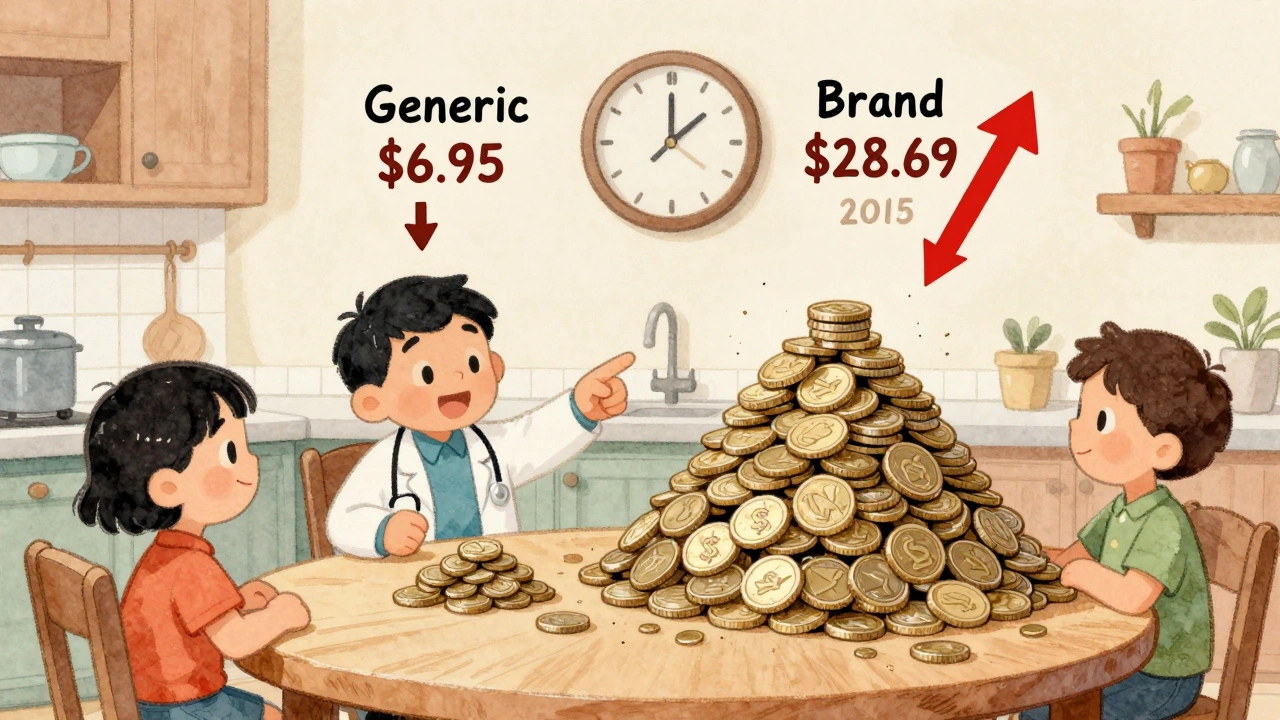
Why Brand-Name Drugs Keep Getting More Expensive
While generics keep getting cheaper, brand-name drug prices keep climbing. In January 2025, major pharmaceutical companies raised prices on 250 drugs by a median of 4.5%. That’s nearly double the overall inflation rate in the U.S. That’s not tied to production costs. It’s not tied to research. It’s corporate pricing. One of the most extreme examples? Vasostrict, a drug used to treat low blood pressure. Between April and July 2025, its list price dropped 76%. That’s not because the manufacturer suddenly became charitable. It’s because a generic version entered the market. The brand had no choice but to slash its price-or lose nearly all its sales. That’s the power of competition. When generics show up, brand-name companies have to respond. Most don’t. They just keep raising prices on drugs with no competition.What’s at Risk: The Generic Supply Chain
Here’s the problem: the system that saves you money is under threat. Generic manufacturers are making less money per pill. They’re operating on razor-thin margins. Some companies have already stopped making certain drugs because the price is too low to cover costs. The Biosimilars Council warns that if this keeps up, we could see more shortages. Not because of supply chain issues or pandemics-but because no one wants to make a drug that pays $0.02 per pill. That’s not speculation. It’s already happening with older, low-cost generics like certain antibiotics, thyroid meds, and blood pressure pills. And it’s not just about profit. It’s about access. If a drug disappears from the market, patients don’t just switch to another one. Sometimes, there isn’t one. Or the alternative is a brand-name drug that costs ten times more.
How Policy Is Helping (and Hurting)
There are policies that help. The Inflation Reduction Act (IRA) is trying to cap insulin costs at $35 a month. That’s huge. But it only applies to a few drugs. Meanwhile, other policies are making it harder for generics to compete. Pay-for-delay deals-where brand-name companies pay generic makers to delay launching their version-are still happening. A 2025 study found these deals cost the system $12 billion a year. Medicare alone loses $3 billion annually because of them. Banning them could save $45 billion over ten years. Patent thicketing is another problem. Companies file dozens of minor patents on one drug to block generics for years. The Congressional Budget Office says ending this practice could save $1.8 billion over ten years. And then there’s Medicare. In 2024, it saved $142 billion because of generics. That’s $2,643 per beneficiary. If we lose that savings, Medicare costs will balloon. Seniors will pay more. Taxpayers will pay more.What You Can Do
You don’t need to wait for Congress to fix this. You can act today.- Always ask your doctor if a generic version exists for your prescription.
- If your pharmacy gives you the brand-name drug without asking, ask why. You have the right to the cheaper option.
- Use mail-order pharmacies or discount programs like GoodRx-they often have lower generic prices than your local pharmacy.
- Check if your insurance has a tiered formulary. Generics are almost always in Tier 1-the lowest cost.
- If you’re on Medicare, review your Part D plan every year. Plans change, and so do their generic coverage rules.
The Bottom Line
Generic drugs aren’t just cheaper. They’re the reason millions of Americans can afford their medicine. They’re the reason insulin, blood pressure pills, and antidepressants aren’t out of reach. They’ve saved the U.S. healthcare system over $3.4 trillion in ten years. That’s more than the entire annual GDP of Australia. But that system is fragile. The same companies that profit from high brand-name prices are lobbying to keep generics out. And if we don’t protect the market that makes generics viable, we’ll lose the savings-and the access-that keeps people healthy. The numbers don’t lie. Generics work. They save money. They save lives. The question is: are we going to let them keep doing it?How much can I save by switching to a generic drug?
On average, you save about $21.74 per prescription by choosing a generic instead of a brand-name drug. In 2024, the average out-of-pocket cost for a generic was $6.95, while brand-name drugs cost $28.69. For uninsured patients, the savings can be even higher-sometimes over $100 per prescription.
Are generic drugs as effective as brand-name drugs?
Yes. The FDA requires generics to have the same active ingredient, strength, dosage form, and route of administration as the brand-name drug. They must also prove they work the same way in the body. Studies show generics are just as safe and effective. The only differences are in inactive ingredients like color or filler, which don’t affect how the drug works.
Why are generic drugs so much cheaper?
Generic manufacturers don’t have to repeat expensive clinical trials. They only need to prove their version works the same as the original. That cuts development costs by up to 90%. Plus, when multiple companies make the same drug, competition drives prices down. Brand-name companies face no competition until their patent expires.
Why do some pharmacies give me the brand-name drug without asking?
Sometimes it’s a system glitch. Other times, the pharmacy gets a higher rebate from the drugmaker for pushing the brand-name version-even if it costs you more. Always ask if a generic is available. You have the legal right to request it. If they refuse, ask to speak to the pharmacist or file a complaint with your state’s board of pharmacy.
What’s the difference between a generic and a biosimilar?
Generics are exact copies of simple chemical drugs like aspirin or metformin. Biosimilars are highly similar versions of complex biological drugs made from living cells-like Humira or Enbrel. They’re not identical, but they work the same way. Biosimilars are newer and cost less than the original biologics, often by 30-50%. They’ve saved over $56 billion since 2015.
Can I trust generic drugs from other countries?
Only if they’re approved by the FDA. Many online pharmacies sell drugs from other countries, but unless they’re FDA-approved, you can’t be sure they’re safe or effective. Stick to U.S.-licensed pharmacies. If a generic looks suspiciously cheap or comes from an unknown source, it could be counterfeit. The FDA has cracked down on fake generics, but they still exist.
Why are some generic drugs hard to find?
Some older generics have such low profit margins that manufacturers stop making them. This often happens with drugs that have been on the market for decades-like certain antibiotics or thyroid meds. When one company stops producing it, others may not step in because the price is too low. That’s when shortages happen. The FDA tracks these shortages, and you can check their website if you’re having trouble finding a medication.
Do insurance plans cover generics better than brand-name drugs?
Yes. Almost all insurance plans put generics in the lowest cost tier. You’ll pay the least copay for generics. Brand-name drugs often require prior authorization or higher copays. Some plans even have a separate deductible for brand-name drugs. Always check your plan’s formulary before filling a prescription.

Comments (15)
Saket Modi
bro why are we even talking about this? i just want my $5 pills and not to think about pharma CEOs eating caviar. 🤡
Chris Wallace
I’ve been on a generic blood pressure med for five years now. Never had an issue. My doctor even said the FDA’s bioequivalence standards are brutal-like, they test the hell out of these things. The fact that people still think generics are ‘inferior’ is just... sad. It’s not magic. It’s science. And it’s working. I just wish more people knew that before they panic-bought the brand-name version at the pharmacy counter.
william tao
The data presented here is statistically significant, empirically robust, and methodologically sound. However, one must consider the structural inefficiencies inherent in the U.S. pharmaceutical supply chain, wherein market-based pricing mechanisms are systematically distorted by regulatory capture and rent-seeking behavior. The 90% generic utilization rate is not indicative of consumer preference-it is indicative of systemic coercion.
Sandi Allen
This is all a lie. The FDA is bought. The ‘generics’ are made in China in factories with no oversight. You think your $6 pill is safe? It’s probably laced with rat poison and formaldehyde. I know a guy whose cousin’s neighbor took a generic and his liver exploded. They don’t tell you this. They’re hiding it. $$$
John Webber
i just dont get why people pay more for brand names when its the same thing. i mean like come on. my grandma takes her generic thyroid med and shes fine. i dont know why anyone would risk it. i think its just because they think brand = better. its not. its just marketing. i saw a commercial once for some brand pill and it had a dog in a tuxedo. that's not medicine. thats a cartoon.
Shubham Pandey
Generic saves money. End of story.
Elizabeth Farrell
I’ve had patients come to me crying because they were choosing between insulin and groceries. Then they found out their brand-name med had a generic-sometimes for less than $10 a month. That moment? That’s why this matters. It’s not just about numbers on a spreadsheet. It’s about someone being able to breathe, work, hug their kid, or go to their grandchild’s recital. The fact that we’re even debating this? That’s the real tragedy. We have the tools. We just need the will.
Sheryl Lynn
Ah yes, the ol’ ‘generic = cheap’ fallacy. It’s almost poetic how the proletariat has been conditioned to equate affordability with inferiority. The pharmaceutical aristocracy thrives on this cognitive dissonance. You see, the $28.69 pill isn’t a medicine-it’s a status symbol. A tiny, white, rectangular talisman of bourgeois virtue. Meanwhile, the $6.95 alternative? It’s the silent revolution. The quiet rebellion of the uninsured, the underinsured, the elderly, the working poor. And they’re winning. By the way, have you checked the color of your generic’s filler? No? Good. Because it doesn’t matter. Neither does your ego.
Paul Santos
Fascinating. The economics of generics are a beautiful example of Schumpeterian creative destruction in action. When competition enters the market, monopolistic rents evaporate-like dew under morning sun. But here’s the irony: the same entities that profit from patent monopolies are now lobbying to suppress biosimilar entry. It’s capitalism with a muzzle. 🤔💊
Eddy Kimani
The biosimilar adoption curve is exponential-almost like Moore’s Law but for biologics. What’s interesting is the lag between regulatory approval and market penetration. It’s not a supply issue-it’s a trust deficit. Clinicians are hesitant. Patients are scared. Payers are slow. But once you get past the first 12 months, adherence spikes and costs plummet. The data from the last two years? That’s not a trend. That’s a tectonic shift.
John Biesecker
i never thought about how a pill could change someones life like that. like i get that its cheaper but i didnt realize it could be the difference between eating or not. i used to think generics were just for poor people. now i see its just smart. and also… i think i spelled ‘pharmaceutical’ wrong in my notes. oops. 🤭
Genesis Rubi
America makes the best drugs in the world. Why are we letting foreigners and cheap generics ruin our legacy? We don’t buy knockoff iPhones, so why buy knockoff medicine? This is a national security issue. Our soldiers deserve real medicine. Not some Chinese-made placebo with a different color.
Doug Hawk
I’ve been in pharmacy for 22 years. I’ve seen the shift. The real problem isn’t the generics. It’s the rebate system. Pharmacies get paid more to push the brand name even when the generic is cheaper for the patient. That’s not a glitch. That’s a business model. And it’s why you’re handed the $150 pill without being asked. The system is rigged. And no one talks about it because the money flows up, not down.
Girish Padia
India makes 70% of the world’s generics. We don’t have fancy ads. We don’t have CEOs with yachts. We just make pills. Cheap. Good. Real. You Americans act like generics are some kind of conspiracy. They’re not. They’re just… medicine.
Chelsea Moore
I CAN’T BELIEVE WE’RE STILL HAVING THIS CONVERSATION IN 2025!!! PEOPLE ARE DYING BECAUSE THEY CAN’T AFFORD THEIR MEDS AND SOMEONE JUST SAID ‘IT’S JUST A $6 PILLS’ LIKE IT’S NOTHING!!! THIS ISN’T A BLOG POST-IT’S A MORAL CRISIS!!! WHY ISN’T THE MEDIA SHOUTING THIS FROM THE ROOFS?!?!?!?!