
Most people throw away pills the moment they hit the expiration date on the bottle. But what if those pills are still good? What if, with the right storage, your leftover antibiotics, painkillers, or blood pressure meds could last years beyond that printed date-without losing strength or becoming dangerous?
The truth is, medication storage matters far more than most people realize. It’s not just about keeping things out of reach of kids. It’s about controlling temperature, humidity, and light. And when done right, it can keep medicines effective long after their labeled expiration dates.
Why Expiration Dates Aren’t Always the Full Story
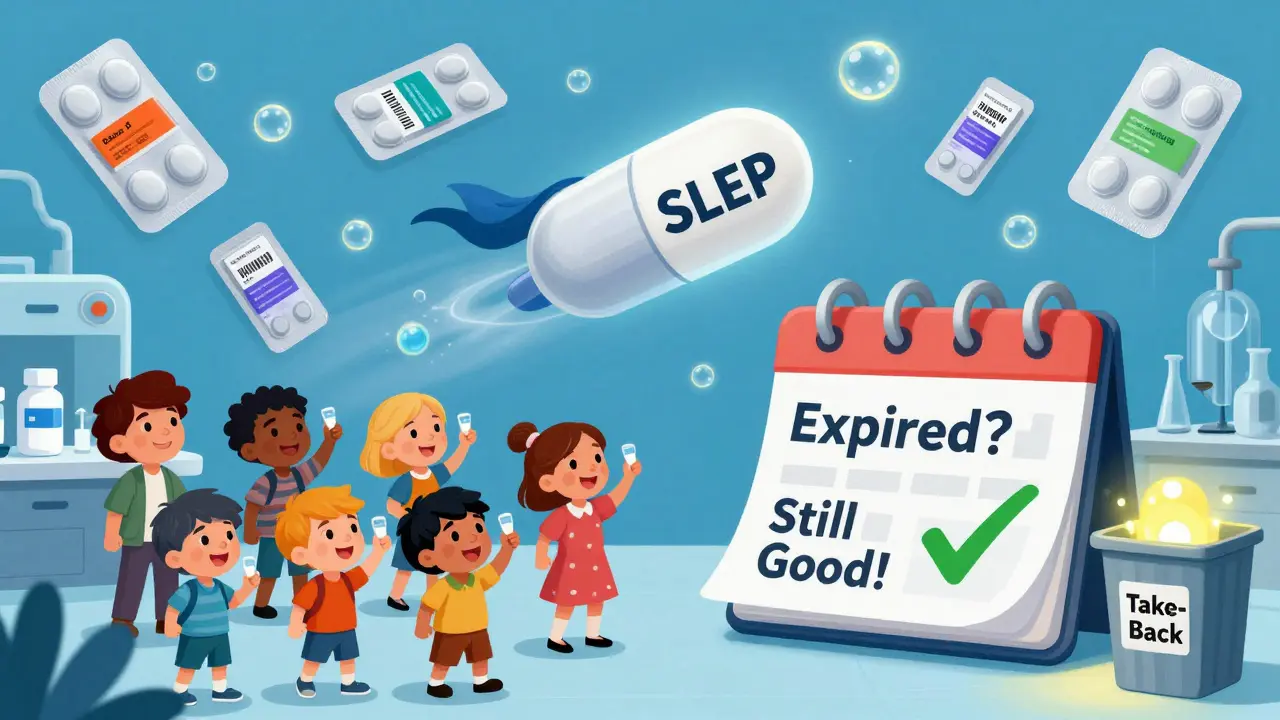
Expiration dates aren’t magic cutoffs where drugs suddenly turn toxic. They’re the last date the manufacturer guarantees full potency and safety under recommended storage conditions. That’s it. Not a death sentence for the pill.
The U.S. government’s Shelf-Life Extension Program (SLEP), run by the FDA and Department of Defense since 1986, tested over 3,000 lots of medications. The results? 88% of them were still safe and effective-sometimes years past their expiration date. Some drugs, like naloxone and fentanyl, stayed stable for up to five years beyond their printed date.
In 2013, the FDA confirmed that certain stockpiled Tamiflu capsules could be used for up to ten years after manufacture-five times longer than the original label. And in April 2024, the FDA extended the shelf life of TPOXX injection from 48 to 60 months for specific lots.
These aren’t edge cases. They’re proof that expiration dates are conservative estimates, not hard limits.
What Medications Last Longer-and What Doesn’t
Not all drugs behave the same. Some hold up well. Others degrade fast-or worse, turn harmful.
Medications that typically stay stable:
- Tablets and capsules (especially solid oral forms like ibuprofen, amoxicillin, atorvastatin)
- Injectables stored properly (like epinephrine auto-injectors if kept cool)
- Antibiotics like doxycycline and ciprofloxacin
- Pain relievers like acetaminophen and aspirin
- Heart medications like metoprolol and lisinopril
Medications that degrade quickly or become risky:
- Liquids (syrups, suspensions, eye drops)
- Reconstituted antibiotics (like amoxicillin clavulanate after mixing)
- Insulin and other biologics
- Nitroglycerin tablets (lose potency fast even in sealed bottles)
- Tetracycline antibiotics (can break down into toxic compounds)
- Suppositories and creams
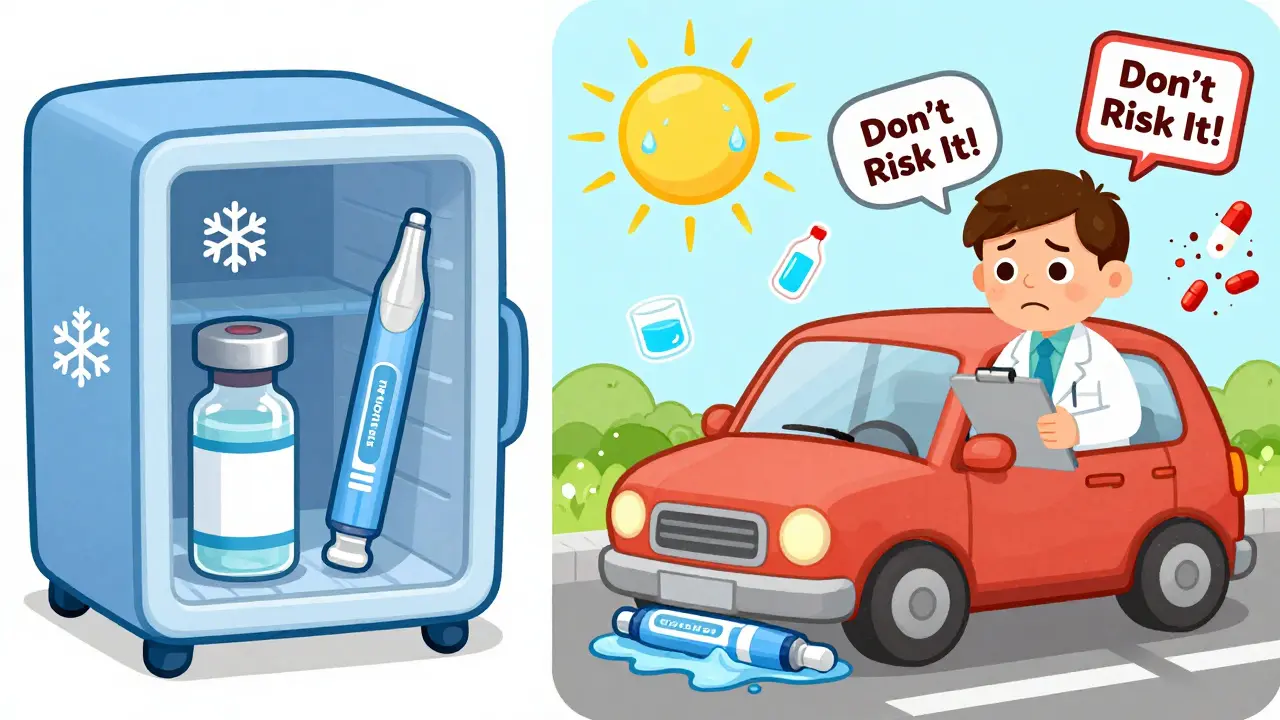
Insulin is a big one. If it’s been exposed to heat-even briefly-it can lose effectiveness without any visible change. That’s dangerous for diabetics. Same with epinephrine. If your EpiPen has been sitting in a hot car, don’t risk it.
How to Store Medications for Maximum Longevity
Storage isn’t just about the medicine cabinet. It’s about science.
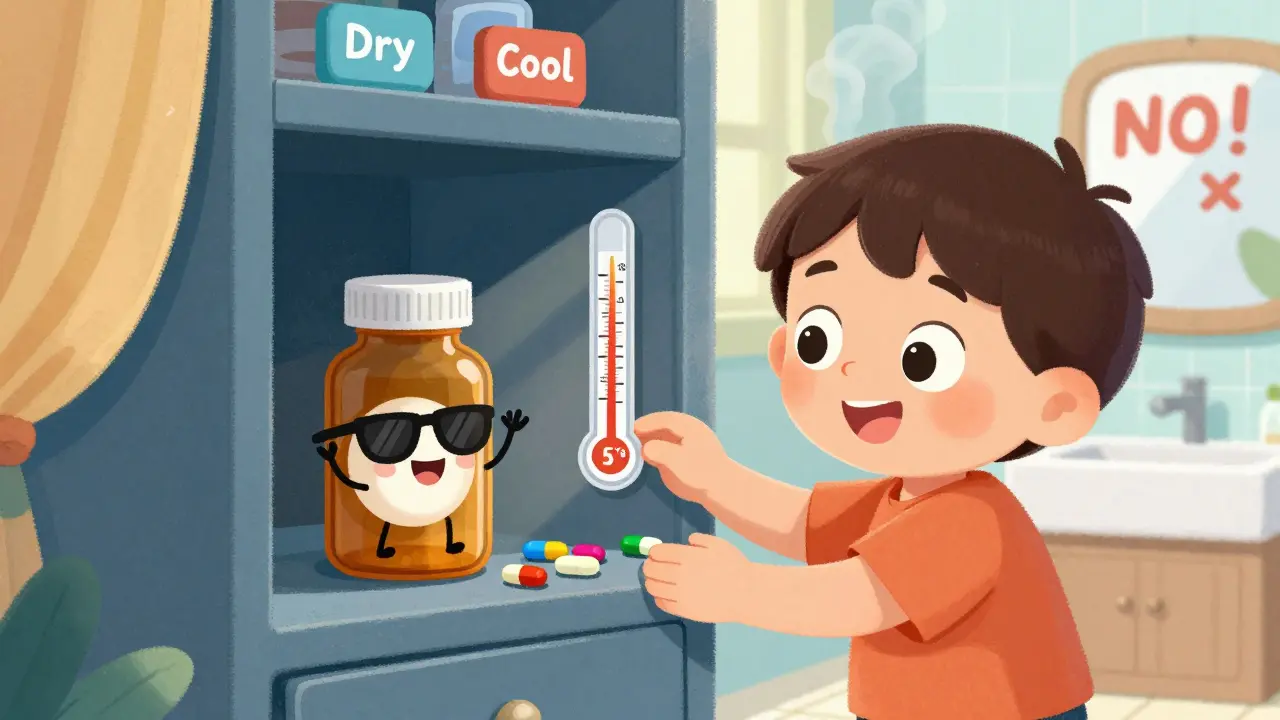
The ideal environment for most pills is cool, dry, and dark. Here’s what to aim for:
- Temperature: 5°C to 25°C (41°F to 77°F). Avoid heat sources like ovens, radiators, or sunny windowsills.
- Humidity: Keep it below 60%. Bathrooms are terrible for storage-steam from showers ruins pills.
- Light: Protect from UV. Keep pills in their original amber bottles or opaque containers.
- Containers: Don’t transfer pills to pill organizers unless you’re using them short-term. Original packaging often has moisture barriers.
Some medications need refrigeration (2°C to 8°C). Check the label. Vaccines, certain antibiotics, and biologics like insulin fall into this group. But don’t freeze them unless it says so. Freezing can destroy the structure of many drugs.
For long-term storage, consider a small, dedicated medicine fridge-just for meds. Set it to 5°C. Use a thermometer to monitor it. That’s what hospitals and pharmacies do.
What Storage Tech Is Used in the Industry
Behind the scenes, pharmaceutical companies use advanced methods to extend shelf life. You won’t find these at your local pharmacy-but you can learn from them.
One technique is modified atmosphere packaging (MAP). Instead of plain air inside the blister pack, they flush it with nitrogen or argon. This slows oxidation-the main cause of drug breakdown.
Another is high-barrier packaging: blister packs made of aluminum and PVC, or HDPE bottles with child-resistant caps that seal tightly. These keep moisture out better than plastic pill bottles.
Some facilities even use time-temperature integrators-tiny labels that change color if the drug has been exposed to too much heat over time. These are being tested for future use in consumer packaging.
And yes, the military uses all of this. The Strategic National Stockpile stores over 3,000 different drugs. They don’t just rely on printed dates. They test lots regularly. That’s how they’ve saved over $2.1 billion since 1986 by avoiding unnecessary replacements.
When You Should Never Use an Expired Medication
Just because a pill might still work doesn’t mean you should take it.
Don’t use expired meds if:
- They’ve changed color, smell, or texture
- They’re crumbly, sticky, or have a strange odor
- They’re liquids that look cloudy or have particles
- They’re insulin, nitroglycerin, or antibiotics that were supposed to be refrigerated and were left out
- You’re treating a serious condition (infection, heart issue, seizure) and can’t get a new prescription
And never take expired antibiotics. Even if they seem fine, they might not kill all the bacteria. That’s how resistant strains start.
If you’re unsure, don’t guess. Talk to a pharmacist. They can often tell you if a drug is likely still safe based on how it was stored and what kind of medication it is.
What About Emergency Situations?
In a disaster-power outage, flood, war-your meds might be your only lifeline. The FDA has acknowledged this. During public health emergencies, they’ve allowed extensions for stockpiled drugs like doxycycline for anthrax or Tamiflu for flu outbreaks.
If you’re in a true emergency and have no access to new medicine, using an expired tablet that was stored properly is better than nothing. But it’s a last resort. Prioritize getting replacement meds as soon as possible.
Keep a small emergency kit with your most critical meds. Store it in a cool, dry place. Rotate it every 6-12 months. Don’t wait until a crisis to find out your pills are useless.
How to Dispose of Expired or Unwanted Medications
If a medication is truly degraded or you’re not going to use it, don’t flush it. Don’t throw it in the trash where kids or pets can get to it.
Use a drug take-back program. Many pharmacies and police stations have drop boxes. In Australia, the National Drug Strategy has take-back initiatives in most states.
If no take-back option exists, mix pills with something unappetizing-coffee grounds or cat litter-seal them in a container, and throw them in the trash. Remove labels to protect your privacy.
Never store expired meds just in case. Outdated drugs clutter your space and create false security. Regularly clean out your medicine cabinet. Every six months is a good rule.
What’s Changing in the Industry
Pharmaceutical companies are moving away from fixed expiration dates. More than 68% of the top 50 drugmakers now use continuous stability monitoring. That means they track how each batch performs over time using sensors and data-not just guesswork.
Regulators are starting to catch up. The European Medicines Agency and others have similar programs to SLEP. Australia’s TGA is reviewing its own policies on expiration dating.
Soon, you might see smart packaging: bottles that tell you if the contents are still good. But until then, the best tool you have is knowledge.
Proper storage isn’t just about saving money. It’s about safety, preparedness, and reducing waste. Millions of pills are thrown away every year because people think they’re useless. Many of them aren’t. With the right conditions, they can still do their job.
Don’t assume expiration = useless. Check the label. Know the storage rules. When in doubt, ask a pharmacist. Your health-and your wallet-will thank you.

Comments (9)
Cam Jane
I used to toss all my meds the second they expired-until my grandma showed me her 12-year-old ibuprofen that still worked fine. She kept it in a sealed jar in the back of her closet, away from the bathroom steam. No weird smell, no discoloration. Just pills that still did their job. I’ve been doing the same since. It’s not reckless-it’s just common sense.
Dana Termini
The FDA’s SLEP data is staggering, but most people don’t know it exists. We treat expiration dates like religious dogma instead of scientific estimates. This post nails it-storage matters more than the stamp on the bottle. I keep my blood pressure meds in a dark, cool drawer. No fridge. No humidity. Just dry and dark. They’re good for years.
Amy Le
Let’s be real-this is just a fancy way to justify hoarding drugs. 😏 The government tests bulk stockpiles under perfect conditions. You’re not a military contractor. Your bathroom cabinet is a microbial warzone. And no, your ‘cool closet’ isn’t 5°C. Also, tetracycline turns toxic. Don’t be dumb. 🚫💊
Stuart Shield
It’s wild how we treat medicine like it’s milk-expire and dump. But we’d never throw out a perfectly good wrench just because the warranty ran out. Pills are tools. They’re not alive. If they’re stored right, they don’t just ‘die’ on a date. I’ve got a 7-year-old aspirin in my emergency kit. Looks fine. Smells fine. Feels fine. I’d use it in a pinch.
Lily Lilyy
Thank you for sharing this important information. Proper storage of medication is a simple way to protect your health and reduce waste. Everyone should take a moment to check their medicine cabinet. Keep things cool, dry, and dark. And always consult a pharmacist when in doubt. Your well-being matters.
Brian Anaz
So now we’re supposed to trust expired pills from some guy’s closet? Next you’ll say it’s fine to drink old milk if it ‘looks okay.’ This is dangerous nonsense. The FDA says ‘guaranteed potency’-not ‘probably still works.’ You don’t gamble with your heart meds. Period.
Kiran Plaha
My uncle in India keeps all his diabetes meds in a tin box inside a wooden cupboard. No fridge. No AC. Just dry and away from the sun. He’s 78 and still takes them. Never had an issue. Maybe the real problem isn’t the pills-it’s how we overthink everything.
Matt Beck
Think about it… if the military can store Tamiflu for 10 years… why can’t you? 🤔 They use nitrogen flushing, high-barrier packaging, and temperature logs… but you? You toss it in the bathroom next to the shower. 😅 That’s not science-that’s chaos. And yet… you’re shocked when your insulin fails? 🤦♂️💊 #StorageIsEverything
Molly McLane
For anyone new to this-start small. Pick one pill you take regularly. Check the label. Where does it say to store it? Then look at where you keep it. If they don’t match, fix it. No need to buy a fridge. Just move it to a drawer. Dark. Dry. Not near the sink. That’s it. You’re already doing better than 90% of people.