
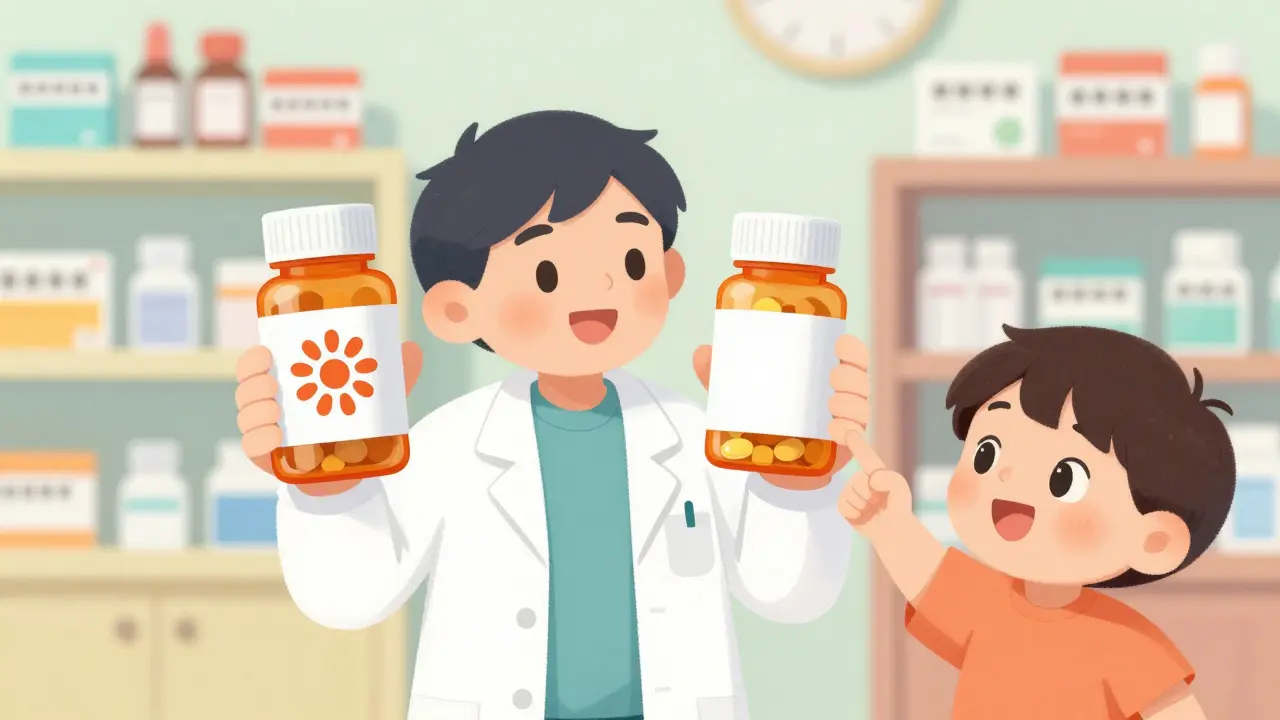
When you pick up a prescription, you might assume the generic version is just as good as the brand name - and you’re right. But what if the generic you’re getting isn’t really a generic at all? What if it’s made by the same company that sells the brand-name drug, under a different label, at a slightly lower price? That’s an authorized generic. And here’s the catch: not every drug has one. In fact, most don’t.
What Exactly Is an Authorized Generic?
An authorized generic is the exact same drug as the brand-name version - same pills, same factory, same ingredients. The only difference? No brand name on the bottle. It’s sold under a generic label, often at a lower price, but it’s produced by the original manufacturer under their existing FDA approval (the NDA), not through the usual generic application process (ANDA). This isn’t some loophole. It’s a legal, FDA-approved strategy. Companies like Pfizer, Mylan, and Teva have used it for years. When Mylan launched its authorized generic of the EpiPen in 2016, it was still under patent. The brand version cost over $600. The authorized generic? Around $300. Same device. Same epinephrine. Same risk of failure. Just no trademark on the box. The FDA has tracked these since 1999. As of late 2019, there were 1,215 authorized generics on the market. Sounds like a lot? Consider this: there are over 20,000 unique prescription drugs in the U.S. That means fewer than 6% of all medications have this option.Why Don’t More Drugs Have Authorized Generics?
Because the decision isn’t made by regulators. It’s made by drug companies. Authorized generics only appear when the brand manufacturer decides to launch one. That’s it. No law requires it. No incentive pushes them to do it for every drug. And they usually only do it when it serves their business interests. Here’s how it works: when a patent is about to expire, a generic company can file to enter the market. If they’re the first to file, they get 180 days of exclusivity - meaning no other generic can compete during that time. That’s a goldmine. But if the brand company launches its own authorized generic during those 180 days, it splits the market. The first-filing generic loses most of its profits. And the brand company keeps control. The FTC found that when an authorized generic enters during this window, the first generic’s revenue drops by 40% to 52%. That’s enough to scare off many would-be challengers. In fact, a 2011 FTC analysis showed that if a brand company is likely to launch an authorized generic, the chance a generic company will even try to enter drops from 4% to 10% - because the payoff isn’t worth the legal risk. So if you’re a big drug company with a $1 billion-a-year drug, and you know a generic is coming, you don’t wait. You launch your own version. You keep the profits. You silence the competition. And you call it “lower prices for patients.”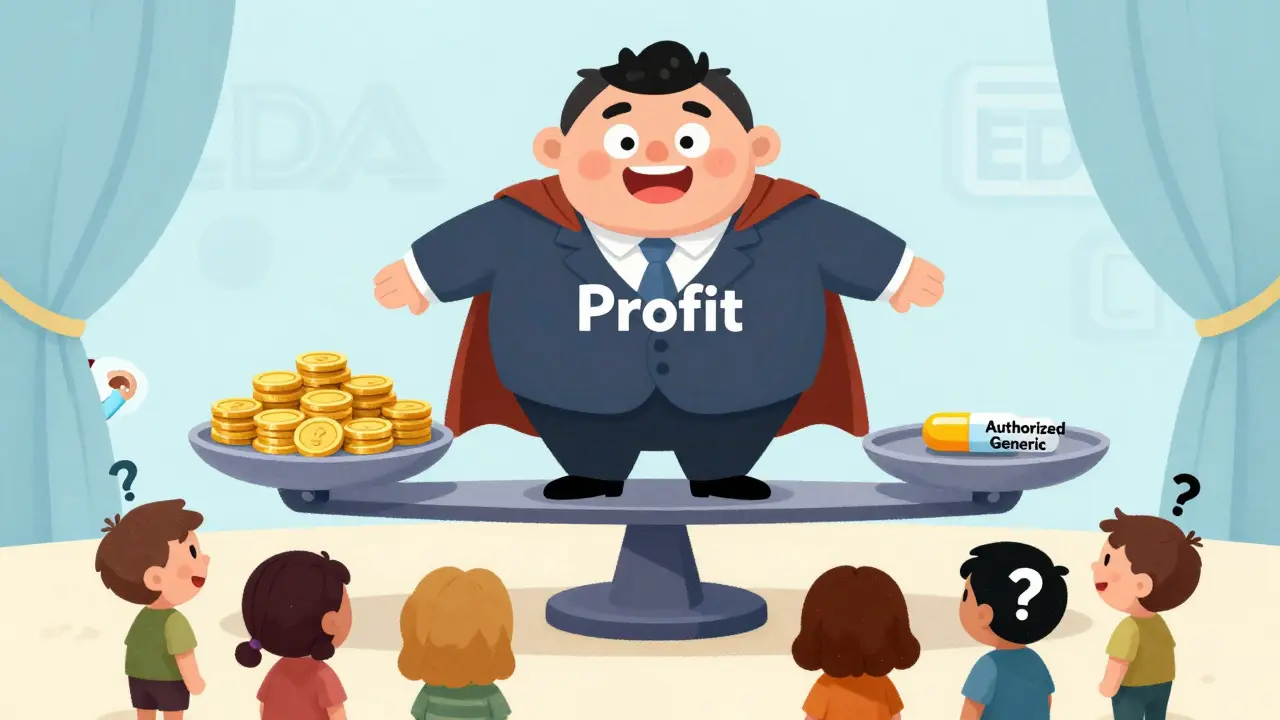
Who Benefits - and Who Gets Left Out?
Consumers do get lower prices - sometimes. During the 180-day exclusivity window, authorized generics can bring retail prices down by 4% to 8%, and wholesale prices by 7% to 14%. That’s real savings. A 2019 AARP analysis showed patients saved an average of $18.75 per prescription when an authorized generic was available. But here’s the problem: those savings are temporary. Once the exclusivity period ends, and if no other generics enter, prices often creep back up. And if the brand company’s authorized generic is the only option? You’re stuck paying what they set. Meanwhile, drugs that aren’t profitable enough - say, a $50 million-a-year medication - rarely get authorized generics. The cost of managing two labels, two supply chains, and potential backlash from generic manufacturers isn’t worth it. So patients on those drugs get no relief. They’re left waiting for a traditional generic to come along - which could take years, if it ever does. And it’s not just about price. Pharmacists report confusion. In one study, 27% more prescription errors occurred when both a brand and its authorized generic were available - because the pills look identical, but the labels are different. Doctors get confused too. A 2018 AMA survey found 63% of physicians struggled to decide which version to prescribe when both were on the shelf. Patients? They’re the most confused of all. One day, their “generic” is blue. The next, it’s white. Same pill. Different box. They think their medication changed. They call their doctor. They panic. They skip doses. That’s not just inconvenient - it’s dangerous.The Bigger Picture: A System Designed for Profit, Not Access
The Hatch-Waxman Act of 1984 was meant to speed up generic access and lower drug prices. It worked - generics now fill 91% of prescriptions in the U.S. But it didn’t account for companies like Pfizer or Mylan playing the system. Authorized generics are a legal way to bypass the spirit of the law. They don’t encourage competition. They suppress it. They let brand companies control the transition from patent to generic without ever losing market share. The FDA has tried to improve transparency. In 2022, they switched from annual to quarterly updates of their authorized generic list. That’s progress. But it doesn’t fix the core issue: the system still lets drugmakers decide who gets access to cheaper versions - and who doesn’t. Legislators have noticed. Bills like the Preserve Access to Affordable Generics and Biosimilars Act have been reintroduced in Congress multiple times since 2003. The latest version, in 2023, had 43 bipartisan cosponsors. It would ban brand companies from launching authorized generics during the 180-day exclusivity window. That would force them to choose: either let real generics in, or keep your brand price - but not both. So far, the drug industry has fought every attempt. Their argument? “We’re lowering prices.” But if they were truly focused on lowering prices, they’d do it for every drug - not just the ones that make billions.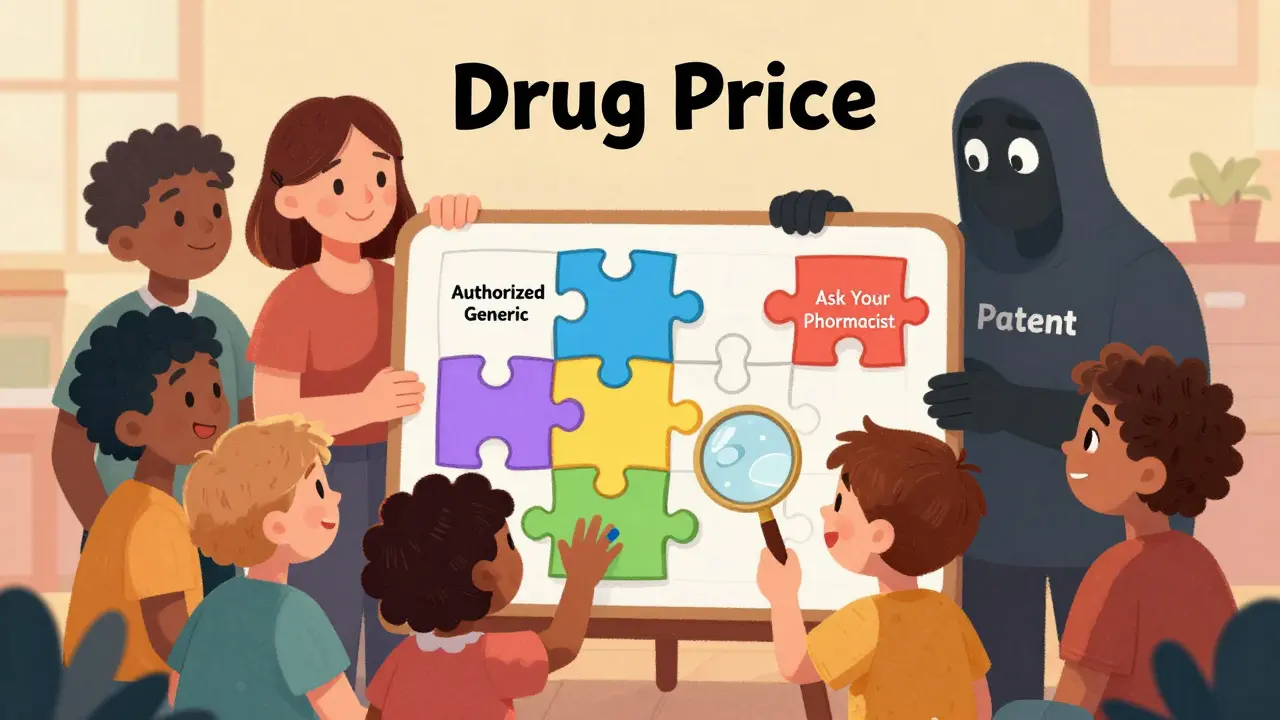
What You Can Do
You can’t force a company to make an authorized generic. But you can make smarter choices. First, ask your pharmacist: “Is this an authorized generic?” If it is, great. You’re getting the same drug at a lower price. But if you’re on a drug with no authorized generic - and no traditional generic either - ask your doctor if there’s a similar medication that does have generic options. Second, check the FDA’s authorized generic list. It’s public. You can search by brand name and see if a version exists. If it does, ask your pharmacy to switch you to it. Third, if you’re paying full price for a brand-name drug with no generic - and you’re on Medicare Part D - ask about the manufacturer’s patient assistance program. Many offer coupons or discounts for those who qualify. And finally, if you’re frustrated by this system, speak up. Contact your representative. Support bills that limit authorized generics during exclusivity periods. This isn’t about being anti-business. It’s about making sure the system works for patients - not just shareholders.Bottom Line
Authorized generics sound like a win. And sometimes, they are. But they’re not the solution to high drug prices - they’re a tactic. A tool used by the biggest players to control the market, not open it up. Most drugs don’t have authorized generics because the companies that make them don’t want to. And until the rules change, that’s not going to stop. If you’re paying for a drug with no generic - authorized or otherwise - you’re not alone. But you’re not powerless either. Ask questions. Know your options. And don’t assume lower prices mean fair competition. Sometimes, the same company is just wearing a different hat.Are authorized generics the same as regular generics?
Yes and no. Authorized generics are made by the brand-name company using the exact same formula, equipment, and quality controls as the original drug. Regular generics are made by other companies after proving they’re bioequivalent to the brand. So while both are chemically identical, authorized generics come straight from the original manufacturer - just without the brand name.
Why don’t all brand-name drugs have authorized generics?
Because the brand manufacturer decides whether to launch one - and they only do it when it benefits them financially. Authorized generics are mostly used for high-revenue drugs ($500 million or more per year) where the company wants to control the transition to generics and block competitors. For cheaper drugs, the cost of managing two versions isn’t worth it.
Do authorized generics lower drug prices long-term?
Not always. They often bring prices down during the 180-day exclusivity period for the first generic, but once that window closes, prices can rise again - especially if no other generics enter the market. In some cases, the authorized generic becomes the only low-cost option, and the brand company sets the price.
Can I ask my pharmacy for an authorized generic?
Yes. If your prescription is for a brand-name drug that has an authorized generic, you can ask your pharmacist to dispense that version instead. It’s often cheaper, and it’s the exact same medication. Just make sure your doctor hasn’t written “dispense as written” on the prescription.
How do I know if my medication is an authorized generic?
Check the FDA’s Authorized Generic List, which is updated quarterly. You can search by the brand name to see if an authorized version exists. You can also ask your pharmacist - they should be able to tell you if the drug you received is an authorized generic or a traditional generic.
Are authorized generics safe?
Yes. Authorized generics are manufactured under the same FDA-approved conditions as the brand-name drug. They’re not inferior - they’re identical. The only difference is the label. If your doctor prescribed the brand, and you get the authorized generic, you’re getting the same medicine.
Why do some pharmacies mix up authorized generics and brand-name drugs?
Because they look the same. The pills, the dosage, the packaging - everything is identical except the name on the bottle. Pharmacists have reported confusion when both versions are available, leading to 27% more prescription errors in some cases. Always double-check the label when you pick up your prescription.

Comments (13)
James Dwyer
Just picked up my generic lisinopril yesterday. Looked different than last time, so I checked the bottle. Turned out it was the authorized generic. Same pill, half the price. No brand name, no fuss. Why isn’t this the default for everything?
jonathan soba
Let’s be clear: authorized generics aren’t a consumer win-they’re a strategic maneuver. The FTC data is damning. When a brand launches its own generic, it doesn’t increase competition; it throttles it. The 180-day exclusivity window becomes a theater of deception where the same company plays both the villain and the savior. It’s corporate theater with FDA approval.
And don’t get me started on the pharmacists. They’re stuck between identical pills with different labels, forced to guess which one the patient’s insurance prefers. The system isn’t broken-it’s designed this way.
What’s worse? The FDA’s quarterly updates are a Band-Aid. Transparency doesn’t fix corruption. We need structural reform, not better spreadsheets.
Kathy Scaman
I had no idea this was even a thing until my pharmacist mentioned it last month. I was on a brand-name statin and switched to the authorized generic-same pill, $40 cheaper. My mom’s been on it for years and never knew. It’s wild how much we don’t know about what’s in our medicine cabinets. Maybe we need a simple label: ‘Made by the same company as the brand’? That’d cut down on the panic when the pill color changes.
Anna Lou Chen
The entire pharmaceutical industrial complex is a Hegelian dialectic of capital accumulation disguised as healthcare. The authorized generic is the negation of the negation-the brand’s self-annihilation as a market mechanism, only to reconstitute itself as a pseudo-competitive alternative. It’s not capitalism-it’s neofeudalism with pill bottles.
When you consider that the Hatch-Waxman Act was predicated on the assumption of market rationality, but the actors involved operate under rent-seeking logic, you realize we’re not dealing with a policy failure-we’re dealing with the inevitable outcome of a system where profit is the only epistemology.
And yet, we’re told to ‘ask our pharmacists’ like that’s a solution. As if epistemic labor should fall on the patient while the architects of this architecture sip champagne in midtown.
Lance Long
Hey, I get it-this system is messed up. But don’t write off authorized generics entirely. For a lot of people, they’re the only reason they can afford their meds at all. I’ve seen patients cry because they finally got their insulin for $30 instead of $300. That’s real.
Yes, the companies are gaming the system. But the people? They’re just trying to survive. Maybe the answer isn’t to ban authorized generics-it’s to force companies to offer them for every drug over a certain revenue threshold. And maybe we need a national database that shows, in plain language, whether your pill is brand, generic, or authorized generic. No jargon. Just facts.
We don’t need to burn the system down. We just need to fix the parts that hurt people.
Timothy Davis
Actually, the 2011 FTC analysis you cited? It’s outdated. A 2020 JAMA study showed that when authorized generics enter, total market prices drop by 22% on average-not just for the first generic, but across the board. You’re ignoring the aggregate effect. Also, the 6% stat is misleading because it doesn’t account for drugs that never had patents to begin with. There are thousands of non-patented drugs with no generics at all because they’re too cheap to manufacture. The problem isn’t authorized generics-it’s that the system doesn’t incentivize competition for low-margin drugs.
And yes, pharmacists get confused. But that’s a training issue, not a policy failure. Put a QR code on the bottle that links to the FDA page. Problem solved.
fiona vaz
I’ve worked in pharmacy for 18 years. I’ve seen patients panic because their ‘generic’ changed color. I’ve had to explain a dozen times a day that it’s the same medicine. Authorized generics make this worse. But they also make meds affordable. It’s a trade-off.
If you want real change, push for a single, standardized label format across all versions-brand, generic, authorized generic. Same font, same layout, same color code. No more ‘oh no, my pill changed!’ moments. And make it mandatory. The FDA can do this tomorrow if they wanted to.
Sue Latham
Oh wow, so the big pharma guys are just… pretending to be nice? Shocking. I’m sure they’re just doing this for the children. /s
Meanwhile, I’m over here paying $800 for my brand-name migraine med because the authorized generic isn’t available. And my insurance won’t cover it unless I try the ‘generic’-which is actually just a different brand with the same active ingredient. What a joke.
Why don’t they just make one version and call it what it is? Like… a drug? With a price? That’s not too much to ask, right?
Linda O'neil
Don’t give up. You’re not powerless. I used to pay $400/month for my thyroid med. Found out there was an authorized generic-switched. Now it’s $12. I told my doctor, my friends, even my book club. Small wins add up. If you ask for it, pharmacies will stock it. If enough people ask, manufacturers will make more. You’ve got more power than you think.
Bryan Fracchia
It’s funny how we’ve turned medicine into a puzzle. You’ve got to be a detective just to know what you’re taking. And yet, we expect people to trust their prescriptions without question.
Maybe the real issue isn’t authorized generics-it’s that we’ve lost trust in the system. If every pill looked the same, had the same label, and the price was transparent… would anyone care who made it? Probably not. But we’re so used to being manipulated that we’ve learned to second-guess everything-even our own health.
What if we stopped trying to outsmart the system and just demanded it be simpler?
Lexi Karuzis
Wait… wait… WAIT. So you’re telling me the SAME COMPANY that charges $600 for an EpiPen is the ONE who also sells the $300 ‘authorized generic’? And they’re the ONLY ones who can do this? And the FDA lets them? And Congress won’t stop them? And you think this is normal?!?!?!
This isn’t capitalism. This is a cartel. With patents. And lobbyists. And FDA loopholes. And they’re laughing all the way to the bank while you’re choosing between your insulin and your rent.
They’re not lowering prices. They’re rebranding greed. And they’re doing it with your life.
Colin Pierce
My dad’s on a drug with no generic-authorized or otherwise. He’s on Medicare, so he’s stuck paying full price. I found out last week that the manufacturer has a patient assistance program that cuts his cost by 70%. He didn’t even know it existed. I helped him apply. Took 20 minutes.
If you’re struggling, reach out. These programs are real. You don’t need to be a genius or a lawyer. Just ask. Pharmacies usually have someone who can help. Or call the manufacturer directly. No shame in it. Your health matters more than pride.
Mark Alan
AMERICA IS BEING ROBBED. 🇺🇸💊💸
They sell you the same pill for $600. Then they sell you the SAME PILL for $300. And they call it a ‘discount’? NO. THEY’RE JUST HOLDING YOU HOSTAGE. 🤬
WE NEED TO BURN PHARMA TO THE GROUND. 🚒🔥
AND THEN WE NEED TO MAKE THEM PAY BACK EVERY DOLLAR THEY STOLE FROM OUR GRANDPARENTS.