
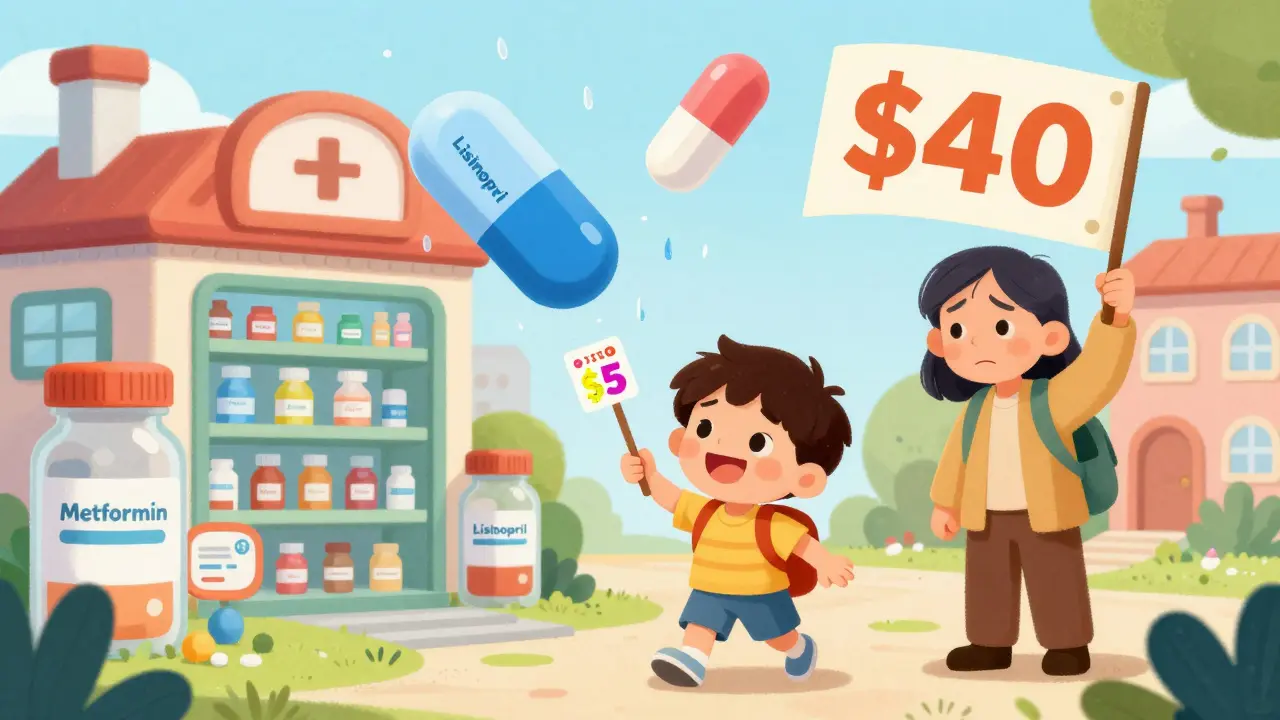
Buying generic drugs shouldn’t feel like a financial gamble. Yet for millions of Americans paying out-of-pocket, the price of a 30-day supply of metformin or lisinopril can jump from $4 to $40 - sometimes even more - depending on the pharmacy. That’s where coupon and discount card programs come in. These aren’t insurance. They’re not government aid. They’re a practical, no-signup-needed workaround that’s helped people cut their monthly drug bills by half or more. But they’re not magic. Knowing how to use them right makes the difference between saving $80 and wasting hours with no results.
How These Programs Actually Work
Think of discount cards like a bulk-buying club for prescriptions. Companies like GoodRx, NeedyMeds, and Blink Health negotiate lower prices directly with pharmacies and drug manufacturers. When you show your card - whether printed or on your phone - the pharmacy pays them a small fee to fill your script at that discounted rate. The pharmacy still makes money. You pay less. It’s a simple exchange.
The model started with Walmart’s $4 generic program back in 2006. That was the first big signal: people would pay cash for generics if the price was fair. Soon after, Target, Kroger, and Costco followed. Today, those store-specific deals still exist - but they’re just the tip of the iceberg. Third-party cards now cover thousands of medications across more than 70,000 pharmacies nationwide.
What You Can Actually Save
Let’s be clear: savings depend entirely on what you’re buying.
If you’re on a heart failure regimen with only generics - say, lisinopril, metoprolol, and spironolactone - you could pay as little as $11 a month. That’s a 65% drop from the usual cash price. Same with common drugs like atorvastatin (Lipitor generic), levothyroxine, or metformin. For these, GoodRx and similar cards often match or beat Walmart’s $4 price. Some users report saving $87 in a single month just by switching from cash to a discount card.
But if your prescription includes even one brand-name drug - like an SGLT2 inhibitor for diabetes or a newer cholesterol med - the savings vanish. Discounts on those can drop to 10% or less. That means instead of paying $12 a month, you’re still stuck with $1,200-$1,500 a month. No card fixes that. The system isn’t broken for generics. It’s broken for brand names.
Who Benefits the Most
These programs were built for people without insurance - or with high-deductible plans. If you’ve hit your deductible, your insurance copay might be cheaper than the discount card. But if you’re early in the year and haven’t met it? The card wins. Same if you’re on Medicare Part D and fall into the coverage gap, or if you’re uninsured entirely.
One 2022 study found that people who believe generics work just as well as brand names are three times more likely to use discount cards. That’s not about money - it’s about mindset. Too many still think “generic” means “weaker.” It doesn’t. The FDA requires them to be identical in strength, safety, and effectiveness. The only difference? Price.
The Big Catch: It’s Not Automatic
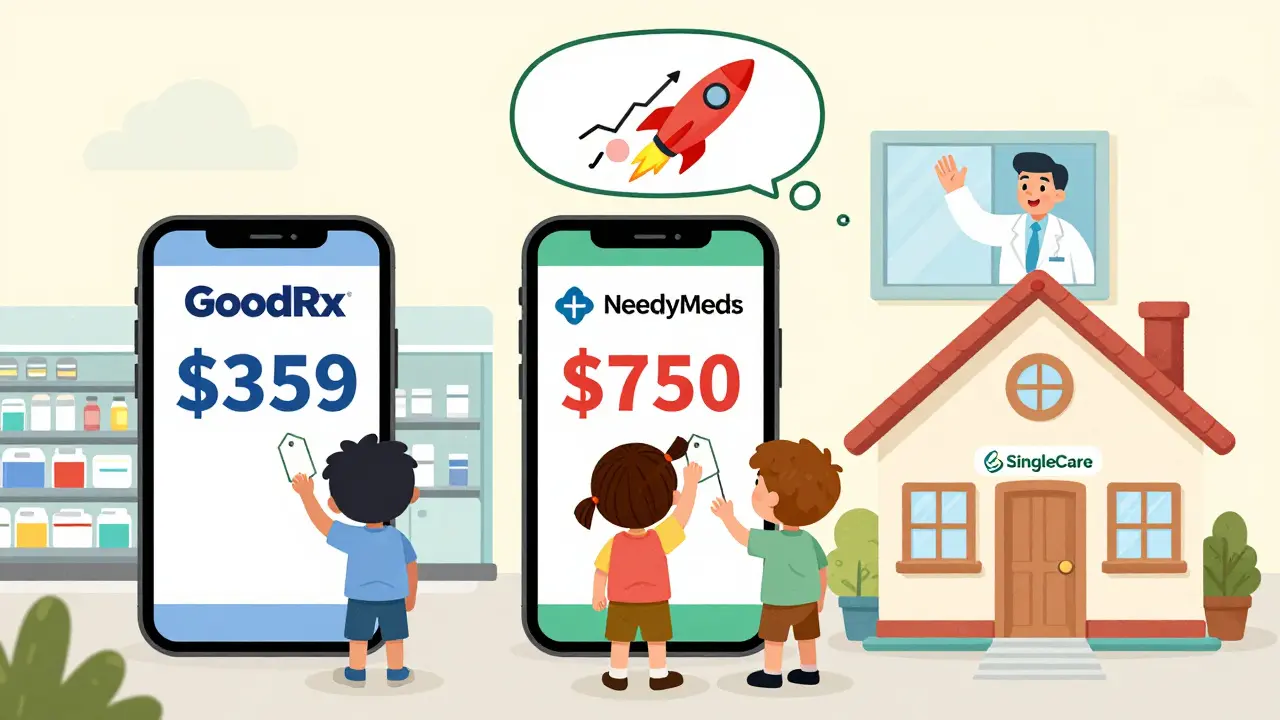
Here’s the problem most people don’t see coming: prices change constantly. The same drug, at the same pharmacy, can cost $15 with one card and $42 with another. That’s not a glitch. It’s how the system works. Pharmacies get different wholesale prices from different distributors. Discount providers negotiate separate deals. There’s no single price.
So you can’t just pick one card and forget it. You have to compare. And that takes time. A 2023 Consumer Reports survey found 68% of users had to check at least two pharmacies to find the best deal. Forty-two percent said the hassle made them delay filling prescriptions - which can hurt your health.
One Reddit user wrote: “I spent 45 minutes comparing GoodRx, Blink, and SingleCare for my thyroid med. Ended up saving $22. But I was late to work.” That’s the real cost: your time.
How to Use Them Right
Here’s a simple, step-by-step way to make this work without the stress:
- Know your exact drug name and dosage. Don’t say “blood pressure pill.” Say “lisinopril 10mg.”
- Open GoodRx, NeedyMeds, and SingleCare on your phone. Type in the drug.
- Check prices at 3-5 nearby pharmacies. Use the app’s map feature.
- Don’t assume the lowest price is at the big chain. Sometimes the local independent pharmacy has the best deal.
- Print the coupon or show the app at the pharmacy counter - before you hand over your insurance card.
- Ask the pharmacist: “Is this cheaper than my insurance?” They’re trained to compare now.
Pro tip: If you take the same meds every month, save the best price as a note in your phone. You’ll save 10 minutes next time.
What’s Changing in 2026
The game is shifting. In 2023, major pharmacy benefit managers (PBMs) like Express Scripts and OptumRx started automatically applying the lowest price - insurance or discount card - at checkout. No more juggling. If your plan uses one of these, you might already be getting the best deal without lifting a finger.
GoodRx added telehealth in early 2024. Now you can get a prescription for a generic drug, get it discounted, and have it shipped - all in the app. That’s a big step toward convenience.
But the big question remains: will regulators step in? The FTC is investigating how PBMs profit from “spread pricing” - charging pharmacies more than they pay insurers, then sharing part of that with discount card companies. If that changes, prices could shift again.
When These Cards Won’t Help
They won’t help if:
- You’re on a low-deductible plan with cheap copays.
- You’re taking brand-name drugs with no generic alternative.
- You’re not willing to spend 10 minutes comparing prices.
- You’re confused about what “generic” means and avoid them out of fear.
For those cases, other options exist: patient assistance programs from drugmakers, nonprofit aid like NeedyMeds’ free services, or state-run programs. But those require applications. Discount cards? Just show up.
The Bottom Line
Coupon and discount card programs aren’t a fix for America’s broken drug pricing system. But for generic medications - the most common, most essential ones - they’re the most reliable, immediate tool you have. They work. They’re free. And they’re used by millions every day.
If you’re paying cash for your meds, don’t guess. Check. Compare. Save. It’s not about being a savvy shopper. It’s about not paying more than you have to for a pill that could keep you alive.
Are discount cards the same as insurance?
No. Discount cards are not insurance. They don’t cover your deductible, don’t count toward your out-of-pocket maximum, and don’t pay for brand-name drugs the way insurance does. They’re simply a negotiated cash price you can use instead of paying full retail. You can use them even if you have insurance - and sometimes, they’re cheaper than your copay.
Can I use a discount card with Medicare?
Yes. Many Medicare Part D users find that discount cards offer lower prices than their plan’s copay, especially during the coverage gap (the “donut hole”). Always compare the card price with your plan’s price before paying. Pharmacists can help you check both.
Why is the price different at different pharmacies?
Pharmacies buy drugs from different wholesalers, and each has its own pricing. Discount card companies negotiate separate deals with each pharmacy chain or independent store. That’s why a drug might cost $5 at CVS but $12 at Walgreens - even with the same card. Always check multiple locations.
Do I need to sign up or give personal info?
No. Most discount cards require zero registration. You don’t need to give your name, address, or insurance number. Just show the barcode on your phone or printed card. Your privacy stays intact.
Are generic drugs as effective as brand names?
Yes. The FDA requires generics to have the same active ingredient, strength, dosage form, and route of administration as the brand-name version. They must also meet the same strict standards for purity and performance. The only differences are in inactive ingredients (like fillers) and packaging - which don’t affect how the drug works.
What if I can’t find a discount on my drug?
Try NeedyMeds. It’s a nonprofit that lists free or low-cost patient assistance programs directly from drug manufacturers. Some companies offer free medication to people who qualify based on income. You can also ask your pharmacist - many have access to manufacturer coupons or samples.

Comments (10)
Donny Airlangga
I used to pay $45 for my metformin until I found GoodRx. Now it’s $7 at my local pharmacy. I didn’t even know these cards existed until my cousin showed me. No signup, no hassle. Just open the app, show the barcode, and walk out with half the bill. Game changer for people on fixed incomes.
Also, never assume your insurance is cheaper-ask the pharmacist to compare. They’re trained to do it now.
Molly Silvernale
It’s not just about money-it’s about dignity. When you’re forced to choose between insulin and groceries, the system has already lost. Discount cards? They’re not a solution-they’re a bandage on a gunshot wound. But hey, if you’re bleeding out and the ER is closed, you take the gauze.
And yet-we still act like this is normal. Like it’s *your* fault you can’t afford to live. We’ve normalized pharmaceutical exploitation so deeply that people cheer when a drug drops from $40 to $12. Shouldn’t it be $3? Shouldn’t it be free? The fact that we’re celebrating crumbs is the real tragedy.
Ken Porter
Stop glorifying coupon culture. This isn’t a win-it’s a failure of government. If you need a smartphone app to afford life-saving medicine, your country has collapsed. We’re not saving money-we’re surviving a rigged system. And now we’re proud of it? Pathetic.
Also, generics are fine. But if you’re not on insurance, you’re already in the 30% of Americans who can’t afford a $500 deductible. This isn’t smart shopping. It’s damage control.
Annette Robinson
For anyone new to this: start with GoodRx. It’s the most reliable. I’ve been using it for my thyroid med for three years now. The price at my CVS changed from $22 to $5 in one week-just because I checked another location. Don’t get discouraged if the first pharmacy says no.
Also, keep a note in your phone with your best price and pharmacy. I did that last year and now I spend less than 5 minutes a month on this. It’s not glamorous, but it keeps me alive.
Luke Crump
Let me guess-someone’s gonna say ‘just use NeedyMeds’ next. Oh wait, that’s the nonprofit that’s funded by Big Pharma and has a 12-week application process. And you think that’s better than a $4 coupon? That’s like offering a paper towel when your house is on fire.
And don’t even get me started on ‘generic equals same.’ Ever read the FDA’s fine print? They only require 80-125% bioequivalence. That’s a 45% swing. My anxiety meds worked fine on brand, then I switched to generic and I was a walking zombie for two weeks. Don’t let them sell you placebo science.
Aubrey Mallory
Stop saying ‘just check prices.’ That’s not a solution-that’s a burden. Imagine having to compare prices for five different meds every month while working two jobs and taking care of your mom. That’s not ‘being savvy.’ That’s exploitation dressed up as empowerment.
And yes, I’ve used these cards. I’ve saved money. But I’m angry. This shouldn’t be on us. This should be on Congress. Stop making people play pharmacy roulette just to stay alive.
Evan Smith
lol I spent 20 minutes comparing GoodRx and SingleCare for my metformin. Saved $1.50. I just paid cash at Walmart next time. $4. Done.
Also, my pharmacist said ‘you’re doing it right’-which is weird because I just showed up and didn’t cry. Progress?
Lois Li
Just wanted to say thank you to the person who wrote this. I’m 68, on Medicare, and I thought I was being dumb for not knowing about these cards. Turns out I wasn’t-no one told me.
I used to pay $38 for my lisinopril. Now I pay $6. I don’t know how I didn’t find this sooner. I’m not tech-savvy, but the app is simple. Just type the name, pick the pharmacy, show the code. I printed it out and keep it in my wallet now.
Also, the part about generics being the same? I didn’t believe it either. But my doctor explained it to me. Turns out, I was scared of nothing. My blood pressure hasn’t changed. Just my bank account.
Thank you for not making me feel stupid for not knowing this.
christy lianto
I used to skip doses because I couldn’t afford my meds. Then I found GoodRx. I saved $87 in one month. I cried in the pharmacy parking lot.
Don’t let anyone tell you this isn’t important. This isn’t about being frugal. This is about not dying because you can’t afford a pill that costs 10 cents to make.
If you’re reading this and you’re healthy-thank you. But if you’re not? Keep going. You’re not alone. And you deserve to live.
swati Thounaojam
Use NeedyMeds if your drug is not on GoodRx. My husband’s antipsychotic was $180. NeedyMeds linked us to free program. Took 3 weeks but we got it. No credit card needed. Just proof of income.
And yes, generics work. My mom took them for 15 years. Still alive. Still walking. Still grateful.