Getting your prescription filled shouldn’t feel like a financial gamble. Yet for millions in the U.S., the price tag on a simple pill can mean choosing between medicine and groceries. The system is broken-not because drugs are inherently expensive, but because the way prices are set, negotiated, and passed along to patients is confusing, opaque, and often unfair. Understanding medication costs isn’t just about saving money-it’s about making sure you get the treatment you need without going broke.
Why Your Prescription Costs So Much (And Why It’s Not What You Think)
The sticker price on your pill bottle? That’s the list price, and it’s almost never what the pharmacy actually gets paid. Drug manufacturers set high list prices to create room for discounts, rebates, and negotiations behind the scenes. Pharmacy benefit managers (PBMs) act as middlemen between insurers and pharmacies, negotiating discounts in exchange for putting certain drugs on preferred lists. But here’s the catch: those discounts don’t always reach you. In many cases, you pay a percentage of the list price, not the discounted one. So even if your insurer got a 40% rebate, you’re still charged based on the inflated original price. This is why two people with the same insurance can pay wildly different amounts for the same drug. One might be on a plan that steers them to a PBM-owned pharmacy with a hidden markup. Another might use a mail-order service that bypasses the middleman entirely. The system was built for profit, not transparency.How Generic Drugs Can Slash Your Costs-Sometimes by 80%
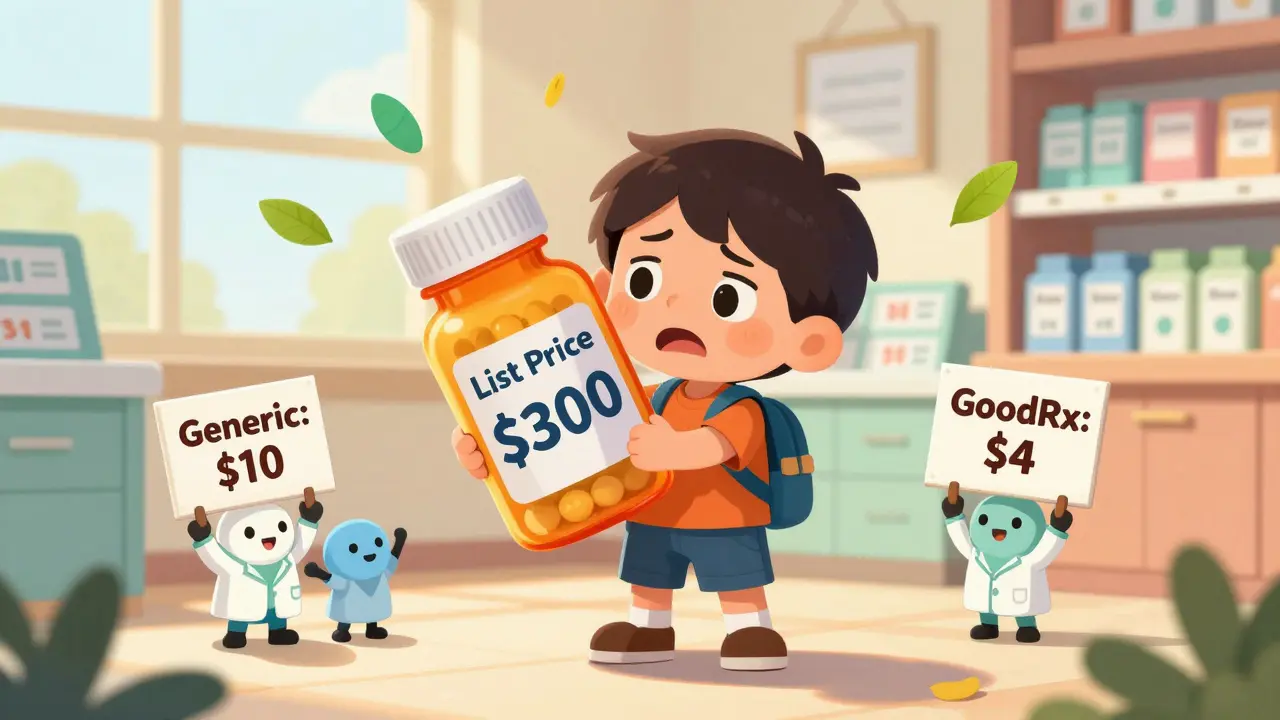
Generic drugs are the easiest way to cut your medication costs without sacrificing effectiveness. By law, generics must contain the same active ingredient, dosage, and route of administration as the brand-name version. They’re not “weaker” or “lower quality.” They’re just cheaper because they don’t carry the cost of research, marketing, and patent protection. For example, the brand-name drug Lipitor (atorvastatin) cost over $150 per month before its patent expired. Today, generic atorvastatin sells for under $10 at most pharmacies-even without insurance. Some discount programs like GoodRx list it at $4. The difference isn’t magic. It’s competition. The FDA approves over 1,000 generic drugs each year. If your doctor prescribes a brand-name drug, ask: “Is there a generic?” If they say no, ask why. Sometimes it’s because the brand has a special formulation (like extended-release). But often, it’s just habit. In 2025, over 90% of prescriptions filled in the U.S. were for generics. That’s not a trend-it’s a proven savings tool.Prescription Coupons: Real Savings or Marketing Trick?
You’ve seen them: “Save $50 on your next prescription!” or “$0 copay for 12 months.” These coupons are everywhere-on TV, in magazines, even in your doctor’s office. But they’re not always what they seem. Most manufacturer coupons only work for brand-name drugs. And here’s the catch: they’re designed to keep you loyal to the expensive version. If you’re on a Medicare plan, these coupons often can’t be used at all. Why? Because Medicare rules prohibit using them to lower your out-of-pocket costs-it’s considered a form of kickback. Still, if you’re privately insured and paying full price, a coupon can help. Mark Cuban’s Cost-Plus Drugs, for example, sells both generics and some branded drugs at cost plus a flat $5 fee. No coupons needed. No negotiation. Just fair pricing. If you’re paying over $50 a month for a drug with a generic available, skip the coupon. Buy the generic instead.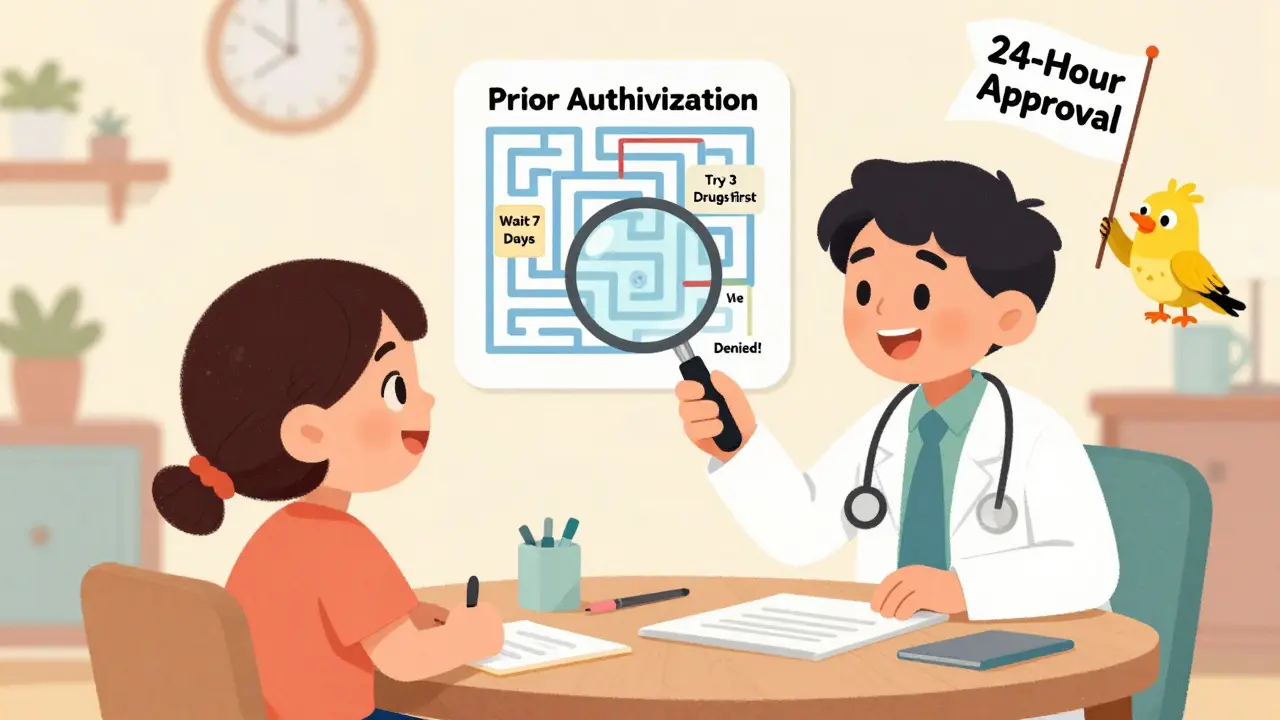
Prior Authorization: The Bureaucratic Gatekeeper
Prior authorization is when your insurance company requires your doctor to prove your drug is “medically necessary” before they’ll cover it. Sounds reasonable, right? In theory, yes. In practice? It’s a roadblock. You might get prescribed a drug your doctor knows works. But your insurer says, “Try the cheaper one first.” That cheaper one might be less effective. Or cause worse side effects. Or simply not work for your condition. So your doctor fills out paperwork-sometimes multiple times-only to be denied. Then you wait days or weeks while your condition worsens. In 2025, the average prior authorization request took 7.3 days to process. Some took over 30. And if you’re on a chronic condition like rheumatoid arthritis or multiple sclerosis, that delay isn’t just inconvenient-it’s dangerous. Worse, insurers often require you to try two or three other drugs before approving the one your doctor picked. This is called “step therapy.” It’s a cost-control tactic that puts profits over patients. The good news? More states are passing laws to limit step therapy and require faster decisions. In California and New York, insurers must respond within 24 hours for urgent cases.The New Medicare Rules: What Changed in January 2026
The biggest shift in U.S. drug pricing in over 20 years took effect in January 2026. For the first time, Medicare is negotiating prices directly with drugmakers. The first 10 drugs selected under the Inflation Reduction Act now have capped prices-some down by 50% or more. If you’re on Medicare Part D, you’re now protected by a $2,000 annual out-of-pocket cap. No more “donut hole.” No more surprise bills after you hit a certain spending threshold. You’ll also save an average of $400 per year on your prescriptions. This isn’t just for seniors. These negotiated prices are starting to influence commercial insurers. Some employers and Medicaid programs are adopting them too. It’s the beginning of a ripple effect. What’s good for Medicare could soon be good for everyone.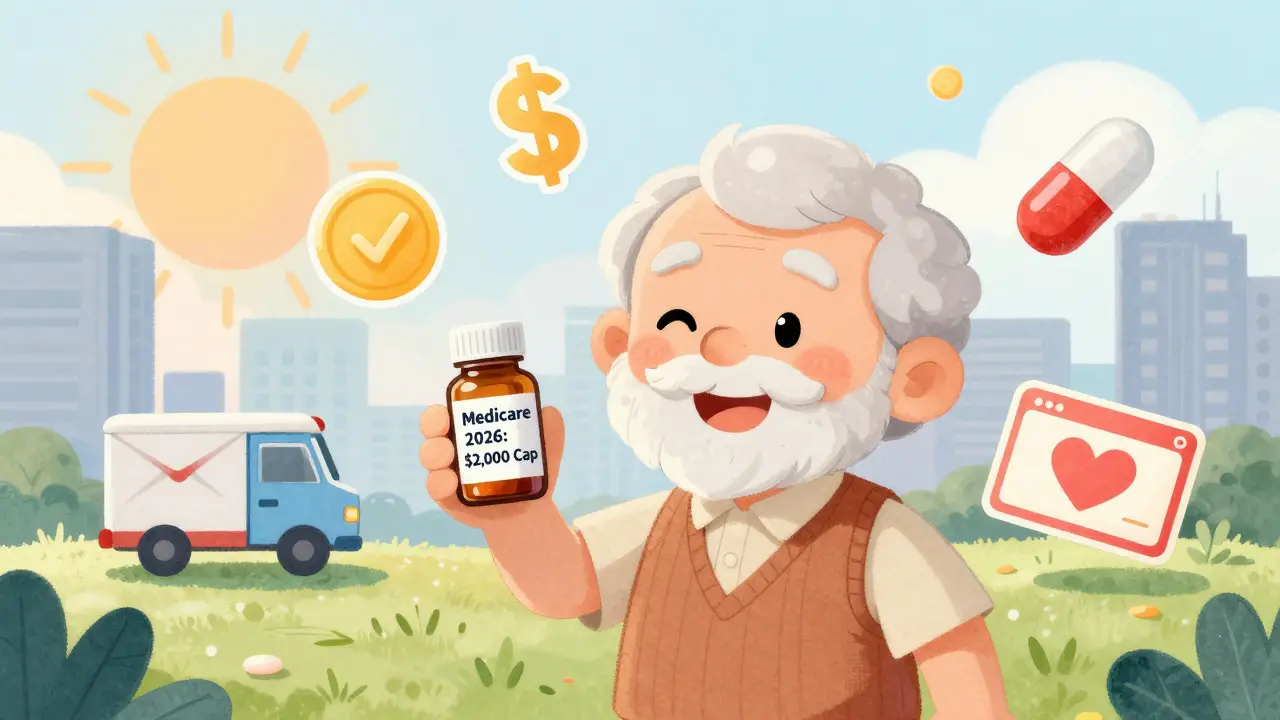
What You Can Do Today to Lower Your Medication Costs
You don’t have to wait for policy changes to save money. Here’s what actually works:- Ask for the generic. Always. Even if your doctor doesn’t suggest it.
- Compare prices. Use GoodRx, SingleCare, or RxSaver. Prices vary wildly between pharmacies-even within the same chain.
- Buy in bulk. If you take a drug long-term, a 90-day supply often costs less than three 30-day fills.
- Check for patient assistance programs. Most drugmakers offer free or low-cost drugs to people who qualify based on income. Visit NeedyMeds.org to search.
- Appeal prior authorizations. If you’re denied, ask your doctor to file an appeal. Many get approved on the second try.
- Use mail-order pharmacies. They often have lower prices and fewer administrative hurdles.
Why This Matters More Than You Think
Medication costs aren’t just a personal finance issue. They’re a public health crisis. When people skip doses because they can’t afford their pills, hospital visits go up. Emergency care spikes. Chronic diseases get worse. The cost to the system is far higher than the savings from denying coverage. The good news? Change is happening. Generic drugs are more available than ever. Medicare’s new pricing rules are forcing the industry to rethink its model. And more patients are asking questions-demanding transparency. You have power. You can ask for the generic. You can shop around. You can push back on prior authorization denials. You don’t have to accept a $300 bill for a pill that costs $10 elsewhere. The system is rigged, but it’s not invincible.Can I use a manufacturer coupon with Medicare?
No, Medicare rules prohibit using manufacturer coupons to lower your out-of-pocket costs. These coupons are designed to work with private insurance or cash payments. If you’re on Medicare, focus on generic drugs, mail-order pharmacies, and the new negotiated prices that took effect in January 2026.
Are generic drugs really as effective as brand-name drugs?
Yes. The FDA requires generics to have the same active ingredient, strength, dosage form, and route of administration as the brand-name drug. They must also meet the same strict standards for quality, purity, and performance. The only differences are in inactive ingredients like fillers or dyes-which rarely affect how the drug works.
Why does my drug cost more at one pharmacy than another?
Pharmacies negotiate different prices with PBMs and wholesalers. Some pharmacies are owned by insurers or PBMs and get special rates. Others charge list price plus a markup. Always check prices using tools like GoodRx before you pay. You might save 70% just by switching locations.
What should I do if my prior authorization is denied?
Ask your doctor to file an appeal. Include medical records showing why the prescribed drug is necessary. Many denials are overturned on appeal, especially if you can prove the alternative drugs failed or caused side effects. You can also contact your insurer’s patient advocate office-many have dedicated teams to help with these cases.
Is there help if I can’t afford my meds even with generics?
Yes. Most drug manufacturers offer patient assistance programs for low-income individuals. Nonprofits like NeedyMeds and the Patient Access Network Foundation can help you apply. Some pharmacies also offer discount cards or sliding-scale pricing. Don’t assume you’re out of options-many programs go unused because people don’t know they exist.