

Metformin Dose Calculator
Your Recommended Dose
Enter your eGFR to see your safe metformin dosage
Monitoring Frequency: Check kidney function
Metformin is the most commonly prescribed diabetes medication in the world. It’s cheap, effective, and reduces the risk of heart attacks in people with type 2 diabetes. But for years, doctors stopped prescribing it whenever a patient’s kidneys looked a little weak. That changed in 2016 - and now, many people with mild to moderate kidney disease can still take metformin safely. The problem? Most patients - and even some doctors - still believe metformin damages the kidneys. It doesn’t. But it does leave your body through your kidneys. That’s why monitoring and dose adjustments matter.
Why Kidney Function Matters for Metformin
Metformin doesn’t get broken down by the liver. It doesn’t change form in your body. It just travels through your bloodstream and gets filtered out by your kidneys. If your kidneys aren’t working well, metformin builds up. Too much of it can, in rare cases, lead to lactic acidosis - a serious condition where your blood becomes too acidic.
But here’s the truth: lactic acidosis from metformin is extremely rare. Studies show it happens in only about 3.3 out of every 100,000 people taking it each year. Most of those cases happen when someone is already sick - with a heart attack, infection, or severe dehydration - not because of the drug alone. Still, you can’t ignore kidney function. The goal isn’t to avoid metformin entirely. It’s to use it right.
What Is eGFR? (And Why It Replaced Creatinine)
For decades, doctors checked serum creatinine levels to decide if someone could take metformin. If creatinine was above 1.4 mg/dL in women or 1.5 mg/dL in men, they’d stop the drug. That was outdated. Creatinine levels don’t tell the full story. They’re affected by muscle mass, age, diet, and even race.
Today, the standard is eGFR - estimated glomerular filtration rate. It’s a number that estimates how well your kidneys are filtering waste. It’s calculated using your age, sex, race, and blood creatinine level. A normal eGFR is 90 or higher. Below 60 means some kidney damage. Below 30 means severe kidney disease.
The FDA updated its guidelines in May 2016 to use eGFR instead of creatinine. This opened the door for millions of people with mild-to-moderate kidney disease to keep using metformin. And it saved lives. Many patients who had their metformin stopped because of high creatinine saw their blood sugar spike - sometimes dangerously - once they stopped the drug.
Current Dosing Guidelines Based on eGFR
Here’s what you need to know about metformin doses based on kidney function:
- eGFR ≥60 mL/min/1.73 m²: Full dose allowed. Maximum is 2,550 mg per day. Check kidney function every 6 to 12 months.
- eGFR 45-59 mL/min/1.73 m²: Max dose is 2,000 mg per day. Monitor every 3 to 6 months. Do not start metformin here if you’ve never taken it before.
- eGFR 30-44 mL/min/1.73 m²: Max dose is 1,000 mg per day. Monitor every 3 months. Some guidelines allow continuation if already on it and stable. Do not start new patients here.
- eGFR <30 mL/min/1.73 m²: Metformin is contraindicated. Do not use it.
There are exceptions. For example, if you’re on hemodialysis, you can take 500 mg after each session. If you’re on peritoneal dialysis, 250 mg per day is safe. These are special cases, and they require close supervision.
Some countries, like New Zealand, still use creatinine clearance instead of eGFR. But in the U.S., Canada, and Europe, eGFR is the standard. If your doctor is still using creatinine numbers, ask them to recalculate your eGFR.
What About Contrast Dyes and Imaging Tests?
If you’re scheduled for a CT scan, angiogram, or other test using iodinated contrast dye, you need to pause metformin - especially if your eGFR is below 60. Contrast dye can temporarily damage your kidneys. If metformin is still in your system during that time, your risk of lactic acidosis goes up.
The standard advice: stop metformin 48 hours before the scan. Don’t restart it until 48 hours after, and only if your kidney function is stable. Your doctor should check your eGFR after the procedure before letting you resume the drug.
This isn’t just theory. A 2023 study in JAMA Internal Medicine found that nearly half of patients with kidney disease didn’t have their metformin stopped before contrast imaging - putting them at unnecessary risk.
Common Myths About Metformin and Kidneys
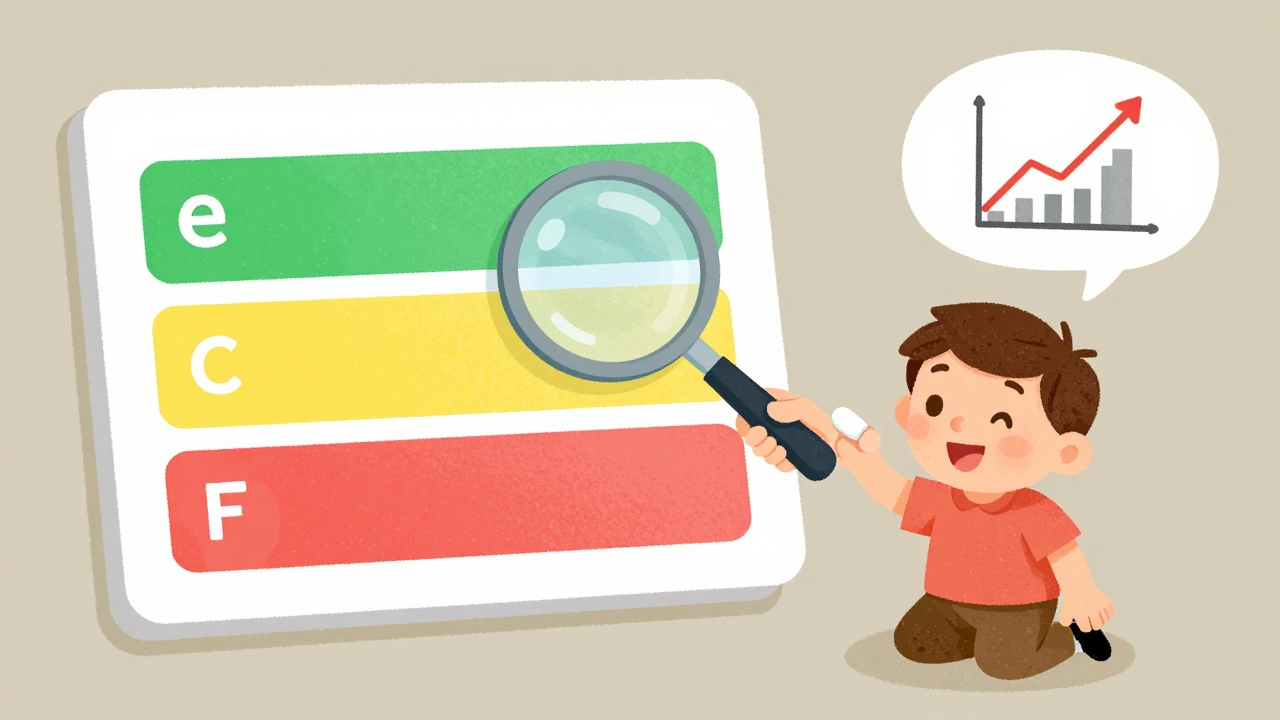
Myth 1: Metformin causes kidney damage. False. Metformin doesn’t harm your kidneys. It just needs them to work well enough to clear it out. Stopping metformin because of mild kidney decline often does more harm than good - your blood sugar rises, your heart risk goes up, and you may gain weight.
Myth 2: If my eGFR is 40, I can’t take metformin anymore. Not true. If you’ve been on it for years and your kidneys are stable, you can usually stay on 1,000 mg per day. The problem isn’t the number - it’s whether your kidney function is dropping quickly.
Myth 3: Older people shouldn’t take metformin. Age alone isn’t a reason to stop. Many people in their 80s and 90s take metformin safely. What matters is their eGFR, not their age. A 2023 Reddit thread from a doctor shared a case where an 82-year-old’s HbA1c jumped from 6.8% to 8.9% after being taken off metformin for an eGFR of 38. That’s a dangerous spike.
Studies show that 22% of patients with eGFR in the 30-59 range have their metformin stopped unnecessarily - often because of this myth. That’s why patient education matters.
When to Be Extra Cautious
Even if your eGFR is in the safe range, you need to pause metformin if you develop any of these:
- Severe infection or fever
- Dehydration from vomiting, diarrhea, or not drinking enough
- Heart failure or a recent heart attack
- Liver disease or alcohol abuse
- Starting a new drug that affects kidney function, like NSAIDs (ibuprofen, naproxen)
Also, watch for signs of lactic acidosis: unusual tiredness, muscle pain, trouble breathing, stomach pain, dizziness, or slow heartbeat. If you feel this way, stop metformin and get help immediately.
What Else Should You Monitor?
Metformin can lower vitamin B12 levels over time. About 7-10% of long-term users become deficient. That can lead to anemia or nerve damage. If you’ve been on metformin for more than 4 years, ask your doctor to check your B12 level. If it’s low, supplements can fix it.
Also, avoid NSAIDs if your eGFR is below 60. These painkillers can cause sudden drops in kidney function. Tylenol (acetaminophen) is safer for pain relief in people with kidney issues.

How to Stick With It
Many people stop metformin because of stomach upset - nausea, diarrhea, gas. That’s common at first. The fix? Start low. Go slow.
Cleveland Clinic found that starting at 500 mg per day and increasing by 500 mg each week cut the rate of people quitting due to side effects from 28% down to 9%. That’s huge.
Also, explain to patients: “Metformin doesn’t hurt your kidneys. It just needs them to work. That’s why we check your blood every few months.” One clinic saw a 35% increase in monitoring adherence after making that simple change.
For older adults or those juggling multiple medications, set reminders. Use a pill organizer. Ask your pharmacist to call when your next kidney test is due.
The Bigger Picture
Metformin isn’t just a sugar-lowering drug. It reduces heart attacks, strokes, and death in people with type 2 diabetes. The UKPDS trial showed a 32% drop in heart attacks after 10 years. That’s why it’s still the first-choice drug - even with newer, pricier options.
In 2023, metformin made up 76% of all new diabetes prescriptions in the U.S. It costs between $4 and $12 a month. Newer drugs cost hundreds. But they don’t have the same heart protection.
Guidelines keep evolving. The 2023 KDIGO update now looks at more than just eGFR. They consider if you’re at risk for sudden kidney injury - like if you’re dehydrated, on certain meds, or sick. That’s personalized care.
Research is ongoing. The MET-FORMIN-CKD trial is testing whether 500 mg per day is safe for people with eGFR as low as 25. Early results are promising. We may soon see even more people benefit from this old drug.
Final Takeaway
Metformin is safe for most people with mild to moderate kidney disease - if you monitor properly. Don’t stop it just because your eGFR dropped to 45 or 40. Talk to your doctor. Get the right test. Adjust the dose. Keep taking it. Your heart and your blood sugar will thank you.

Comments (8)
alaa ismail
Metformin saved my life, but I almost quit because I thought it was wrecking my kidneys. Turns out, my eGFR was 48 and I was fine on 1000mg. My doc just didn’t know the new guidelines. Thanks for this post - I’m sharing it with my whole family now.
Fern Marder
My grandma’s HbA1c went from 6.5 to 9.1 after they yanked her metformin for an eGFR of 42. She cried for weeks. 😔 Doctors still treat kidneys like a switch - flip it off, done. Not how biology works.
Victoria Graci
There’s something poetic about how we fear what we don’t understand. Metformin doesn’t damage kidneys - it’s just a quiet traveler passing through, asking only for a clear path. We’ve spent decades treating it like a trespasser because we misread the map. The real villain isn’t the drug - it’s outdated protocols dressed in white coats. And yet, here we are: millions still told to stop, while their blood sugar climbs and their hearts quietly break. We don’t need more drugs. We need better minds.
It’s not about eGFR numbers alone. It’s about trajectory. A stable 38 is not the same as a plummeting 50 to 25 in three months. One is a resting place. The other is a red flag. But we treat them like twins. That’s the tragedy.
And vitamin B12? Nobody talks about it. You’re on metformin for ten years, your nerves start tingling, your energy vanishes - and the doc says, ‘It’s just aging.’ No. It’s the drug quietly stealing your B12, and no one’s checking. It’s not a side effect. It’s a silent contract you didn’t sign.
I once had a patient who stopped metformin because his creatinine was 1.6. His eGFR? 52. He gained 40 pounds, got diabetic neuropathy, and ended up in the ER with ketoacidosis. They blamed his ‘noncompliance.’ I blamed the system. We stopped seeing people. We started seeing labs.
Maybe the real question isn’t ‘Can they take metformin?’ but ‘Why are we so afraid to let them?’
Allan maniero
Interesting how the medical community clings to creatinine like it’s gospel. I remember in the early 2000s, we’d stop metformin if a 70-year-old woman had a creatinine of 1.4 - even if she was 4’10”, weighed 98 pounds, and had zero muscle mass. Her eGFR was actually 67. She was perfectly fine. But we stopped the drug anyway. Why? Because the algorithm didn’t account for body size, sex, or ethnicity. It was a blunt instrument. And now, decades later, we’re still fixing the same mistake in pockets of the world. New Zealand still uses creatinine clearance? That’s like using a slide rule to calculate rocket trajectories. The science moved on. The practice hasn’t caught up.
And contrast dye? I’ve seen so many patients panic when told to stop metformin. They think they’re being denied treatment. But it’s the opposite - it’s protection. The 48-hour pause isn’t a punishment. It’s a precaution. Like turning off your phone before an MRI. Simple. Necessary. Yet, as that JAMA study showed, nearly half of high-risk patients skip it. That’s not negligence. That’s ignorance. And ignorance kills.
What’s wild is how little we talk about the psychological burden of this. Patients who’ve been told for years ‘Your kidneys are failing, so we’re stopping your med’ - they internalize it. They think metformin is poison. They stop taking it even when they’re told it’s safe again. The stigma lingers longer than the drug. We need to reframe the narrative. Not ‘Your kidneys can’t handle it’ - but ‘Your kidneys are doing fine, and here’s how we keep them that way.’ Language matters.
ruiqing Jane
Stop stopping metformin for eGFR 40-59 unless it’s dropping fast. You’re not helping. You’re harming. This isn’t opinion - it’s in the ADA, KDIGO, and FDA guidelines. If your doctor is still using creatinine thresholds, ask for a new one. Or get a new doctor. Your heart deserves better than outdated protocols.
Carolyn Woodard
The mechanistic elegance of metformin’s renal clearance is often overlooked. Unlike hepatically metabolized agents, it undergoes glomerular filtration without biotransformation, rendering pharmacokinetic variability largely dependent on GFR dynamics. Consequently, pharmacodynamic safety profiles are exquisitely sensitive to renal perfusion status, particularly in the context of acute kidney injury precipitated by contrast agents or hypovolemia. The 2016 FDA revision, while empirically sound, has not been uniformly operationalized due to entrenched cognitive biases - notably, the representativeness heuristic, wherein clinicians equate elevated creatinine with irreversible renal failure, despite the known confounding effects of sarcopenia and age-related decline. The persistent underutilization of eGFR-based dosing algorithms in primary care settings reflects a broader epistemic lag in clinical translation, wherein evidence-based guidelines are subordinated to heuristic-driven decision-making. Furthermore, the concomitant depletion of vitamin B12, mediated by altered ileal receptor expression, represents a preventable iatrogenic cascade, yet remains grossly under-monitored in longitudinal cohorts. This is not merely a dosing issue - it is a systemic failure of pharmacovigilance.
Saravanan Sathyanandha
In India, we still see doctors stopping metformin for creatinine >1.4 - even in young, muscular men. One patient I counseled had an eGFR of 72 but was taken off metformin because his creatinine was 1.45. His HbA1c jumped to 9.6 in three months. He started having chest pain. His family blamed the drug. I showed them the guidelines. They cried. We restarted it at 1000mg. His sugar came down. His heart stabilized. This isn’t just science - it’s justice. We owe our patients better than outdated rules. Especially when the drug costs less than a cup of chai and saves lives. Let’s stop killing with kindness.
Zoe Bray
It is imperative that clinicians adhere strictly to the current KDIGO 2023 recommendations regarding metformin utilization in patients with chronic kidney disease, particularly in the context of dynamic renal function assessment and concurrent pharmacologic risk factors. The continued reliance upon serum creatinine thresholds, as opposed to eGFR-based stratification, constitutes a clinically significant deviation from established standards of care and may result in avoidable metabolic decompensation, increased cardiovascular morbidity, and suboptimal glycemic control. Furthermore, the under-screening of vitamin B12 levels in long-term metformin users represents a critical gap in preventive pharmacotherapy, warranting immediate institutional protocol development. It is recommended that all primary care practices implement automated eGFR alerts within electronic health record systems, coupled with mandatory B12 monitoring at 48-month intervals for all patients on metformin exceeding two years of continuous therapy. Failure to do so constitutes a breach of the standard of care.