

Tinea versicolor isn’t a rash you catch from a dirty towel or poor hygiene. It’s a common, harmless fungal condition caused by your own skin’s yeast-Malassezia-going into overdrive. You can’t pass it to someone else. It won’t scar you. But it can make you feel like you’re walking around with invisible stains on your skin. White, pink, or brown patches on your chest, back, or shoulders. They don’t tan. They stand out. And even after treatment, they often come back. If you’ve spent months wondering why your skin won’t look normal again, you’re not alone. Up to 80% of people who clear the infection see it return within a year. The good news? You can stop the cycle-with the right plan.
What’s Really Going On With Your Skin?
Your skin naturally hosts Malassezia yeast. In fact, every single person has it. It’s part of your skin’s microbiome, feeding on oils and keeping things balanced. But when conditions change-heat, sweat, humidity, or oily skin-it starts multiplying too fast. That’s when it triggers tinea versicolor.
The yeast doesn’t just multiply. It changes how your skin makes pigment. Malassezia furfur releases azelaic acid, which blocks melanin production. That’s why you get light patches. Darker patches? That’s your body’s inflammatory response. The result? Patches that don’t blend in when you get a tan. They look like ghost outlines on your skin.
This isn’t rare. Around 2-8% of people in temperate climates get it. In hot, humid places, that number jumps to 30-50%. Teens and young adults are most affected-not because they’re dirty, but because their skin makes more oil. That’s the yeast’s favorite food.
How Do You Know It’s Tinea Versicolor?
It’s often mistaken for eczema, psoriasis, or even vitiligo. But there are clear signs:
- Patches are usually on the chest, back, shoulders, or upper arms
- They’re slightly scaly when you rub them
- They don’t tan-so they become more obvious in summer
- They’re not itchy, or only mildly so
Doctors confirm it with a simple test. A quick scrape of the patch, mixed with potassium hydroxide (KOH), and looked at under a microscope. You’ll see the classic “spaghetti and meatballs”-long fungal threads with round yeast cells. It’s 95% accurate. No blood tests. No biopsies. Just a quick look.
And here’s something most people don’t know: you don’t need a doctor to start treatment. Many effective options are available over the counter.
How to Clear the Infection
Once diagnosed, treatment is straightforward. You have two paths: topical or oral.
Topical treatments are first-line for most people. The most common is selenium sulfide 2.5% shampoo-yes, the same one used for dandruff. Selsun Blue is the brand name. You apply it to dry skin, leave it on for 10 minutes, then rinse. Do this daily for two weeks. Studies show it clears the infection in 78% of cases. It’s cheap, safe, and doesn’t need a prescription.
Another option is ketoconazole 2% shampoo. Same method: apply, wait 10 minutes, rinse. Works just as well. Some people prefer it because it has a milder smell.
If the patches are widespread or don’t respond to shampoos, your doctor may prescribe oral medication. Fluconazole-300 mg once a week for 2 to 4 weeks-clears the infection in 92% of cases. But it requires a prescription and a liver function test before starting. It’s not something to take lightly, but it’s powerful when needed.
Don’t waste time on home remedies. Apple cider vinegar, tea tree oil, coconut oil-none have solid evidence. In fact, oil-based products can make it worse by feeding the yeast. Stick to what’s proven.
Why It Keeps Coming Back
Clearing the yeast isn’t the hard part. Keeping it away is.
Studies show 60-80% of people see it return within a year. Why? Because the yeast never truly leaves your skin. It’s always there. The goal isn’t to kill it forever-it’s to keep it under control.
Here’s what triggers it again:
- Heat and humidity-especially summer months
- Oily skin or using heavy lotions, oils, or sunscreen
- Wearing tight, non-breathable clothes
- Not continuing maintenance after treatment
And here’s the big mistake most people make: they stop treatment as soon as the patches fade. That’s like stopping antibiotics halfway through. The yeast is still there, just quiet. It bides its time until conditions are right again.

How to Prevent Recurrence for Good
Prevention isn’t optional. It’s the only way to stop the cycle.
UCLA Health studied 200 patients over two years. Those who used ketoconazole 2% shampoo once a month during warm months cut their recurrence rate to just 25%. That’s a 70% drop compared to those who didn’t maintain.
Here’s what works:
- Monthly maintenance shampoo-Use ketoconazole or selenium sulfide shampoo once a month. Do it year-round if you live in a humid climate, or just April through October if you’re in a temperate zone.
- Avoid oils-Skip heavy moisturizers, coconut oil, mineral oil, and oil-based sunscreens. Look for “non-comedogenic” or “oil-free” labels.
- Wear breathable fabrics-Cotton, bamboo, and moisture-wicking synthetics help. Avoid polyester and tight-fitting clothes that trap sweat.
- Shower after sweating-Don’t let sweat sit on your skin. Change clothes after workouts or long days in the heat.
- Use gentle cleansers-Soap can dry out your skin and disrupt its natural balance. Try a fragrance-free, non-soap cleanser like Cetaphil or CeraVe.
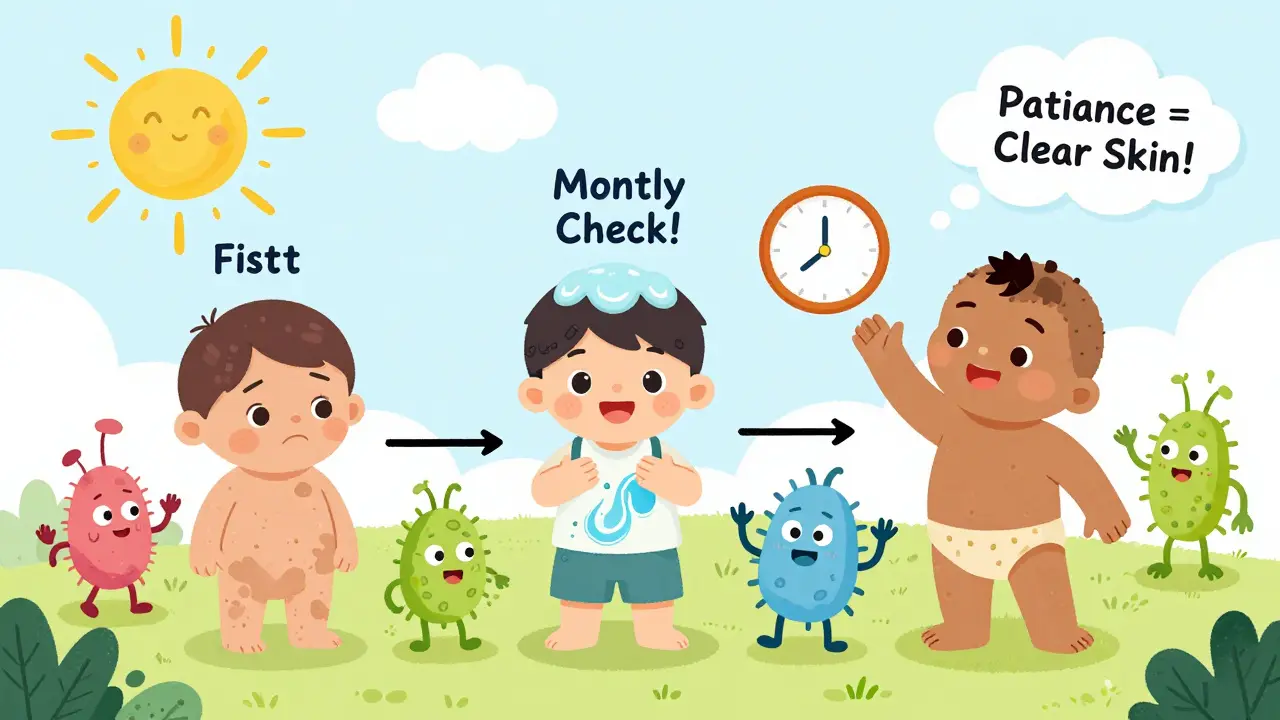
And here’s a pro tip: set a monthly phone reminder. Mayo Clinic found that patients who did this improved adherence by 40%. You don’t need to be perfect-just consistent.
What About Sun Exposure?
Sunlight makes tinea versicolor look worse-not because it makes the infection worse, but because your healthy skin tans while the affected areas stay pale. That contrast makes the patches look more obvious.
Some people think sunbathing will “fix” it. It won’t. It’ll just make you feel more self-conscious. Use sunscreen daily. Look for mineral sunscreens with zinc oxide or titanium dioxide-they’re less likely to clog pores or feed yeast.
Over time, your skin’s pigment will return naturally. It can take 6 to 12 months. Be patient. The patches will fade. But only if you prevent the yeast from coming back.
When to See a Doctor
You don’t need to see a doctor for every patch. But you should if:
- The patches spread quickly or cover large areas
- They’re itchy, painful, or bleeding
- You’ve tried OTC treatments for 4 weeks with no improvement
- You have diabetes, HIV, or take steroids long-term-these increase your risk of recurrence
Also, if you’ve had three or more recurrences in a year, your dermatologist may recommend year-round monthly maintenance. The American Academy of Dermatology updated its guidelines in 2023 to reflect this for chronic cases.
What Doesn’t Work
There’s a lot of misinformation out there. Let’s clear it up:
- It’s not contagious. You didn’t catch it from a gym towel or a pool.
- It’s not caused by poor hygiene. Washing more won’t help-it can actually make it worse by stripping your skin’s natural barrier.
- It’s not related to diet. No food causes or cures it.
- It’s not a sign of a weak immune system-unless you’re on steroids or have HIV. Most healthy people get it.
Don’t fall for miracle cures. Stick to science-backed methods.
Real People, Real Results
On Reddit, a user named ClearSkinSeeker22 spent three months trying everything before getting diagnosed. “I avoided the pool all summer,” they wrote. “I thought I had vitiligo.” After using Selsun Blue daily for two weeks, then monthly after, they’ve been clear for over a year.
Another user on SkincareRx, GlowGetter, says: “I use ketoconazole shampoo once a month. It’s become part of my routine, like brushing my teeth. No more white patches. No more hiding my back.”
That’s the pattern. People who treat it once and forget it? It comes back. People who treat it and maintain? They live normally.
What’s Next in Treatment?
Researchers are exploring new ways to fight tinea versicolor. At UC San Diego, scientists found that certain good bacteria can suppress Malassezia yeast by 68% in lab tests. Probiotic creams might be the next step.
Also, some yeast strains are becoming less sensitive to ketoconazole. That’s why doctors are now testing combination therapies-using two antifungals together-to stay ahead of resistance.
But for now, the best tools are simple, cheap, and proven. You don’t need the future. You need consistency.
Is tinea versicolor contagious?
No, tinea versicolor is not contagious. It’s caused by yeast that already lives on your skin. You can’t catch it from someone else or spread it through contact, towels, or pools.
Can tinea versicolor go away on its own?
Sometimes, yes-but it’s rare. Without treatment, the yeast stays overgrown and the patches remain visible. Treatment speeds up pigment recovery and prevents worsening. Waiting doesn’t help.
How long do the patches last after treatment?
The yeast clears in days or weeks, but the skin color can take 6 to 12 months to return to normal. That’s because your skin needs time to rebuild pigment. Sun exposure during this time can make the contrast worse, so use sunscreen daily.
Can I use regular shampoo instead of selenium sulfide or ketoconazole?
No. Regular shampoos don’t contain antifungal ingredients. Only selenium sulfide or ketoconazole shampoos are proven to kill the yeast. Other products won’t help and may even worsen the condition if they’re oily.
Should I avoid the sun if I have tinea versicolor?
No-you should still protect your skin with sunscreen. But know that sun exposure will make the patches more noticeable because unaffected skin tans while infected areas don’t. Sunscreen helps prevent this contrast and protects your skin from damage.
Is tinea versicolor linked to poor hygiene?
No. Tinea versicolor is not caused by being dirty. In fact, over-washing or using harsh soaps can irritate your skin and make it easier for yeast to overgrow. The condition is linked to heat, sweat, oil production, and genetics-not cleanliness.
Can I use antifungal cream instead of shampoo?
Some antifungal creams (like clotrimazole or miconazole) can help, but they’re less effective than shampoos for tinea versicolor. Shampoos are designed to be left on the skin for 10 minutes, giving the antifungal time to work. Creams are usually rinsed off too quickly. Stick with selenium sulfide or ketoconazole shampoo for best results.
Don’t let tinea versicolor steal your confidence. It’s not a life sentence. It’s a manageable condition. With the right treatment and a simple monthly routine, you can have clear skin again-and keep it that way.

Comments (14)
Jane Wei
Used Selsun Blue for two weeks and it vanished. Still use it once a month like a ritual. No more hiding my back in tank tops.
Salome Perez
Thank you for this incredibly well-researched and compassionate breakdown. So many people misunderstand this condition as a hygiene issue, when it's really just biology playing its quiet, stubborn game. The monthly shampoo maintenance tip? Pure gold. I've been doing it for three years now-no recurrence. It’s not a cure, it’s a lifestyle adjustment, like flossing. And honestly? More people should know this.
Josh Potter
Bro. I tried tea tree oil for 3 months. Zero. Then I used Selsun Blue like you said. 10 minutes, daily. Two weeks later I wore a white shirt to the gym and didn’t panic. I’m not even kidding. This shit works. Stop wasting your life on YouTube hacks.
Naomi Lopez
It’s fascinating how the medical establishment still treats this like a minor nuisance when it’s clearly a microbiome dysbiosis crisis. The fact that we’re still using 1970s antifungals instead of targeted probiotic modulation speaks volumes about pharmaceutical inertia. Also, why is no one talking about the glyphosate link? Just saying.
Jonathan Morris
Let me guess-this was written by a dermatology rep. The ‘no contagion’ line is a classic distraction. Why would Big Pharma care if you think it’s ‘just yeast’? They profit from monthly shampoos and prescription fluconazole. And don’t get me started on the ‘non-comedogenic’ scam. All sunscreen clogs pores. They just label it differently to sell more.
CAROL MUTISO
Wow. So we’re now treating skin fungus like it’s a yoga practice? Monthly shampoo rituals, phone reminders, cotton shirts… I’m not sure if this is self-care or a cult. But hey, if it works, I guess it’s better than crying in the mirror. Still, I’d rather just tan and let the patches fade naturally. Why fight nature when you can just… accept it?
Radhika M
I had this in India last summer. Heat + sweat = disaster. Used ketoconazole shampoo from local pharmacy. Rs 120. Worked. Now I use it every 15 days during monsoon. No more patches. Simple. Cheap. No drama.
Philippa Skiadopoulou
A well-structured and clinically sound overview. The emphasis on maintenance therapy is particularly commendable. Many patients discontinue treatment prematurely, unaware that Malassezia is a commensal organism requiring long-term modulation rather than eradication. The UCLA data on recurrence reduction is compelling.
Kaylee Esdale
I used to hate my back. Now I wear tank tops. No big deal. Just use the shampoo once a month. Like brushing your teeth. If it’s not broke, don’t fix it. But if it’s broke? Fix it easy. No fancy stuff. Just the shampoo. That’s it.
Steven Lavoie
As someone who’s spent years in tropical climates, I can confirm: humidity is the silent enemy. But the real insight here isn’t the shampoo-it’s the mindset shift. This isn’t a ‘problem’ to be solved. It’s a seasonal companion. You learn to live with it, not fight it. That’s what the pros do. The rest of us just buy expensive creams and feel guilty.
Pawan Chaudhary
This gave me hope. I thought I’d have these patches forever. Now I know it’s just a matter of being consistent. One shampoo a month? I can do that. Thank you for making it feel manageable, not scary.
Meghan O'Shaughnessy
I’m not even sure if I have this. I just have some light spots that come and go. But reading this made me realize I’ve been treating them like acne. Maybe I’ve been overwashing. Maybe I need to stop scrubbing and just… breathe. Thanks for the gentle reminder that skin isn’t a battlefield.
Erik J
Is there any data on whether the yeast strain in tinea versicolor varies geographically? I’m curious if resistance patterns differ between regions-say, between the US and India-given differences in climate, skin microbiome, and product use.
Victoria Rogers
Yeah right. Next they’ll say global warming is fake. You think this is just yeast? It’s the chemicals in your shampoo, your water, your food, your damn deodorant. They’re poisoning us and calling it ‘normal.’ You think you’re in control? You’re just another sheep following the shampoo cult.