
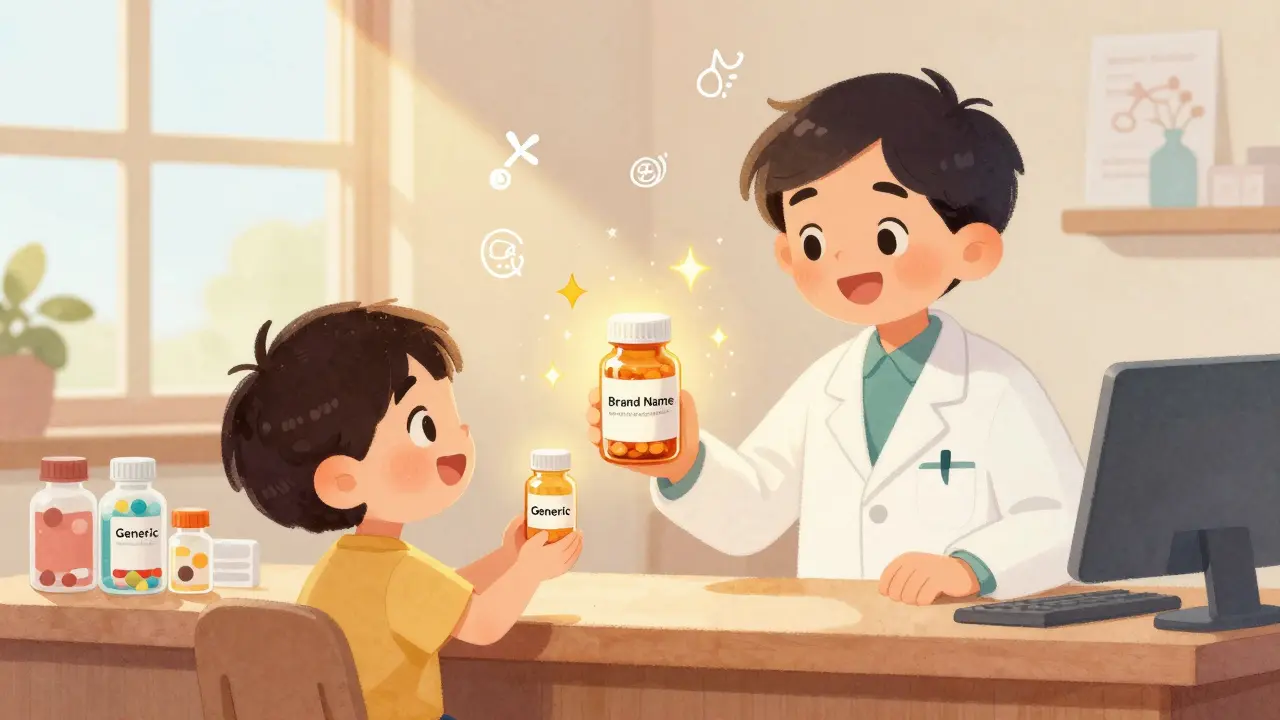
When you pick up a prescription, chances are you’re getting a generic drug. In fact, 90% of all prescriptions filled in the U.S. are for generic medications. But how do these cheaper versions get approved? And can you trust them to work just like the brand-name drug you’ve been taking? This isn’t just about saving money-it’s about knowing your medicine is safe, effective, and exactly what your doctor prescribed.
What Exactly Is a Generic Drug?
A generic drug is a copy of a brand-name drug that has the same active ingredient, strength, dosage form, and way it’s taken (like a pill, injection, or cream). It’s not a weaker version. It’s not a substitute. It’s the same medicine, made by a different company after the original patent expires.For example, if your doctor prescribes Lipitor for cholesterol, you might get atorvastatin instead-the generic version. Same chemical, same effect, same side effects. The only differences are the color, shape, or inactive ingredients (like fillers or dyes), which don’t affect how the drug works.
How Does the FDA Approve Generics?
The FDA doesn’t require generic drug makers to repeat the expensive clinical trials that brand-name companies did. Instead, they use a faster, more efficient process called the Abbreviated New Drug Application (ANDA). This system was created by the Hatch-Waxman Act in 1984 to make affordable drugs available without sacrificing safety.To get approved, a generic drug must prove two things:
- Pharmaceutical equivalence: The generic has the same active ingredient, strength, dosage form, and route of administration as the brand-name drug (called the Reference Listed Drug or RLD).
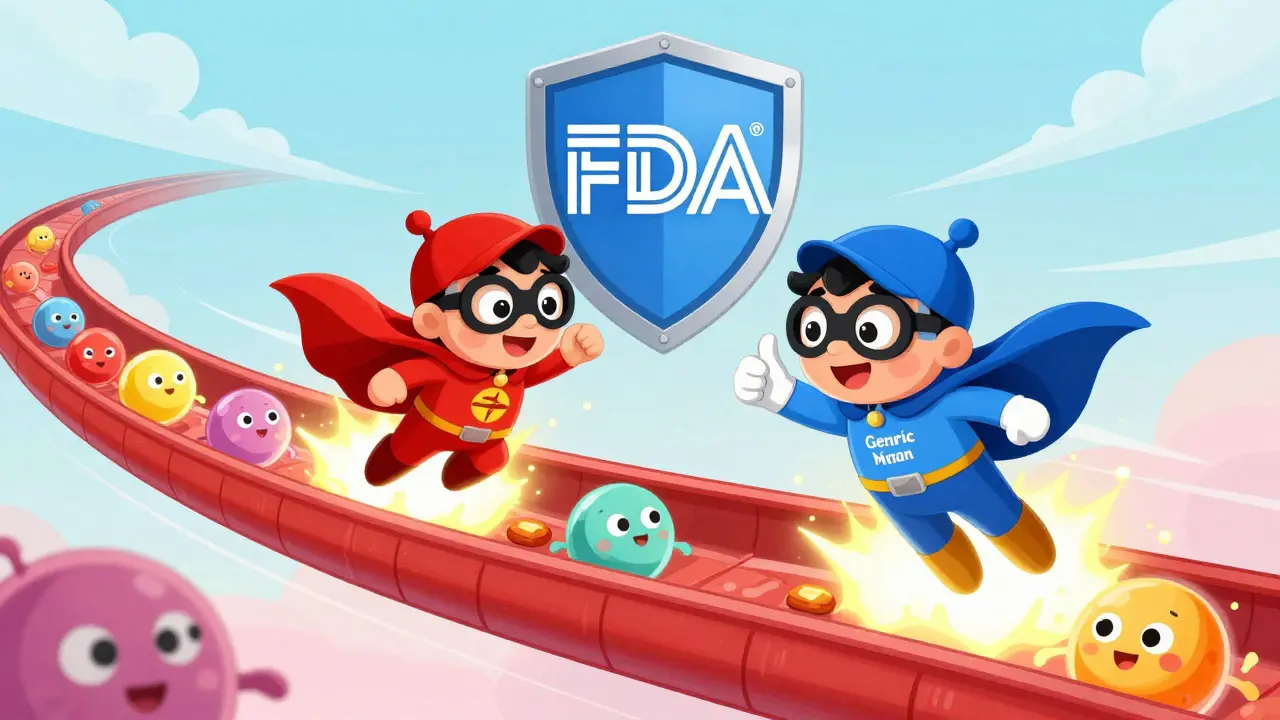
- Bioequivalence: The generic delivers the active ingredient into your bloodstream at the same rate and to the same extent as the brand-name drug.
Bioequivalence is tested in small studies with healthy volunteers-usually 24 to 36 people. Researchers measure how much of the drug enters the blood over time (called AUC) and the highest level it reaches (called Cmax). For the generic to pass, these numbers must fall within 80% to 125% of the brand-name drug’s values. That’s a tight range, and it ensures the drug behaves the same way in your body.
Are Generics as Safe and Effective as Brand-Name Drugs?
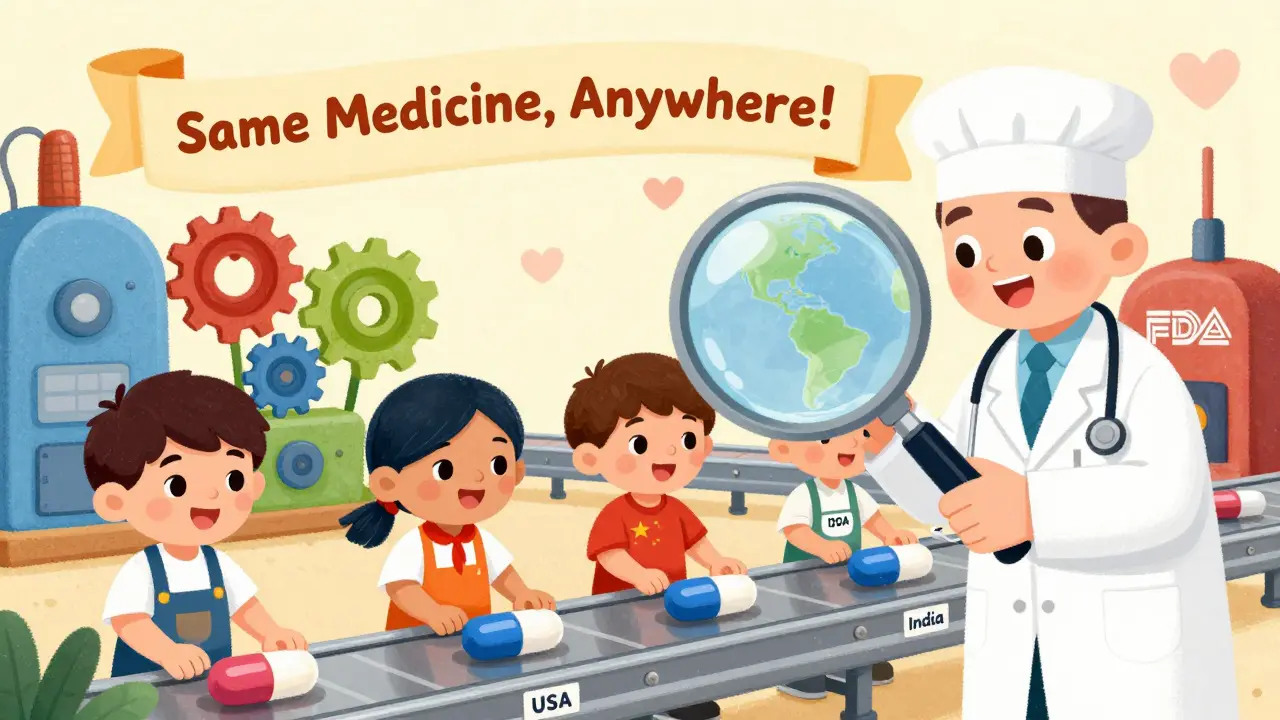
Yes. The FDA holds generics to the same strict standards as brand-name drugs. Every generic manufacturer must follow the same quality rules-called Current Good Manufacturing Practices (cGMP)-as the original drugmaker. In fact, many brand-name companies also make their own generic versions.The FDA inspects over 1,500 manufacturing facilities each year, including those overseas. If a plant fails inspection, the FDA won’t approve the drug. That’s why you can trust that a generic from India, China, or the U.S. meets the same safety bar.
Studies show that patients are just as satisfied with generics as they are with brand-name drugs. In a 2022 FDA survey of 2,500 patients, 87% said they were happy with their generic medication. Pharmacists agree: 94% of community pharmacists say they recommend generics when available.
What About Complex Drugs Like Inhalers or Creams?
Not all drugs are easy to copy. Simple pills? Easy. Complex products like nasal sprays, eye drops, or topical creams? Much harder. These are called “complex generics,” and they make up only about 15% of applications-but cause nearly 40% of delays in approval.Why? Because it’s not enough to match the active ingredient. With inhalers, for example, you need to match how the drug is sprayed, how deep it goes into the lungs, and how long it stays there. These details are hard to measure. The FDA launched the Complex Generic Drug Product Initiative in 2023 to create clearer rules for these tricky products. In September 2023, they approved the first generic version of EpiPen-a major milestone after 15 years of effort.
Why Do Some Patients Worry About Switching Generics?
Most people don’t have issues. But a small group-those taking drugs with a narrow therapeutic index-can be more sensitive to small changes. These include medications like:- Levothyroxine (for thyroid)
- Warfarin (a blood thinner)
- Phenytoin (for seizures)
- Cyclosporine (for organ transplants)
For these drugs, even tiny differences in how the body absorbs the medicine can matter. That’s why some patients report feeling different after switching between generic brands. The FDA acknowledges this and encourages doctors and patients to stick with one generic manufacturer if it’s working well. If you notice changes in how you feel after switching-like new side effects or symptoms returning-tell your doctor. It’s not common, but it happens.
How Long Does It Take for a Generic to Hit the Market?
Once a brand-name drug’s patent expires, generic companies can file an ANDA. The FDA aims to review standard applications within 10 months. But complex drugs can take over two years.The first company to file an ANDA for a generic often gets 180 days of exclusive sales rights. That’s why you might see one generic version appear first, then others follow. For high-demand drugs like statins or antidepressants, you might see five or six generics come out at once-driving prices down even more.
On average, generic drugs enter the market about 14 months after the brand patent ends. That’s much faster than the 10-15 years it takes to develop a brand-new drug.
How Much Money Do Generics Save?
The savings are huge. Generics make up 90% of prescriptions but only cost about 23% of total drug spending. Over the past decade, they’ve saved the U.S. healthcare system an estimated $2.2 trillion.For patients, that means filling a 30-day supply of a brand-name drug might cost $150-but the generic version could be $10 or even free with insurance. That’s why Medicare Part D and private insurers push generics-they’re not just cheaper, they’re smarter.
What’s the Future of Generic Drugs?
The FDA is working to keep up. In 2023, they approved 90 new generic drugs. By 2025, they plan to use artificial intelligence to speed up reviews. They’re also pushing for more transparency with tools like the GDUFA dashboard, where you can track your drug’s approval status in real time.But challenges remain. Some brand-name companies use legal tricks-like filing dozens of minor patents-to delay generics. This is called “evergreening,” and it can push back generic entry by over three years. The FDA and Congress are looking at ways to stop these tactics, including the CREATES Act, which would prevent brand companies from blocking access to samples needed for testing.
Meanwhile, the market is growing. With over $250 billion in brand-name drugs set to lose patent protection by 2027, we’ll see a wave of new generics. The industry expects a 25% increase in applications.
What Should You Do as a Patient?
You don’t need to be an expert to use generics safely. Here’s what to remember:- Ask your doctor or pharmacist if a generic is available. Most of the time, it is.
- Don’t assume generics are “less good.” They’re tested just as hard.
- If you’re on a narrow therapeutic index drug, stick with the same generic brand unless your doctor says otherwise.
- Check the FDA’s Orange Book to see which generics are approved for your drug.
- If you notice a change in how you feel after switching generics, report it. It’s not your imagination.
Generic drugs are one of the most successful public health tools in modern medicine. They’re safe, effective, and affordable. And they’re not going away. The next time you pick up your prescription, you can feel confident you’re getting the same medicine-just at a price that fits your life.
Are generic drugs as effective as brand-name drugs?
Yes. Generic drugs must meet the same FDA standards as brand-name drugs. They contain the same active ingredient, work the same way in the body, and are held to the same quality and safety rules. The FDA requires bioequivalence testing to prove they deliver the same amount of medicine into your bloodstream at the same rate. Millions of patients use generics every day with no difference in results.
Why are generic drugs cheaper?
Generic drugs don’t need to repeat expensive clinical trials that brand-name companies already did. Instead, they use a faster approval process called ANDA, which focuses on proving the drug is equivalent-not new. This cuts development costs from over $2 billion for a new drug to just $5-10 million for a generic. Savings are passed on to patients, insurers, and the healthcare system.
Can I switch between different generic brands?
For most people, yes. But if you’re taking a drug with a narrow therapeutic index-like levothyroxine or warfarin-your body is very sensitive to small changes. In those cases, it’s best to stick with the same generic manufacturer. If you notice side effects or symptoms returning after switching, talk to your doctor. You’re not imagining it, and your pharmacist can help you stay on the same version.
Do generic drugs come from the same factories as brand-name drugs?
Sometimes. Many brand-name companies also make generic versions of their own drugs. Other times, generics are made in the same overseas factories that produce brand-name drugs. The FDA inspects all facilities-whether they make brand-name or generic drugs-and requires them to follow the same strict quality rules. Where a drug is made doesn’t affect its safety or effectiveness.
How do I know if a generic is approved by the FDA?
The FDA publishes a list of all approved generic drugs in the Orange Book, which is free to search online. You can also ask your pharmacist or check the drug’s packaging-FDA-approved generics will have the same active ingredient listed as the brand-name version. If it’s not on the Orange Book, it’s not approved.

Comments (9)
Teresa Rodriguez leon
I used to be terrified of generics until my thyroid meds switched from Synthroid to levothyroxine. I felt like a zombie for two weeks. Then I found the exact same manufacturer and everything went back to normal. Don't let anyone tell you it's all in your head.
Manan Pandya
The FDA's bioequivalence standards are scientifically rigorous. The 80–125% confidence interval for AUC and Cmax is not arbitrary-it reflects clinically insignificant variation. Generic drugs are not inferior; they are equivalent. The data is publicly available and peer-reviewed.
Aliza Efraimov
Let me tell you-my grandma takes five different generics every day. She’s 82, lives alone, and her pharmacist knows her by name. She saved over $4,000 last year just on meds. That’s not a loophole-that’s justice. The system works when we let it. Stop fearing what’s proven.
I’ve seen people cry because they couldn’t afford brand names. Generics aren’t a compromise-they’re a lifeline.
Nisha Marwaha
From a pharmacoeconomic standpoint, the ANDA pathway represents a paradigm shift in regulatory efficiency. The Hatch-Waxman Act created a bifurcated market structure wherein innovators retain exclusivity while enabling bioequivalent entrants via abbreviated pathways. The GDUFA framework further institutionalizes quality metrics for global manufacturing sites, ensuring cGMP compliance irrespective of geographic origin. The 90% market penetration of generics is not serendipitous-it is the direct outcome of evidence-based policy design.
Paige Shipe
Generics are fine I guess. But I still trust the brand name more. I mean, look at the packaging-generic ones look like they were made in a basement. And why do they always have weird colors? Like, why is my generic metformin neon green? It’s not natural. It’s not right. I’d rather pay extra for something that looks like medicine.
Tamar Dunlop
In Canada, we have a similar system, though our public drug plans mandate generics unless contraindicated. The cultural trust in pharmaceutical regulation is high, and patient outcomes reflect this. I find it heartening that the FDA's standards align so closely with those of Health Canada-this is global public health integrity in action.
David Chase
USA FOR LIFE!!! 🇺🇸🔥 Generics? Nah. I’d rather pay $150 for Lipitor than some Chinese junk that might be made in a factory with rats running through it. The FDA’s got eyes everywhere, but still-why risk it? My heart’s worth more than a $10 copay. Let the poor people take the generics. I’ve got insurance. 🤑💊 #BuyAmerican #NoMoreForeignMedicine
Emma Duquemin
Y’ALL. I just found out my local pharmacy gets generics from the SAME factory that makes the brand name. Like, same line, same machines, same quality control. The only difference? The label. That’s it. I went back to my pharmacist and said, ‘Wait, so I’ve been paying extra for a sticker?’ She laughed and said, ‘Welcome to the real world, honey.’ Mind. Blown. 🤯
Now I only ask for the generic-and I tell everyone I know. This isn’t about being cheap. It’s about being smart. And honestly? It feels good to not be ripped off.
Kevin Lopez
ANDA. Bioequivalence. cGMP. Niche therapeutic index drugs require individualized monitoring. Don’t conflate accessibility with equivalence in all contexts. Stick to one manufacturer. Document changes. Your pharmacokinetics aren’t a suggestion.