
Navigating medication travel safely requires understanding specific rules and preparing properly. Every year, thousands of travelers face unexpected delays, confiscation, or even denied entry because of medication issues. It’s not just about packing your pills-it’s about knowing how security checkpoints, temperature requirements, and country-specific laws interact. This guide covers everything you need to know to keep your treatment on track while staying compliant.
Understanding Security Checkpoint Rules
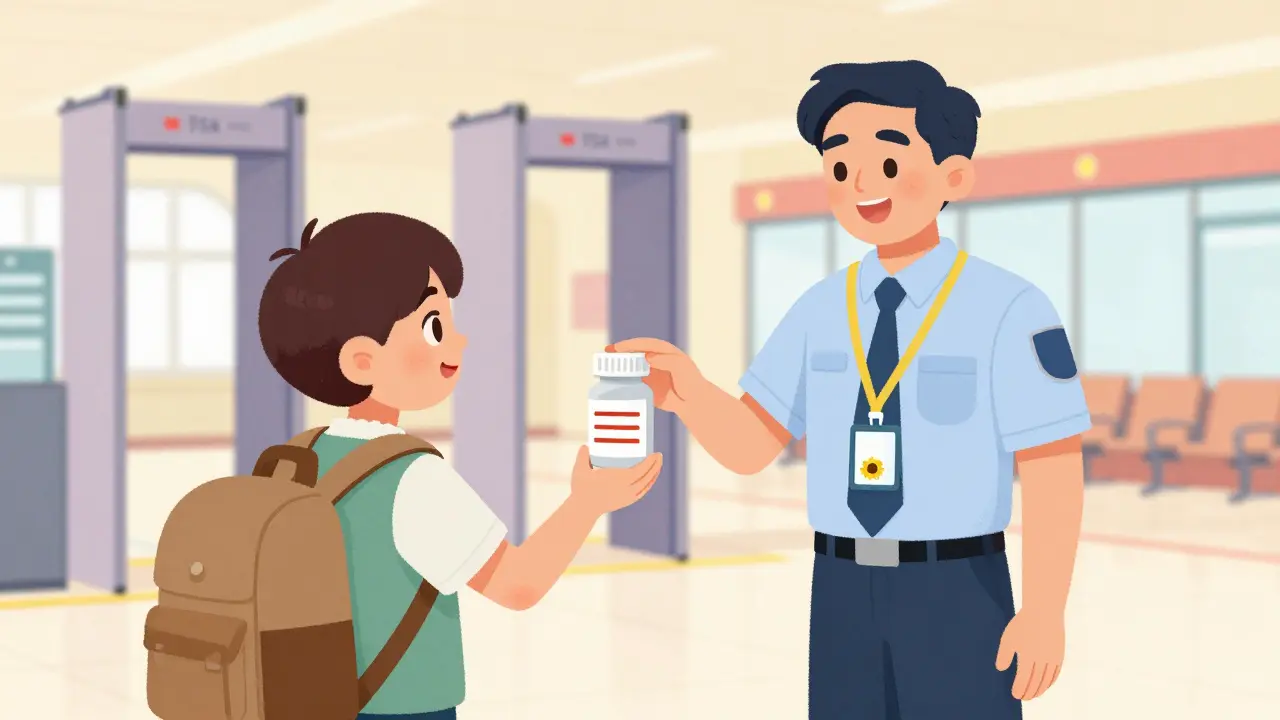
When flying, security checkpoints are where medication issues often arise. The TSA Transportation Security Administration sets rules for medications in carry-on luggage. As of 2025, TSA permits medically necessary liquids in reasonable quantities beyond the 3.4 ounce limit when declared at security. Solid medications face no quantity restrictions but must be declared. Keeping medications in original pharmacy containers with labels reduces inspection time by 63% compared to unlabeled containers, based on TSA’s 2025 internal metrics. For medical devices like insulin pumps, lithium batteries must stay in carry-on luggage and cannot exceed 100 watt-hours without airline approval per FAA guidelines.
The TSA Cares program, launched in 2023, has cut security processing time for medication carriers by 41%. Travelers can request this service by calling 855-787-2227 72 hours before travel. At 37 major U.S. airports, dedicated "medication-friendly" lanes use sunflower lanyards for quick identification. Remember: never pack medications in checked luggage. Checked bags get screened separately, and delays could leave you without critical drugs during transit.
Storing Medications Correctly During Travel
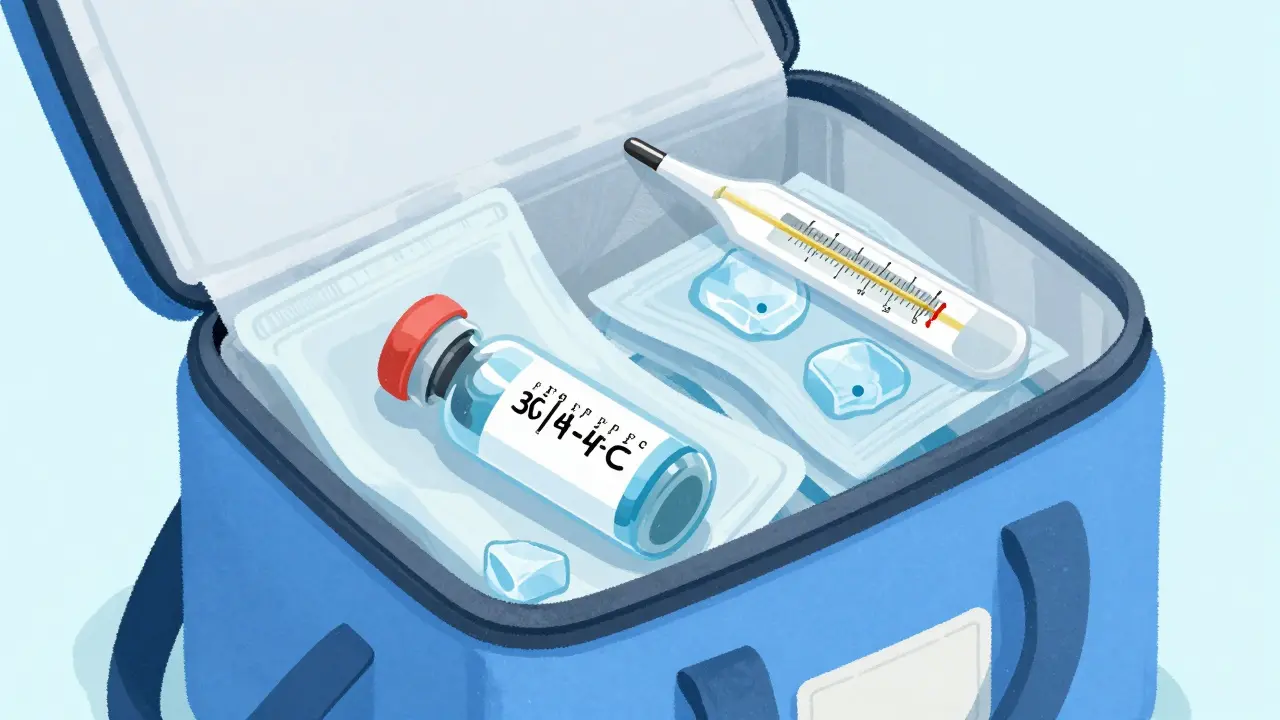
Temperature control is critical for many medications. Insulin must stay between 36°F-46°F (2°C-8°C) per FDA guidelines, while biologics like certain cancer drugs require 2°C-8°C stability. Using pharmaceutical-grade cooling wallets, 73% of insulin users report success during tropical travel. These wallets maintain temperatures for up to 72 hours even in +40°C ambient conditions. For short flights, insulated bags with ice packs work well, but avoid direct contact between ice and medication containers to prevent freezing.
Some medications degrade quickly when exposed to heat. Antibiotics like amoxicillin require cool, dry storage, while epinephrine auto-injectors (EpiPens) lose effectiveness above 77°F (25°C). Always check manufacturer guidelines before travel. If your medication requires refrigeration, pack it in a cooler with frozen gel packs. Never leave medications in a hot car or direct sunlight-this is a common cause of treatment failure during travel.
Documentation You Must Carry
Original pharmacy containers with labels are required by 67% of countries for medication verification. A doctor’s letter detailing your medical condition and medication necessity is essential for international travel. The CDC recommends this for all international trips, as it reduces delays at customs by 89%. For non-English speaking destinations, translated prescriptions are mandatory for 83% of countries. Digital copies of prescriptions are now accepted in 31 countries (up from 12 in 2023), but always carry physical copies as backup.
For controlled substances like opioids or stimulants, additional documentation is critical. The DEA requires a signed prescription from your doctor and a letter explaining the medical need. The CDC Centers for Disease Control and Prevention’s Yellow Book 2025 highlights high-risk medications like hydrocodone, oxycodone, and alprazolam (Xanax). These drugs face strict controls in 28% of countries. Always check specific country regulations before travel-what’s legal in the U.S. may be banned elsewhere.
Navigating International Regulations
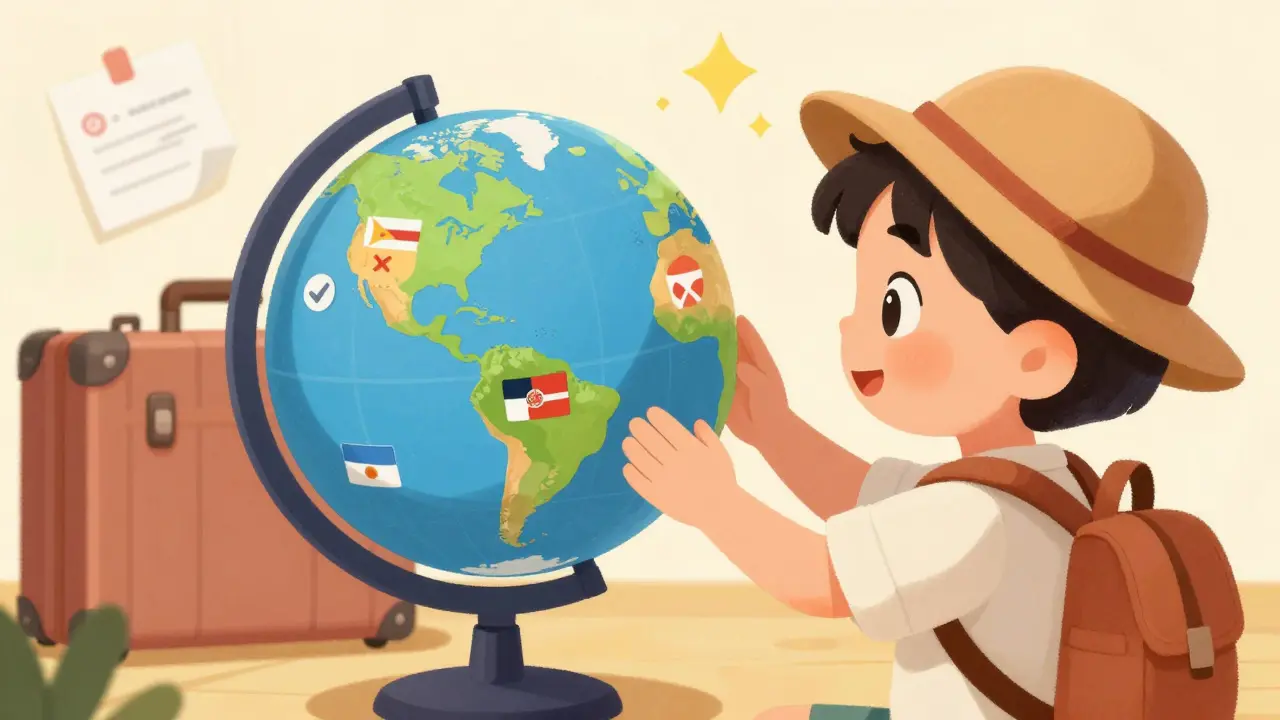
Country-specific medication rules vary wildly. Japan bans pseudoephedrine entirely (common in cold medicines), Thailand requires prior authorization for benzodiazepines like Xanax, and the UAE prohibits all opioids. Adderall and Vyvanse face outright bans in 17 countries including France and Sweden. Pseudoephedrine is prohibited in 22 countries due to methamphetamine conversion concerns. The INCB International Narcotics Control Board updates country regulations monthly. Their October 2025 report lists 47% of nations changing medication rules annually.
For CBD products, confusion is common. While TSA permits CBD with under 0.3% THC domestically, 29 countries including Singapore and Dubai ban all CBD regardless of THC content. The INCB’s 2025 update confirms CBD is illegal in these destinations. Always research destination-specific rules before packing. If unsure, contact the embassy of your destination country for clarification-this is the safest approach.
Managing Refills and Extended Stays
The FDA allows foreign nationals to bring or ship a 90-day medication supply. For stays longer than 90 days, mail shipments are possible but require specific documentation: visa or passport copy, doctor’s letter, and English prescription copy. Customs and Border Protection confirmed in October 2024 that "additional medication may be sent" for extended stays. However, controlled substances like Adderall require DEA coordination for international shipping.
Distributing medications across multiple carry-on locations prevents total loss during luggage issues. MIUSA’s 2025 survey found 92% of travelers who used this strategy avoided treatment disruption. For chronic conditions, always carry extra medication (at least 10-15 days’ supply) in your carry-on. If your medication is confiscated, contact your country’s embassy immediately-they can provide emergency assistance and guidance on local alternatives.
What to Do If Problems Occur
If your medication is confiscated at security, remain calm and ask to speak with a supervisor. TSA officers have flexibility with medically necessary items when properly declared. For international issues, contact your embassy-they can often help secure emergency supplies or provide local medical contacts. Always keep a list of generic medication names (e.g., "alprazolam" instead of "Xanax") in case brand names aren’t recognized abroad.
For temperature-sensitive drugs that spoil during travel, contact a local pharmacy or hospital. Many countries have emergency medication programs for travelers. Carry a backup prescription for critical medications, and consider using telemedicine services for urgent refills. The CDC’s Yellow Book 2025 recommends having a list of local healthcare providers at your destination before traveling. This can save hours of searching during a medical emergency.
Can I carry liquid medications in my carry-on?
Yes, medically necessary liquids exceed the 3.4 ounce limit when declared at security. TSA permits reasonable quantities for medications. Keep them in original packaging and be ready to show a prescription or doctor’s note. Always declare them clearly during screening to avoid delays.
Do I need a doctor’s letter for all international trips?
Yes, the CDC recommends a doctor’s letter for all international travel. It should state your medical condition, prescribed medications, and dosage. This reduces customs delays by 89% and is required by many countries for controlled substances. Include your doctor’s contact information for verification.
How do I store insulin during a long flight?
Keep insulin in a pharmaceutical-grade cooling wallet or insulated bag with frozen gel packs. Avoid direct contact between ice and the vial to prevent freezing. Store it in your carry-on-never in checked luggage. Most airlines allow ice packs for medical supplies. Check with your airline beforehand for specific policies.
What medications are banned internationally?
Common banned medications include Adderall (banned in 17 countries), pseudoephedrine (banned in 22 countries), and opioids like hydrocodone (prohibited in the UAE and many others). Xanax (alprazolam) requires authorization in Thailand and is banned in Singapore. Always check destination-specific rules via the INCB’s country database before traveling.
Can I bring CBD oil internationally?
No-while TSA permits CBD with under 0.3% THC domestically, 29 countries including Singapore, Dubai, and Japan ban all CBD regardless of THC content. The INCB’s 2025 update confirms zero-tolerance policies in these destinations. Always research destination laws before packing CBD products.

Comments (12)
Pamela Power
This guide is laughably inadequate. TSA rules? More like 'TSA chaos'. They're just trying to make travelers feel like criminals. And 'pharmaceutical-grade cooling wallets'? That's just a fancy way to say 'buy our overpriced products'. Typical corporate nonsense.
Let's be real: the real issue is how the FDA and DEA have made it impossible to travel without jumping through hoops. They're not protecting anyone, just creating bureaucratic nightmares.
I've had my insulin confiscated before because the TSA officer didn't understand the rules. They're supposed to allow medically necessary liquids, but they don't. It's all a farce.
And this 'CDC recommends' nonsense? The CDC is just another government agency that's more concerned with paperwork than actual health.
What's next? Will they require a notarized letter from your doctor just to carry aspirin? This is a joke.
They're all in cahoots with Big Pharma to keep prices high. It's obvious.
Why don't they just make the rules clear instead of this vague 'reasonable quantities' nonsense?
And the 'medication-friendly lanes'-that's just a PR stunt. How many airports actually have them? Not enough.
It's all smoke and mirrors. The real problem is that the government doesn't trust travelers with their own meds.
Someone needs to sue these agencies for harassment.
This guide is useless because it doesn't address the systemic issues. Just more fluff to make people feel better.
Arjun Paul
Your complaints are valid but misplaced. The TSA protocols are based on actual security concerns. The issue is that travelers don't follow basic guidelines. For example, keeping medications in original containers reduces inspection time by 63% as stated in the post. You're blaming the system instead of taking responsibility.
Moreover, the FDA and CDC regulations exist for a reason. They're not arbitrary. If you had read the post properly, you'd know that certain medications require specific handling.
It's not about Big Pharma conspiracies. It's about public safety. Your paranoia is unproductive.
Take India for instance. The country has strict laws on medications. A traveler once got arrested for carrying prescription meds without proper documentation. This guide highlights those risks.
Instead of whining, educate yourself. The CDC's Yellow Book is free online. It's your responsibility to check before traveling.
Stop blaming others for your own ignorance. This is a factual guide, not a conspiracy theory.
And your 'TSA chaos' comment? They have a 99% success rate with medication checks. Your experience is an outlier.
Real solution: always carry a doctor's letter. It's required by 67% of countries. Why ignore that?
Stop being a conspiracy theorist. The system works when you follow the rules. Period.
divya shetty
This guide is insufficient for Indian travelers. We need more details on local laws. For example, in India, carrying certain medications requires prior approval from the government. The post mentions 67% of countries require original pharmacy containers, but doesn't specify Indian regulations.
Also, the CDC's recommendation for a doctor's letter is good, but in India, the letter must be in Hindi or English with a notarized translation. This guide doesn't address that.
Moreover, the INCB's October 2025 report states that India has specific rules for controlled substances like opioids. This guide should have included that.
As an Indian traveler, I find this information incomplete. It's frustrating when guides don't cover country-specific details.
Maybe next time, include a section for India and other Asian countries. It's not just about the US rules.
Cole Streeper
The government is using this to track us. Be careful what you carry.
This guide is a front for surveillance. They're collecting data on every medication you take. Why else would they require so much documentation?
Remember 9/11? They've been using 'security' as an excuse to spy on citizens for years. This is just another step.
They want to know who's taking what meds so they can control us. It's obvious.
Don't trust the TSA or CDC. They're all in cahoots.
Always assume they're watching. That's the only way to stay safe.
Carol Woulfe
This is all a ploy by pharma companies to control our meds. They're hiding the real issues.
The 'pharmaceutical-grade cooling wallets' are overpriced because companies want to profit. The real reason for the regulations is to keep people dependent on expensive meds.
Think about it: why do they require so much documentation? To track us and sell our data.
Big Pharma is behind this. They want to keep prices high by making it hard to get meds abroad.
And the CDC? They're just a front for corporate interests. Don't believe their 'recommendations'.
This guide is propaganda. They want you to think it's helpful, but it's really a tool for control.
Always question authority. The truth is hidden in plain sight.
Georgeana Chantie
US rules are perfect. Other countries are just weak. 😏
Why do you think the US has the best healthcare system? Because we don't have these ridiculous restrictions that other countries impose.
It's all about national pride. We're the best, and everyone else should follow our lead.
Stop complaining. If you can't handle the rules, don't travel.
This guide is exactly what we need. No need for conspiracy theories. Just follow the guidelines.
Other countries should adopt US standards. It's that simple.
For example, Japan banning pseudoephedrine? That's stupid. Why can't they just trust people like we do?
And the UAE banning opioids? They're just being paranoid. In the US, we have proper controls without being draconian.
It's time for the rest of the world to wake up. We're leading the way, and we're doing it right.
Don't listen to these conspiracy theorists. The US is the safest place to travel with meds. Period.
Sam Salameh
This is great for Americans! We should export this guide worldwide.
US travelers have it easy compared to others. We have clear rules and support.
Other countries should learn from us. Why do they make it so hard?
It's all about national security. We protect our citizens first.
Don't let other countries' rules scare you. Follow the US guidelines and you'll be fine.
Keep your meds in original containers. Declare them. Done.
It's simple. Why make it complicated?
US rules are the gold standard. Everyone else should adopt them.
Cullen Bausman
All citizens must comply with these regulations for national security. Period.
It's not a suggestion. It's a requirement. Failure to adhere could result in serious consequences.
The TSA and FDA have established clear protocols for a reason. They exist to protect public health and safety.
Ignoring these rules is irresponsible. It puts others at risk.
There is no room for personal opinions here. The regulations are non-negotiable.
It's your duty as a citizen to follow them. Period.
Any deviation is unacceptable. This isn't open for debate.
Compliance is mandatory. End of story.
Samantha Beye
Always keep meds in original packaging for safety.
Rene Krikhaar
Good point. Always carry extra supply in case of delays. Original bottles help security checks. Thanks for the reminder.
It's also important to check country-specific rules before traveling.
For example, some countries require translated prescriptions.
But overall, this guide is very helpful for travelers.
anjar maike
This is super useful 🌟 Always check country rules before traveling.
Brendan Ferguson
Arjun makes a good point about following guidelines. But let's not forget that travelers have real challenges.
For example, not everyone has access to pharmaceutical-grade cooling wallets. They're expensive.
Also, some countries have inconsistent enforcement of rules. It's not just about following guidelines.
Maybe the guide could include more affordable alternatives for cooling meds.
And for people with chronic conditions, the stress of traveling with meds is real.
We need empathy, not just rules.
It's important to balance safety with compassion.
Let's make travel easier for everyone.