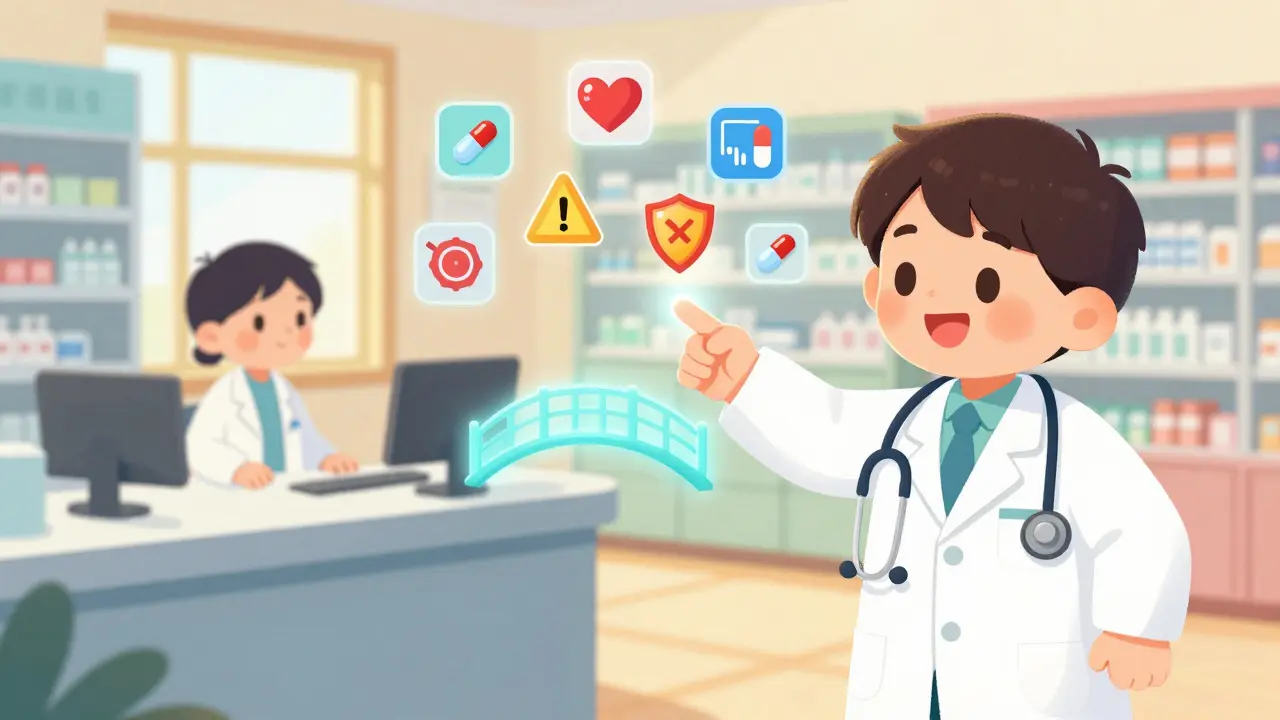
Imagine this: a patient walks into a community pharmacy with a new prescription for blood pressure medication. The pharmacist checks the system, sees the patient is also taking a diuretic, and immediately flags a dangerous interaction. But here’s the catch-the doctor who wrote the script never knew about the diuretic. No one had access to the full picture. That’s not just a missed opportunity. It’s a risk. And it happens every day because most pharmacies and providers still operate in silos.
That’s where EHR integration comes in. It’s not a buzzword. It’s the bridge between the doctor’s office and the pharmacy counter. When electronic health records (EHRs) talk directly to pharmacy systems, prescriptions don’t just get filled-they get safer, smarter, and faster. And the data proves it.
How EHR-Pharmacy Integration Actually Works
EHR integration isn’t about one system replacing another. It’s about two systems talking to each other using standardized language. Think of it like two people speaking different languages but using the same translation app. The app? It’s called NCPDP SCRIPT and HL7 FHIR.
NCPDP SCRIPT (version 2017071) handles the actual prescription transmission. When a doctor sends an e-prescription, this standard ensures it arrives at the pharmacy correctly-no handwritten scribbles, no misread names. But that’s just the start. FHIR (Fast Healthcare Interoperability Resources) Release 4, released in 2019, lets the pharmacy system pull in the patient’s full history: lab results, allergies, other meds, even care plans. This bidirectional flow means pharmacists don’t just receive orders-they can send back critical updates. A pharmacist spots a duplicate therapy? They can alert the provider through the EHR. A patient missed a dose? The pharmacy can flag it in the record.
Behind the scenes, it’s all secured with OAuth 2.0 for login, TLS 1.2+ for encrypted data transfer, and AES-256 for stored records. Every access is logged-required by the 21st Century Cures Act to stop information blocking. And it’s not theoretical. Systems like Surescripts, which processes over 22 billion transactions a year, already make this happen daily for millions of patients.
The Real Benefits: Numbers That Matter
Let’s cut through the fluff. What does this integration actually change for patients and providers?
- Medication errors drop by 48% thanks to automated alerts for interactions and dosing issues.
- Prescription processing time falls from 15.2 minutes to 5.6 minutes per script-saving pharmacists hours every day.
- Patients on chronic meds are 23% more likely to take them as prescribed when pharmacists have full access to their records.
- Hospital readmissions due to medication problems drop by 31%-a direct result of timely interventions.
- Pharmacists identify 4.2 medication-related problems per patient visit when they can see EHR data, compared to just 1.7 without it.
In Australia, the My Health Record system cut preventable hospitalizations by 27% by giving clinicians real-time access to pharmacy data. In the U.S., a 2022 study found integrated systems saved $1,250 per patient annually by avoiding unnecessary tests, ER visits, and hospital stays.
And it’s not just about saving money. It’s about saving lives. One pharmacist in Tennessee reported catching a life-threatening interaction between a new antibiotic and a patient’s heart medication-because the EHR showed the patient had recently been discharged from the hospital. Without integration, that interaction would’ve gone unnoticed until the patient ended up back in the ER.
Who’s Doing It Right-and Who’s Still Left Behind
The gap between big health systems and independent pharmacies is wide-and getting wider.
Eighty-nine percent of pharmacies tied to hospitals or large health networks have full EHR integration. That’s because they use the same EHR systems as the doctors: Epic, Cerner, or Meditech. Their pharmacists log in to the same platform. Data flows seamlessly.
But only 12% of independent community pharmacies have bidirectional integration. Why? Cost. Implementation runs between $15,000 and $50,000 upfront. Annual maintenance? Another $5,000 to $15,000. For a small pharmacy making $200,000 in profit a year, that’s a huge gamble.
Even when they pay, they often hit walls. There are over 120 different EHR systems and 50 pharmacy management platforms in the U.S. Getting them to talk? It’s like trying to connect five different types of USB cables with no adapter. A 2023 report found 73% of health information exchanges struggle to map pharmacy data into medical EHRs.
And time? Pharmacists spend an average of 2.1 minutes per patient. Even with a system that shows alerts, there’s no time to dig into the EHR. A 2021 survey found 68% of pharmacists say they simply don’t have enough time to review patient records during visits.
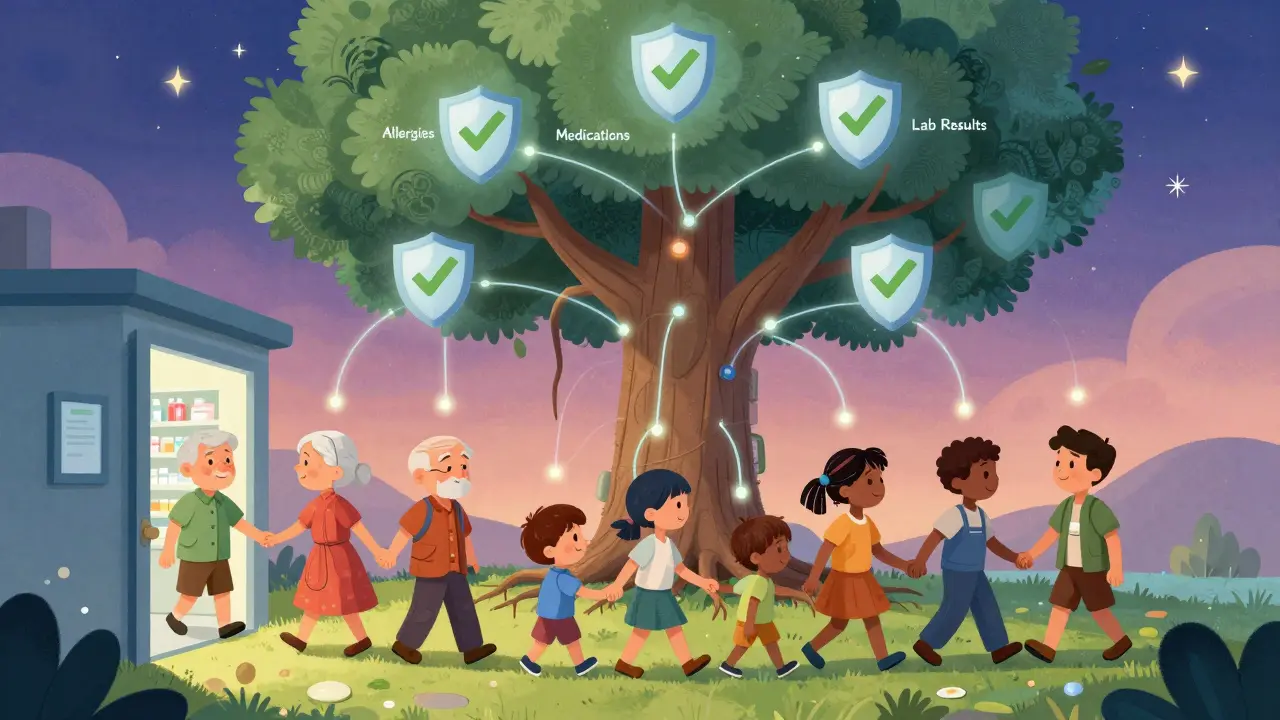
Barriers That Keep Integration From Going Mainstream
It’s not just tech. It’s money, rules, and culture.
Reimbursement is broken. Pharmacists can now prescribe in 48 states. But only 19 states pay them for reviewing EHR data or managing medication therapy. If you can’t get paid for your time, why invest $40,000 in a system that takes months to set up?
Provider resistance is real. Some doctors still see pharmacists as order-takers, not care partners. A University of Wisconsin study found only 3 out of 127 community pharmacies had formal EHR access agreements with local clinics. That’s less than 0.01% of Wisconsin’s pharmacists.
Alert fatigue is another silent killer. When a system flags every possible interaction-even low-risk ones-pharmacists start ignoring them. One pharmacist on Reddit said they get 15 alerts per script, but only 2 are actually useful. That’s not safety-it’s noise.
And training? Most vendors offer minimal support. Surescripts rates 4.2/5 for clarity. Smaller platforms? 2.8/5. One pharmacy owner in Ohio spent seven months and $18,500 on integration-only to find the system didn’t sync with their billing software.
What’s Changing-and What’s Coming Next
Change is coming, but it’s slow.
The 2023 CMS mandate requires 80% of Medicare Part D plans to integrate medication therapy management by 2025. That’s a huge push. If you’re a pharmacy serving Medicare patients, you’re being forced to adapt.
California’s SB 1115 law requires EHR integration for medication therapy management by 2026. Other states are watching. The 21st Century Cures Act already bans information blocking-so providers can’t legally refuse to share data with pharmacies anymore.
And the tech is evolving. The Pharmacist eCare Plan (PeCP), built on FHIR, is getting its first major update in 2024. Version 2.0 will include smarter clinical decision support-like auto-flagging patients who haven’t refilled a critical med in 90 days.
AI is starting to play a role. CVS and Walgreens are testing machine learning models that scan integrated EHR-pharmacy data to predict which patients are at risk for non-adherence or adverse events. Early results show a 37% improvement in identifying problems before they escalate.
Even patients are helping. The CARIN Blue Button 2.0 system, launched in January 2024, lets patients download their own prescription history from insurers and share it with their pharmacy. It’s not perfect-but it’s a start.
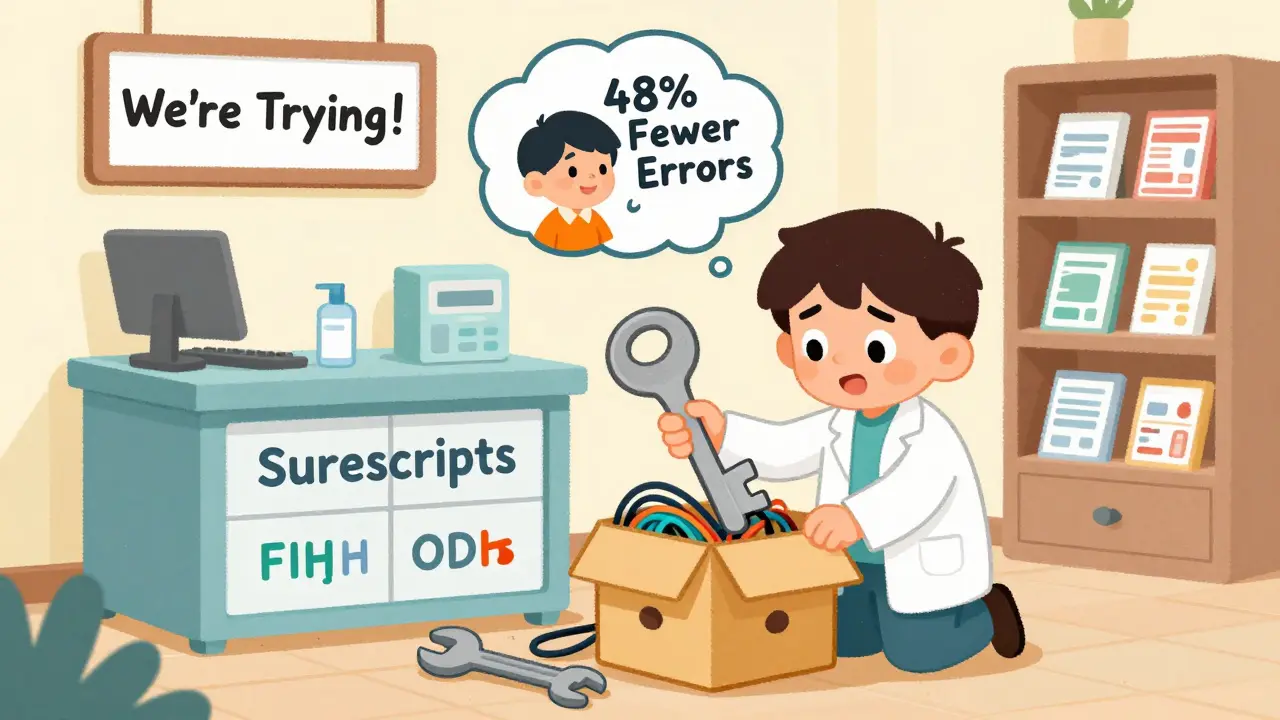
What Pharmacies Can Do Today
If you’re an independent pharmacy wondering where to start:
- Start with Surescripts. It’s the most widely used network. Their Medication History and e-Prescribing services are affordable and plug into most pharmacy systems.
- Use SmartClinix or DocStation. These are pharmacy-specific EHRs designed to integrate with major hospital systems. SmartClinix starts at $199/month. DocStation at $249/month. Both include EHR connections.
- Train your team. Don’t wait for the system to be live. Start teaching staff how to interpret alerts and document interventions. Even small steps matter.
- Track your metrics. Count how many medication errors you catch. How many prior authorizations you complete faster. Use that data to show your ROI to investors or partners.
You don’t need to integrate everything at once. Start with one thing: electronic prescribing. Then add medication history. Then care plans. Progress beats perfection.
The Future Is Connected
Pharmacists are the most accessible healthcare providers. They see patients more often than doctors. They know their meds. They remember their allergies. But for too long, they’ve been shut out of the conversation.
EHR integration isn’t about technology. It’s about recognizing pharmacists as essential members of the care team. The data shows it works. The patients benefit. The system saves money. The only thing holding it back is whether we’re willing to pay for it-and make time for it.
The question isn’t whether you should integrate. It’s how soon you can start-and what you’ll do with the extra time, safety, and trust you’ll gain when you do.
What is EHR integration for pharmacies?
EHR integration for pharmacies is the secure, two-way digital connection between a patient’s electronic health record (used by doctors) and the pharmacy’s management system. This allows pharmacists to see a patient’s full medication history, lab results, and allergies, while also letting them send alerts or care recommendations back to the provider. It replaces paper prescriptions and manual calls with automated, real-time data exchange.
How does EHR integration reduce medication errors?
Integrated systems automatically check for drug interactions, duplicate therapies, incorrect dosages, and allergies when a prescription is sent. If a doctor prescribes a blood thinner to someone already on aspirin, the system flags it before the pharmacist fills it. Studies show this cuts medication errors by up to 48%. It also prevents errors from misread handwriting or miscommunication between providers.
Why don’t all pharmacies use EHR integration?
Cost is the biggest barrier. Independent pharmacies face $15,000-$50,000 in upfront costs and $5,000-$15,000 annually to maintain integration. Many also lack the technical staff to manage it. Even when they pay, incompatible systems, poor vendor support, and lack of reimbursement make it hard to justify. Only 12% of independent U.S. pharmacies have full bidirectional integration.
Can pharmacists prescribe meds if their EHR is integrated?
Yes-48 states allow pharmacists to prescribe under certain conditions. But integration makes it safer and more effective. With access to EHR data, pharmacists can see a patient’s full history before prescribing, avoid conflicts, and document their decisions directly in the patient’s record. Integration turns prescribing from a legal right into a clinical tool.
What’s the difference between NCPDP SCRIPT and HL7 FHIR?
NCPDP SCRIPT is the standard for sending and receiving prescriptions-think of it as the prescription form. HL7 FHIR is the modern language for sharing broader clinical data: lab results, allergies, diagnoses, care plans. SCRIPT gets the script to the pharmacy. FHIR tells the pharmacist why the script was written and what else the patient is dealing with.
Is EHR integration required by law?
Not yet for all pharmacies, but regulations are pushing hard. The 21st Century Cures Act bans information blocking, meaning providers can’t refuse to share data with pharmacies. CMS requires Medicare Part D plans to integrate medication therapy management by 2025. California mandates it for MTM by 2026. So while it’s not universal yet, compliance is becoming unavoidable.
How long does EHR integration take to implement?
For an independent pharmacy, it typically takes 3 to 6 months. The first 4-8 weeks involve choosing a vendor and signing contracts. Then 8-12 weeks for technical setup and testing. Finally, 4-8 weeks for staff training and workflow adjustments. Some systems like Surescripts can go live faster if the pharmacy already uses compatible software.
What are the best EHR systems for pharmacies?
Surescripts is the most widely used network for prescription transmission and medication history. For full pharmacy EHRs, SmartClinix and DocStation are top choices for independent pharmacies. Both offer direct integration with Epic, Cerner, and other major hospital systems. UpToDate provides drug information embedded in EHRs, while Pharmacist eCare Plan (PeCP) is the emerging standard for structured pharmacist notes.