
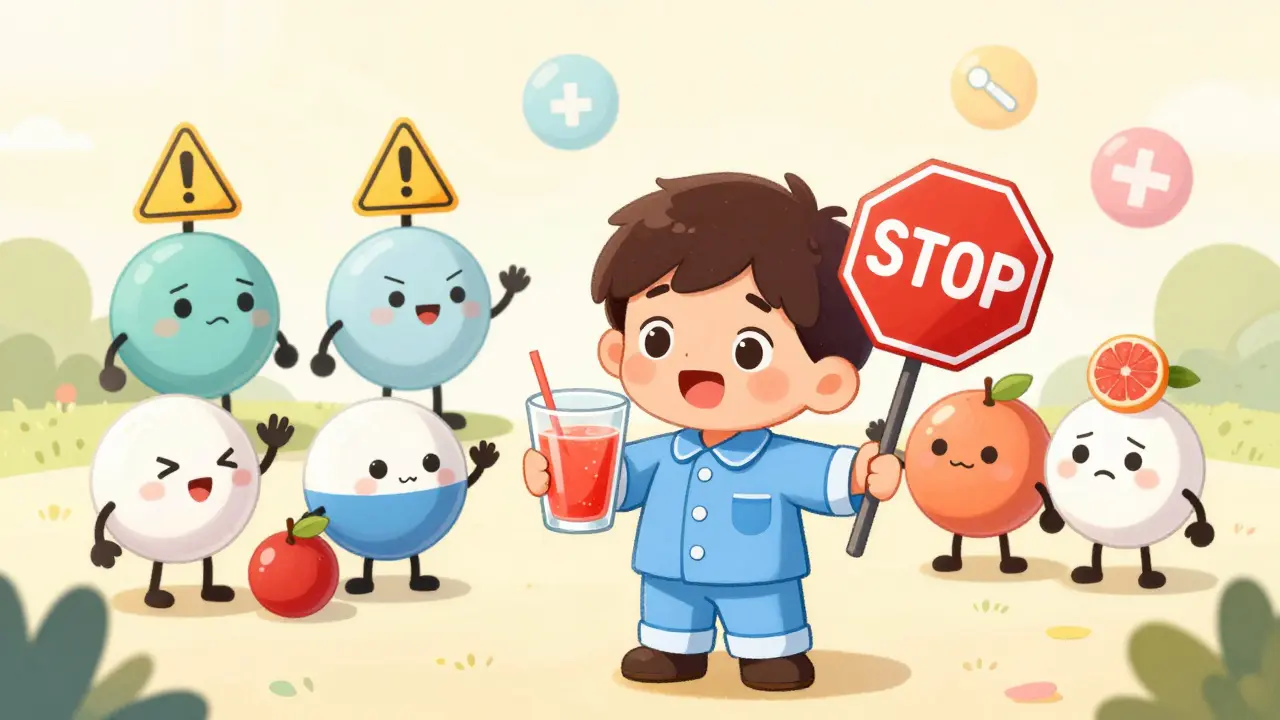
Grapefruit-Statin Interaction Calculator
How This Calculator Works
Based on FDA guidelines and clinical studies, this tool helps you determine if your grapefruit consumption is safe with your statin medication. Remember: grapefruit interactions are irreversible and can cause severe muscle damage.
Results
Important Safety Note: Even small amounts of grapefruit juice can significantly increase statin levels. The FDA considers 200-250ml (8 oz) of juice as the threshold for significant interaction risk.
This tool is based on clinical studies but individual reactions vary due to genetics, liver function, and other medications. Always consult your doctor for personalized advice.
Drinking grapefruit juice while taking certain statins can be dangerous - but how much is too much? It’s not just about avoiding grapefruit entirely. The real question is: how much grapefruit pushes your statin into risky territory? For millions of people on cholesterol-lowering meds, this isn’t theoretical. It’s a daily choice with real consequences.
Which Statins Are at Risk?
Not all statins react the same way to grapefruit. Only three are strongly affected: simvastatin (Zocor), lovastatin (Mevacor), and atorvastatin (Lipitor). These are metabolized by an enzyme in your gut called CYP3A4. Grapefruit contains chemicals - mainly bergamottin and 6',7'-dihydroxybergamottin - that shut down this enzyme. When that happens, your body can’t break down the statin properly. The result? Drug levels in your blood can spike by 3 to 8 times.That spike isn’t harmless. It raises your risk of muscle damage - from mild soreness to a life-threatening condition called rhabdomyolysis, where muscle tissue breaks down and floods your kidneys with toxic proteins.
On the other hand, pravastatin (Pravachol), rosuvastatin (Crestor), fluvastatin (Lescol), and pitavastatin (Livalo) are safe with grapefruit. They don’t rely on CYP3A4. If you’re on one of these, you can enjoy your grapefruit without worry.
The Magic Number: How Much Grapefruit Is Risky?
The FDA and multiple studies point to one clear threshold: 200-250 ml (about 8 ounces) of grapefruit juice. That’s one standard glass. Even this small amount can increase simvastatin levels by 3.6 times, according to a 2006 study in the British Journal of Clinical Pharmacology. One glass. One day. That’s enough to double your risk of side effects.But here’s the catch: not everyone reacts the same. Some people’s guts have more CYP3A4 enzyme than others. In a 2012 study, one person’s simvastatin levels jumped 8-fold after one glass of juice. Another’s didn’t change at all. Genetics, age, liver health, and other medications all play a role.
That’s why blanket rules don’t work. For someone on a low dose of simvastatin (10-20 mg), one glass of juice might be manageable with careful monitoring. For someone on 80 mg - the highest dose - even half a grapefruit could be dangerous.
What About Eating the Fruit Instead of Drinking Juice?
Eating half a grapefruit is generally considered safer than drinking juice. Why? Juice is more concentrated, and you’re likely to drink more of it in one sitting. A whole grapefruit contains about 100-150 ml of juice. So half a fruit is roughly half the volume of the risky threshold.Still, the same compounds that block CYP3A4 are in the pulp and peel. If you’re on simvastatin or lovastatin, don’t assume eating the fruit is risk-free. The Cleveland Clinic recommends treating half a grapefruit the same as one 8-ounce glass of juice: monitor for side effects and avoid daily use if you’re on a high dose.

Timing Doesn’t Fix It
You might think: “I’ll drink grapefruit juice in the morning and take my statin at night.” That won’t help. The enzyme inhibition caused by grapefruit is irreversible. Once CYP3A4 is blocked, your gut cells need 24-72 hours to make new enzymes. That means even if you take your statin 12 hours after juice, the enzyme is still down.One study showed that drinking grapefruit juice in the morning still raised simvastatin levels when the pill was taken at night. The interaction isn’t about timing - it’s about total exposure.
What’s Considered “Excessive”?
The FDA defines excessive grapefruit consumption as 1.2 liters per day - that’s five 8-ounce glasses. At that level, the interaction becomes almost guaranteed. One case report from the European Medicines Agency described a 72-year-old man who drank a liter of grapefruit juice daily while on simvastatin. He developed rhabdomyolysis and needed hospitalization.But here’s the key point: you don’t need to drink five glasses to be in danger. The risk starts at one. The question isn’t whether you’re drinking too much - it’s whether you’re drinking any at all, given your statin and dose.
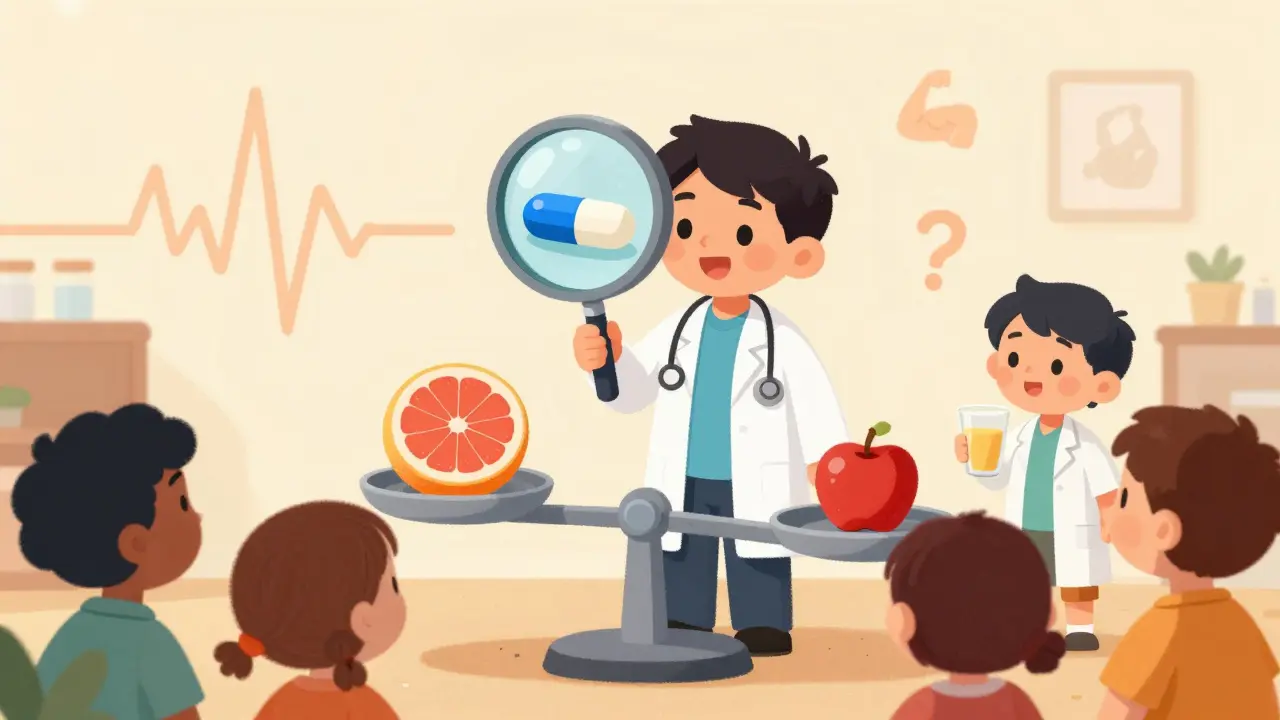
What Should You Do If You Like Grapefruit?
If you’re on simvastatin, lovastatin, or atorvastatin and you love grapefruit, you have three realistic options:- Switch to a safe statin. Rosuvastatin or pravastatin work just as well for most people and have zero interaction with grapefruit. Ask your doctor if a switch is right for you.
- Absolutely avoid grapefruit. If you’re on a high dose (like 80 mg simvastatin), this is the only safe choice.
- Limit to one small serving occasionally. If you’re on a low dose and otherwise healthy, one 8-ounce glass once or twice a week may be acceptable - but only with close monitoring.
Never assume you’re fine just because you’ve had grapefruit before without problems. That’s like driving without a seatbelt because you’ve never crashed. The risk builds over time, and one bad reaction can be catastrophic.
Watch for These Warning Signs
If you’re combining grapefruit with a high-risk statin, know the red flags:- Muscle pain, tenderness, or weakness - especially in the shoulders, thighs, or lower back
- Dark, tea-colored urine (a sign of muscle breakdown)
- Unexplained fatigue or nausea
These symptoms can show up within days of starting grapefruit with your statin. If you notice them, stop the grapefruit and call your doctor immediately. Rhabdomyolysis is rare - only 17 documented cases between 1990 and 2021 - but it can cause kidney failure or death if not caught early.
The Bottom Line
There’s no universal safe amount of grapefruit with statins. The risk depends on your drug, your dose, your body, and your habits. For most people on simvastatin or lovastatin, avoiding grapefruit entirely is the safest move. If you’re on atorvastatin, one glass a week might be okay - but only if you’re on a low dose and have no other risk factors.For everyone else - pravastatin, rosuvastatin, fluvastatin, pitavastatin - grapefruit is fine. No restrictions. No worries.
The best approach? Talk to your doctor or pharmacist. Bring your exact statin name and dose. Tell them how much grapefruit you eat. They can tell you if your habit is safe - or if it’s time to switch meds or say goodbye to your morning glass of juice.

Comments (14)
Poppy Newman
OMG I just realized I’ve been drinking grapefruit juice with my simvastatin for 3 years 😱 I’m switching to orange juice today. Also, why does no one talk about how grapefruit juice tastes like liquid regret? 🍊💔
Mina Murray
Typical FDA bullshit. They say 250ml is dangerous but they also approve 80mg simvastatin doses? That’s like saying a car is safe at 60mph but then giving you a turbo button. The real danger is pharmaceutical greed. Big Pharma doesn’t want you to know grapefruit is cheaper than their drugs. And don’t get me started on how they hide the fact that statins cause dementia. 🤫
Rachel Steward
Let’s cut through the corporate fluff. The entire narrative around grapefruit and statins is designed to keep you dependent. Why? Because if you knew you could swap simvastatin for pravastatin without losing efficacy, you’d demand generics. But the pharma lobby makes sure you’re scared of fruit, not the 100+ documented side effects of statins. And don’t even get me started on how the enzyme inhibition isn’t ‘irreversible’-it’s just slow to regenerate, which is why they push the 72-hour myth. Real science says you can time it if you’re smart. But they don’t want you to be smart. They want you to be compliant.
Anastasia Novak
I used to think I was fine with my morning grapefruit and Lipitor… until I woke up unable to lift my arm. Three days in the ER. My kidneys were crying. Now I drink chamomile tea and cry into my oat milk latte. Grapefruit isn’t just a fruit-it’s a silent assassin wrapped in citrus. And the worst part? My doctor didn’t even warn me. 😭
Alex Danner
For anyone on atorvastatin-yes, you can have a glass of grapefruit juice once a week if you’re on a low dose (10-20mg) and your liver enzymes are normal. I’ve been doing it for 5 years. Got my levels checked every 3 months. No issues. But if you’re on 80mg? Don’t even think about it. Your muscles will thank you later.
Katrina Morris
so i switched to rosuvastatin last year and now i eat grapefruit every morning 🌞 its like my little victory over big pharma lol
steve rumsford
bro i drank a whole damn grapefruit smoothie with my statin and felt fine… until my legs turned to jelly. now i just eat the fruit, not the juice. less concentrated. and yeah i still feel guilty every time i bite into it 😅
Andrew N
you dont need to avoid grapefruit. you just need to stop taking statins. they dont even work for most people. its all placebo and fear.
LALITA KUDIYA
in india we eat grapefruit with salt and chili and no one gets sick 😊 maybe its about how you eat it? just saying 🌶️🍊
Anthony Capunong
Why are we letting fruit dictate our health? In America we don’t bow to citrus. If you want your statin, take your statin. If you want your grapefruit, eat your grapefruit. This is the land of the free. Stop being paranoid. We don’t need FDA babysitting.
Aparna karwande
How dare you suggest grapefruit is dangerous? In my village in Maharashtra, our grandmothers have eaten grapefruit with every meal for 70 years. No statins, no hospital visits. This is Western fear-mongering disguised as science. You are poisoning your mind with corporate lies. 🇮🇳
Jessie Ann Lambrecht
Y’all, I’m a nurse and I’ve seen rhabdo up close. It’s not scary because it’s rare-it’s scary because it sneaks up on you. One day you’re fine, the next you can’t stand. Switching statins isn’t weakness-it’s wisdom. And yes, you can still have grapefruit… just not with simvastatin. Your body isn’t a lab rat. Protect it like you’d protect your favorite dog.
Jonathan Larson
While the pharmacokinetic interactions between grapefruit and CYP3A4-metabolized statins are well-documented, the clinical implications are not uniformly distributed across populations. Individual variability in enzyme expression, genetic polymorphisms in CYP3A5, and concomitant medication use significantly modulate risk. Therefore, a one-size-fits-all recommendation is both scientifically unsound and clinically suboptimal. A personalized approach, informed by pharmacogenomic testing and therapeutic drug monitoring, is the gold standard. Patients should be empowered with data, not fear.
Elen Pihlap
wait so if i eat grapefruit and take my statin at the same time am i gonna die?? i just ate one like 20 mins ago 😭