
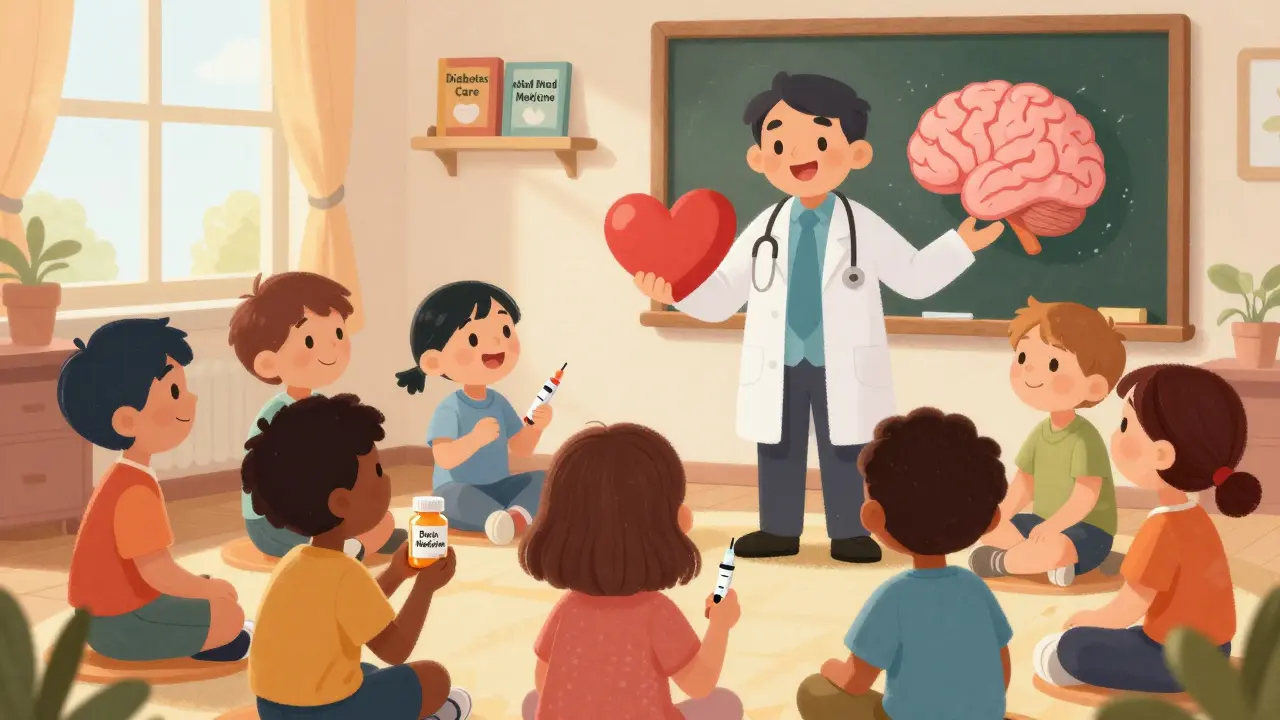
When someone says they take medication for depression or anxiety, the reaction isn’t always understanding. Sometimes it’s silence. Sometimes it’s a raised eyebrow. Or worse-a joke about being "on pills." This isn’t just awkward. It’s harmful. Mental health medication stigma keeps people from getting the care they need, even when those medications work. And it’s not just from strangers. It comes from families, coworkers, and even healthcare providers who don’t realize how their words carry weight.
Why Mental Health Medications Are Treated Differently
Think about diabetes. If someone takes insulin, no one calls it a weakness. If someone takes blood pressure pills, no one assumes they’re lazy or broken. But when someone takes an antidepressant, suddenly it’s seen as a sign they can’t handle life on their own. Why? The truth is, mental health medications are often confused with recreational drugs. People hear "pills" and think "high," not "treatment." They don’t realize that SSRIs don’t make you feel euphoric-they help balance brain chemistry so you can get out of bed, show up for work, or hold a conversation without crying. The American Psychiatric Association reports that 25% of patients stop their medication within 30 days because they’re ashamed. That’s not because the drug didn’t work. It’s because they felt judged for taking it.How Language Fuels the Stigma
Words matter. A lot. The National Institute of Mental Health found that using terms like "meds," "drugs," or "pills" increases negative attitudes by 41%. But if you say "medication," "treatment," or "brain health support," people respond differently. It’s not magic-it’s framing. In clinical settings, replacing "You’re on antidepressants" with "You’re taking medication to help your brain recover" changes the tone. It shifts from something secretive to something medical. One study showed that simply changing language reduced patient shame by 27%. That’s not a small win. That’s life-changing.Normalizing Medication Like Any Other Treatment
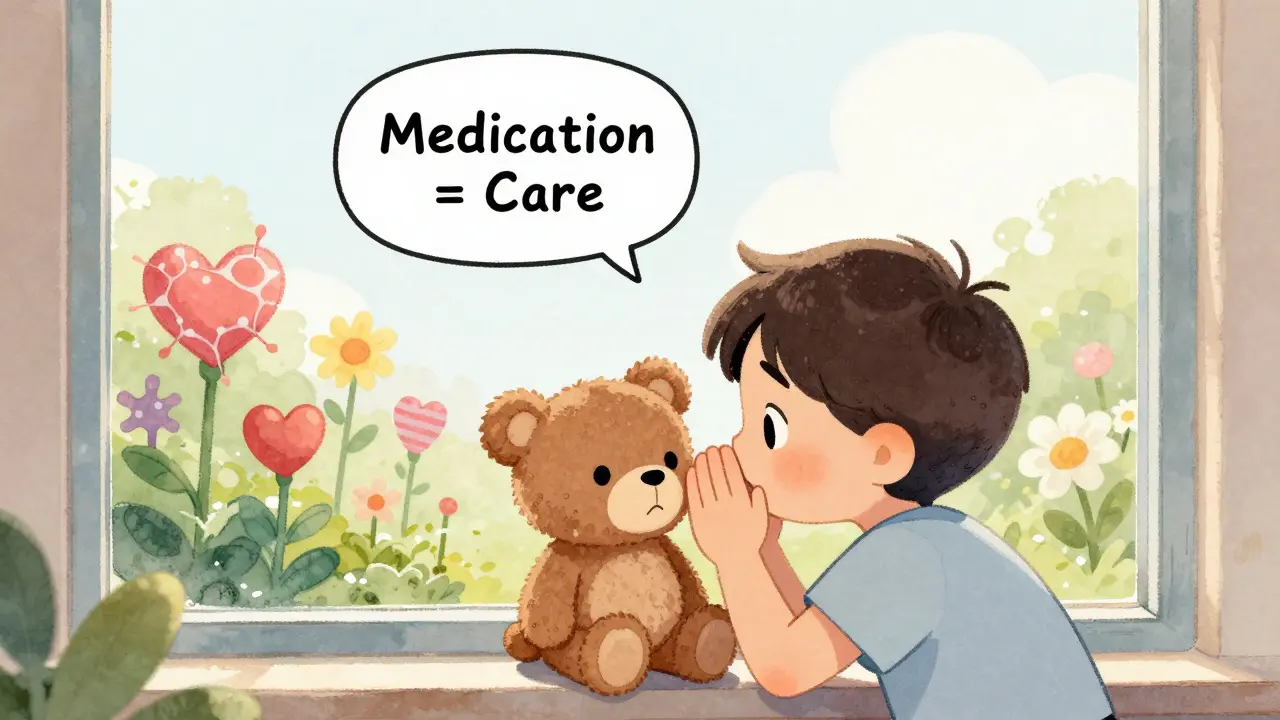
The most powerful way to fight stigma is to compare mental health meds to physical health meds. You don’t need to be a doctor to make this connection. Try this: "I take medication for my brain, just like my friend takes insulin for her pancreas. One helps regulate sugar. The other helps regulate mood. Both are medical conditions. Both need treatment." This isn’t theoretical. On Reddit’s r/mentalhealth, a post titled "How I talk about my medication without shame" got over 1,200 upvotes. Users shared variations of this approach-and reported a 60% drop in negative reactions from friends and family. Why? Because it makes the issue relatable. It turns abstract fear into something familiar.What Providers Can Do (And What They Often Don’t)
Healthcare providers are on the front lines. But many still carry unconscious bias. A 2021 study found that 22% of primary care doctors have negative feelings toward patients who ask for psychiatric medications. That’s not just a gap in knowledge-it’s a gap in care. Here’s what works:- Ask, don’t assume. Instead of saying, "You should try medication," ask, "How do you feel about taking medication for your condition?" Then listen. The "Two-Question Approach"-asking about feelings and concerns-has been shown to increase medication adherence by 33%.
- Normalize in the exam room. Say: "Lots of people I see take medication for mental health. It’s not unusual. It’s not a last resort. It’s part of recovery."
- Use the same language for mental and physical health. Don’t say "psych meds." Say "medication." Don’t say "mental illness" in a hushed tone. Say "treatment plan."
Cultural Differences and Hidden Barriers
Stigma doesn’t look the same everywhere. In some Asian American communities, 47% lower rates of antidepressant use are tied to cultural beliefs that emotional struggles should be handled privately, not with pills. In other cultures, mental health is seen as a spiritual issue-not a medical one. This means one-size-fits-all advice doesn’t work. Providers need cultural competency training. A 2022 meta-analysis showed that providers who completed 8+ hours of training reduced stigma-related communication errors by 29%. That’s not just polite-it’s effective. And it’s not just about what’s said. It’s about what’s assumed. If a patient is quiet, don’t assume they’re resistant. Ask: "Is there something about medication that feels uncomfortable to talk about?" That simple question opens the door.Personal Stories Are Powerful-But Only If Done Right
Hearing someone say, "I take medication for my anxiety, and it changed my life," can be the most convincing thing you’ll ever hear. That’s why contact-based interventions-where people share lived experience-work so well. A 2023 study with 700+ college students found that after hearing peers talk about their medication use, 22% more said they’d consider it themselves. But not all storytelling helps. A 2023 study found that simulating hallucinations to build empathy sometimes backfired, increasing stigma by 15%. Why? Because it focused on extreme cases, not everyday recovery. The key? Real, balanced stories. Not "I was broken and now I’m cured." But "I still have hard days. But this medication lets me show up for my kids. That’s enough." YouTube creator John Green, who’s talked openly about his SSRIs since 2017, found that 68% of his 2.4 million subscribers said watching his videos made them feel less alone about taking medication. That’s the power of visibility-when it’s honest.What Works in the Real World
You don’t need a national campaign to make a difference. Small changes add up:- Integrate mental health care into primary care. When you see your doctor for high blood pressure and they ask, "How’s your sleep?"-that normalizes mental health as part of overall health. Henry Ford Health’s research shows this reduces stigma by 38%.
- Use tools like SAMHSA’s "Medication Conversation Starter" app. It gives you scripted responses to common stigmatizing comments. Over 150,000 people have downloaded it. Users report 42% more confidence in talking about meds.
- Bring in peer support specialists. People who’ve taken psychiatric meds themselves and now help others? Programs using them see 28% higher long-term adherence. Their lived experience is their credential.
What Doesn’t Work (And Why)
Some approaches sound good but miss the mark:- "Just be brave and take it!" This ignores the real fear of judgment. Shame doesn’t disappear because someone tells you to stop feeling it.
- "Everyone takes something." Comparing to caffeine or ibuprofen trivializes the experience. It’s not the same.
- Only talking about "success stories." If you only hear about people who "got better," those still struggling feel like failures. Recovery isn’t linear.
What to Say (And What to Avoid)
Here’s a quick guide:| Do | Don’t |
|---|---|
| "This helps balance brain chemistry, like insulin helps with blood sugar." | "You just need to think positive." |
| "Many people take this. It’s not rare or weird." | "Are you sure you need that?" |
| "What concerns do you have about it?" | "You’re lucky you have access to this." |
| "I take medication for my brain. Just like you take one for your heart." | "I don’t take those kinds of pills." |
It’s Not About Changing Everyone’s Mind
You won’t convince everyone. And you shouldn’t try. The goal isn’t to win arguments. It’s to give people the space to feel safe enough to seek help. That’s why the most effective approach is quiet consistency: normalizing the conversation, correcting myths gently, and refusing to treat mental health meds as something shameful. The CDC reports that more than 75% of people don’t see mental health conditions as chronic illnesses-like diabetes or heart disease. That’s the real problem. Not the medication. The belief that it’s optional, temporary, or weak. Changing that belief starts with one conversation. One phrase. One person saying, "It’s medicine. Not a moral failing."What’s Next?
By 2026, 65% of antidepressant prescriptions will happen in primary care, not specialty clinics. That’s a huge shift. And it’s happening because people are demanding care without judgment. The Substance Abuse and Mental Health Services Administration is spending $15 million on campaigns that reframe psychiatric meds as part of chronic disease management. That’s not just policy. It’s progress. You don’t have to be a doctor, a researcher, or a public figure to help. You just have to speak up-kindly, clearly, and without shame.Why do people feel ashamed of taking mental health medication?
People feel ashamed because mental health medications are often misunderstood as signs of weakness, addiction, or "losing control." Unlike insulin or blood pressure pills, psychiatric meds are wrongly linked to recreational drugs or portrayed as something only "crazy" people need. Cultural beliefs, media portrayals, and even well-meaning but misinformed comments from friends or doctors reinforce this shame. Studies show that 32% of adults with mental illness avoid treatment because of this stigma, and 45% feel embarrassed to take their meds.
How can I talk to someone about their medication without making them feel judged?
Start by asking open-ended questions like, "How do you feel about taking your medication?" or "What’s been your experience with it?" Avoid assumptions, judgments, or comparisons like "I don’t take those." Instead, normalize by saying, "Many people take medication for their brain health, just like others take it for their heart." Use the word "medication," not "pills" or "drugs." Listen more than you speak. Your goal isn’t to fix-they just need to feel heard.
Is it true that mental health medications are less effective than those for physical conditions?
No. Antidepressants have a 40-60% efficacy rate for moderate to severe depression-comparable to medications for high blood pressure or asthma. In fact, for many people, combining medication with therapy leads to 70-80% improvement in symptoms. The difference isn’t in effectiveness-it’s in perception. People assume mental health meds are "not real medicine," but they’re FDA-approved, rigorously tested, and prescribed by licensed providers just like any other drug.
What should I do if a healthcare provider seems dismissive about mental health meds?
You have the right to care that respects your experience. If a provider seems dismissive, ask for clarification: "Can you explain why you’re hesitant about this treatment?" If they continue to minimize your needs, it’s okay to seek another provider. Many clinics now offer integrated care where mental health is treated as part of overall health. You can also ask for a referral to a provider trained in cultural competency or medication management. Your mental health matters-don’t settle for less than respectful care.
Are there tools or apps that help people talk about their mental health meds?
Yes. SAMHSA’s "Medication Conversation Starter" app, downloaded over 150,000 times since 2021, offers scripted responses to common stigmatizing comments like "You’re just relying on pills" or "Why not try therapy first?" It helps users respond confidently and calmly. NAMI also offers free workshops on how to talk about medication without shame. These tools aren’t magic-but they give people the words they need when they’re feeling vulnerable.
Can sharing my own experience with medication help reduce stigma?
Absolutely. Personal stories are one of the most powerful tools against stigma. A 2023 study showed that after hearing peers share their experiences with psychiatric meds, 22% more students said they’d consider taking them. The key is being honest-not dramatic. Saying something like, "I take medication for anxiety. It doesn’t change who I am. It helps me show up," makes it real for others. You don’t need a big audience. One conversation can change someone’s mind.

Comments (13)
Stacey Smith
This is why America needs to stop treating mental health like a moral failing. Medication isn't weakness-it's medicine.
Jon Paramore
SSRIs modulate serotonin reuptake via SERT inhibition-similar to how ACE inhibitors regulate angiotensin II in hypertension. The pharmacokinetics are just as rigorous. The stigma is purely sociocultural, not clinical.
Cameron Hoover
I used to hide my pills in a vitamin bottle. Now I say, 'Yeah, I take something for my brain-it's like a blood pressure pill, but for my mood.' People don't blink anymore. It's wild how simple framing changes everything.
Swapneel Mehta
In India, people say 'mind problems are spiritual'-but my cousin took sertraline and went back to teaching. No miracles. Just chemistry. Maybe we need to stop mixing faith with pharmacology.
Christina Weber
You state that 25% of patients discontinue medication within 30 days due to stigma-but you provide no citation for this statistic. The APA does not publish such granular data in its public fact sheets. This undermines the credibility of your entire argument.
Cara C
I’ve had patients tell me they stopped meds because their mom said, 'God will heal you.' I don’t argue. I just say, 'I’m glad you’re here. Let’s talk about what you need right now.' Sometimes that’s enough to keep them alive.
Michael Ochieng
In Nigeria, we call depression 'pressure.' No one takes pills for pressure. But when my brother started on escitalopram, he stopped crying at work. We stopped calling it pressure. Now we call it treatment. Small shifts matter.
Ben Warren
The fundamental flaw in this narrative is the conflation of medicalization with moral legitimacy. The fact that a drug is FDA-approved does not confer ethical superiority. One must consider the ontological status of mental illness-is it a biochemical disorder, or a manifestation of existential dissonance? The reductionist model of psychiatry ignores centuries of philosophical inquiry into human suffering. Furthermore, the normalization of pharmacological intervention risks pathologizing normal emotional responses to a capitalist, alienating society. This is not progress-it is corporate psychiatry in disguise.
Theo Newbold
The CDC doesn’t even classify depression as a chronic illness. That’s a lie pushed by Big Pharma. You think people are ashamed? They’re smart. They know these drugs are just placebos with side effects. 75% of the 'efficacy' is placebo effect. Wake up.
Jason Silva
🤯 PSA: The government doesn’t want you to know this-but SSRIs are designed to keep you docile. Think about it. Why are they prescribed so much in schools and prisons? Coincidence? 🤔 #MindControl #ChemicalSlavery
Teya Derksen Friesen
The data is clear: when providers use the term 'medication' instead of 'psych meds,' adherence increases. This is not opinion-it is evidence-based practice. We must institutionalize this language across all training programs.
Meina Taiwo
In Lagos, my sister told her boss she takes 'brain medicine.' He said, 'Like for diabetes?' She nodded. He said, 'Then I get it.' One question. One comparison. That’s all it took.
Jerry Peterson
I used to say 'I'm on antidepressants' like it was a confession. Now I say 'I take medication for my mental health, same way I take vitamins.' No one bats an eye. It's not about convincing people-it's about speaking like it's normal. Because it is.