
Clearing expired medications isn’t just about cleaning out a cabinet. It’s a safety step that can prevent accidental overdoses, reduce environmental contamination, and stop dangerous drugs from ending up in the wrong hands. But here’s the problem: lot numbers don’t tell you when a drug expires. And if you’re guessing, you’re risking lives.
Why You Can’t Trust Lot Numbers for Expiration Dates
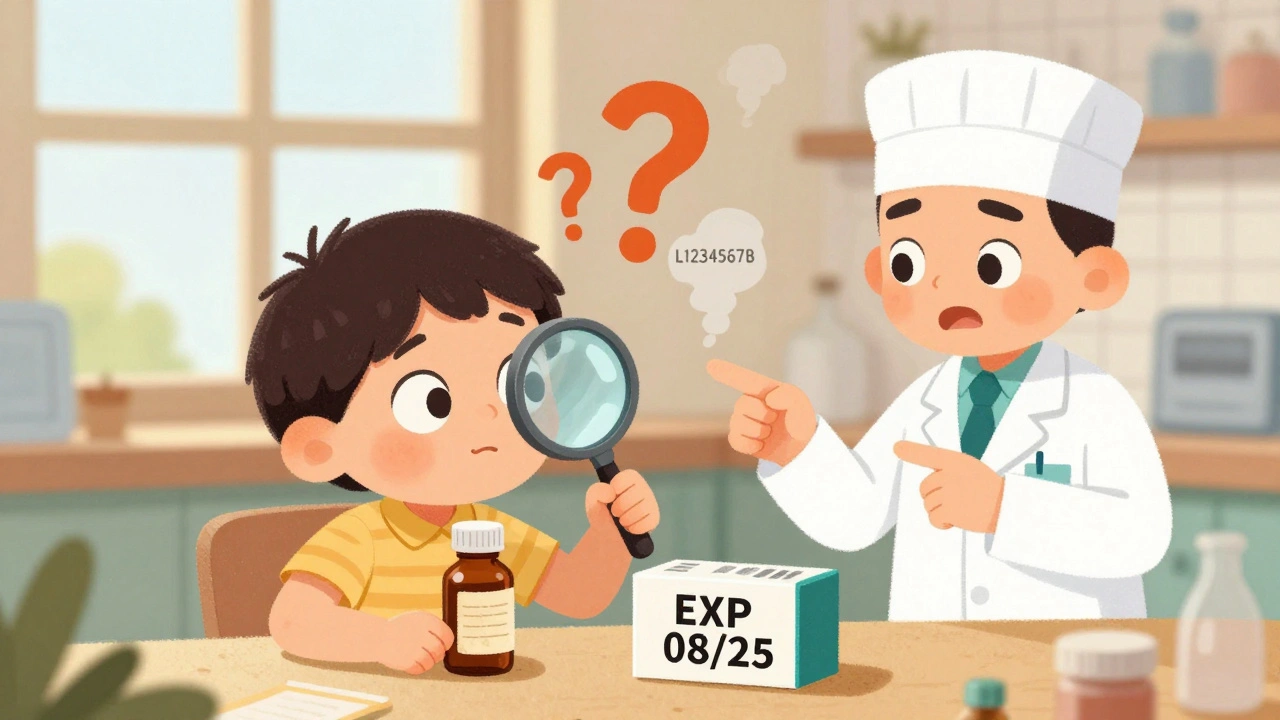
Lot numbers are not expiration dates. They’re batch identifiers-like a serial number for a specific group of pills made at the same time, in the same factory. Pfizer might use 230515A to mean May 15, 2023. Merck could use MK22B047 where the "22" stands for 2022. But that’s it. No universal code. No public decoder. No reliable way to turn "L1234567B" into a date. The FDA requires manufacturers to print the expiration date-"EXP"-right on the package. That’s the only date that matters. Not the lot number. Not the manufacturing date. Not what your pharmacy software guesses. The EXP date is legally binding. Even if a drug looks fine, smells fine, and hasn’t changed color, if the date has passed, it’s expired. Period. A 2024 study by Medplore found that 74% of medication errors during inventory clearance came from staff trying to calculate expiration dates from lot numbers. One pharmacy tech in Ohio accidentally threw out $18,000 worth of insulin because she thought "22B047" meant it expired in 2022. It didn’t. The EXP date was 2025.How to Find the Real Expiration Date
Step one: Look at the packaging. Always. Whether it’s a blister pack, bottle, or vial, the expiration date is printed somewhere. It’s usually in month/year format-like "EXP 08/25" or "EXP AUG 2025". Some international meds use day/month/year, which can confuse people used to month/day/year. If you’re unsure, check the label again. If it’s faded, blurry, or torn, don’t guess. Treat it as expired. Don’t rely on your memory. Don’t assume all pills in the same bottle have the same date. Different batches get mixed in during restocking. Even if the bottle says "EXP 12/24," the pills inside might be from a later batch. Always check the label on the individual unit. If you’re working in a pharmacy or clinic, scan the barcode or enter the lot number into your inventory system. Systems like IFS Inventory or MedKeeper link lot numbers to manufacturer databases and pull the correct expiration date automatically. Manual entry? That’s where mistakes happen. Automated systems cut error rates from over 12% down to under 0.3%.Check for Recalls-Before You Throw Anything Away
Just because a drug is expired doesn’t mean it’s safe to dispose of. Some expired meds are also recalled. And some recalled drugs are still in stock because no one checked. The FDA maintains a public database of recalls, market withdrawals, and safety alerts. You can search by drug name, manufacturer, or lot number. If your inventory system flags a lot number that’s on the recall list, you don’t just discard it-you quarantine it. Recalled drugs might be contaminated, mislabeled, or ineffective. They need special handling. In 2021, 217 recall incidents were delayed because pharmacies didn’t cross-check lot numbers with the FDA database. One case involved a blood pressure medication that was found to contain a carcinogen. The lot numbers were scattered across 14 states. If those pharmacies had checked before clearing expired stock, they could’ve prevented exposure. Use the FDA’s website: www.fda.gov/safety/recalls-market-withdrawals-safety-alerts. Type in the lot number. If there’s a match, stop. Don’t dispose. Contact your regional FDA office or the manufacturer. They’ll tell you what to do next.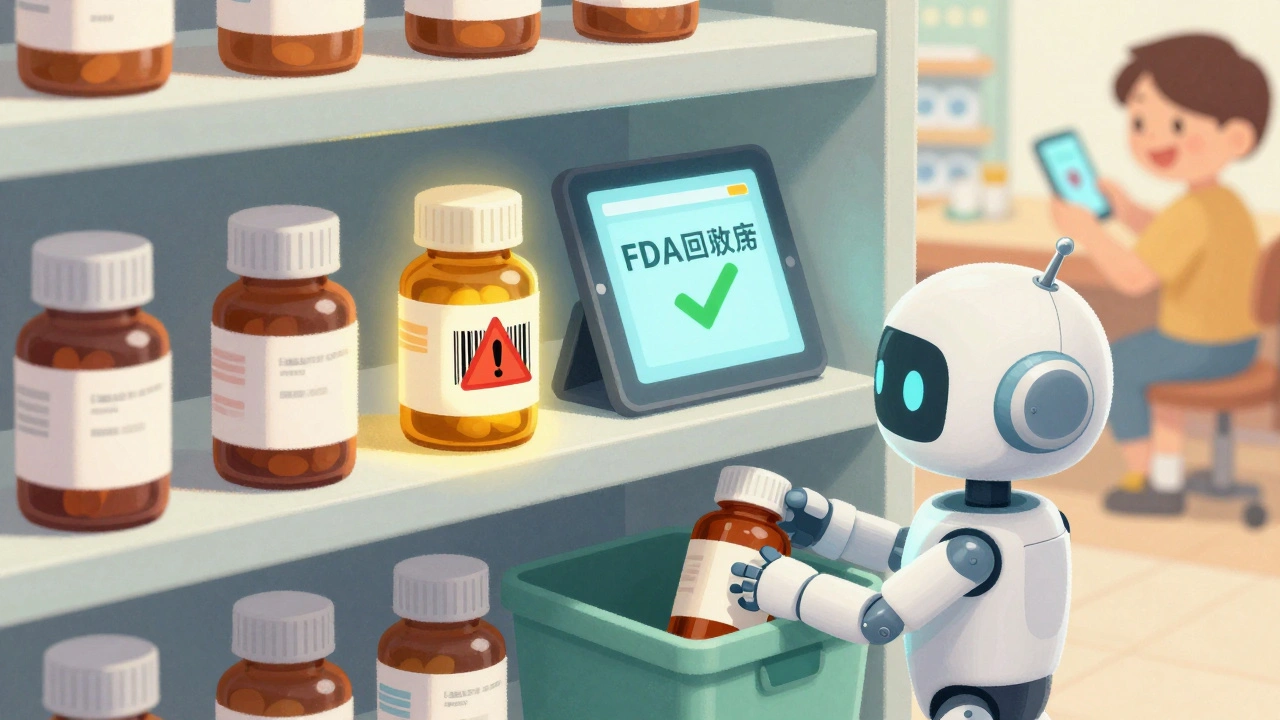
The 7-Step Clearance Process for Pharmacies and Clinics
If you’re responsible for clearing expired meds in a healthcare setting, follow this proven protocol from the American Society of Health-System Pharmacists (ASHP):- Isolate all drugs with an EXP date within 60 days. Don’t wait until the day they expire.
- Scan the lot number into your inventory system at least 30 days before expiration. This gives time to flag recalls.
- Verify against the FDA’s recall database using the lot number. Do this manually if your system doesn’t auto-check.
- Confirm with the manufacturer’s official notification. Some recalls are announced directly to pharmacies before hitting the FDA site.
- Document every cleared item with a timestamped photo of the label and lot number. Keep these records for at least two years.
- Complete FDA Form 3639 if you’re disposing of controlled substances like opioids or benzodiazepines. This is required by the DEA.
- Dispose properly. Don’t flush. Don’t trash. Use a drug take-back program, or follow DEA-approved destruction methods.
What Happens When You Skip the Steps
A pharmacy in Iowa misread a lot number and kept expired antibiotics on the shelf for 11 months. A patient took them, got worse, and ended up in the ER. The lab found the drug had degraded into a toxic compound. The pharmacy paid $850,000 in damages. Another clinic in Texas threw out $2.7 million in still-viable meds because they thought "MFG 03/22 + 36 months" meant expiration. That’s European notation. In the U.S., that’s just the manufacturing date. The EXP date was still 2025. The meds were perfectly safe. These aren’t rare mistakes. They’re systemic. A 2023 survey by NCPA found only 42% of independent pharmacies use automated lot-tracking systems. Chain pharmacies? 99%. That gap is dangerous. One in eight expired meds cleared improperly comes from small clinics and pharmacies that still rely on paper logs and guesswork.
Tools That Actually Work
The FDA approved Medplore’s AI scanner in April 2024. It reads EXP dates from photos-even if the label is smudged, bent, or poorly lit. It’s 99.2% accurate. Before this, 31% of labels were too damaged for human eyes to read. Now, a photo taken with a phone camera can confirm expiration in seconds. Other tools like IFS Inventory, MedKeeper, and GS1-compliant scanners link lot numbers to real-time expiration data. They auto-flag recalls. They send alerts when a batch is 30 days out. They print labels with both lot and EXP dates. If you’re a small pharmacy, you don’t need a $50,000 system. Even a $200 barcode scanner connected to a free FDA recall checker app can save you from disaster. The key isn’t cost-it’s consistency.What’s Changing in 2025 and Beyond
By November 2025, the FDA will require all pharmacies to use fully electronic lot tracking. No more handwritten logs. No more manual lookups. If you’re not ready, you’ll be out of compliance. The industry is moving toward SNI (Standardized Numerical Identification), which will simplify lot numbers. But here’s the catch: expiration dates will still be separate. The FDA made it clear-"SNI will not replace EXP dates." So even when lot numbers get easier, you still have to read the label. Blockchain projects like Pfizer’s MediLedger are already showing 28% improvement in expiry accuracy across pilot sites. AI tools will soon predict expiration based on storage conditions-not just dates. But for now, the rule is simple: If you can’t see the EXP date, assume it’s expired.What You Should Do Right Now
If you’re clearing expired meds at home:- Look for the "EXP" date on every bottle, box, or blister pack.
- If it’s missing, faded, or unclear-don’t take it. Discard it.
- Check the FDA recall database if you’re unsure about a brand or lot number.
- Use a drug take-back location. Don’t flush or throw in the trash.
- Start using an automated inventory system with lot tracking.
- Train staff on the ASHP 7-step process. Do it quarterly.
- Keep manufacturer contact info updated. Call them if a lot number looks odd.
- Use bright lighting (500+ lux) when scanning labels. Dim light = more errors.
Can I tell when a medication expires by its lot number?
No. Lot numbers are batch identifiers, not expiration dates. Manufacturers use different formats, and there’s no public database that links them to expiry dates. The only reliable way to know when a medication expires is to read the "EXP" date printed on the package.
What should I do if a drug’s expiration date is faded or missing?
If you can’t read the expiration date, treat the medication as expired. Do not use it. Discard it safely through a drug take-back program or according to FDA disposal guidelines. Never guess-expired meds can lose potency or become harmful.
How do I check if my medication is part of a recall?
Go to the FDA’s official recall database at www.fda.gov/safety/recalls-market-withdrawals-safety-alerts. Enter the drug name, manufacturer, or lot number. If there’s a match, stop using the medication immediately and contact your pharmacist or the manufacturer for instructions.
Is it safe to use expired medication if it looks fine?
No. Even if the pill looks unchanged, expired medications can lose effectiveness or break down into harmful substances. The FDA does not guarantee safety or potency after the expiration date. Always follow the printed EXP date.
Why do some international medications have different date formats?
Many countries use day/month/year instead of month/day/year. For example, "05/03/25" could mean March 5, 2025 in Europe but May 3, 2025 in the U.S. Always check the label carefully and confirm with a pharmacist if unsure. Misreading these formats led to $2.7 million in unnecessary waste in 2023.
What’s the best way to dispose of expired meds?
Use a drug take-back program at a pharmacy or law enforcement location. If none are available, mix pills with an unpalatable substance like coffee grounds or kitty litter, seal them in a container, and throw them in the trash. Never flush unless the label specifically says to.
Do pharmacies have to track lot numbers for expired meds?
Yes. By November 2025, FDA regulations require all pharmacies to use electronic lot tracking systems. This ensures accurate expiration monitoring and recall response. Pharmacies that don’t comply risk fines and patient safety incidents.
Can AI help me read expired medication labels?
Yes. The FDA approved Medplore’s AI scanner in 2024, which can read EXP dates from photos-even on damaged or blurry labels-with 99.2% accuracy. Many pharmacies now use smartphone apps with this tech to speed up inventory checks and reduce human error.

Comments (9)
Joe Lam
Let me get this straight-you’re telling me pharmacists are still manually decoding lot numbers like it’s 1998? Jesus Christ. The FDA approved an AI scanner that reads smudged labels with 99.2% accuracy and half of you are still squinting at faded ink like it’s a Rorschach test. This isn’t incompetence-it’s negligence dressed up as tradition.
And don’t even get me started on the $2.7 million in wasted insulin because someone thought ‘MFG 03/22’ meant expiration. That’s not a mistake. That’s a felony waiting to happen. You don’t get to cry about budget cuts when your training is so lazy it kills people.
If you’re not using an automated system by 2025, you shouldn’t be allowed to handle a pill bottle. Period.
Jenny Rogers
It is, in fact, a moral imperative that we treat pharmaceutical expiration dates with the solemnity befitting their role in the preservation of human life. The casual disregard for the EXP designation reflects a broader cultural decay-a society that has abandoned epistemic rigor in favor of convenience.
One cannot ethically justify the use of guesswork when the stakes involve pharmacological integrity. The FDA’s mandate is not merely regulatory; it is ontological. To ignore the printed date is to participate in a metaphysical betrayal of the patient’s right to safety.
Moreover, the proliferation of DIY disposal methods-coffee grounds, kitty litter-is not merely unsanitary; it is an affront to the sacredness of medicinal science. One must ask: if we cannot honor the expiration date, what other boundaries of medical ethics are we prepared to erode?
Rachel Bonaparte
Okay, but have you ever stopped to think that maybe the FDA doesn’t want you to know the real expiration dates? I mean, think about it-they’ve been pushing these ‘lot number’ systems for decades, but they never published the decoding key. Why? Because Big Pharma doesn’t want you to realize most drugs last way longer than they say.
And the AI scanner? That’s a distraction. It’s not about accuracy-it’s about control. They need you to believe the label is gospel so you don’t start asking why your 2018 blood pressure med still works perfectly fine.
I checked my old antibiotics from 2017. Still solid. The ‘EXP’ date? A corporate lie. They profit off fear. They profit off waste. They profit off you throwing out perfectly good medicine because some bureaucrat printed a date that was never scientifically validated.
And now they’re forcing pharmacies to use ‘electronic tracking’? That’s just the first step to RFID chips in your pills. Next thing you know, your meds will be tracking your heartbeat and selling your data.
Don’t be fooled. This isn’t safety. It’s surveillance with a white coat.
Scott van Haastrecht
Let’s be brutally honest: the entire system is a circus. You have pharmacists who can’t read a date format, managers who rely on paper logs, and a federal database that updates slower than a dial-up modem.
The 7-step ASHP protocol? Great on paper. In reality, it’s ignored by 60% of independent pharmacies because it’s ‘too time-consuming.’ Meanwhile, the guy who just threw out $18k in insulin? He’s still employed. No consequences. No accountability.
And now we’re supposed to believe a $200 barcode scanner is the solution? Please. That’s like handing a chainsaw to a toddler and calling it ‘safety equipment.’
The real problem isn’t the lot numbers-it’s the people. The system is designed to fail because the people running it don’t care enough to get it right. And until someone gets sued into oblivion, nothing changes.
Chase Brittingham
I’ve worked in a small clinic for 12 years, and I’ve seen all sides of this. I’ve seen people panic over a faded label. I’ve seen others ignore it entirely.
The truth is, most of us just want to do the right thing-we’re just not given the tools. That $200 scanner? It’s not a magic fix, but it’s a start. I bought one last year. My team went from 15 errors a month to 1 every 3 months.
It’s not about being perfect. It’s about being consistent. One extra minute checking the label. One extra second scanning the barcode. That’s what saves lives.
And yeah, the FDA database is clunky. But it’s free. And it works. I’ve used it to catch two recalls already. One was a batch of metformin that turned out to have trace amounts of NDMA. We quarantined it before anyone got near it.
It’s not glamorous. But it matters.
Bill Wolfe
Let’s be real-this whole conversation is a distraction. You’re all obsessing over lot numbers and scanners like they’re the answer, but nobody’s asking why we’re even stockpiling meds for 3+ years in the first place.
Pharmaceutical companies push expiration dates that are artificially short to drive repeat sales. It’s a $500 billion industry built on planned obsolescence.
And now the FDA wants you to trust their database? LOL. They approved Vioxx. They ignored the opioid crisis for a decade. Why would you believe they’re suddenly the guardians of truth?
Meanwhile, we’re being sold a $50,000 ‘inventory system’ that’s just a fancy spreadsheet with a logo. The real solution? Stop hoarding meds. Only order what you need. Reduce waste at the source.
And if you’re still using paper logs in 2025? You’re not just outdated-you’re complicit.
Also, 🚨🚨🚨
PS: The AI scanner? Still needs manual input. It’s not AI. It’s OCR with a marketing budget.
Ollie Newland
From a UK pharmacy perspective, the US focus on EXP dates versus lot numbers is interesting-we’ve had SNI-compliant traceability since 2019 under the FMD directive. Lot numbers are tied to batch-specific expiry via the EU hub, and every dispense is logged in real time.
What’s striking is how fragmented the US system is. You’ve got 50 different state boards, 10k independent pharmacies, and zero national standardization. The FDA database is a great resource, but it’s reactive, not proactive.
What’s missing is an interoperable national registry. Think NHS Digital, but for meds. Lot + batch + expiry + recall status in one API. No more manual lookups. No more guesswork.
Until then, you’re patching a dam with duct tape. The tech exists. The infrastructure doesn’t. And that’s the real bottleneck.
Rebecca Braatz
Listen-I’ve trained over 200 pharmacy techs in the last 5 years. I’ve seen the fear. The confusion. The shame when someone throws out $10k in insulin.
But here’s the thing: change is possible. You don’t need a $50k system. You need a culture shift.
I started a ‘Label Check Challenge’ at my clinic. Every Friday, we pick one random bottle. We scan it. We check the FDA site. We share what we found. No judgment. Just learning.
Three months in? Our error rate dropped by 80%. People started double-checking on their own. One tech found a recall no one else had seen.
This isn’t about tech. It’s about community. We’re not machines. We’re humans protecting humans. And when we stop pretending we know it all, we start doing it right.
Michael Feldstein
One quick thing I learned the hard way: don’t assume the pharmacy’s label matches the bottle inside. I once had a patient bring in a bottle labeled ‘EXP 09/24’ but the pills were from a 2025 batch. The pharmacy had restocked without updating the outer label.
So I started telling everyone: if you’re unsure, check the blister pack. Or the vial. Or the individual foil. That’s where the real date lives.
And if you’re a clinician? Ask your pharmacist to confirm the lot number against the manufacturer’s website. Most have lookup tools now. It takes 30 seconds.
It’s not about being paranoid. It’s about being thorough. And yeah, it’s a pain. But so is ending up in the ER because you trusted a faded stamp.