
PPI-Antifungal Interaction Checker
This tool helps you understand whether your medications are compatible. Select a proton pump inhibitor (PPI) and an antifungal to see the interaction risk based on clinical evidence.
When you're taking a proton pump inhibitor (PPI) for heartburn and an antifungal for a stubborn yeast infection, you might not think they’re connected. But they are-and the way they interact can make one or both drugs fail. This isn’t just theoretical. It’s happening in hospitals, clinics, and pharmacies every day. In fact, nearly 1 in 5 hospitalized patients gets both types of drugs at the same time. And when that happens, the results can be dangerous: fungal infections don’t clear up, patients stay in the hospital longer, and costs spike. The problem? PPIs raise stomach acid levels, and that breaks how some antifungals get absorbed. But it’s more complicated than that. Some PPIs might even help antifungals work better in surprising ways.
Why PPIs Disrupt Antifungal Absorption
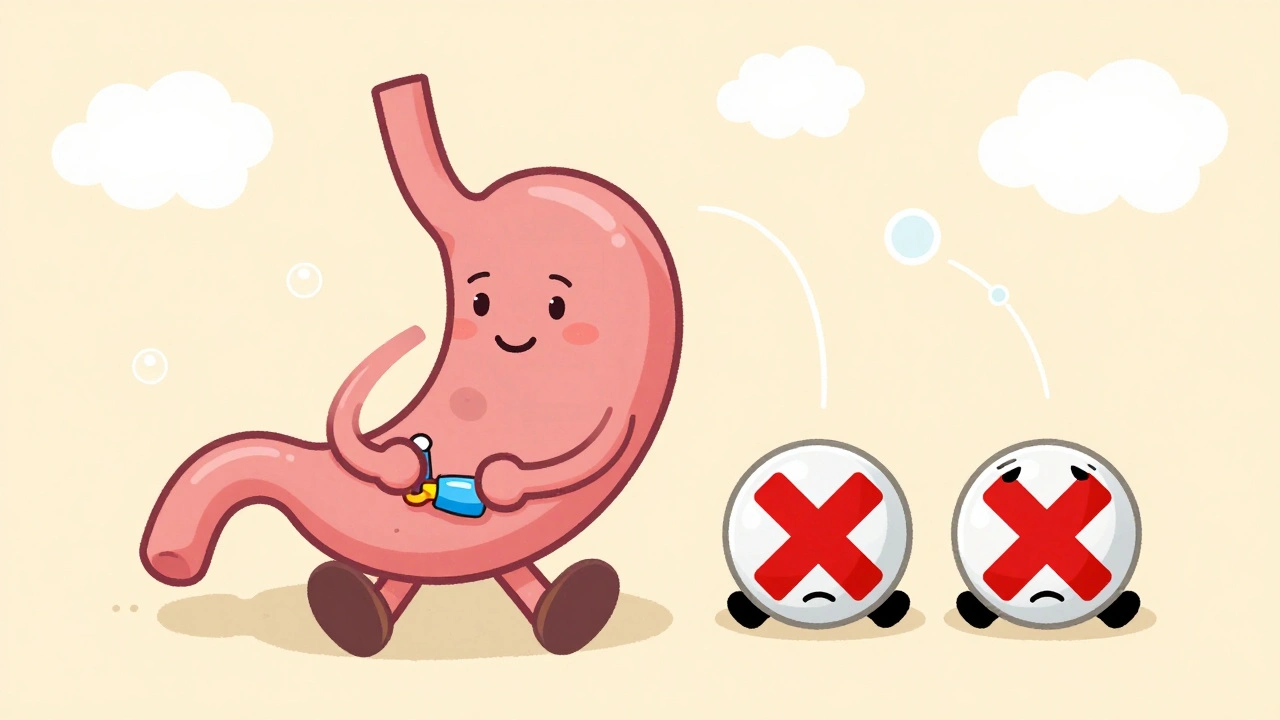
Proton pump inhibitors like omeprazole, pantoprazole, and esomeprazole work by shutting down the acid pumps in your stomach lining. That’s great if you have GERD. But it’s a problem for certain antifungals that need acid to dissolve and get into your bloodstream. Two of the most common systemic antifungals-itraconazole and ketoconazole-rely on low stomach pH to dissolve properly. When you take a PPI, your stomach pH rises from about 1.5 to 5 or 6. That’s like turning off the heat in a kettle. The antifungal just sits there, undissolved. A 2023 study in JAMA Network Open looked at 1,243 patients and found that when itraconazole was taken with a PPI, its absorption dropped by 60%. That’s not a small dip-it’s enough to push drug levels below the minimum needed to kill fungi. Ketoconazole isn’t much better. At normal stomach acid levels, it dissolves at about 22 mg/mL. But when pH climbs to 6.8, solubility plummets to just 0.02 mg/mL. That’s a 1,100-fold drop. No wonder patients on both drugs often see their fungal infections come back.Fluconazole: The Exception
Not all antifungals are affected the same way. Fluconazole is different. It’s water-soluble, so it doesn’t need acid to dissolve. Whether your stomach is super acidic or nearly neutral, fluconazole still gets absorbed at about 90%. The FDA confirms this in its latest prescribing info (January 2024). That’s why fluconazole is often the go-to choice when a patient needs a PPI and an antifungal at the same time. But here’s the catch: fluconazole doesn’t cause absorption problems, but it creates another kind of risk. It blocks a liver enzyme called CYP2C9. That enzyme breaks down blood thinners like warfarin. So if you’re on fluconazole and warfarin together, your blood can thin too much. Doses of warfarin often need to be cut by 20-30% to avoid bleeding. That’s why pharmacists check for this combo every time.Voriconazole: A Complex Middle Ground
Voriconazole is trickier. It doesn’t need acid to absorb, so PPIs don’t hurt its uptake. But here’s where things get messy: voriconazole is broken down by liver enzymes CYP2C19 and CYP3A4. Guess what else inhibits those enzymes? PPIs-especially pantoprazole and omeprazole. A 2015 study in Antimicrobial Agents and Chemotherapy showed that when voriconazole and a PPI are taken together, voriconazole clearance drops by 25-35%. That means the drug builds up in your blood. Too much can cause vision problems, liver damage, or even hallucinations. So with voriconazole, you’re not dealing with too little-you’re dealing with too much. That’s why hospitals like the Cleveland Clinic require voriconazole blood level checks within 72 hours of starting a PPI. If levels are too high, they reduce the dose by 25-50%. It’s not guesswork. It’s science.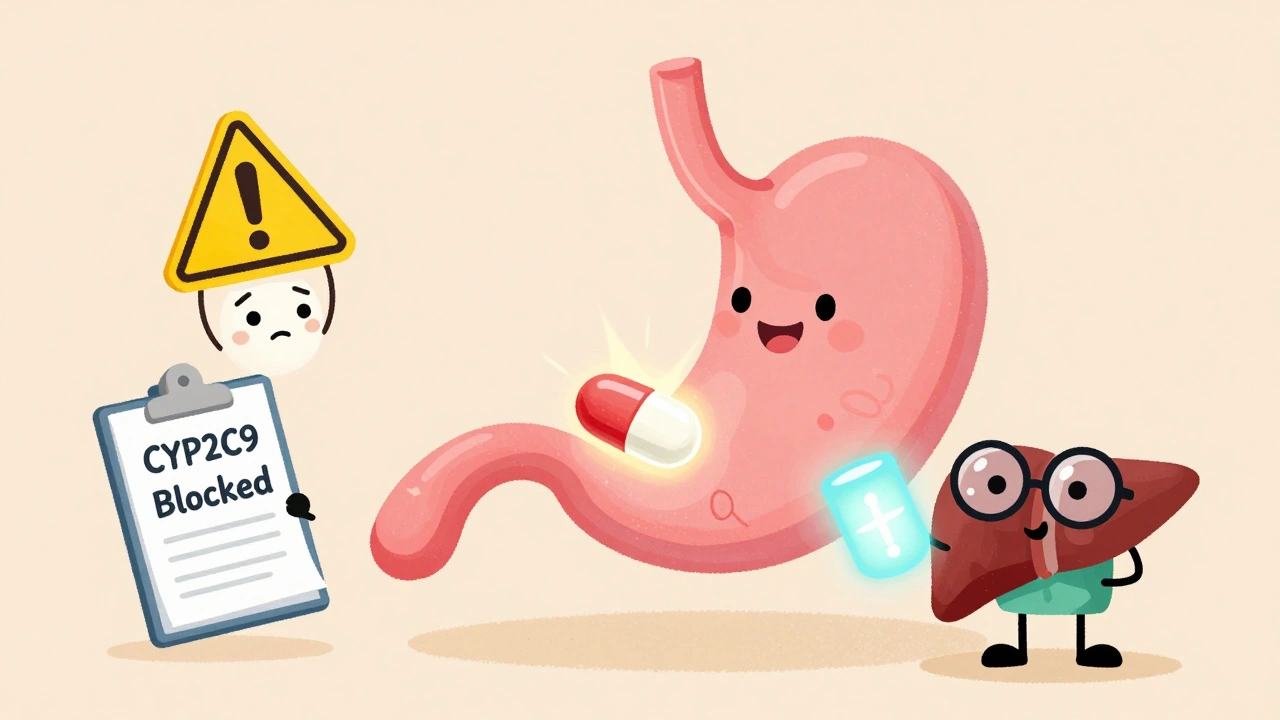
The Paradox: PPIs Might Actually Help Antifungals
Here’s where things get wild. A 2024 study in PMC10831725 found something no one expected: PPIs might boost the power of antifungals against resistant Candida. In lab tests, omeprazole blocked a fungal protein called Pam1p, which pumps out antifungal drugs before they can kill the fungus. This is the same mechanism fungi use to become resistant to fluconazole. When PPIs blocked Pam1p, fluconazole’s effectiveness jumped 4 to 8 times against resistant strains. That’s right-something that makes fluconazole harder to absorb might also make it work better once it’s inside the body. It’s like turning off a leaky faucet while also upgrading the water pressure. This isn’t proven in people yet, but it’s being tested. A Phase II trial at Johns Hopkins (NCT05876543) is now giving patients omeprazole 40mg daily along with fluconazole to see if it helps treat stubborn candidiasis. Results are due in late 2025.What Doctors Do When Both Drugs Are Needed
Most experts agree: don’t mix itraconazole or ketoconazole with PPIs. The FDA added a black box warning to itraconazole’s label in June 2023-its strongest possible warning-saying the combination is contraindicated. The European Medicines Agency followed suit in September 2023. But here’s the problem: a 2024 audit found that over 22% of itraconazole prescriptions in community pharmacies were still being paired with PPIs. That’s not just a mistake-it’s a safety failure. So what do you do if you need both? First, avoid itraconazole and ketoconazole entirely. Use fluconazole instead. If you absolutely must use itraconazole, take it at least 2 hours before the PPI. The University of California San Francisco recommends this timing. Even then, absorption only improves from 60% loss to 45% loss-not enough to rely on. That’s why many infectious disease pharmacists (87%, according to a 2023 survey) recommend switching to echinocandins like caspofungin instead. These drugs don’t care about stomach acid or liver enzymes. They’re given by IV, so absorption isn’t an issue.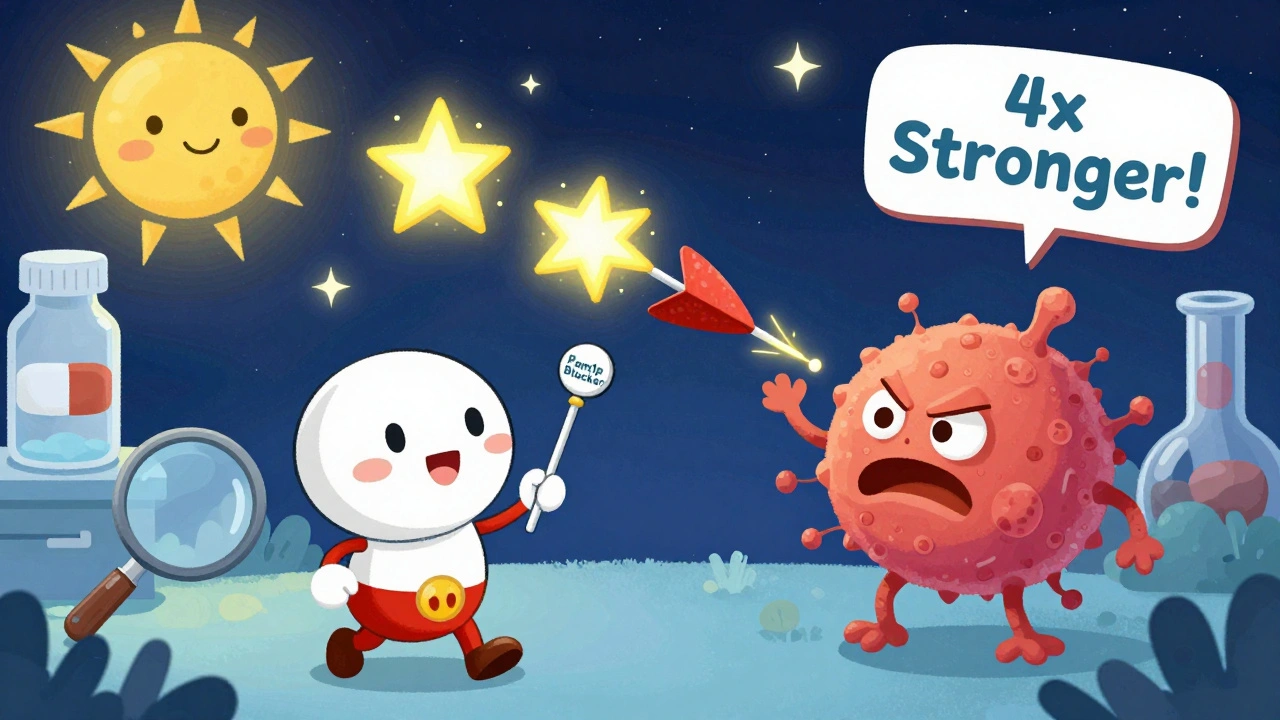
What’s Coming Next
Researchers aren’t waiting for doctors to get it right. They’re fixing the problem at the source. The FDA is funding new formulations of itraconazole that don’t need acid to dissolve. One called SUBA-itraconazole, tested in a 2023 Phase I trial, showed 92% bioavailability regardless of stomach pH. That’s a game-changer. If approved, it could eliminate this interaction entirely. Meanwhile, some scientists are asking: what if we use PPIs on purpose to help antifungals? If omeprazole can block fungal resistance pumps, maybe we can design combination therapies where a low-dose PPI helps an antifungal work better. It sounds like science fiction-but it’s already in clinical trials.Bottom Line: What You Need to Know
- Don’t take itraconazole or ketoconazole with PPIs. The risk of treatment failure is too high. The FDA says it’s contraindicated. Proton pump inhibitors can cut absorption by 60% or more. - Fluconazole is safe with PPIs-but watch for interactions with blood thinners. - Voriconazole needs monitoring. If you’re on both, get a blood test within 3 days of starting the PPI. - Ask your doctor about alternatives. Echinocandins, like caspofungin, don’t interact with PPIs and work just as well for many infections. - Don’t assume “natural” means safe. Some herbal supplements (like St. John’s Wort) also affect liver enzymes and can interfere with antifungals. Tell your doctor everything you’re taking. This isn’t about avoiding medication. It’s about using it right. The science is clear. The risks are real. And the solutions are getting better.Can I take fluconazole with a proton pump inhibitor?
Yes, fluconazole can be safely taken with proton pump inhibitors. Unlike itraconazole or ketoconazole, fluconazole doesn’t require stomach acid to be absorbed. Its bioavailability stays above 90% regardless of gastric pH. However, fluconazole can interfere with other medications, especially warfarin, by inhibiting the CYP2C9 liver enzyme. If you’re on blood thinners, your dose may need to be reduced by 20-30%.
Why is itraconazole contraindicated with PPIs?
Itraconazole needs a highly acidic environment in the stomach to dissolve and be absorbed. Proton pump inhibitors raise stomach pH to near-neutral levels, reducing itraconazole absorption by up to 60%. This drops blood concentrations below the therapeutic threshold (0.5 μg/mL), making the drug ineffective against fungal infections. The FDA added a black box warning in 2023, stating that combining these drugs can lead to treatment failure.
What happens if I take voriconazole with a PPI?
Voriconazole absorption isn’t affected by PPIs, but its metabolism is. PPIs like omeprazole and pantoprazole inhibit the liver enzymes (CYP2C19 and CYP3A4) that break down voriconazole. This causes voriconazole levels to build up in the blood, increasing the risk of side effects like blurred vision, liver damage, and hallucinations. Therapeutic drug monitoring is required, and doses often need to be lowered by 25-50%.
Are there any antifungals that don’t interact with PPIs?
Yes. Echinocandins (caspofungin, micafungin, anidulafungin) are given intravenously and do not rely on stomach acid or liver metabolism for absorption. They’re often used as alternatives when PPIs must be continued. Fluconazole also has no absorption interaction with PPIs, though it has other drug interactions to monitor.
Is there any benefit to taking PPIs with antifungals?
Emerging research suggests a possible benefit. A 2024 study found that omeprazole can inhibit a fungal protein (Pam1p) that pumps antifungals out of yeast cells. This makes resistant strains of Candida more sensitive to fluconazole, reducing the dose needed by 4-8 times in lab tests. A clinical trial is underway to see if this effect works in patients. But this is still experimental-do not combine PPIs and antifungals without medical supervision.

Comments (13)
Rupa DasGupta
This is wild but makes total sense. I took itraconazole with omeprazole once and my yeast infection came back worse. My doctor just shrugged and said 'maybe it didn't work.' No one ever told me why. Now I get it. 😒
Mark Ziegenbein
Let’s be real here-the pharmaceutical industry doesn’t want you to know that a $2 generic PPI can sabotage a $500 antifungal because it’s not profitable to fix. They’d rather keep you on the treadmill of failed treatments, repeat prescriptions, and IV echinocandins that cost $2,000 a pop. This isn’t science-it’s capitalism dressed in lab coats. And don’t get me started on how fluconazole’s CYP2C9 inhibition is quietly killing people on warfarin while pharmacies just slap on a 'caution' sticker like it’s a coupon.
The FDA’s black box warning? A PR stunt. The real problem is that 87% of infectious disease pharmacists recommend switching to echinocandins, yet 22% of prescriptions still pair itraconazole with PPIs. That’s not negligence-it’s systemic failure. And now we’re supposed to believe that omeprazole blocking Pam1p is a 'benefit'? Please. That’s not a therapeutic synergy-it’s a biological loophole that Big Pharma will patent into oblivion and sell as a combo pack for $999.
They’ll call it 'Fluconazole-PPI Synergy Therapy' and market it to desperate patients with 'resistant candidiasis' while ignoring that the real solution is just... not giving people PPIs unless absolutely necessary. But hey, why fix the root cause when you can sell a new drug?
Jennifer Patrician
Anyone else think this is all a cover-up? PPIs are just a gateway to control our gut biome so they can sell more antifungals, then more antibiotics, then more 'immune boosters.' The FDA, the NIH, the Cleveland Clinic-they’re all in on it. They don’t want you to know that stomach acid is your natural defense. They want you dependent on pills. And now they’re pretending omeprazole helps antifungals? That’s not science. That’s propaganda. Wake up.
Marvin Gordon
This is one of those posts that actually changes how you think about meds. I used to just pop my omeprazole and fluconazole together like it was cereal. Now I’m checking my warfarin dose with my pharmacist. Small change, big impact. Thanks for laying this out so clearly.
Philip Kristy Wijaya
It is an incontrovertible fact that the pharmacokinetic interplay between proton pump inhibitors and azole antifungals constitutes a clinically significant pharmacodynamic perturbation, particularly in the context of gastric pH modulation and hepatic cytochrome P450 enzyme inhibition. The ramifications of such interactions are not merely theoretical but have been empirically validated across multiple peer-reviewed studies, including those published in JAMA Network Open and Antimicrobial Agents and Chemotherapy. One must exercise extreme caution when co-administering these agents, as the consequences of therapeutic failure may be dire.
an mo
Fluconazole + warfarin = bleeding risk. Voriconazole + PPI = hallucinations. Itraconazole + PPI = treatment failure. Echinocandins = no interaction. So why are we still using oral azoles in 2025? Because the system is broken. Hospitals still stock ketoconazole like it’s 1998. Pharmacists don’t have time to catch it. Doctors are overwhelmed. And patients? They just want their rash to go away. This isn’t a drug interaction-it’s a public health time bomb.
Lynette Myles
Fluconazole is safe with PPIs. But not with warfarin. That’s all you need to know.
Mellissa Landrum
They don’t want you to know that your stomach acid is your immune system’s first line of defense. PPIs are killing your natural defenses so you’ll need more drugs. The whole thing is a scam. You think your heartburn is bad? Wait till your gut dies and you’re on IV antifungals for life. Big Pharma made this happen. They’re not fixing it-they’re selling it.
Jimmy Jude
Here’s the real question: if PPIs block fungal resistance pumps, why aren’t we using them as adjuvant therapy for every resistant Candida case? Why wait for a Phase II trial? Why not just prescribe them together now? We’re not waiting for perfection-we’re waiting for permission. And permission is a luxury the dying don’t get.
This isn’t just pharmacology. It’s philosophy. The body isn’t a machine to be fixed with isolated drugs. It’s a system. And we’re treating it like a broken toaster.
Ali Bradshaw
Great breakdown. I work in pharmacy and see this every week. The biggest issue? Patients don’t tell us they’re taking omeprazole. They say 'I just take something for acid' and never mention the name. We need better patient education-not just more warnings.
Kylee Gregory
It’s fascinating how one drug’s flaw becomes another’s opportunity. PPIs disrupt absorption but may also disarm fungal resistance. It’s like a double-edged sword-and we’re still figuring out which edge to hold. Maybe the answer isn’t choosing one over the other, but learning how to use both more wisely. Science doesn’t always give us clean answers. Sometimes it gives us paradoxes. And maybe that’s okay.
Annie Grajewski
So let me get this straight… PPIs make antifungals not work… but also make them work better? And we’re just gonna wait till 2025 to find out? Sounds like someone’s got a grant and no idea what they’re doing. Also, 'SUBA-itraconazole'? That’s not a drug name, that’s a rejected Marvel villain.
ashlie perry
They’re hiding the truth. The real reason they don’t want you to know about the Pam1p thing is because if PPIs help antifungals, then why are they still selling expensive IV drugs? It’s all about money. The FDA knows. The doctors know. They just won’t say it out loud.