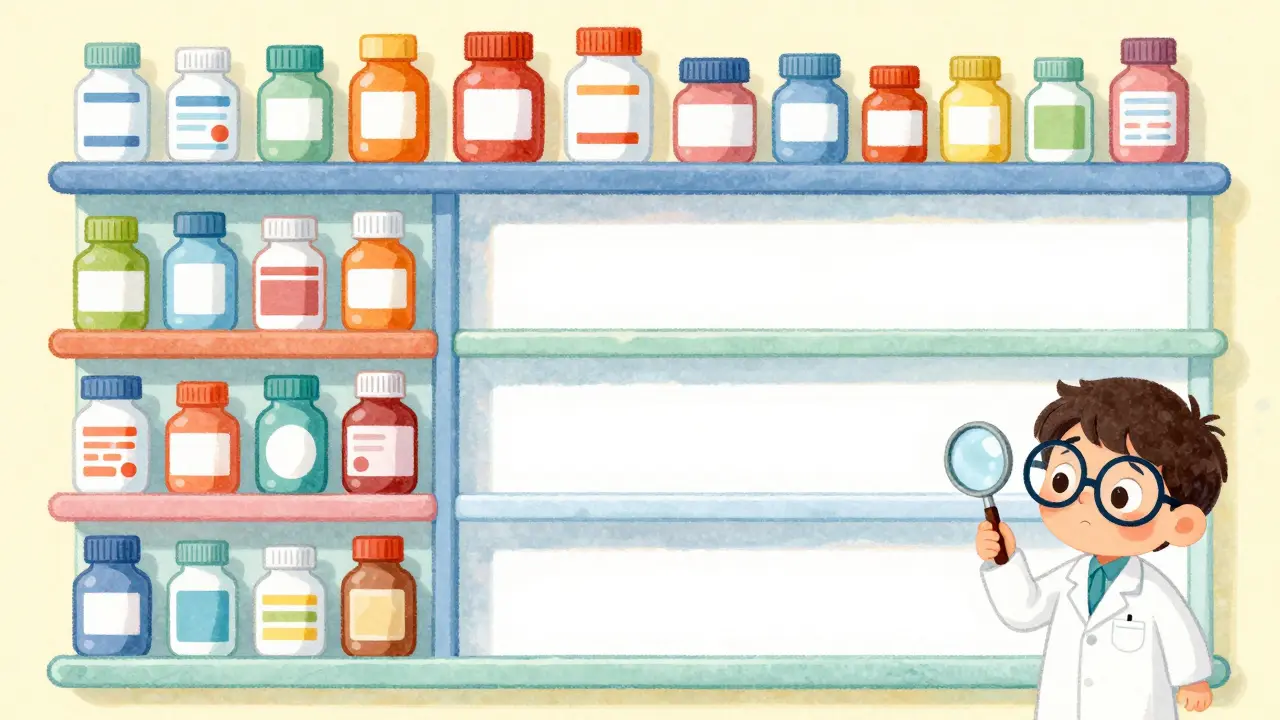
Ever wonder why your local pharmacy suddenly runs out of a common medication, only for it to reappear three months later? It's rarely a random fluke. In the world of healthcare, drug shortages is a critical systemic failure where the demand for a specific medication exceeds the available supply, often leading to delayed treatments or patient instability. While it feels like a surprise to the patient, these gaps are often predictable if you know where to look. Forecasting scarcity isn't just about counting pills in a warehouse; it's about analyzing a complex web of geopolitical risks, raw material availability, and manufacturing bottlenecks.
If you are a healthcare provider, a pharmacy manager, or a patient managing a chronic condition, understanding how scarcity forecasting works can help you move from reacting to a crisis to planning for one. We are moving toward a model where AI and systemic analysis can tell us a drug will be missing six months before the shelf is empty. Here is how that process actually works and why it is becoming the only way to keep medicine moving.
The Core Drivers of Medicine Scarcity
You can't predict a shortage without knowing what causes it. Most people think it's just "bad luck," but it usually boils down to a few specific triggers. First, there is the issue of Active Pharmaceutical Ingredients (APIs). Most drugs aren't made in one building; they are assembled from ingredients sourced globally. If a single factory in India or China shuts down due to an environmental regulation or a power grid failure, the global supply of a specific antibiotic can vanish overnight.
Then there is the "Just-in-Time" manufacturing trap. For decades, the pharmaceutical industry focused on lean inventories to save money. While this is great for profit margins, it's terrible for resilience. A small spike in demand-like a sudden outbreak of a respiratory virus-can wipe out a three-month supply in three days. When the buffer is gone, there is no safety net.
We also have to consider the "green transition" and climate change. As we've seen in broader resource scarcity models, environmental shifts impact the raw materials needed for drugs. For example, many medications rely on plant-based precursors. If a region in Sub-Saharan Africa or Southeast Asia suffers a prolonged drought, the biological feedstock for those medicines disappears, creating a ripple effect that hits pharmacies in Melbourne or New York.
How Modern Forecasting Actually Works
Old-school forecasting was simple: if we sold 1,000 bottles last June, we should order 1,100 this June. That doesn't work anymore. Modern drug shortages predictions use what's called a "systems analysis" approach. This means analysts aren't just looking at sales data; they are monitoring 17 or more distinct data streams.
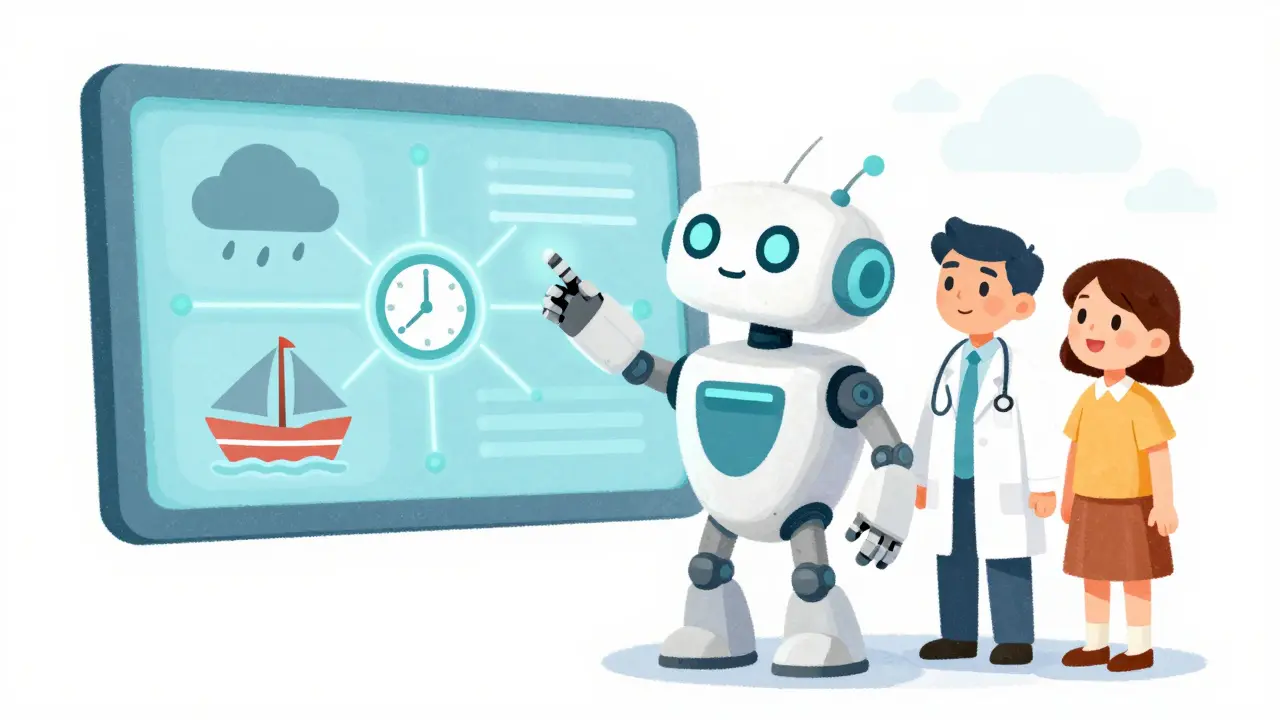
Imagine a dashboard that tracks everything from shipping port congestion in Shanghai to the energy output of chemical plants in Germany. By combining this with demographic projections-like an aging population requiring more cardiovascular meds-forecasters can spot "bottlenecks" before they happen. For instance, if data shows that the only three factories producing a specific stabilizer for a drug are all in a high-risk seismic zone, that's a red flag for future scarcity.
AI is also playing a massive role here. We are seeing the rise of predictive models that can analyze social media trends and early clinic reports to spot a surge in a specific symptom across a city. If thousands of people start reporting a specific fever pattern, the AI can predict a surge in demand for a specific antiviral before the official health reports are even written.

Comparing Different Forecasting Approaches
Not all predictions are created equal. Some are cautious and pessimistic, while others are based on "best-case" recovery scenarios. Depending on who is doing the forecasting, the strategy for handling the scarcity changes.
| Model Type | Primary Data Source | Speed of Detection | Best For... |
|---|---|---|---|
| Demand-Based | Sales & Prescription Data | Slow (Reactive) | Steady-state medications |
| Supply-Chain Based | API Production & Logistics | Medium (Proactive) | Manufacturing failures |
| Systemic/AI Based | Geopolitical & Environmental Data | Fast (Predictive) | Black-swan events & pandemics |
The Ripple Effect of Geopolitical Shifts
You can't talk about scarcity without talking about politics. We are currently seeing a trend toward "geoeconomic fragmentation." In plain English: countries are tired of relying on a single foreign source for critical medicine. This has led to the rise of "dual-sourcing" strategies, where companies intentionally pay more to have two different suppliers in two different parts of the world.
While this sounds like a solution, the transition period actually creates more scarcity. Switching a drug's source isn't as simple as changing a vendor on Amazon. It requires rigorous regulatory approval, stability testing, and quality audits. If a company decides to move production from one country to another to avoid tariffs, there is often a "gap period" where the supply dips while the new facility gets up to speed.
Trade policies and tariffs also act as a hidden tax on availability. When tariffs increase the cost of raw materials, smaller manufacturers may decide a specific low-margin generic drug is no longer profitable to produce. They simply stop making it. This isn't a supply chain failure; it's an economic decision that leads to a pharmacy shelf with a "Currently Unavailable" sign.
Practical Strategies for Managing Future Scarcity
If you're in the industry or a patient, you can't wait for the official government alert. By the time a shortage is "official," the drug is usually already gone. You need your own set of heuristics to gauge risk.
- Monitor the API Source: If you know your critical medication relies on a single plant in a region experiencing political unrest or climate disasters, start looking for alternatives early.
- Diversify the Formulary: For clinicians, don't rely on a single "gold standard" drug if a viable second-line therapy exists. Having a pre-approved backup plan prevents panic when the primary option vanishes.
- Build Strategic Buffers: While "Just-in-Time" is efficient, "Just-in-Case" is safe. Maintaining a slightly larger safety stock of critical-care medications can bridge the gap during a temporary 3-6 month supply dip.
- Track Regulatory Changes: Keep an eye on FDA or EMA warnings regarding manufacturing quality. A "warning letter" to a major plant is often the first domino to fall before a total shortage.
Common Pitfalls in Scarcity Predictions
One of the biggest mistakes people make is assuming a shortage is a permanent state. In reality, most drug scarcities are cyclical. The danger is the "Bullwhip Effect." This happens when a shortage occurs, and everyone panics and over-orders. This creates an artificial spike in demand that looks like a permanent trend, leading manufacturers to over-expand. Then, the panic subsides, and the market is suddenly flooded with too much medicine, leading to price crashes and some plants closing down-which, ironically, sets the stage for the next shortage.
Another mistake is ignoring the "talent scarcity" side of the equation. You can have all the raw chemicals in the world, but if there is a shortage of qualified pharmacists or specialized chemists to oversee the production, the medicine doesn't get made. We are seeing a significant gap in technical talent that could hinder the rapid scaling of production during a crisis.
How long do most drug shortages last?
It varies wildly. A shortage caused by a temporary plant shutdown might last 3 to 6 months. However, scarcity driven by raw material shortages or economic shifts in the API market can last years, requiring a total shift in how the drug is sourced or formulated.
Can AI really predict a shortage before it happens?
Yes, by analyzing non-traditional data. Instead of looking at pharmacy stock, AI monitors things like weather patterns affecting crop-based ingredients, shipping delays at major ports, and early symptom clusters in digital health data to flag risks months in advance.
Why aren't all drugs made locally to prevent shortages?
Cost and regulation. Many raw materials only grow in specific climates, and the specialized chemical plants required for API production are incredibly expensive to build and maintain. Most countries rely on a global network to keep the cost of generics affordable.
What is the "Bullwhip Effect" in medicine?
It's a phenomenon where small fluctuations in demand at the pharmacy level cause massive swings in production at the factory level. Panic buying leads to over-production, which then leads to a market crash and eventual under-production, creating a cycle of instability.
What should a patient do if their medication is forecasted to be scarce?
Talk to your doctor immediately about a "therapeutic equivalent." This is a different drug in the same class that does the same thing. Having a prescription for an alternative already on file means you won't have to scramble when the primary drug disappears.