

When you’re dealing with sudden, intense pain-like after surgery, a bad back injury, or a toothache-taking one pill and getting real relief sounds ideal. That’s the promise of generic fixed-dose combinations for pain. These aren’t two separate pills you take at the same time. They’re single tablets or capsules with two active ingredients already mixed in the right amounts. And they’re not just new or experimental. They’re widely used, studied, and approved around the world.
What Exactly Are Fixed-Dose Pain Combinations?
A fixed-dose combination (FDC) means two or more drugs are locked into one pill at a set dose. For pain, this usually pairs an opioid-like painkiller with an NSAID or acetaminophen. Why? Because pain works in different ways. One drug might block signals in your brain, while the other reduces swelling at the injury site. Together, they hit pain from multiple angles. This is called multimodal analgesia, and it’s now a standard approach in hospitals and clinics.
For example, a common FDC is tramadol 50 mg and a non-steroidal anti-inflammatory drug (NSAID) like diclofenac 50 mg. Tramadol changes how your nerves send pain signals, while diclofenac reduces inflammation right where it hurts. Studies show this combo works better than either drug alone-and at lower doses. That means less chance of side effects like stomach upset or dizziness.
Top Generic Fixed-Dose Pain Combos You Can Find Today
Not all pain combos are the same. Some are prescription-only. Others are available over-the-counter (OTC). Here are the most common and well-studied ones:
- Tramadol 50 mg + Diclofenac 50 mg: Approved in Brazil, Europe, and Australia. Used for post-surgery pain, muscle injuries, and severe arthritis. Peak pain relief happens within 2-4 hours.
- Tramadol 75 mg + Acetaminophen 650 mg: Sold under brand names like Ultracet and now as generics. Effective for dental pain and acute flare-ups. But it’s not for long-term use.
- Acetaminophen 500 mg + Ibuprofen 200 mg: Available OTC in many countries. Proven to work better than either drug alone after wisdom tooth removal. A Cochrane review found patients needed rescue pain meds half as often.
- Drotaverine 80 mg + Acetaminophen 500 mg: Used mainly in Eastern Europe and Latin America for cramp-like abdominal pain. Works fast-pain drops within 2 hours in most users.
- Dexketoprofen 25 mg + Tramadol 75 mg: A newer combo used in Europe. Even more potent than standard tramadol alone, with fewer side effects than higher doses of single drugs.
These aren’t random mixes. Each ratio was tested in clinical trials to find the sweet spot: enough of each drug to work well, but not so much that side effects pile up.
Why These Combos Work Better Than Single Drugs
Think of pain as a chain. One link is inflammation, another is nerve signaling, another is brain processing. A single drug only breaks one link. A combo breaks two or three.
Take acetaminophen and ibuprofen together. Acetaminophen dulls pain in the brain. Ibuprofen stops swelling in your joints or muscles. When you take them separately, you might need two pills, at different times. With the combo, you get both effects in one tablet. Studies show 60-70% of patients report better pain control. Fewer people need extra painkillers. That’s huge if you’re recovering from surgery or dealing with a flare-up.
There’s also a dose-sparing effect. That means you can use less of each drug and still get the same result. For example, 75 mg tramadol + 650 mg acetaminophen works as well as 100 mg tramadol alone. That lowers your risk of liver damage from too much acetaminophen, or stomach bleeding from too much NSAID.
Where These Combos Are Used (And Where They’re Not)
These combinations shine in acute pain-the kind that comes on suddenly and lasts days, not months. Think:
- After dental surgery
- Post-operative pain
- Severe sprains or fractures
- Kidney stones
- Acute back pain
They’re not meant for chronic pain like arthritis that lasts years. Why? Because long-term use increases risks. Opioid components like tramadol can lead to dependence. NSAIDs can damage kidneys over time. Acetaminophen can cause liver failure if taken too often.
OTC versions (like acetaminophen + ibuprofen) usually say: “Don’t use for more than 3 days without talking to your doctor.” That’s not a suggestion. It’s a safety rule.
The Real Risks: What You Might Not Know
Yes, these combos work. But they’re not risk-free. The biggest dangers come from overlapping ingredients and hidden doses.
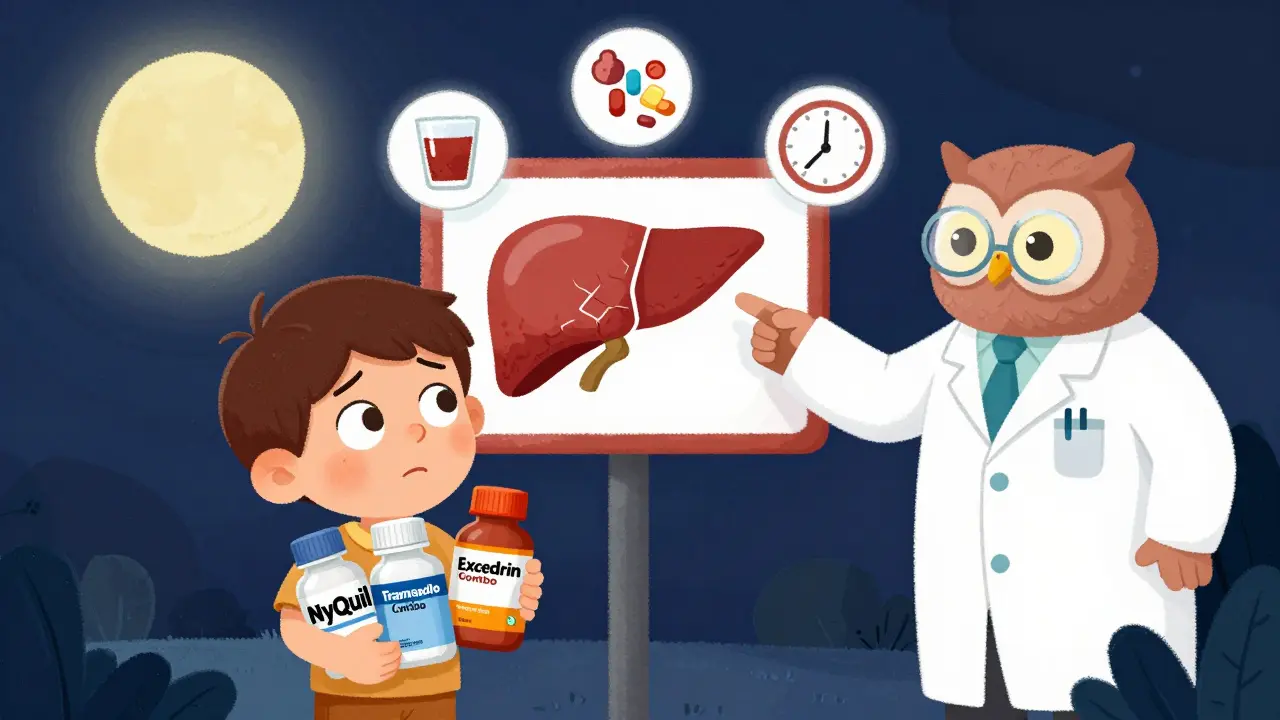
Acetaminophen overdose is the most common mistake. A lot of cold medicines, sleep aids, and even some OTC pain relievers contain acetaminophen. If you take a tramadol/acetaminophen combo and also take NyQuil or Excedrin, you can easily hit the 4,000 mg daily limit. That’s the max your liver can handle. Overdoses can cause sudden liver failure-no warning signs until it’s too late.
The FDA reports that 22% of accidental acetaminophen overdoses in 2022 came from people not realizing they were taking multiple products with the same ingredient.
NSAID risks include stomach ulcers, high blood pressure, and kidney problems. If you have a history of ulcers, heart disease, or are over 65, you need to be extra careful.
Tramadol side effects are real. Nausea, dizziness, constipation, and vomiting affect up to 35% of users. Some people even feel “spaced out” or get headaches. In one study, 15% of patients stopped taking tramadol/diclofenac because of stomach issues.
And here’s the tricky part: tramadol is metabolized by liver enzymes (CYP2D6 and CYP3A4). If you’re on antidepressants, antifungals, or even grapefruit juice, it can change how tramadol works. Some people turn it into a stronger opioid, others turn it into nothing. It’s unpredictable.
Who Should Avoid These Combos?
These products aren’t for everyone. You should avoid them if you:
- Have liver disease (especially with acetaminophen)
- Have kidney disease (especially with NSAIDs)
- Are pregnant or breastfeeding
- Have a history of opioid addiction
- Take SSRIs or MAOIs (risk of serotonin syndrome)
- Are under 18 (tramadol use is restricted in teens)
Even if you’re healthy, start low and go slow. Don’t assume a combo is stronger-it’s just smarter. Always check with your pharmacist before mixing it with other meds.
What’s New in 2025?
The landscape is shifting. In July 2023, the WHO added tramadol/acetaminophel to its Model List of Essential Medicines for Acute Pain. That means it’s now officially recognized as a must-have drug for global health systems.
Brazil’s ANVISA approved new generic versions of tramadol/diclofenac in September 2023. The FDA is working on new guidelines for abuse-deterrent versions-meaning pills that are harder to crush or snort.
Also, more manufacturers are entering the market. Companies like Teva, Mylan, and Sun Pharma now produce over 37 generic versions of tramadol/acetaminophen in the U.S. alone. Prices have dropped 40% since 2020. You can now find these combos for under $10 a month at many pharmacies.
How to Use Them Safely
If you’re prescribed one of these combos, here’s how to use it right:
- Read the label. Know exactly how much acetaminophen or NSAID is in each pill.
- Check all other meds you’re taking. No extra Tylenol, Advil, or cold remedies.
- Don’t take more than directed. Even if pain feels worse.
- Set a timer. Take it at the same times each day. Don’t skip doses and then double up.
- Watch for side effects. Nausea? Dizziness? Dark urine? Call your doctor.
- Use for no more than 5-7 days unless your doctor says otherwise.
Keep a list of all your meds. Bring it to every appointment. Pharmacists can spot dangerous overlaps before you do.
Bottom Line: Smart Tool, Not a Shortcut
Generic fixed-dose pain combinations are one of the most practical advances in pain care in the last 20 years. They’re cheaper, more effective, and reduce pill burden. But they’re not magic. They work best when used carefully, for short periods, and with full awareness of the risks.
If you’ve been taking two separate pills for pain, switching to a combo might help. But if you’re already on multiple medications, or have liver or kidney issues, talk to your doctor first. These aren’t just painkillers. They’re carefully balanced tools. Use them right, and they can get you back on your feet. Use them wrong, and the side effects can be worse than the pain.
Are generic pain combinations as effective as brand names?
Yes. Generic fixed-dose combinations must meet strict bioequivalence standards set by the FDA, EMA, and other regulators. This means they deliver the same amount of active ingredients into your bloodstream at the same rate as the brand-name version. For example, generic tramadol/diclofenac has been tested in clinical trials showing identical pain relief and side effect profiles compared to the original. The only differences are in color, shape, or inactive ingredients-none of which affect how well the drug works.
Can I take a pain combo if I’m on antidepressants?
It depends. Tramadol can interact with SSRIs, SNRIs, and MAO inhibitors, increasing the risk of serotonin syndrome-a rare but dangerous condition that causes high fever, confusion, rapid heartbeat, and muscle stiffness. If you’re on an antidepressant, never start a tramadol combo without consulting your doctor. They may choose a non-opioid combo like acetaminophen/ibuprofen instead.
Why aren’t more pain combos available over the counter?
Regulators are cautious. While acetaminophen/ibuprofen is available OTC in many countries, combos containing opioids like tramadol are strictly prescription-only. That’s because of addiction risks, liver damage from acetaminophen, and the potential for accidental overdose. Even OTC combos come with strong warnings: “Don’t use longer than 3 days,” “Check other meds,” and “Talk to your doctor if pain continues.”
Is tramadol/acetaminophen better than oxycodone/acetaminophen for pain?
For most people, tramadol/acetaminophen is a safer choice. Oxycodone is a stronger opioid with higher addiction potential and more severe withdrawal. Tramadol is weaker and has a lower risk of dependence. Studies show both are similarly effective for acute pain, but tramadol causes fewer respiratory issues and less constipation. That’s why many hospitals now use tramadol combos as a first-line option instead of oxycodone.
Can I drink alcohol with these pain combos?
No. Alcohol increases the risk of liver damage when combined with acetaminophen. It also worsens dizziness, drowsiness, and breathing problems when combined with tramadol or NSAIDs. Even one drink can be dangerous. Always avoid alcohol while taking any pain combination product.
What to Do Next
If you’re considering one of these combos, start here:
- Check your current meds with a pharmacist.
- Ask if a non-opioid combo (like acetaminophen/ibuprofen) would work for your pain.
- If you need an opioid, ask for the lowest effective dose and shortest duration.
- Use a pill organizer to avoid accidental double-dosing.
- Keep a pain diary: rate your pain before and after, note side effects.
Pain doesn’t have to be a guessing game. With the right combo, used correctly, you can get relief without unnecessary risk. But you need to be informed. Don’t assume it’s safe just because it’s cheap or easy to get. These are powerful tools. Treat them that way.

Comments (14)
Jesse Lord
I've been using the acetaminophen + ibuprofen combo since my wisdom teeth came out and it's been a game changer. No more juggling pills at 2 a.m. Just one tablet and I'm good to go. Seriously, why didn't anyone tell me about this sooner?
Mayank Dobhal
Tramadol/diclofenac saved my back after the car crash. But man, the dizziness hit hard. Felt like I was floating. Still took it. Pain was worse.
Lakisha Sarbah
I'm so glad this post exists. My mom took tramadol/acetaminophen with NyQuil and ended up in the ER. She didn't even know NyQuil had acetaminophen. We need more awareness.
Mark Harris
If you're in pain and you're not using these combos you're doing it wrong. Stop taking five different pills and just get one that does the job. Life's too short for pill confusion.
Natasha Bhala
i just started using the otc combo after my knee surgery and honestly it's been so much easier. no more forgetting which pill to take when. small wins matter.
Patrick Jarillon
Let me guess - you all think these combos are some kind of miracle? Wake up. The pharma giants pushed these because they make more money selling two drugs in one pill. They're not safer - they're just more profitable. And don't even get me started on how the FDA is in their pocket. The real danger? You think you're being smart when you're just being marketed to.
Ritu Singh
As someone from India where these combinations are widely available and often used without prescription, I must say the global health implications are profound. In rural areas, access to multiple medications is a luxury. A single fixed-dose pill means survival for many. The WHO's inclusion of tramadol/acetaminophen in the Essential Medicines List isn't just policy - it's justice. We must not let Western regulatory overcaution erase this lifeline for billions.
Savannah Edwards
I've been a nurse for 18 years and I can tell you - the most dangerous patients aren't the ones taking too much, they're the ones who think they're taking just enough. I had a guy last month take his tramadol/acetaminophen combo and then take two extra Tylenol because his pain 'felt a little worse.' He ended up with acute liver failure. It wasn't an overdose - it was a misunderstanding. People don't realize how sneaky acetaminophen is. It's in everything. Your sleep aid. Your cold medicine. Your 'natural' joint supplement. One pill you think is safe becomes three. And then suddenly, your liver is a ghost. I wish everyone knew this.
Marcus Jackson
The whole 'dose-sparing effect' thing is just marketing. You're still getting the same total dose. It's just bundled. And let's be real - if you're using this for more than a week, you're already on the slippery slope. I've seen too many people go from 'just for a few days' to 'I can't sleep without it.'
AMIT JINDAL
OMG I just found out my cousin is taking the tramadol/diclofenac combo and she's only 22 😱 I mean like... are you serious? She's not even 30 and she's already on opioids?? My mom says we should be thankful we're not in America where everything is a prescription but I think we need to protect our youth from these chemical traps 😭💔
Catherine Wybourne
Honestly? I love that these combos exist. But I also love that someone finally wrote this in plain English. No jargon. No fluff. Just facts. And for the record - yes, I did check my meds with my pharmacist. And yes, I now have a little sticky note on my fridge that says 'NO NYQUIL WITH THIS.' Small steps, people.
Ashley Hutchins
If you're using these combos without talking to your doctor first you're basically playing russian roulette with your liver and I don't know how you live with yourself because this isn't just about pain its about responsibility and if you don't get that then you're part of the problem
Gouris Patnaik
In India, we have always known that Western medicine overcomplicates things. Why do you need two drugs in one pill? Why not just take one and then the other? This is a capitalist trick. We used turmeric, ginger, and rest - and we were fine. Now you want to sell us pills that contain chemicals we don't even understand. Shame on you.
Joey Gianvincenzi
While I appreciate the thoroughness of this exposition, I must respectfully challenge the implicit assumption that pharmaceutical innovation is inherently benevolent. The normalization of fixed-dose analgesic combinations, while clinically pragmatic, reflects a broader societal trend toward pharmacological convenience at the expense of holistic care. The reduction of pain management to a chemical equation neglects the psychosocial, environmental, and rehabilitative dimensions of healing. One pill does not a cure make. We must not mistake efficacy for ethics.