
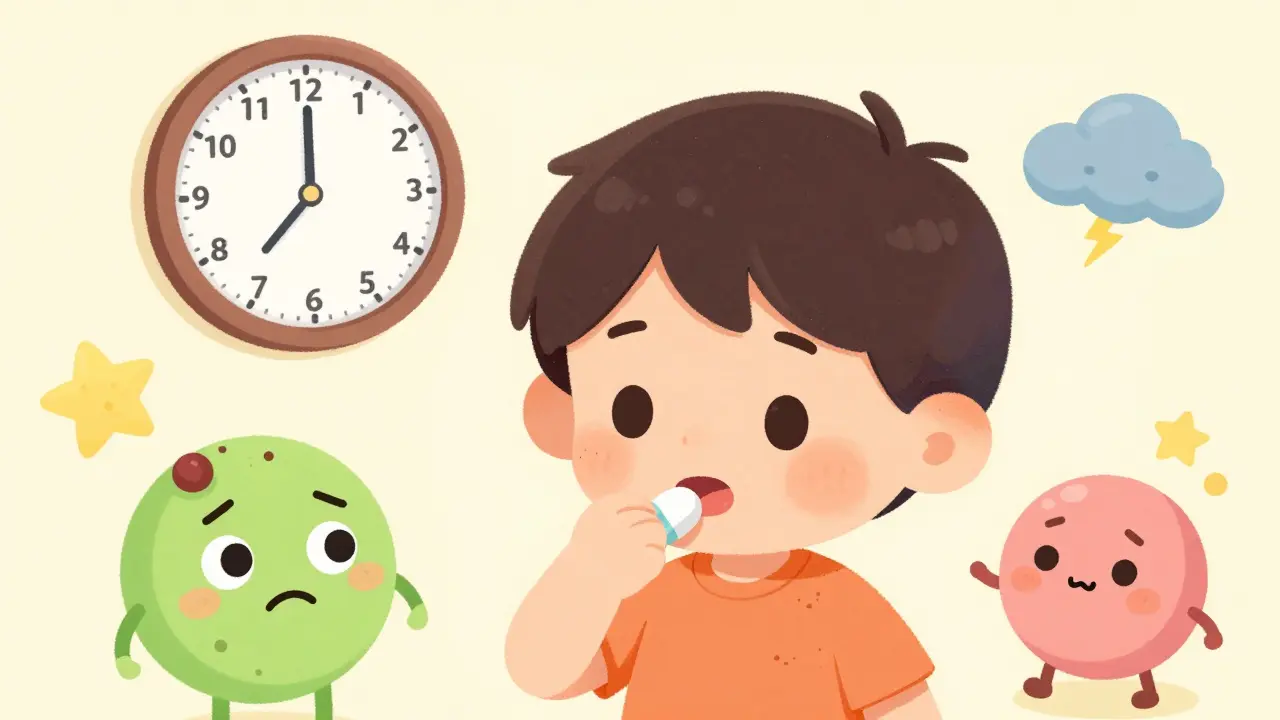
Side Effect Timeline Calculator
How It Works
Enter your medication details below to estimate when side effects might appear based on the latest medical research.
Why This Matters
Knowing the expected timeline can help you:
- Recognize serious reactions early
- Prevent unnecessary panic
- Communicate effectively with your doctor
- Track symptoms in your personal health journal
When you start a new medication, you might wonder: when will the side effects show up? Some people feel sick right away. Others don’t notice anything for weeks. And a few don’t realize something’s wrong until months later. This isn’t random. There’s a pattern. Knowing when to expect side effects can save you from panic, hospital visits, or even serious harm.
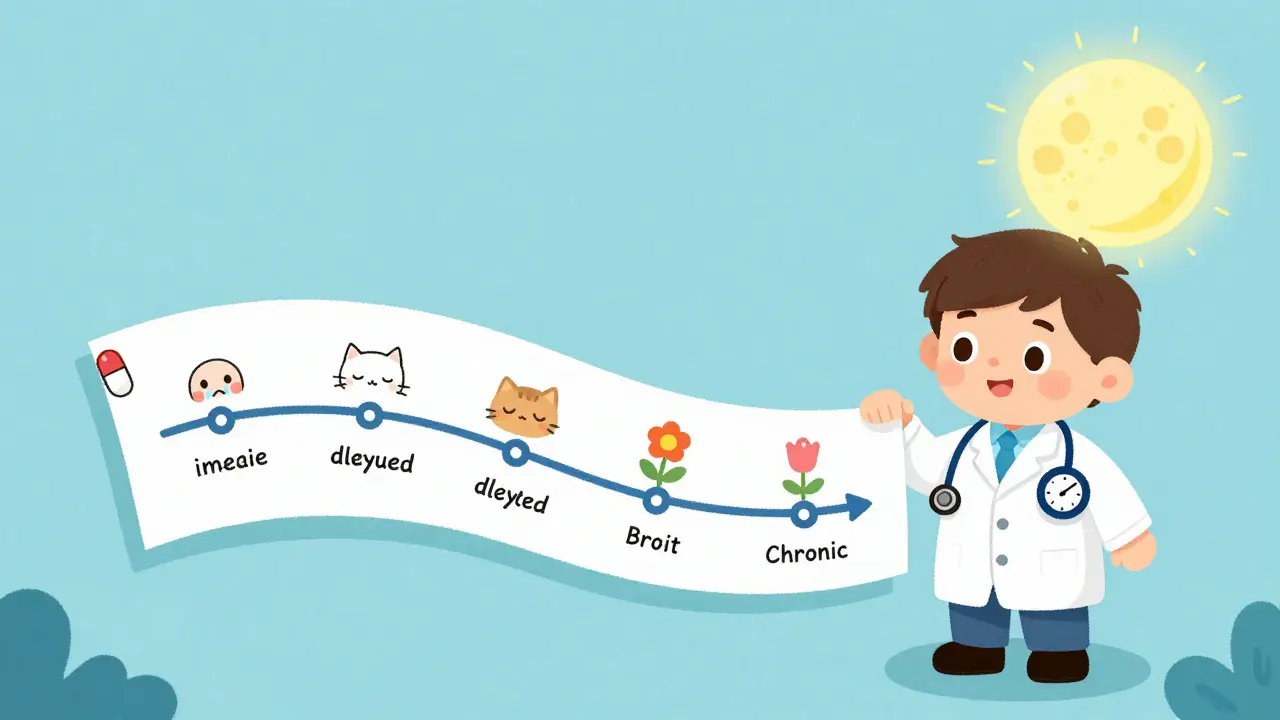
Immediate Reactions: Minutes to One Hour
If a side effect hits within the first hour, it’s likely an allergic or hypersensitivity reaction. The most dangerous of these is anaphylaxis - a life-threatening response that can cause swelling, trouble breathing, a drop in blood pressure, or loss of consciousness. According to data from the American Academy of Allergy, Asthma & Immunology, 98.7% of anaphylactic reactions happen within minutes to one hour after taking the drug. In fact, 67% begin within just 15 minutes. This is why doctors often ask you to wait in the clinic after your first dose of certain medications, like antibiotics or vaccines.
Other immediate reactions include hives, itching, or a sudden rash. These are also signs your immune system is reacting. Penicillin, for example, triggers immediate reactions in 73% of cases within 15 minutes. If you feel dizzy, your throat tightens, or your skin breaks out in red welts right after taking a pill, don’t wait. Call emergency services or go to the nearest ER.
Early Delayed Reactions: 1 to 72 Hours
Many side effects don’t show up instantly. They creep in over the next few hours or days. This window - between 1 and 72 hours - is when you’re most likely to notice things like nausea, dizziness, headaches, or mild rashes. These aren’t always allergic. Often, they’re just your body adjusting to the new chemical.
For example, over-the-counter painkillers like ibuprofen or acetaminophen usually cause stomach upset or drowsiness within 30 minutes to 4 hours. That’s because they’re absorbed quickly. Prescription drugs like certain blood pressure medications or sleep aids can also trigger symptoms in this window. A study from Vinmec Medical Center found that 89% of mild drug allergy symptoms - like itching or low-grade fever - appear within this 3-day window.
Some rashes fall here too. A rare but serious skin reaction called AGEP (Acute Generalized Exanthematous Pustulosis) shows up in 87% of cases within 2 days. It looks like tiny, pus-filled bumps, often starting on the trunk. If you notice this, contact your doctor within 24 hours. It needs treatment fast.
Delayed Reactions: 4 Days to 8 Weeks
This is the most confusing phase. You’ve been taking your medication for days or weeks. You feel fine. Then - out of nowhere - your skin breaks out, your liver enzymes spike, or you feel achy and tired. This isn’t a coincidence. It’s a delayed immune response.
The most common type is a maculopapular rash - flat red spots mixed with raised bumps. It usually appears between 4 and 14 days after starting a drug, with a median of 8 days. Antibiotics like amoxicillin are frequent culprits. If you get this rash, don’t assume it’s just a virus. It could be your body reacting to the medication.
Even more serious is DRESS syndrome - Drug Reaction with Eosinophilia and Systemic Symptoms. It’s rare, affecting about 0.1% of people taking certain anticonvulsants like carbamazepine or phenytoin. But when it happens, it’s dangerous. Symptoms include fever, swollen lymph nodes, liver inflammation, and a widespread rash. The median time to onset? 28 days. That’s nearly 4 weeks. Many patients think they’re fine because they’ve been on the drug for a month. They’re wrong.
Other delayed reactions include drug-induced lupus (which can take weeks to months) and liver injury (which may not show up until 2-8 weeks). These often don’t have obvious symptoms at first. That’s why your doctor might order blood tests at your follow-up visits - to catch problems before you feel them.

Chronic Reactions: Beyond 8 Weeks
Some side effects take months to appear. You might be on a medication for years before anything happens. This is especially true for drugs used for long-term conditions - like high blood pressure, high cholesterol, or epilepsy.
Take amiodarone, a heart medication. It can cause lung damage called interstitial lung disease. Symptoms - cough, shortness of breath, fatigue - often don’t show up until 6 to 12 months after starting. By then, the damage may be significant. Statins, used for cholesterol, can cause muscle pain or weakness. In 5-10% of users, this shows up within 7-10 days. But for others, it creeps in slowly over weeks.
Another example is lithium, used for bipolar disorder. Kidney damage from lithium can take years to develop. That’s why regular blood tests are non-negotiable. Your doctor isn’t being paranoid - they’re preventing long-term harm.
What Influences the Timeline?
Not everyone reacts the same way. Your body’s unique makeup changes how fast side effects appear.
- Dosage: Higher doses mean faster reactions. A study from Sequencing.com found that 82% of side effects from high-dose drugs show up within 24 hours, compared to just 47% at normal doses.
- Age: People over 65 often experience side effects 2.3 days later than younger adults. Slower metabolism means drugs stick around longer.
- Genetics: Some people have gene variants that make them react faster. For example, those with the HLA-B*57:01 gene develop a dangerous reaction to the HIV drug abacavir - usually within 48 hours. Testing for this gene is now standard before prescribing.
- Kidney or liver function: If your kidneys or liver don’t clear drugs well, side effects last longer. In patients with kidney disease, side effects from renally excreted drugs can be delayed by 30-50%.
- Other conditions: People with autoimmune diseases tend to react 37% faster than others, according to FDA data. Your immune system is already on high alert.
What Should You Do?
Knowing the timeline isn’t just useful - it’s lifesaving. Here’s what to do:
- Monitor closely in the first week. Keep a journal. Note the time, what you took, and how you felt. Even small changes - like a headache or slight nausea - matter.
- Set reminders. If you’re on an antidepressant, schedule a check-in with your doctor at 2 weeks and 4 weeks. Side effects like emotional numbness or sexual dysfunction often appear around day 21.
- Don’t ignore delayed symptoms. If you get a rash, fever, or unexplained fatigue after 2-4 weeks on a new drug, don’t brush it off. Call your doctor. It could be DRESS or another serious reaction.
- Use tracking tools. Patients who use medication apps with side effect logging report 32% fewer ER visits. You don’t need a fancy app - a simple notebook works.
- Know when to act. Immediate reactions? Go to the ER. Delayed reactions? Call your doctor within 24-48 hours. Don’t wait for it to get worse.
Doctors now use this timeline data to guide treatment. The FDA requires all prescription drug guides to include expected onset windows. And clinics like Mayo Clinic’s Personalized Medicine Program use genetic and clinical data to predict your personal risk with 84% accuracy.
Final Thought
Side effects aren’t random. They follow a clock. Some strike fast. Others wait. Your job isn’t to fear medication - it’s to understand it. Track your symptoms. Know the timelines. Talk to your doctor. That’s how you stay safe, not just on medication, but in life.
Can side effects appear after stopping a medication?
Yes. Some reactions, especially delayed ones like DRESS or drug-induced lupus, can worsen or appear even after you stop the medication. This is because the immune system keeps reacting even after the drug is gone. Symptoms may last for days or weeks after discontinuation. If you stop a drug and still feel unwell, don’t assume it’s unrelated. Contact your doctor.
Do generic drugs cause side effects at the same time as brand-name drugs?
Not always. While the active ingredient is the same, generics can have different inactive ingredients (excipients) or release rates. A study in the Journal of Generic Medicines found that 23% of patients noticed a change in side effect timing or intensity when switching from brand to generic. If you switch and feel different, report it. It’s not just in your head.
Are all side effects dangerous?
No. Many side effects - like mild nausea, drowsiness, or dry mouth - are temporary and harmless. Your body adjusts over days or weeks. In fact, 78% of mild side effects resolve on their own within 3-5 days of continuing the medication. The key is distinguishing between annoying and alarming symptoms. If something is new, worsening, or affects your breathing, heart, or mental state, don’t wait.
How do doctors know if a side effect is from the drug or something else?
They look at timing. If a rash appeared 10 days after starting a new antibiotic, it’s likely drug-related. If you’ve had the same rash for years and started the drug 2 days ago, it’s probably not. Doctors also check for patterns - for example, if multiple patients on the same drug develop the same symptom. Blood tests and skin biopsies help confirm reactions like DRESS or liver injury.
Should I stop taking my medication if I get a side effect?
Only if it’s severe - like trouble breathing, swelling, chest pain, or a rash covering most of your body. For mild side effects, don’t stop without talking to your doctor. Stopping suddenly can be dangerous. For example, quitting antidepressants too fast can cause withdrawal symptoms. Your doctor may lower the dose, switch you to another drug, or just tell you to wait it out.

Comments (15)
Jimmy V
Right after taking my first dose of amoxicillin, my throat closed up. No joke. I was in the ER before I could text my roommate. That 67% stat? I’m part of it. Don’t wait. If it feels like your body’s betraying you, it probably is.
Jinesh Jain
I started a new blood pressure med and got dizzy for three days. Thought it was dehydration. Turned out it was the drug. Took me a week to connect the dots. This article should be mandatory reading.
douglas martinez
As a physician, I cannot stress enough the importance of tracking symptom onset. Many patients dismiss early signs as ‘just stress’ or ‘a cold.’ The data presented here is clinically sound and aligns with our internal protocols at Johns Hopkins. Documentation saves lives.
Sabrina Sanches
I got that weird rash on day 11 after starting lamotrigine and thought it was just allergies until my dermatologist said ‘DRESS alert’-thank god I didn’t ignore it. This is the kind of info you need to save your life, not just your sanity
Shruti Chaturvedi
My aunt took lithium for 12 years and never knew her kidneys were failing until her creatinine spiked. Regular bloodwork isn’t optional. It’s survival
Katherine Rodriguez
Why are we trusting Big Pharma’s timelines? They don’t care if you get sick as long as you keep buying. The FDA doesn’t test for long-term effects properly. I’ve seen people turn into zombies on SSRIs and nobody bats an eye
Devin Ersoy
Oh wow, a 23% difference between generics and brand? Shocking. I guess the $100 bottle with the fancy logo really does have magic dust in it. Meanwhile, I’ve been on generic metformin for 8 years and still have my liver. Maybe your body’s just weak?
Scott Smith
My daughter started on fluoxetine and developed severe insomnia on day 17. We didn’t connect it until her pediatrician mentioned the 2-week window. Now she’s on a different SSRI and sleeping like a baby. Tracking matters.
Sally Lloyd
Did you know the CDC hides data on drug reactions to protect pharmaceutical stock prices? The 84% accuracy claim? That’s just PR. Real data is buried under NDAs. I’ve got screenshots from leaked internal memos. The truth is out there.
Emma Deasy
I’ve been on 17 different medications in the past decade. Each one came with its own emotional rollercoaster. The day I got the maculopapular rash? I cried. Not because it hurt-but because I realized how little control I had. This article? It gave me back a sliver of agency. Thank you.
tamilan Nadar
In India, we call this ‘medicinal jaundice’-people think side effects are normal because they’ve seen relatives suffer for years. This breakdown helps us explain to families: no, this isn’t fate. It’s science. And we can act.
Rosemary Chude-Sokei
It is imperative that patients maintain meticulous records of medication initiation and concurrent symptoms. The integration of temporal data into clinical decision-making has been shown to reduce diagnostic delay by up to 41%. This article exemplifies best practice in patient education.
Leah Dobbin
I read this and thought-finally, someone who understands that side effects aren’t just ‘annoying.’ They’re signals. I wish my psychiatrist had given me this timeline when I started venlafaxine. I might’ve avoided the weight gain and tremors.
Dylan Patrick
My brother died from DRESS. It started on day 29. They told him it was ‘just a virus.’ I’m screaming this into the void: IF YOU’RE ON CARBAMAZEPINE AND FEEL FEVERISH AFTER 3 WEEKS-GO TO THE ER. DON’T WAIT. DON’T TEXT. GO.
Kathy Leslie
This is the kind of post I save. I’ve been on sertraline for 6 months. The dry mouth? Fine. The 3 a.m. panic attacks? I thought it was anxiety. Now I know it’s the med. Thanks for the clarity.